
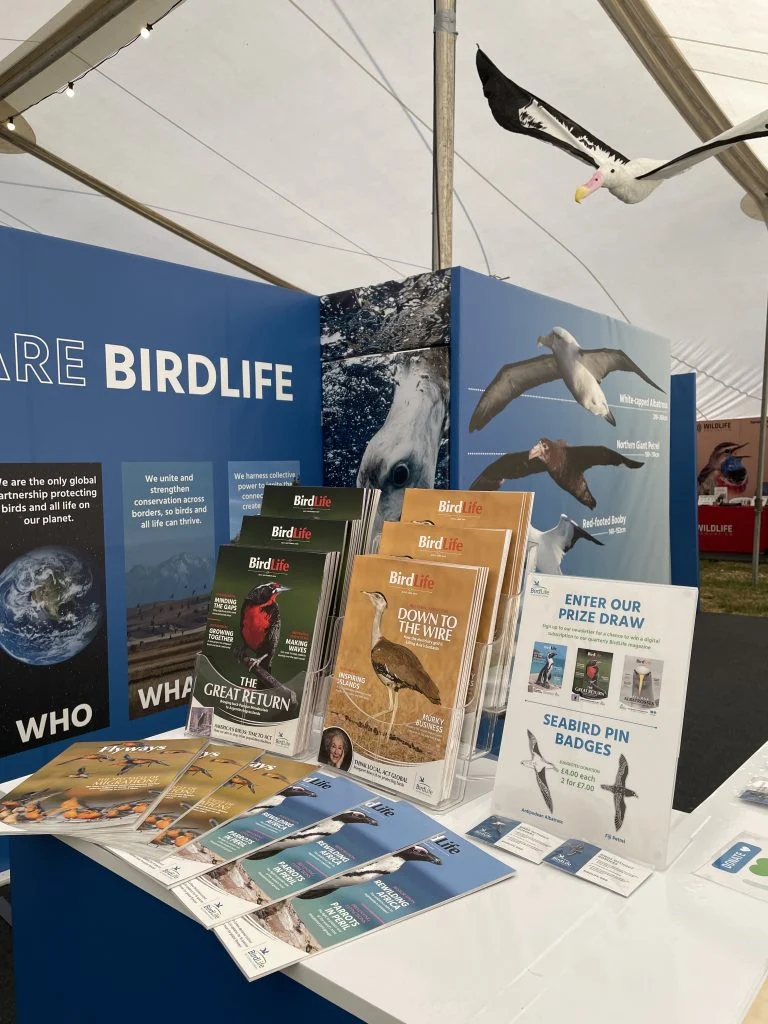
The world’s largest annual celebration of birds, Global Birdfair 2026, is poised to generate monumental support for avian conservation, focusing its fundraising efforts on the critically endangered endemic birds of São Tomé and Príncipe. Scheduled to take place from July 10th to 12th, 2026, at its traditional home, Rutland Water in the UK, this pivotal event will direct its proceeds towards BirdLife International’s vital work to protect the unique avian inhabitants of this isolated island nation and prevent their extinction.
A Legacy of Conservation: The Evolution of Global Birdfair
Global Birdfair stands as a beacon in the international conservation calendar, building upon a rich legacy that began decades ago. Originally known as Birdfair, the event was conceived by Tim Appleton MBE and Martin Davies in 1989 as a modest gathering at Rutland Water. Its primary objective was to bring together birdwatchers, conservationists, and the optics industry, fostering a community spirit while simultaneously raising funds for pressing bird conservation projects worldwide. Over its initial three decades, the event achieved remarkable success, raising millions of pounds for numerous BirdLife International projects, impacting species and habitats across every continent.
The transition to "Global Birdfair" in recent years marked a new chapter, aiming to broaden its international appeal and impact, especially in the wake of global challenges that necessitated adaptive strategies for large-scale gatherings. Despite changes, the core mission remains steadfast: to unite the global birding community, educate the public on critical conservation issues, and channel significant financial resources to where they are most needed. The enduring dedication and passion of organizers like Tim Appleton MBE and Penny Robinson, alongside a vast network of volunteers, have been instrumental in maintaining this event’s status as a premier fundraising platform for avian biodiversity. Their tireless efforts have not only sustained the fair but have also ensured its continued evolution as a dynamic hub for conservation dialogue and action.
São Tomé and Príncipe: A Unique Biodiversity Hotspot Under Duress
The choice of São Tomé and Príncipe as the beneficiary of Global Birdfair 2026 underscores the acute crisis facing island ecosystems globally. Located in the Gulf of Guinea, off the western equatorial coast of Africa, São Tomé is the larger of the two main islands that constitute this small nation. Its geological isolation, volcanic origins, and lush, humid forests have fostered an extraordinary evolutionary laboratory, resulting in a high degree of endemism—species found nowhere else on Earth. This biological uniqueness, however, makes its fauna and flora exceptionally vulnerable to external pressures.

Among São Tomé’s most iconic and imperiled residents are three species listed as Critically Endangered on the IUCN Red List: the Dwarf Ibis (Bostrychia bocagei), the São Tomé Grosbeak (Crithagra concolor), and Newton’s Fiscal (Lanius newtoni). These birds are not merely rare; they represent distinct evolutionary lineages, their survival intertwined with the health of the island’s dwindling primary forests.
The Dwarf Ibis, a small, secretive wading bird, is a true forest ibis, preferring dense, undisturbed areas. Its elusive nature and specific habitat requirements make it particularly susceptible to forest fragmentation and degradation. The São Tomé Grosbeak, a robust finch, is another enigma, known for its massive bill, suggesting a specialized diet, likely of hard seeds found within the island’s unique flora. Its population is believed to be exceedingly small, making every individual critical for the species’ persistence. Finally, Newton’s Fiscal, a striking shrike, is named after its discoverer and represents a predatory niche within the island’s ecosystem. All three species are restricted to the remaining tracts of old-growth forest, which are under constant threat.
The primary drivers of their decline are multifaceted. Habitat loss and degradation due to agricultural expansion (particularly cocoa and coffee plantations), logging, and infrastructure development are paramount. While much of the forest is theoretically protected within the Parque Natural Obô de São Tomé, enforcement can be challenging. Invasive alien species, such as rats, cats, and monkeys introduced by human activity, also pose a significant threat, preying on eggs, chicks, and adult birds, or competing for resources. The small population sizes of these endemics also render them highly susceptible to stochastic events like disease outbreaks or extreme weather, which are becoming more frequent with climate change.
BirdLife International’s Strategic Intervention for São Tomé
BirdLife International, a global partnership of conservation organizations, is at the forefront of efforts to safeguard these precious species. The project supported by Global Birdfair 2026 will focus on a strategic, multi-pronged approach designed to address the immediate threats and build long-term resilience for São Tomé’s endemic birds. A critical component of this initiative is filling the "knowledge gaps" about these endangered species. Despite their critically endangered status, detailed ecological data on their precise distribution, population dynamics, breeding biology, and specific threats remain surprisingly limited. Researchers, often working in challenging conditions, need resources for extensive fieldwork, population monitoring, and genetic studies to accurately assess their status and inform targeted conservation actions.
Beyond research, the project places a strong emphasis on strengthening local capacity. This involves training and empowering park rangers, conservationists, and community members in São Tomé to become stewards of their natural heritage. This includes developing skills in species identification, population monitoring techniques, anti-poaching patrols, invasive species management, and habitat restoration. By fostering a strong local workforce, the project aims to ensure that conservation efforts are sustainable and driven by those who have the most intimate understanding of the local context.
Community engagement is another cornerstone. The survival of these birds ultimately depends on the support and active participation of local communities. The project will work with residents, particularly those living near forest areas, to raise awareness about the ecological and economic value of their unique biodiversity. This includes exploring sustainable livelihood alternatives that reduce pressure on forest resources, fostering a sense of ownership, and integrating conservation into local development plans. By involving community members as partners, the initiative seeks to create a shared vision for conservation that benefits both nature and people.

Experiencing Conservation in Action at Global Birdfair 2026
For attendees, Global Birdfair 2026 offers a unique opportunity to immerse themselves in the world of bird conservation and directly connect with the São Tomé project. The event is designed to be highly interactive and educational, moving beyond traditional exhibition formats. Visitors will have the chance to learn directly from São Tomé experts, gaining insights into the challenges and triumphs of conservation on the island.
A highlight will be the dedicated BirdLife International stand, featuring an interactive display that brings the São Tomé experience to life. This includes a unique "pod" where visitors can relax and listen to the authentic sounds of the São Tomé forest, offering an auditory journey into the habitat of the Dwarf Ibis, São Tomé Grosbeak, and Newton’s Fiscal. This sensory experience aims to foster a deeper appreciation for the unique soundscapes that are increasingly under threat.
Educational talks and presentations by leading ornithologists and conservationists will delve into the intricacies of island biogeography, the specific threats to endemic species, and innovative solutions being deployed. Attendees can also embark on a "migratory journey" around Global Birdfair with a "Flyways Passport," visiting various partner stands and collecting stamps. This activity not only highlights the interconnectedness of global bird migration routes but also encourages exploration of the diverse range of conservation organizations present, culminating in the reward of an exclusive pin badge—a tangible reminder of their contribution. Every ticket purchased for Global Birdfair 2026 directly contributes to these vital conservation efforts, transforming visitor engagement into tangible support for São Tomé’s birds.
The Broader Implications: Island Conservation as a Global Imperative
The focus on São Tomé and Príncipe at Global Birdfair 2026 serves as a powerful reminder of the global imperative for island conservation. Islands, while constituting a small fraction of the Earth’s landmass, harbor an astonishing proportion of its biodiversity, particularly endemic species. Tragically, they have also been disproportionately affected by extinctions. Historical data shows that islands account for over 80% of all recorded bird extinctions since 1600. The fragile nature of island ecosystems, combined with limited resources and often intense human pressures, makes them exceptionally vulnerable.
The lessons learned and successes achieved in São Tomé can have far-reaching implications, serving as a model for other island nations facing similar challenges. By securing the future of the Dwarf Ibis, São Tomé Grosbeak, and Newton’s Fiscal, the project also safeguards the broader forest ecosystem upon which countless other species, including plants, insects, and reptiles, depend. These forests provide essential ecosystem services, such as climate regulation, water purification, and soil stability, benefiting the local communities directly. Protecting the island’s unique biodiversity also bolsters its potential for ecotourism, offering sustainable economic opportunities that incentivize conservation.

The collective impact of events like Global Birdfair extends beyond immediate fundraising. It elevates public awareness, mobilizes political will, and strengthens the network of individuals and organizations committed to conservation. The support from Global Birdfair is not just about a specific project; it’s about investing in the long-term capacity of a nation to protect its natural heritage, fostering a global solidarity for biodiversity.
Looking Ahead: A Blueprint for Enduring Change
As Global Birdfair 2026 approaches, the anticipation among the global birding and conservation communities is palpable. The event represents a critical juncture for São Tomé’s unique avian treasures. The funds raised will translate directly into scientific research, ranger training, community outreach, and habitat protection—concrete actions that are essential for reversing the tide of extinction.
The commitment of organizers like Tim Appleton and Penny Robinson, coupled with the unwavering support from BirdLife International and thousands of attendees, embodies the collective determination to make a genuine difference. Many island endemic species face an uncertain future, but with dedicated resources for their conservation, there is hope for their long-term survival. The success of the São Tomé project will not only secure these three critically endangered species but will also protect the intricate forests, resilient ecosystems, and vibrant communities that define this extraordinary island. Global Birdfair 2026 at Rutland Water promises to be more than just an event; it will be a pivotal moment for global conservation, a testament to what can be achieved when passion, purpose, and community converge.
