
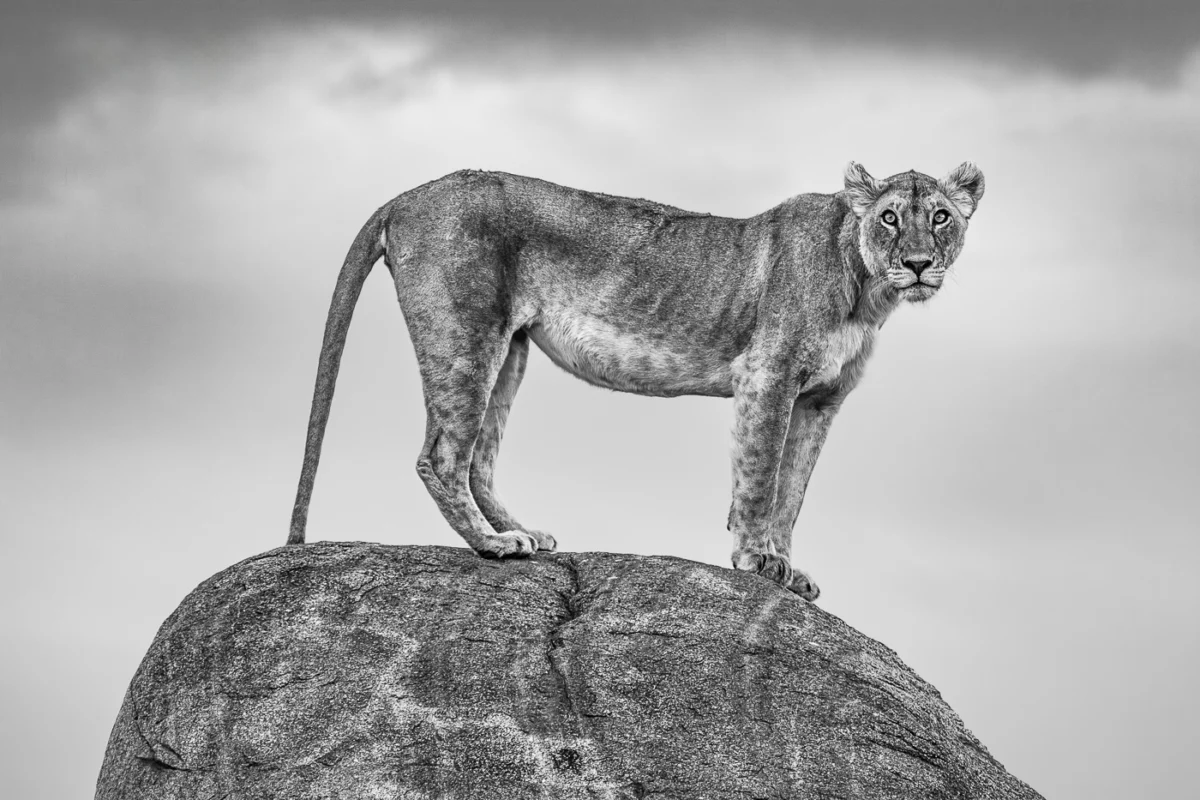
The realm of wildlife photography often conjures images of vibrant colors, majestic landscapes, and the intricate details of nature’s palette. However, for artist Gabi Guiard, the most profound narratives of the wild are best articulated through the timeless interplay of black and white. Guiard’s journey into this specialized art form is a testament to a lifelong fascination with animals, evolving from a childhood curiosity into a distinct photographic philosophy that strips away the superfluous to reveal the raw essence of nature.

Guiard’s initial professional path diverged significantly from her innate passion. Trained in graphic design and art direction within the demanding world of advertising, she honed a keen eye for visual storytelling, composition, and the power of impactful imagery. While the industry was characterized by commercial demands, it also exposed her to the influential works of celebrated black-and-white fashion and advertising photographers. These masters, renowned for their ability to evoke emotion and create iconic imagery through grayscale, inadvertently laid the groundwork for Guiard’s future artistic direction. This period, rich in visual training and creative problem-solving, instilled in her a deep understanding of how form, texture, and light could communicate narratives without the aid of color. It was this foundational knowledge, coupled with her enduring love for wildlife, that ultimately converged, guiding her toward a unique expression in nature photography.
The Enduring Power of Monochromatic Vision

For Guiard, black and white is not merely an aesthetic choice; it is a fundamental language, a deliberate medium through which she communicates her innermost feelings and observations when immersed in nature. It stands apart from a superficial attempt to appear "artistic" or "classic," instead serving as a conduit to focus on the irreducible essentials of a scene. This approach aligns with a rich tradition in photography, where pioneers like Ansel Adams and Henri Cartier-Bresson demonstrated the unparalleled ability of black and white to convey mood, texture, and form with striking clarity. By consciously omitting color, Guiard eliminates a powerful, often distracting, element. This removal forces both the photographer and the viewer to engage with the image on a deeper level, compelling them to perceive textures, appreciate intricate shapes, and discern the subtle yet dramatic shifts in contrast. The result is an exercise in photographic honesty, where, as Guiard articulates, "what you see is what remains when everything superfluous disappears." This stripping down to elemental forms allows the inherent drama and character of the wild to dominate, inviting a more contemplative and visceral connection.
Stripping Away the Superfluous: The "Less is More" Philosophy

Central to Guiard’s artistic credo is the minimalist principle that "less is more." This philosophy dictates that true impact is achieved not by showcasing every detail, but by highlighting what truly matters. In an age of visual overload, where high-resolution color images often aim to capture every nuance, Guiard’s approach stands as a powerful counter-narrative. She believes that simplifying reality to its most essential components allows the wild character of nature to take center stage, unencumbered by peripheral distractions. This means that a single glance, the elegant curve of a silhouette against the horizon, or a subtle gesture can be sufficient to unfold a compelling story. When Guiard works in black and white, her intention is to forge an immediate and potent connection between the viewer and the raw strength of the moment. The absence of color allows the viewer to bypass superficiality and delve into the core emotion, almost as if they could "hear the silence of the instant." This emphasis on simplification acts as a visual filter, directing the eye toward the profound rather than the ornate. By paring down visual elements, Guiard ensures that the viewer’s attention is undiluted, naturally drawn to the very essence of the scene. This deliberate creation of "noise-free space" or apparent emptiness is not a void but an invitation, allowing each individual observer to imbue the photograph with their own emotions, memories, and interpretations, thus completing the narrative in a deeply personal way.
Composition: The Unseen Architect of Impact

For Gabi Guiard, composition is unequivocally the backbone of every photograph. Far from being a mere arrangement of elements within the frame, it serves as the invisible guide, steering the viewer’s gaze toward the narrative she intends to unfold. In the monochromatic world, where the vibrant cues of color are absent, the role of composition escalates, becoming even more critical in shaping perception and impact. Lines, shapes, and spatial relationships acquire an intensified significance, dictating flow and balance. The precise placement of an animal within its natural habitat, the delicate equilibrium between expanses of light and profound shadow, or the deliberate emptiness of negative space—all these elements coalesce to engineer a harmonious yet often tense visual experience. Guiard frequently gravitates toward simplicity in her compositions, meticulously excising any extraneous elements that might dilute the core message. A bold diagonal line, for instance, might meticulously lead the eye directly to the intense gaze of a lion, while the graceful arc of a tree branch could perfectly frame a solitary silhouette. Conversely, the strategic use of negative space around a subject can amplify its presence, creating both visual strength and an intimate connection. This intuitive understanding of spatial dynamics allows her to transcend rigid compositional rules, knowing precisely when to subtly bend or even break them to evoke a more potent emotional response. Ultimately, composition, in Guiard’s hands, becomes the vital, invisible structure that grants the image its inherent power and allows it to breathe, resonating with a deeper, unspoken truth.
Mastering Light and Shadow: Contrast as Narrative

In Guiard’s black-and-white photography, light and shadow are not simply technical aspects; they are the fundamental brushes with which she paints each image, crafting profound visual narratives. This reliance on contrast extends far beyond mere aesthetic preference; it is a powerful communicative tool, her chosen method for giving voice to the messages she aims to convey. The deep blacks in her photographs serve a dual purpose: they artfully conceal what she deems unnecessary to show, guiding the viewer away from distractions, while the luminous whites and varied grays selectively reveal what she wants the observer to feel and understand. In the absence of color, the interplay between light and shadow takes on an extraordinary weight, transforming into the primary means of expressing mood, depth, and drama. Shadows, often overlooked in color photography, become protagonists in their own right, carrying as much narrative significance as the subjects themselves. They sculpt form, define texture, and create a sense of three-dimensionality, imbuing the two-dimensional image with tangible presence. This masterful manipulation of tonal values allows Guiard to control the viewer’s emotional journey, evoking anything from serene tranquility to intense power, all through the eloquent dance of light and dark.
Beyond the Visual: Evoking Emotion and Connection

While Guiard’s photographs are rooted in the meticulous observation of wildlife, her ultimate quest transcends mere documentation; she seeks to evoke profound emotion. Her aim is not simply to present an animal or a landscape, but to communicate something far deeper: the raw power of the wild, the quiet solitude of a creature, its inherent majesty, or even its poignant fragility. This artistic intention aligns with a broader movement in contemporary nature photography that prioritizes emotive storytelling over purely encyclopedic representation. For Guiard, lions, for example, are not merely biological specimens; they embody the "kings and queens of a territory that breathes at its own rhythm." This anthropomorphic yet respectful framing elevates them beyond their animalistic form, transforming them into symbols of dignity, resilience, and sovereign presence. Each image, therefore, is envisioned as a repository for a fragment of their ongoing story: a tranquil gaze that subtly masks immense strength, a composed gesture that speaks volumes of innate dignity. The monochromatic palette plays a crucial role in intensifying this narrative. By removing the potentially distracting vibrancy of color, black and white photography compels the viewer to concentrate on the inherent emotional content, making the connection more direct, more primal, and ultimately, more impactful. This focus on emotion fosters a deeper appreciation for wildlife, moving beyond aesthetic appeal to touch upon the shared experience of existence.
A Timeless Lens: Bridging Eras Through Black and White

One of the most compelling aspects of Gabi Guiard’s commitment to black-and-white photography is its inherent timeless quality. There is a magical transcendence in monochromatic images; a photograph captured today could effortlessly be perceived as having been taken decades ago, and equally, it will retain its impactful resonance many years into the future. This characteristic connects her work to a venerated lineage of photographic art, echoing the enduring appeal of classic masterpieces that have defied temporal boundaries. This timelessness allows Guiard to present nature as an eternal entity, a profound mirror reflecting both our contemporary selves and the generations that preceded us. By stripping away the ephemeral markers of color, she creates a space for universal human connection. Furthermore, this absence of color serves as an open invitation for each viewer to project their own accumulated memories, personal experiences, and deeply held emotions onto the image. In doing so, black-and-white photography facilitates an intimate, almost meditative dialogue between the captured scene and its observer, transforming each photograph into a deeply personal and reflective experience. It’s a testament to the idea that true art communicates across epochs, and in Guiard’s hands, the wild finds its eternal voice.
The Imperative of Sensitivity: Crafting Meaningful Images

While the technical mastery behind each of Gabi Guiard’s images is undeniable—the meticulous search for optimal light, the precise compositional arrangement, and the keen attention to detail—she firmly asserts that it is sensitivity that truly imbues her work with profound meaning. Technique, however refined, is merely a tool; it is the emotional intelligence and intuitive understanding applied during the photographic process that elevates an image from a mere depiction to a compelling narrative. For Guiard, this sensitivity manifests in critical decisions: knowing precisely what elements to highlight and what to deliberately recede into the shadows; discerning the exact moment to activate the shutter and, equally important, recognizing when to remain silent, observing without intrusion. This judicious balance underscores the ethical dimension of wildlife photography, emphasizing patience, respect, and a deep understanding of animal behavior. As she eloquently states, "Technique without sensitivity tells nothing; when both come together, a photograph is born that can move, inspire, and invite reflection." This fusion of technical acumen and profound empathy allows Guiard to transcend the purely visual, crafting photographs that resonate on an emotional and intellectual level, inviting viewers to pause, contemplate, and connect with the profound beauty and fragility of the natural world.
Challenges and the Contemporary Landscape of Wildlife Photography

The pursuit of meaningful wildlife photography, especially in black and white, presents its own unique set of challenges and rewards. Unlike a documentary approach that often seeks to capture every detail for scientific or educational purposes, Guiard’s artistic vision demands a more selective eye, a deeper engagement with the subject’s emotional state, and an unwavering commitment to a minimalist aesthetic. This approach requires not only exceptional photographic skills but also an extensive understanding of animal behavior, immense patience, and the ability to work in diverse, often challenging, environmental conditions. The increasing global awareness of wildlife conservation provides a powerful backdrop for Guiard’s work. In an era where biodiversity loss is a critical concern, artistic interpretations of nature, such as hers, play a vital role in fostering appreciation and empathy. By presenting animals and their habitats in a timeless, stripped-down manner, her photographs can cut through the noise of daily life and serve as potent reminders of the intrinsic value of the wild. Such art transcends geographical and cultural barriers, speaking to universal human emotions and inspiring a renewed sense of responsibility towards the planet’s diverse ecosystems. Her work stands as an example of how artistic expression can contribute to broader conservation efforts, sparking dialogue and encouraging reflection on humanity’s place within the natural world.
In Summary: A Symphony in Grayscale

Gabi Guiard’s artistic output is firmly rooted in a quartet of guiding principles:
- Black and White as a Language: A deliberate choice to communicate essence, emotion, and story.
- The Essential Over the Superfluous: A commitment to minimalism, focusing on core elements for maximum impact.
- Composition as the Backbone: The strategic arrangement of elements to guide the viewer’s eye and create harmony or tension.
- Contrast as a Tool: The masterful use of light and shadow to sculpt form, evoke mood, and underscore narrative.
For Guiard, black and white is far more than a mere filter or stylistic preference; it is a vital, intentional choice that defines her artistic identity. It represents her profound way of requesting silence from the bustling world, enabling her to truly listen to the unspoken narratives that nature yearns to share. It is within this profound silence, this serene space devoid of chromatic distraction, that she consistently uncovers and captures the images that most authentically represent her unique vision and resonate deeply with the spirit of the wild.
