
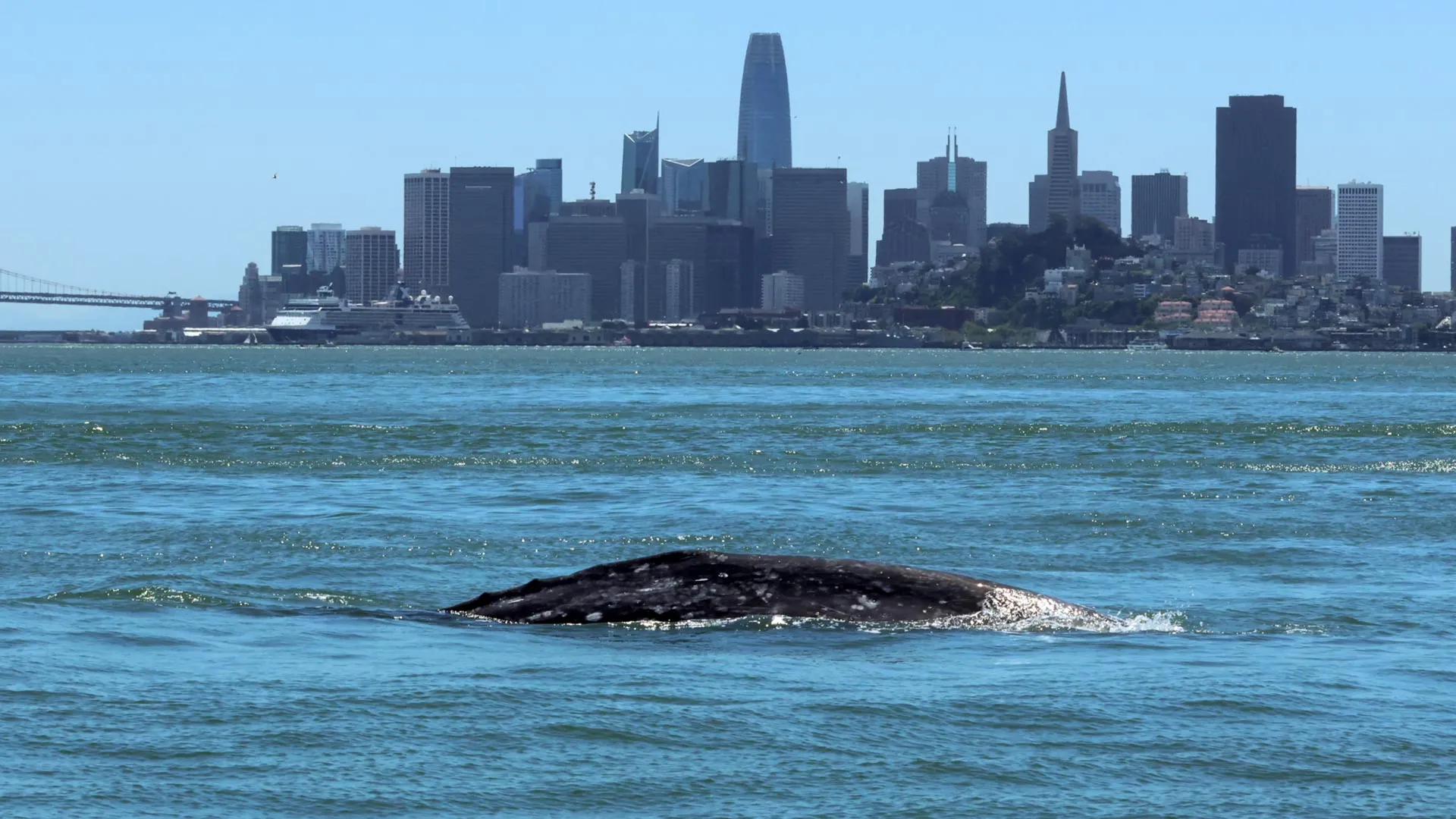
Gray whales, renowned for their monumental migration spanning thousands of miles between the food-rich Arctic and the warm, sheltered lagoons of Baja California, are exhibiting alarming and unprecedented behaviors driven by the accelerating impacts of climate change. A recent study published in Frontiers in Marine Science highlights a critical new challenge for these majestic marine mammals: an increasing number are diverting from their traditional routes to seek sustenance in the heavily trafficked, perilous waters of San Francisco Bay. This shift, a stark symptom of disrupted ocean ecosystems, is proving fatal for a significant proportion of these "Bay Grays," with vessel strikes identified as a primary cause of death.
The study, spearheaded by researchers from Sonoma State University and the Center for Coastal Studies, paints a grim picture of a population under immense pressure. It reveals that nearly 20% of the gray whales documented entering San Francisco Bay did not survive their stay, with many succumbing to collisions with ships. This high mortality rate underscores the urgent need for comprehensive intervention strategies to protect a species already facing a precipitous population decline.
The Gray Whale’s Epic Journey: A Shifting Landscape
The gray whale ( Eschrichtius robustus) undertakes one of the longest migrations of any mammal on Earth, an annual round trip of up to 12,000 miles. Their journey typically begins in the nutrient-rich Arctic and sub-Arctic waters of the Bering, Chukchi, and Beaufort Seas, where they spend the summer months gorging on amphipods and other benthic invertebrates, building up critical fat reserves. These reserves fuel their arduous migration south along the North American coastline to the warm, shallow lagoons of Baja California, Mexico, where they breed and calve during the winter. Throughout this southbound and subsequent northbound journey, gray whales traditionally do not feed, relying entirely on the energy accumulated in the Arctic.
However, the delicate balance of this ancient cycle is being severely disrupted by rapidly warming ocean conditions. The Arctic, warming at more than twice the global average, is experiencing profound ecological changes. Melting sea ice alters ocean currents, stratification, and light penetration, fundamentally impacting the availability and distribution of the tiny organisms that form the base of the Arctic food web. This disruption means that the crucial feeding grounds gray whales depend on are becoming increasingly unreliable, leaving many whales undernourished before they even begin their migration.
This ecological crisis is reflected in the broader health of the gray whale population. The National Oceanic and Atmospheric Administration (NOAA) declared an "Unusual Mortality Event" (UME) for the species in 2019, an ongoing situation that signals a significant and unexpected number of deaths. Since 2016, the Eastern North Pacific gray whale population has plummeted by more than half, from an estimated 27,000 individuals to approximately 13,800. Sightings of calves, crucial indicators of reproductive success and population recovery, have become alarmingly rare, further emphasizing the severity of the crisis.
A New Sanctuary, A New Danger: The Emergence of "Bay Grays"
Historically, San Francisco Bay was not considered a regular stop on the gray whale migration route. This began to change noticeably around 2018, coinciding with the broader decline in the population and the declaration of the UME. It was then that researchers and the public alike started observing gray whales entering the Bay with increasing frequency, a phenomenon that quickly correlated with a distressing rise in local whale deaths. This prompted scientists to launch a dedicated effort to understand these "Bay Grays"—whether they were desperate, one-time visitors seeking an emergency meal, or if the Bay was becoming a new, albeit dangerous, part of their migration strategy.
The research, led by Josephine Slaathaug of Sonoma State University and co-authored by Bekah Lane of the Center for Coastal Studies, meticulously tracked gray whale activity within the Bay from 2018 to 2023. Their methodology combined opportunistic sightings and photographs contributed by a vigilant public—an invaluable citizen science component—with more structured, dedicated surveys conducted from 2023 to 2025. Individual whales were identified using unique natural markings on their skin, such as barnacle scars, pigmentation patterns, and dorsal humps, creating a comprehensive catalog of the Bay’s temporary residents. These visual records were then cross-referenced with necropsy data from stranded whales, allowing researchers to link specific individuals observed in the Bay to subsequent fatalities.
The study documented a total of 114 individual gray whales utilizing San Francisco Bay during the research period. A crucial finding was that only four of these individuals were observed in the Bay in more than one year. This low rate of return suggests that for most whales, the Bay is likely an "emergency feeding stop" rather than a newly integrated part of their annual migration. Scientists have observed unusually thin individuals foraging in other nontraditional habitats as well, reinforcing the hypothesis that these whales are desperate for food, driven by the scarcity in their traditional Arctic feeding grounds.
San Francisco Bay’s Unique and Deadly Hazards
While offering a potential, albeit temporary, food source, San Francisco Bay presents a gauntlet of dangers for these ocean giants. Josephine Slaathaug underscored the specific challenges: "Gray whales have a low profile to the water when they surface, and this makes them difficult to see in conditions like fog which are common to San Francisco Bay." The Bay’s notoriously foggy conditions, often blanketing the waters, severely reduce visibility for both mariners and whales, making evasive maneuvers incredibly difficult.
Beyond the environmental conditions, the Bay’s status as a major maritime hub dramatically elevates the risk. "Additionally, San Francisco Bay is a highly trafficked waterway, and the Golden Gate Strait serves as a bottleneck through which all traffic and whales must enter and exit," Slaathaug added. This narrow, high-volume passage concentrates an immense amount of vessel traffic—from massive container ships and oil tankers to commercial fishing boats, ferries, and a dense network of recreational vessels. The sheer volume and speed of these vessels, coupled with the whales’ low profile and potentially weakened state, create a lethal combination. The Port of Oakland, for example, is one of the busiest on the West Coast, handling millions of tons of cargo annually, necessitating thousands of vessel movements through the Golden Gate.
The Grim Toll: Mortality Rates and Causes
The statistics are sobering. Between 2018 and 2025, a total of 70 gray whales were found dead in the broader San Francisco Bay region. Of these, a staggering 30 were definitively confirmed to have died from vessel strikes, accounting for over 40% of the cases where a cause of death could be determined. Among the remaining whales, many exhibited clear signs of malnutrition, suggesting that starvation was a significant contributing factor, either directly or by weakening the whales and making them more susceptible to other dangers.
Researchers successfully matched 21 of the 45 identifiable dead whales to individuals previously documented in their Bay catalog. Bekah Lane highlighted the direct consequence of the Bay’s dangers: "At least 18% of the individuals identified in San Francisco Bay later died in the area. Our broader analysis of local strandings both inside and outside San Francisco Bay found that over 40% of these whales died of trauma from vessels." This figure underscores the immediate and severe threat posed by ship traffic in this critical area.
The challenges in determining the exact cause of death for all stranded whales are considerable. Necropsies are logistically complex, often hampered by the advanced state of decomposition of carcasses and the difficulty in accessing remote stranding sites. Furthermore, unique identifying markings on whales’ skin can fade after death, making definitive matches to live sightings more difficult and potentially leading to an underestimation of the true mortality rate linked to Bay visits. However, the evidence strongly suggests a vicious cycle: whales weakened by malnutrition are less agile, less able to detect and react to oncoming vessels, thereby increasing their vulnerability to ship strikes.
A Call to Action: Proposed Protection Measures
The findings of this study serve as an urgent call for proactive conservation measures. While gaps in understanding daily whale movements and behaviors within the Bay still exist, the consistent presence of gray whales—with 36 individuals entering the area in 2025 alone, sometimes in groups exceeding 10—demands immediate attention. Further research, including more detailed tracking technologies and additional necropsies, is crucial to ascertain whether the low number of returning whales is primarily due to high mortality rates, and to disentangle the precise interplay between starvation and vessel strikes as causes of death.
Scientists and conservationists are advocating for a multi-pronged approach to mitigate the risks. Preventive steps could include:
- Educating Commercial Vessel Operators: Implementing awareness campaigns and mandatory training for captains and crew on the presence of whales, particularly in high-risk areas like the Golden Gate Strait and within the Bay. Programs like "See a Whale, Slow Down" have proven effective in other regions.
- Adjusting Ferry Routes: Rerouting existing ferry services or establishing specific, whale-free corridors to minimize interactions, especially during peak whale presence.
- Implementing Speed Restrictions: Establishing seasonal or dynamic speed limits for all vessels in designated high-risk zones. Studies in other critical habitats, such as those for the critically endangered North Atlantic Right Whale, have demonstrated that mandatory speed restrictions significantly reduce vessel strike mortality.
Lane emphasized the efficacy of such measures: "In San Francisco Bay, the biggest threat to these whales is vessel traffic. Continued monitoring will help illuminate their distribution patterns and behaviors while within the Bay, which can impact risk. Route changes and speed restrictions have been found to significantly reduce vessel strike mortality to large whales, and an assessment of risk can help identify the most effective strategies to protect these animals."
Engaging stakeholders from port authorities (e.g., Port of Oakland, Port of San Francisco), the U.S. Coast Guard, NOAA Fisheries, the shipping industry, and environmental organizations will be paramount to developing and implementing effective solutions that balance conservation needs with economic realities.
Broader Ecological Implications and the Future of Gray Whales
The plight of the "Bay Grays" is more than an isolated local issue; it is a stark indicator of the profound, far-reaching consequences of climate change on global marine ecosystems. Gray whales, as a sentinel species, provide a crucial barometer of ocean health. Their desperate search for food in unconventional and dangerous locations signals a deep disturbance in their primary feeding grounds and a broader systemic stress on their population.
The observed behavioral shift raises critical questions about the long-term adaptability of the species. Is this a nascent, desperate adaptation to a rapidly changing world, or merely a temporary reprieve that often ends in tragedy? The evidence strongly points to the latter, highlighting the extreme vulnerability of whales forced to deviate from established survival strategies. The continued decline in population numbers and rare calf sightings suggest that the species is struggling to cope with these new pressures.
Beyond the immediate conservation of gray whales, the implications extend to the economic sectors that rely on healthy oceans. While implementing protective measures may initially impact shipping schedules or routes, the long-term economic benefits of preserving marine biodiversity and ecosystem health—including sustainable fisheries and marine tourism—are incalculable.
Researchers acknowledge that a complete, day-to-day picture of every whale’s movement and decision-making within the Bay remains elusive. However, as Slaathaug concluded, "This study is our best analysis of the data we collected, but it’s important to consider that we do not have the full picture of each whale’s movements on a daily timescale. These results are an important piece of the larger puzzle of what is going on in the overall population as they attempt to adapt to climate change in real time." The insights gained from studying these "Bay Grays" are vital for understanding the broader challenges faced by the species and for informing urgent, collaborative conservation efforts to secure a future for these iconic ocean wanderers in a rapidly changing world.
