
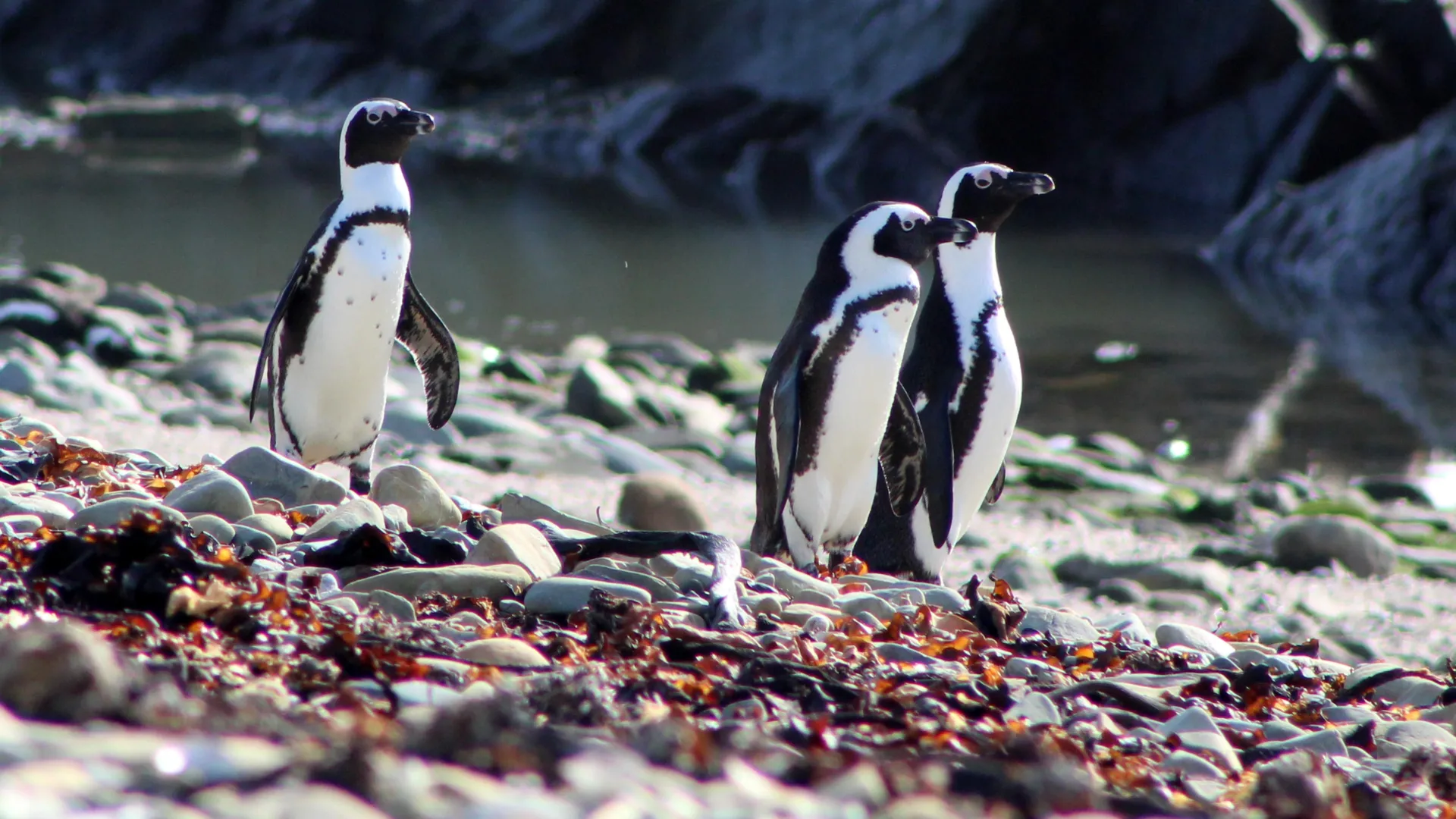
A pivotal new study, spearheaded by researchers at the University of St Andrews, has brought to light a critical and intensifying threat to the Critically Endangered African penguin (Spheniscus demersus). The research indicates that these iconic seabirds are significantly more prone to forage in the same waters as commercial fishing vessels during years when their primary food source, small pelagic fish, is scarce. This heightened spatial overlap not only intensifies direct competition for food but also places immense additional pressure on a species already teetering on the brink of extinction. The findings underscore the urgent need for adaptive management strategies to safeguard one of Africa’s most vulnerable marine birds.
Unveiling Overlap Intensity: A New Metric for Conservation
Published on November 17 in the esteemed Journal of Applied Ecology, the groundbreaking research introduces a novel metric termed "overlap intensity." This innovative analytical tool moves beyond merely identifying shared geographical areas between penguins and fishing fleets. Crucially, it quantifies the number of individual penguins potentially impacted by these interactions, offering a far more nuanced and ecologically meaningful assessment of risk. By focusing on the proportion of the penguin population affected, the study provides a clearer picture of the scale of the challenge and the potential for widespread negative consequences.
Dr. Jacqueline Glencross, the lead author from the Scottish Oceans Institute at the University of St Andrews, elucidated the rationale behind this methodological advancement. "We recognised the limitations of simply mapping where overlap occurs. To truly understand the ecological impact, we needed a better way to assess how many penguins are potentially impacted when fisheries operate nearby — not just where the overlap occurs," Dr. Glencross stated, highlighting the necessity of moving towards population-level impact assessments. This approach marks a significant step forward in marine conservation science, providing actionable data for policymakers and conservationists.
A Species in Peril: The Steep Decline of African Penguins
The African penguin population has suffered a catastrophic decline, with numbers plummeting by nearly 80% over the past three decades. From an estimated population of over one million breeding pairs in the early 20th century, current estimates suggest fewer than 10,000 breeding pairs remain, primarily concentrated in South Africa and Namibia. This dramatic reduction has elevated their conservation status to Critically Endangered on the IUCN Red List, signalling an extremely high risk of extinction in the wild.
One of the predominant drivers of this decline is the escalating competition with commercial fisheries for essential prey species, primarily sardines (Sardinops sagax) and anchovies (Engraulis encrasicolus). These small pelagic fish form the cornerstone of the African penguin’s diet, providing the high-energy sustenance required for breeding, chick-rearing, and overall survival. The South African pelagic fishery, which targets these very species, is a large-scale industry employing purse-seine nets. This highly efficient fishing method encircles vast schools of fish with a large wall of netting, often leading to significant catches that can rapidly deplete local prey availability for resident predators like penguins.
Beyond fishing pressure, African penguins face a gauntlet of other threats, including habitat degradation, oil spills, disease outbreaks, and the pervasive impacts of climate change, which affects ocean currents and, consequently, the distribution and abundance of their prey. The cumulative effect of these stressors has created a precarious situation for the species, making any additional pressure, such as increased competition for food, particularly devastating.
Tracking Data Reveals Alarming Spikes in Overlap
The research team meticulously analysed tracking information derived from penguins nesting on two crucial breeding colonies: Robben Island and Dassen Island, both located off the coast of South Africa. This collaborative effort involved scientists from the University of Exeter, the South African Department of Forestry, Fisheries and the Environment (DFFE), and BirdLife South Africa. Their comprehensive analysis revealed a stark and concerning trend: a dramatic surge in overlap intensity during years characterised by diminished fish abundance.
A particularly stark illustration of this phenomenon was observed in 2016, a year notorious for exceptionally low fish biomass in the Benguela Current Large Marine Ecosystem, which supports these penguin populations. In that year, approximately 20% of the tracked penguins were observed actively foraging in the same geographical regions as operational fishing vessels. This figure represents a five-fold increase compared to years with more robust fish stocks, where the overlap intensity typically hovered around a mere 4%.
These findings unequivocally demonstrate that the competition between African penguins and commercial fisheries intensifies profoundly when prey resources become limited. Such conditions are especially perilous during critical life stages, notably chick-rearing. During this period, adult penguins must make frequent and efficient foraging trips to provide sufficient food for their rapidly growing offspring. Any reduction in prey availability or increased effort required to find food directly compromises breeding success and, consequently, the long-term survival of the species. When adults struggle to find food, they may abandon chicks, or the chicks may starve, contributing directly to the population decline.
A Timeline of Decline and Mounting Pressure
The crisis facing African penguins has been decades in the making.
- Early 20th Century: African penguin populations were robust, with estimates suggesting over a million breeding pairs. Exploitation for guano and eggs began to impact numbers.
- Mid-20th Century: The industrialisation of fishing off the South African coast, targeting sardines and anchovies, began in earnest. While initially not directly linked to penguin declines, it laid the groundwork for future competition.
- 1980s-1990s: A noticeable acceleration in population decline became evident. Concerns began to mount among conservationists regarding the impact of fishing, oil spills, and habitat degradation.
- Early 2000s: Scientific studies increasingly highlighted the correlation between local fish availability and penguin breeding success, with calls for spatial fishing closures around colonies gaining traction.
- 2008: The African penguin was uplisted to Endangered by the IUCN.
- 2010s: The decline continued unabated, prompting more rigorous research and intensified advocacy for stronger protections. This period saw several proposed fishing closures around colonies, often met with resistance from the fishing industry due to economic concerns.
- 2013: The African penguin was uplisted again to Critically Endangered by the IUCN, reflecting the severity of its population trajectory.
- 2016: A year of particularly low fish biomass, as highlighted by the St Andrews study, underscores the vulnerability of penguins during periods of prey scarcity. This year served as a stark reminder of the consequences of unmanaged overlap.
- Recent Years (Late 2010s – Early 2020s): Conservation organisations escalated legal actions, arguing that the existing management framework was insufficient to protect the species. These actions led to significant legal battles in South Africa.
- Early 2023: A landmark high court agreement was reached between conservation organisations and representatives from the fishing industry. This agreement acknowledged the critical need for fishery closures around penguin colonies, marking a turning point in the long-standing dispute.
- Following the Agreement: The South African government, responding to the court decision and mounting scientific evidence, reinstated more biologically meaningful no-fishing zones near key breeding sites, including Robben Island, one of the primary colonies examined in the St Andrews study.
- November 17, 2023: Publication of the University of St Andrews study, providing robust scientific validation for the necessity and effectiveness of such management interventions.
A New Tool for Conservation and Fishery Management
The development of the "overlap intensity" metric represents a significant advancement in the toolkit available to conservationists and fishery managers. By providing a quantitative measure of ecological risk across the penguin population, the researchers have created a powerful instrument to inform and guide ecosystem-based fishery management (EBFM). EBFM is a holistic approach that considers the entire ecosystem, including predators, prey, and habitat, rather than managing individual fish stocks in isolation.
Furthermore, the findings strongly advocate for the implementation and refinement of dynamic marine protected areas (MPAs). Unlike static MPAs, which have fixed boundaries, dynamic MPAs can adapt their size, location, or timing of closures in response to real-time shifts in predator and prey distribution and abundance. This adaptive approach is particularly pertinent in highly variable marine environments like the Benguela Current, where fish stocks can fluctuate significantly due to oceanographic conditions and climate change. Such flexible management could allow for targeted closures during critical periods of prey scarcity or intense penguin foraging, thereby minimising conflict with the fishing industry during times of relative abundance.
Legal Battles and Updated Fishing Closures: A Glimmer of Hope?
The dire situation of the African penguin recently became the focal point of a significant South African court case. Conservation organisations challenged the perceived lack of meaningful fishing restrictions near critical breeding sites, arguing that existing regulations were inadequate to protect the species from starvation.
The culmination of these legal efforts saw a breakthrough earlier this year. A high court agreement was brokered between various conservation groups, including BirdLife South Africa, and representatives from the fishing industry. This agreement was a crucial step, formally acknowledging the imperative for fishery closures around penguin colonies. In the wake of this agreement, the South African government moved swiftly to reinstate and, in some cases, expand no-fishing zones around sensitive areas. These measures included more biologically meaningful closures near Robben Island, a site of paramount importance for the African penguin and a key focus of the recent study.
Dr. Glencross underscored the timely relevance of their research in this context. "This research highlights why those closures are necessary. Previously unprotected areas with high overlap intensity are where the penguins were most at risk," she affirmed. The study thus provides scientific validation for the proactive steps taken by the South African government, reinforcing the efficacy of spatial management in mitigating human-wildlife conflict in marine environments.
Broader Impact and Implications for Marine Ecosystems
The implications of this study extend beyond the immediate plight of the African penguin. The findings serve as a stark reminder of the intricate interdependencies within marine ecosystems and the far-reaching consequences of human activities. When a keystone predator like the African penguin struggles due to prey scarcity exacerbated by fishing, it signals potential instability within the broader food web. This could lead to trophic cascades, impacting other species that rely on the same prey or are part of the broader ecological network.
From an economic perspective, while fishing provides livelihoods and contributes to national economies, the long-term sustainability of the industry itself is inextricably linked to the health of the marine ecosystem. Depleted fish stocks, whether from overfishing or climate change, ultimately harm both marine wildlife and human livelihoods. The study therefore implicitly calls for a more integrated approach that balances economic needs with ecological imperatives, ensuring the long-term viability of both fishing communities and marine biodiversity.
The challenge of managing interactions between endangered species and commercial industries is not unique to South Africa. This study provides a replicable framework – the "overlap intensity" metric – that can be adapted and applied globally to assess similar conflicts in other marine or terrestrial ecosystems. It champions the use of robust scientific data to inform dynamic, adaptive management strategies that can respond to environmental variability and evolving conservation needs.
Looking ahead, the success of these new closures and the broader conservation efforts will hinge on effective monitoring and enforcement, alongside continued scientific research. Climate change is projected to further exacerbate the variability and overall decline of small pelagic fish stocks in the Benguela Current, adding another layer of complexity to conservation efforts. International cooperation, investment in climate change mitigation, and a sustained commitment to ecosystem-based management will be crucial to securing a future for the Critically Endangered African penguin and the vibrant marine ecosystems they inhabit. The St Andrews study stands as a powerful scientific endorsement for proactive, data-driven conservation, offering a pathway forward in a complex and urgent conservation crisis.
