
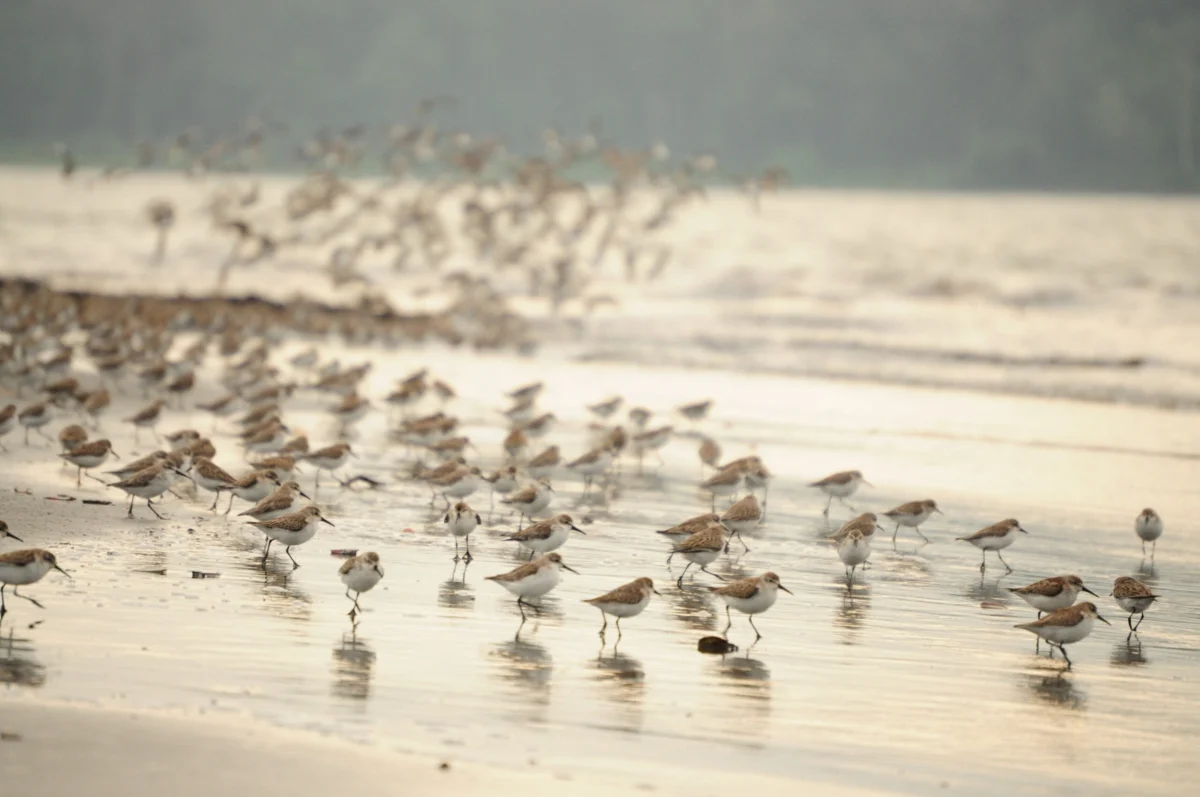
Velddrif, Western Cape, South Africa – BirdLife South Africa has embarked on a pioneering research initiative, marking a significant first for the country by deploying advanced tracking devices on migratory shorebirds. This ambitious project aims to unravel the complex and often mysterious journeys undertaken by these intrepid avian travelers, shedding crucial light on their migratory pathways, critical stopover sites, and the urgent conservation needs across vast international flyways.
The initiative focuses on two species of global conservation concern: the Curlew Sandpiper ( Calidris ferruginea) and the Grey Plover (Pluvialis squatarola). These waders, known for their incredible stamina and long-distance flights, are being tagged and colour-ringed at vital coastal feeding grounds, including the ecologically rich Berg River estuary in Velddrif. While it has been generally understood that these species migrate from their non-breeding grounds in South Africa to breed in the high Arctic mainland, this project seeks to provide unprecedented detail about their movements along the Africa–Eurasian Flyway. The data generated will be instrumental in identifying key habitats essential for their survival and informing coordinated conservation strategies that transcend national borders. Both the Curlew Sandpiper and Grey Plover are currently listed as globally Vulnerable on the International Union for Conservation of Nature (IUCN) Red List, underscoring the critical importance of this research.
This endeavor represents a landmark achievement for ornithological research in southern Africa. While tracking studies have been conducted extensively in other regions along the flyway, the number of tagged birds that have reached South Africa and subsequently been monitored has been remarkably low. This has left significant gaps in our understanding of the migratory routes, essential stopover points, and breeding grounds utilized by the South African populations of these species. This project, therefore, marks the inaugural deployment of long-distance tracking devices on Palearctic migratory shorebirds, specifically the Curlew Sandpiper and Grey Plover, within South Africa.
A Collaborative Effort for Global Conservation
The success of this cutting-edge project hinges on robust international collaboration. BirdLife South Africa is working in close partnership with leading institutions and organizations from around the globe. These include the Department of Ornithology at the prestigious Max Planck Institute for Biological Intelligence in Germany, Wetlands International, a globally recognized authority on wetland conservation based in the Netherlands, the FitzPatrick Institute of African Ornithology at the University of Cape Town, and Conserve Eden, an environmental conservation organization located in Plettenberg Bay, South Africa.

The financial backbone for this crucial research has been provided by significant grants from the Royal Society for the Protection of Birds (RSPB) in the United Kingdom and the Ecological Restoration Fund, also based in the UK. This international financial support underscores the global recognition of the importance of migratory bird conservation and the role South Africa plays within this interconnected ecological network.
This latest fieldwork in the Western Cape builds upon BirdLife South Africa’s established track record of engaging with migratory species. Earlier monitoring efforts, for instance, focused on European Rollers (Coracias garrulus) in the Kruger National Park, highlighting the diverse array of habitats within South Africa that serve as critical stopover or wintering grounds for a wide range of migratory birds. The logistical challenges of accessing remote field sites for such extensive research have been significantly mitigated by the generous, long-term loan of a 2025 Subaru Forester from Subaru Southern Africa, demonstrating valuable corporate social responsibility in conservation efforts.
Unlocking the Secrets of Avian Journeys
By integrating state-of-the-art satellite tracking technology with dedicated on-the-ground monitoring, the project is poised to generate high-resolution movement data. This data will provide unparalleled insights into the intricate migration routes, the identification of vital refuelling sites where birds must replenish their energy reserves, and the discovery of previously unknown ecological connections between disparate regions. These findings are not merely academic; they are essential for developing and implementing a truly flyway-scale approach to bird conservation, recognizing that the fate of these birds is intertwined across continents.
Jessica Wilmot, Flyway & Migrants Project Manager at BirdLife South Africa, emphasized the project’s significance: "BirdLife South Africa has dedicated many years to working along the West Coast, and this project is a natural extension and a powerful testament to that long-standing commitment. It not only illuminates the interconnectedness of landscapes within South Africa but also vividly demonstrates how shorebirds act as vital links, connecting us to critical wetlands across the entire African continent. In the wake of the recent Ramsar Conference of the Parties 15 held in Victoria Falls, this initiative serves as a timely and potent reminder of the indispensable ecological value of these wetland ecosystems."
Early Discoveries and Future Directions
Even in its nascent stages, the tracking data has already begun to reveal remarkable and diverse migratory patterns. While some tagged individuals have initially headed eastward, others have commenced a steady northward trajectory, hugging the western coastline of Africa. Intriguingly, two birds have already reached the vast and ecologically significant Sudd wetlands in South Sudan, with another closely following in the eastern Central African Republic. Two other individuals have established wintering grounds in Angola, while a group of three have found refuge in the Makgadigadi Pans, a Key Biodiversity Area in Botswana.

These initial movements are not only fascinating from an ornithological perspective but also highlight the plasticity and diverse strategies employed by these migratory populations. This offers an exciting and unique opportunity for both the general public and the conservation community to follow the birds’ journeys in near real-time, fostering greater engagement and understanding of global bird migration.
The ability to monitor these birds’ movements provides a dynamic and evolving picture of their survival strategies. For instance, understanding the precise duration and locations of stopovers is critical. If a crucial wetland area is degraded or disappears, birds may be unable to complete their arduous journeys. By pinpointing these vital refueling stations, conservationists can prioritize efforts to protect and restore these habitats. The data can also reveal unexpected challenges, such as the impact of climate change on breeding grounds or the presence of novel threats along migration corridors.
The Broader Implications for Conservation and Research
The success of this project has far-reaching implications. Firstly, it provides empirical data to support existing conservation policies and to advocate for new ones. The identification of critical international stopover sites can lead to collaborative agreements between countries to ensure their protection. This is particularly relevant given the increasing pressures on coastal and wetland habitats worldwide due to development, pollution, and climate change.
Secondly, the project serves as a vital training ground for local researchers and conservationists. Working alongside international experts provides invaluable experience in cutting-edge tracking technology, data analysis, and international project management. This capacity building is essential for the long-term sustainability of conservation efforts in South Africa.
Thirdly, the near real-time tracking data offers an unprecedented opportunity for public engagement and education. By making some of this data accessible to the public, BirdLife South Africa can inspire a new generation of environmental stewards and foster a deeper appreciation for the natural world and the incredible feats of migratory animals. This can translate into greater public support for conservation initiatives and policy changes.
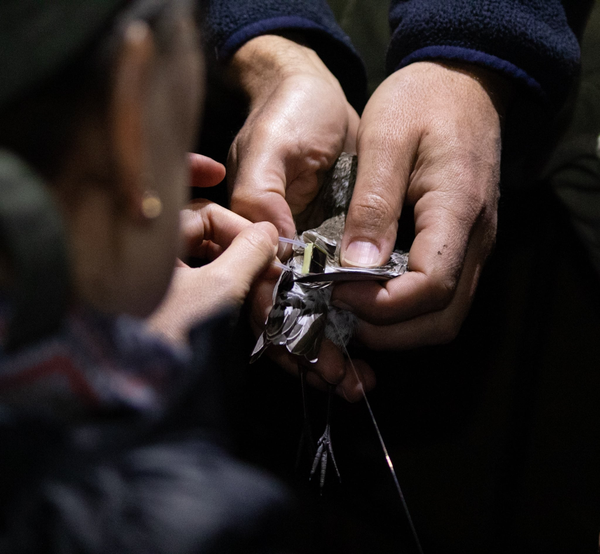
The choice of Velddrif as a primary tagging location is strategically significant. The Berg River estuary is a recognized Important Bird and Biodiversity Area (IBA) and a Ramsar site, highlighting its international importance for waterbirds. Such sites are often under immense pressure from coastal development and agricultural runoff. By focusing research on these areas, BirdLife South Africa can directly inform local management decisions and advocate for stronger protection measures.
The inclusion of species like the Curlew Sandpiper and Grey Plover is also noteworthy. These are not charismatic megafauna, yet their ecological roles are profound. As insectivores, they play a part in controlling insect populations. As indicators of wetland health, their decline signals broader environmental problems. Their long migrations also connect them to a global network of ecosystems, making them sentinels of planetary health.
Future Outlook and Call to Action
The data gathered from this initiative will contribute to a global understanding of migratory bird populations and their vulnerabilities. It will inform IUCN assessments, guide international conservation partnerships, and help prioritize funding for critical habitat restoration and protection projects. The ongoing monitoring will also allow for the assessment of population trends and the effectiveness of conservation interventions over time.
BirdLife South Africa is encouraging the public to support this vital research and contribute to future tracking efforts. Donations can be made through their dedicated webpage: https://www.birdlife.org.za/shorebirdtracking. By investing in this project, individuals and organizations can play a direct role in safeguarding the future of these remarkable migratory shorebirds and the vital ecosystems they depend on. The success of this initiative promises not only to fill critical knowledge gaps but also to foster a renewed sense of global responsibility for the natural heritage we share.
