
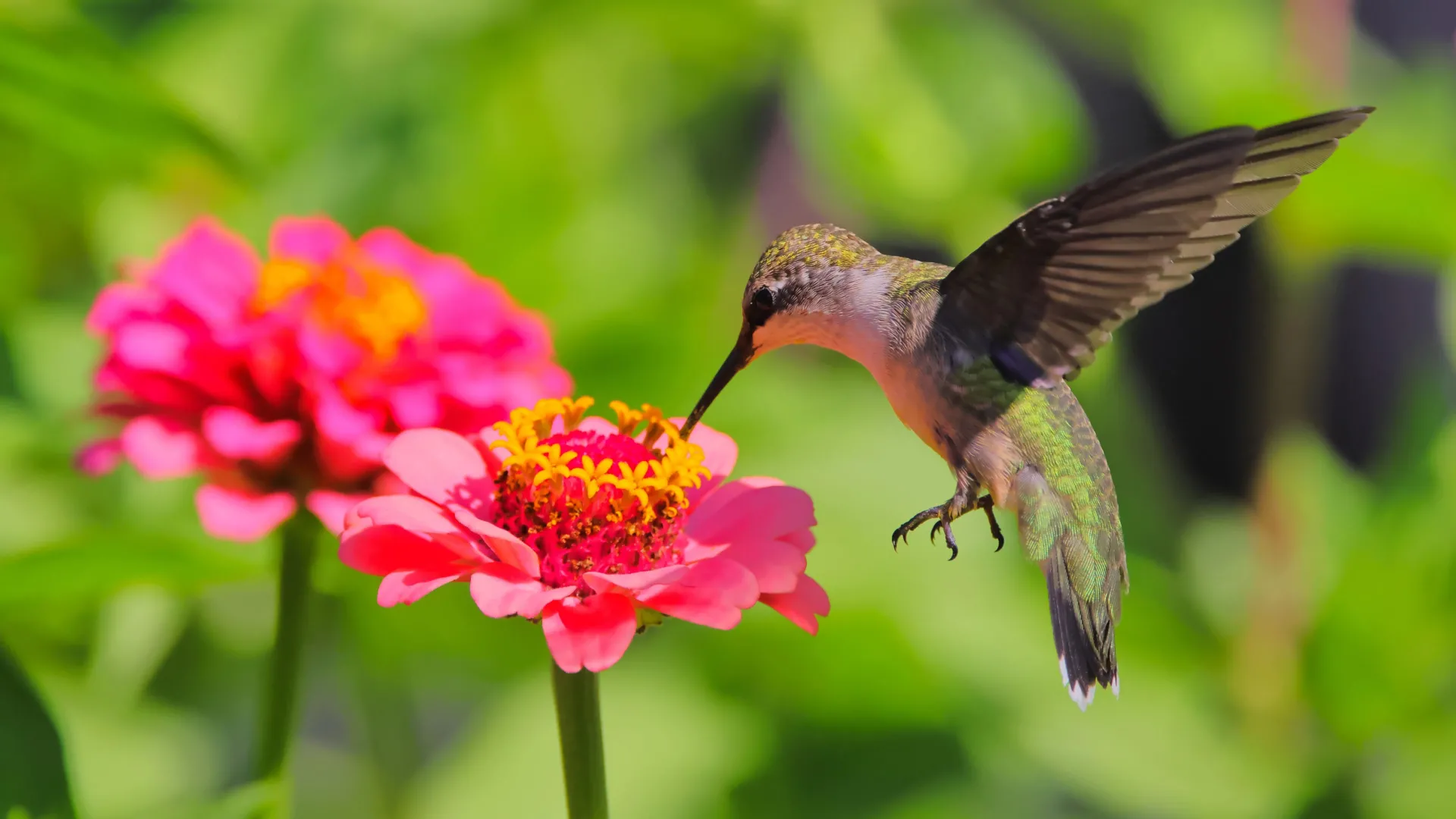
The intricate dance between pollinators and flowering plants, a cornerstone of terrestrial ecosystems, involves a surprising element: small but consistent amounts of alcohol. A groundbreaking study conducted by biologists at the University of California, Berkeley, has unveiled that as bees, hummingbirds, and other vital species flit from blossom to blossom, drawing sustenance from nectar and facilitating plant reproduction, they are also inadvertently ingesting ethanol, the very substance found in alcoholic beverages. This discovery challenges long-held assumptions about the pure, sugar-rich diets of these crucial creatures and opens new avenues for understanding their physiology, behavior, and evolution.
Unveiling a Widespread Phenomenon
The Berkeley research, representing the first comprehensive survey of alcohol content in floral nectar, systematically examined samples from 29 different plant species. The findings, published on March 25 in Royal Society Open Science, were startling: ethanol was detected in at least one sample from 26 of these species, indicating a far more ubiquitous presence than previously imagined. While most nectar samples contained only trace amounts, likely the byproduct of natural yeast fermentation of sugars within the nectar, one particular sample registered a concentration of 0.056% ethanol by weight. To put this into perspective for human understanding, this level is approximately 1/10 proof, suggesting that even seemingly negligible concentrations in nature can be scientifically quantifiable and potentially impactful.
This revelation significantly broadens our understanding of the chemical complexity of nectar, a fluid traditionally viewed primarily as a simple energy source composed mainly of sugars. The presence of ethanol introduces a new variable into the delicate plant-pollinator relationship, prompting questions about its origins, its effects on pollinators, and its potential evolutionary significance.
Quantifying the Daily Buzz: How Much Alcohol Do Pollinators Consume?
Despite the seemingly minuscule concentrations, the cumulative daily intake for highly active pollinators can be substantial. Nectar serves as the primary energy source for many species, particularly those with high metabolic rates. Hummingbirds, for instance, are renowned for their prodigious energy demands, consuming an astonishing 50% to 150% of their body weight in nectar each day to fuel their rapid wing beats and active lifestyles.
Based on these intensive feeding habits, the Berkeley researchers were able to estimate the daily ethanol consumption for specific species. An Anna’s hummingbird (Calypte anna), a common sight along the Pacific coast of North America, is estimated to consume roughly 0.2 grams of ethanol per kilogram of body weight daily. This figure, while still modest, is remarkably comparable to the ethanol intake of a human consuming approximately one standard alcoholic drink. This analogy highlights the relative significance of this intake within the context of the hummingbird’s much smaller body mass and rapid metabolism.
Crucially, the study emphasizes that despite this regular intake, pollinators do not exhibit overt signs of intoxication. This is attributed to their feeding patterns; bees and birds consume the alcohol gradually throughout the day, allowing their metabolic systems to process it efficiently. Earlier work by the same UC Berkeley team had already provided insights into this tolerance, demonstrating that hummingbirds readily consume sugar water containing up to 1% alcohol by volume. However, their preferences shift when concentrations rise above this threshold, indicating a behavioral mechanism to avoid excessive intake. This suggests an evolved ability to meter their consumption, preventing potential intoxicating effects that could impair their critical foraging and reproductive behaviors.
Beyond Intoxication: The Subtle Effects of Nectar’s Chemical Cocktail
The absence of clear signs of drunkenness does not mean ethanol is without effect. Nectar is a complex biochemical soup, containing a variety of compounds beyond simple sugars, including secondary metabolites like nicotine and caffeine. These substances, known to influence animal behavior in subtle yet significant ways, provide a framework for considering the potential role of ethanol.
Aleksey Maro, a doctoral student involved in the nectar analysis alongside postdoctoral fellow Ammon Corl, elaborated on this complexity: "Hummingbirds are like little furnaces. They burn through everything really quick, so you don’t expect anything to accumulate in their bloodstream." Maro continued, "But we don’t know what kind of signaling or appetitive properties the alcohol has. There are other things that the ethanol could be doing aside from creating a buzz, like with humans." This perspective underscores that the effects of ethanol might extend beyond simple intoxication, potentially influencing aspects such as foraging efficiency, memory, decision-making, or even social interactions.
Professor Robert Dudley, a UC Berkeley professor of integrative biology and a key figure in this research, echoed this sentiment, adding, "There may be other kinds of effects specific to the foraging biology of the species in question that could be beneficial." He suggested, "They’re burning it so fast, I’m guessing that they probably aren’t suffering inebriating effects. But it may also have other consequences for their behavior." These subtle influences could, over evolutionary time, lead to adaptations that optimize the pollinator’s foraging strategy or even the plant’s reproductive success.
A Chronology of Discovery: Building the Case for Dietary Alcohol
The recent large-scale survey is not an isolated finding but rather the culmination of years of iterative research by Professor Dudley’s lab at UC Berkeley, gradually piecing together the puzzle of dietary alcohol in wild animals.
The journey began with earlier, pivotal experiments conducted at a feeder positioned strategically outside Professor Dudley’s office. These controlled observations provided initial behavioral insights into Anna’s hummingbirds’ responses to varying alcohol concentrations. The results clearly indicated that these birds were largely indifferent to low alcohol levels in sugar water, specifically those below 1% by volume. This indifference aligns with the low concentrations typically found in natural nectar. However, a distinct behavioral shift occurred when the concentration reached 2%; the hummingbirds’ visits to the feeder dropped by approximately half. This behavioral aversion strongly suggested an evolved mechanism for avoiding potentially harmful levels of alcohol. "Somehow they are metering their intake," Dudley noted, "so maybe zero to 1% is a more likely concentration that they would find in the wild than anything higher." This observation provided a crucial baseline for understanding natural consumption limits.
Further biochemical evidence solidified the case. A separate study, led by former graduate student Cynthia Wang-Claypool, investigated the metabolic processing of alcohol in birds. This research made a significant breakthrough by detecting ethyl glucuronide in feathers, including those of Anna’s hummingbirds. Ethyl glucuronide is a specific byproduct of ethanol metabolism, a compound typically formed when the liver processes alcohol. Its presence in feathers—a biological archive of metabolic activity—conclusively demonstrated that these birds not only ingest alcohol but also metabolize it in a manner strikingly similar to mammals, including humans. This finding provided the physiological link, proving that the alcohol was indeed being processed by the birds’ bodies.
These foundational studies laid the groundwork for the most recent, comprehensive survey. As Ammon Corl summarized the synergistic nature of their findings: "The laboratory experiment was showing that yes, they will drink ethanol in their nectar, though they have some aversion to it if it gets too high. The feathers are saying that, yes, they will metabolize it. And then this study is saying that ethanol is actually pretty widespread in the nectar they consume." This chronological progression of research, moving from behavioral observation to physiological evidence and finally to ecological prevalence, painted a robust picture of dietary alcohol as a regular, if previously overlooked, component of pollinator diets.
The Mechanisms of Natural Fermentation
The presence of ethanol in nectar is primarily attributed to the natural process of fermentation. Nectar is a sugary solution, and sugars are readily metabolized by yeasts, microscopic fungi ubiquitous in many natural environments, including on flower surfaces and within floral tissues. When yeasts come into contact with nectar and conditions are favorable—such as adequate sugar concentration, moisture, and temperature—they convert sugars into ethanol and carbon dioxide through anaerobic respiration.
Environmental factors play a significant role in influencing the rate and extent of this fermentation. Warmer temperatures, for example, can accelerate yeast activity, leading to higher ethanol production. Similarly, stagnant nectar in enclosed floral structures or in older flowers might accumulate higher concentrations of alcohol compared to freshly secreted nectar. The specific microbial community present on a flower can also vary, with certain yeast strains being more efficient at ethanol production. This ecological context explains why ethanol levels, while generally low, can fluctuate and occasionally reach higher, albeit still sub-intoxicating, levels.
A Comparative Look at Alcohol Intake Across the Animal Kingdom
To contextualize the findings for nectar feeders, the research team went beyond hummingbirds and sunbirds, comparing estimated daily alcohol intake across a diverse range of animals known to encounter ethanol in their natural diets. This comparative analysis utilized an enzymatic assay to precisely measure ethanol levels and then extrapolated daily intake based on species-specific caloric needs and feeding behaviors.
The study focused on two hummingbird species, including the Anna’s hummingbird, and three species of sunbirds. Sunbirds, found predominantly in Africa and Eurasia, occupy an ecological niche similar to hummingbirds in the Americas, feeding on nectar from plants like the honeybush (Melianthus major) in South Africa.
The comparison included:
- European honeybee (Apis mellifera): Estimated at 0.05 g/kg/day, representing the lowest intake among the compared species. Bees, while exposed to fermented nectar, often process it into honey, which has different chemical properties.
- Nectar-feeding birds (Anna’s hummingbird, sunbirds): Ranged from approximately 0.19 to 0.27 g/kg/day when feeding on native flowers, placing them in a mid-range category.
- Humans: Consuming one standard alcoholic drink per day (defined as 0.14 grams/kg/day) provided a familiar benchmark for comparison.
- Fruit-eating chimpanzees (Pan troglodytes): Their intake was comparable to that of nectar-feeding birds, as they frequently consume overripe, fermented fruit.
- Pen-tailed tree shrew (Ptilocercus lowii): This small mammal, native to Southeast Asia, displayed the highest estimated intake at a remarkable 1.4 g/kg/day. Tree shrews are known for their consumption of naturally fermented palm nectar, which can reach up to 3.8% alcohol by volume, and they exhibit extraordinary tolerance to these levels.
Interestingly, the feeder experiments conducted with Anna’s hummingbirds suggested that these birds might ingest even more alcohol from artificial fermented sugar water (0.30 g/kg/day) than from natural nectar. This indicates a potential for higher intake in human-modified environments, raising questions about the long-term implications of such dietary shifts.
Evolutionary Adaptations and Broader Implications
This extensive research is an integral component of a broader five-year National Science Foundation project. The overarching goal of this ambitious initiative is to collect genetic data from hummingbirds and sunbirds to unravel the mysteries of their physiological and behavioral adaptations to diverse environments and specialized food sources. This includes understanding how these birds thrive at high altitudes, maintain their energy balance on sugar-rich diets, and, critically, cope with frequently fermented nectar.
The pervasive presence of dietary ethanol in the natural world, as highlighted by this study, carries profound evolutionary implications. It suggests that exposure to alcohol is not a recent phenomenon tied to human cultural practices but rather a long-standing environmental factor that has likely shaped the physiology and behavior of numerous animal species over millennia. This continuous exposure could have driven the evolution of specialized detoxification pathways and mechanisms of alcohol tolerance, much like the well-documented ADH4 gene evolution in primates, which enhanced their ability to metabolize ethanol from fermented fruits.
Professor Dudley underscored this broader significance: "These studies suggest that there may be a broad range of physiological adaptations across the animal kingdom to the ubiquity of dietary ethanol, and that the responses we see in humans may not be representative of all primates or of all animals generally." This challenges the anthropocentric view of alcohol consumption and metabolism, urging scientists to consider a more diverse array of biological responses.
The chronic nature of this exposure—pollinators consuming alcohol every day of their lives post-weaning—means that these adaptations are not merely about acute detoxification but potentially about long-term nutritional or signaling effects. "Maybe there are other physiological detoxification pathways or other kinds of nutritional effects of ethanol for animals that are consuming it every day of their lives," Dudley pondered. "That’s the interesting thing—this is chronic through the course of the day, but that’s a lifetime exposure post-weaning. It just means that the comparative biology of ethanol ingestion deserves further study."
The implications extend beyond pure biology. For ecological conservation, understanding the full chemical profile of nectar and its effects on pollinators is vital. Climate change, for instance, could alter temperature regimes, potentially affecting fermentation rates in nectar and thus the alcohol content. Such shifts could have unforeseen consequences for pollinator health and ecosystem stability. Moreover, for agricultural practices that rely heavily on pollinators, a deeper understanding of their physiological responses to dietary components could inform strategies for supporting healthy and efficient pollinator populations.
In conclusion, the UC Berkeley study has revealed a hidden layer of complexity in the lives of pollinators, turning our conventional understanding of their diets on its head. The regular, albeit low-level, consumption of alcohol from nectar is a widespread natural phenomenon with far-reaching implications for evolutionary biology, ecological interactions, and our appreciation of the subtle chemical forces that shape life on Earth. As researchers continue to delve into the "comparative biology of ethanol ingestion," the findings promise to unlock even more secrets about the resilience and adaptability of the natural world.
