
Washington, DC – The United States House of Representatives today passed the Farm, Food, and National Security Act of 2026, commonly known as the Farm Bill, a landmark piece of legislation that includes vital provisions for voluntary, science-based conservation programs. This significant legislative movement represents a crucial step toward bolstering environmental stewardship on America’s working lands, offering robust support to farmers, ranchers, and foresters in their efforts to manage natural resources sustainably. Championed by organizations like the National Audubon Society, these programs are increasingly recognized as indispensable tools in confronting the ongoing crisis of declining bird populations across the continent, which have plummeted by an estimated 3 billion individuals since 1970. The bill integrates proven conservation practices that not only enhance the productivity and resilience of agricultural and forested lands but also provide essential habitats for a diverse array of bird species, from the elusive Cerulean Warbler to the iconic Northern Bobwhite.
The Significance of the Farm Bill for Conservation
The Farm Bill is a comprehensive, multi-year piece of legislation that governs an array of agricultural and food programs in the United States. Typically reauthorized every five years, it influences everything from commodity prices and crop insurance to food stamps, rural development, and, critically, land conservation. While often perceived primarily through the lens of agricultural subsidies and food security, its conservation title is a cornerstone, allocating billions of dollars to programs designed to protect natural resources on private working lands. These lands, comprising nearly 70% of the contiguous U.S. landmass, are vital for both food production and biodiversity. The House’s approval of the 2026 Farm Bill, with its emphasis on voluntary conservation, underscores a growing bipartisan recognition of the interconnectedness between agricultural sustainability and ecological health.
The current legislative push aims to reauthorize and potentially expand programs that offer financial and technical assistance to landowners who voluntarily implement conservation practices. These programs are designed to be flexible, allowing producers to tailor solutions that best fit their specific operations and local environmental conditions. The underlying philosophy is that conservation is most effective when it is producer-led and supported by sound scientific principles, leading to outcomes that benefit both the environment and the economic viability of rural communities.
A Deeper Look into Voluntary, Science-Based Conservation Programs
Central to the Farm Bill’s conservation efforts are several flagship programs, each with distinct but complementary objectives:
- Environmental Quality Incentives Program (EQIP): Provides financial and technical assistance to agricultural producers to address natural resource concerns and deliver environmental benefits such as improved water and air quality, conserved ground and surface water, reduced soil erosion and sedimentation, improved or created wildlife habitat, and reduced threats to public health and safety. Practices supported include nutrient management, cover cropping, no-till farming, and prescribed grazing.
- Conservation Stewardship Program (CSP): Rewards producers for conservation performance and offers payments for maintaining and adopting new conservation activities on their entire operation. CSP emphasizes active management and the improvement of existing conservation systems, promoting a holistic approach to environmental stewardship.
- Agricultural Conservation Easement Program (ACEP): Protects agricultural lands and wetlands through easements. The agricultural land easement component helps keep working farms and ranches in production, while the wetland reserve easement component restores and protects wetlands.
- Conservation Reserve Program (CRP): Pays farmers to remove environmentally sensitive land from agricultural production and plant species that will improve environmental health and quality. CRP reduces soil erosion, improves water quality, and provides habitat for wildlife, including birds and pollinators.
These programs are not merely about environmental protection; they are strategic investments in the long-term resilience of American agriculture. By promoting practices like diversified crop rotations, reduced tillage, riparian buffers, and rotational grazing, they contribute to healthier soils, which are more resistant to drought and erosion, require fewer chemical inputs, and sequester carbon. Improved water management reduces runoff and enhances water quality, benefiting both agricultural operations and downstream ecosystems. For wildlife, especially grassland and wetland birds, these practices create critical breeding, foraging, and migratory habitats that are increasingly scarce in intensively managed landscapes.
The Avian Crisis and the Role of Working Lands
The alarming decline of North American bird populations—a staggering loss of nearly 3 billion birds since 1970, as reported by a 2019 study published in Science by researchers from Cornell Lab of Ornithology and Partners in Flight—underscores the urgency of conservation action. This decline affects a wide range of species, from common backyard birds to specialized grassland and forest dwellers. Habitat loss and degradation, primarily driven by agricultural intensification and urbanization, are identified as major culprits. Pesticide use, climate change, and collisions with infrastructure also contribute significantly to these losses.
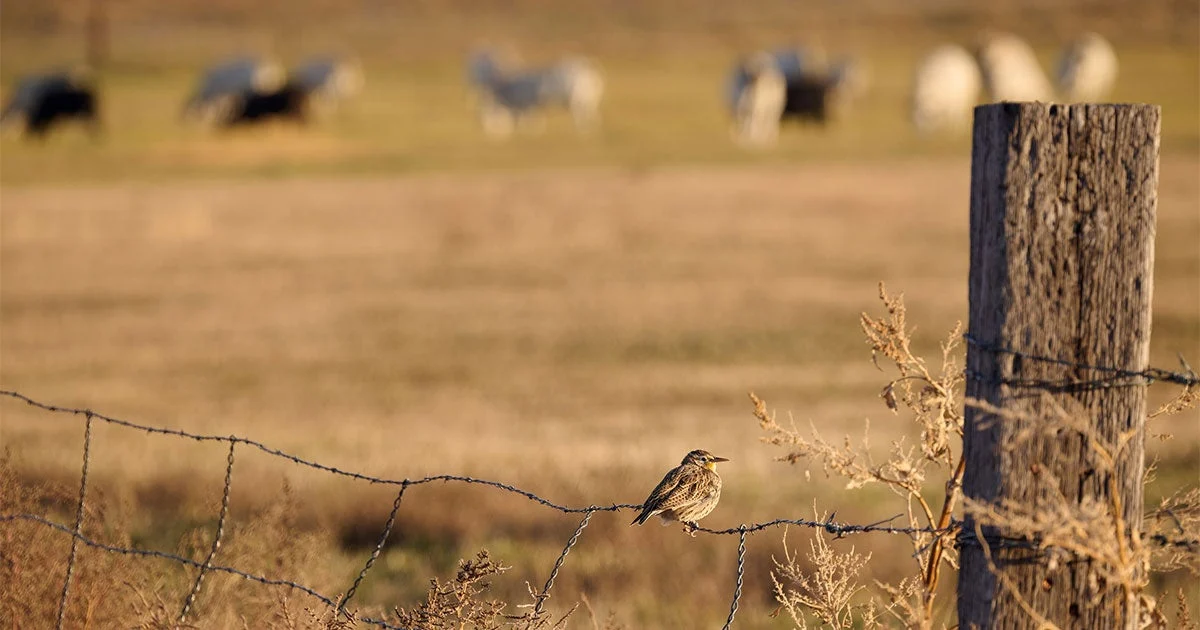
The Farm Bill’s conservation programs directly address these threats by incentivizing habitat creation and restoration on agricultural and forested lands. For instance, the conversion of marginal croplands back to native grasslands through programs like CRP provides vital breeding grounds for species such as the Western Meadowlark, Grasshopper Sparrow, and Northern Bobwhite, all of which have experienced severe population declines. The restoration of wetlands under ACEP offers critical stopover and breeding sites for waterfowl and shorebirds. Forest management practices supported by the Farm Bill can enhance habitat for forest birds like the Cerulean Warbler, a species of high conservation concern that relies on mature, diverse deciduous forests.
Audubon’s Conservation Ranch Program, highlighted in the original context, exemplifies the direct impact of such initiatives. This program works directly with independent ranchers to certify grasslands as beneficial bird habitats, promoting grazing practices that mimic natural disturbances and create diverse grass structures that different bird species require. Ranchers who participate often see benefits in terms of soil health, forage quality, and water retention, demonstrating that economic viability and ecological stewardship can go hand-in-hand.
Marshall Johnson’s Call to Action
Marshall Johnson, Chief Conservation Officer for the National Audubon Society, articulated the profound implications of the House’s action, stating, "By investing in voluntary conservation programs, the House is supporting rural communities while helping ensure the long-term resilience of our food systems and the habitats that birds need to survive. Voluntary conservation helps producers keep lands working while improving ecosystem health, from healthier soils to better-managed grazing systems, delivering real benefits for both agriculture and birds."
Johnson’s statement underscores the multifaceted benefits of these programs. Beyond the direct ecological gains, they provide crucial economic stability for rural communities by offering financial incentives and technical assistance that can improve farm profitability and sustainability. Healthier soils, for example, lead to reduced input costs for fertilizers and pesticides, while improved water management can mitigate the impacts of increasingly frequent droughts and floods. Well-managed grazing systems, such as those promoted by Audubon’s programs, can enhance forage quality, increase herd health, and improve the ecological integrity of rangelands, demonstrating a clear synergy between productive agriculture and environmental stewardship.
Looking ahead, Johnson urged the Senate to "build on this momentum by strengthening and modernizing critical conservation programs, including supporting efforts to restore productive pasture and accelerate grassland restoration." He specifically cited North Dakota’s Conservation Forage Program as a successful model, which has "proven to deliver measurable benefits for landowners." The North Dakota program likely focuses on incentivizing the conversion of less productive croplands into diverse perennial forage systems or native grasslands, providing economic benefits to producers through haying or grazing opportunities while simultaneously creating high-quality habitat for grassland birds and improving soil health. Such state-level successes provide valuable blueprints for federal policy, demonstrating that strategic investments yield tangible results.
Legislative Timeline and Broader Implications
The passage of the Farm Bill by the House of Representatives marks a significant milestone in a lengthy legislative process. The bill now moves to the Senate, where it will undergo further review, debate, and potential amendments. The Senate Agriculture, Nutrition, and Forestry Committee typically drafts its own version of the Farm Bill, which then proceeds to the full Senate floor for a vote. If both chambers pass different versions of the bill, a conference committee composed of members from both the House and Senate will be formed to reconcile the differences and produce a final compromise bill. This final version must then be approved by both chambers before being sent to the President for signature. This intricate process often involves intense negotiation, as various agricultural sectors, environmental groups, and political factions vie for specific provisions and funding allocations.
The successful reauthorization of a robust conservation title in the Farm Bill holds profound implications. For agriculture, it means continued access to resources that promote sustainable practices, enhance climate resilience, and potentially open new market opportunities for environmentally friendly products. For conservation, it represents the single largest federal investment in private lands conservation, critical for safeguarding biodiversity and ecosystem services. For rural communities, these programs can foster economic stability, support local economies, and preserve the agricultural heritage of the nation.
However, challenges remain. Debates over funding levels, program eligibility, and the balance between commodity support and conservation initiatives are common. Advocates will need to ensure that the conservation title retains its strength and receives adequate appropriations. There is also a continuous need to adapt these programs to address emerging environmental threats, such as increasingly severe climate change impacts and evolving agricultural practices. Modernization efforts, as suggested by Audubon, could include enhancing support for climate-smart agriculture, prioritizing practices that sequester carbon, and ensuring equitable access to programs for all types of producers, including small-scale and historically underserved farmers.
The Farm, Food, and National Security Act of 2026, as it stands following House passage, offers a beacon of hope for both the agricultural sector and the natural world. By recognizing the intrinsic link between healthy working lands and thriving ecosystems, particularly for birds, the legislation lays the groundwork for a more sustainable and resilient future for America’s heartland. The journey through the Senate will be critical in determining the final shape and impact of this pivotal legislation.
About Audubon
The National Audubon Society stands as a leading nonprofit conservation organization, boasting 120 years of science-based, community-driven impact. Its mission is dedicated to protecting birds and the places they need, both today and in the future. Recognizing birds as powerful indicators of the planet’s health—sentinels that warn of environmental change and inspire action—Audubon operates across the Western Hemisphere. The organization is driven by the understanding that what is beneficial for birds is inherently beneficial for the entire planet. Through a collaborative, bipartisan approach that spans various habitats, national borders, and the political spectrum, Audubon consistently drives meaningful and lasting conservation outcomes. With a robust team of 800 staff and a vast network of over 1.9 million supporters, Audubon remains a dynamic and ever-growing force committed to ensuring a better planet for both birds and people for generations to come. Further information is available at www.audubon.org and on social media platforms like Facebook and Instagram @audubonsociety.
Media Contact: Jeff Billington, [email protected]
