
The Trinity River Audubon Center (TRAC) in Dallas, Texas, is poised to welcome visitors this spring to witness a vibrant display of ecology in full bloom, offering an unparalleled opportunity for exploration, education, and communion with nature. Situated as a critical biodiverse refuge along the Trinity River, TRAC serves as an accessible gateway to the vast natural wonders of the region, inviting individuals and families to unwind, learn, and discover the dynamic ecosystems thriving within this urban green space. Each visit promises new revelations, underscoring the intrinsic vitality of this unique landscape.
A Canvas of Native Blooms Transforms the Landscape
As spring progresses, the trails at TRAC are transformed into a kaleidoscopic panorama, greeting visitors with a dazzling array of native blooms, migratory birds, beneficial insects, and other compelling signs of the season’s awakening. Central to this botanical spectacle is the Texas Paintbrush (Castilleja indivisa), its striking neon-red inflorescences dominating sunny prairie spaces and signaling the peak of spring. This native wildflower, known for its vibrant bracts that resemble brushstrokes of color, is a keystone species, providing essential nectar for early pollinators. By May, the landscape further diversifies with the emergence of Firewheels (Gaillardia pulchella), Bee Balm (Monarda fistulosa), and a host of other indigenous wildflowers, collectively painting the prairie with intricate patterns of color and movement. These species are not merely aesthetic elements; they form the foundation of a healthy ecosystem, supporting a complex web of life. The careful management of these prairie habitats by TRAC staff ensures the continued proliferation of these vital plant communities, which in turn sustain local insect and bird populations.
Beyond the open prairies, the ecological richness extends into the Great Trinity Forest, one of the largest urban bottomland hardwood forests in the United States. Here, the Roughleaf Dogwood trees (Cornus drummondii) present their own delicate display, adorned with clusters of white blossoms that frequently buzz with the activity of diligent pollinators. These native plants, meticulously conserved and cultivated by TRAC, are fundamental to creating a healthy, thriving habitat that supports the diverse wildlife dependent on the center’s protected lands. The presence of such robust native plant communities is a testament to TRAC’s commitment to ecological restoration and conservation, demonstrating how targeted efforts can significantly enhance biodiversity even within an urban setting.
Avian Wonders and Migratory Journeys Mark the Season
The botanical splendor is complemented by a vibrant avian chorus, as the spring season marks a critical period for both resident and migratory bird species. Visitors who pause near the tubular red blooms of Coral Honeysuckle (Lonicera sempervirens) may be rewarded with a glimpse of a Ruby-throated Hummingbird (Archilochus colubris), a diminutive yet indefatigable flyer, stopping to refuel on nectar during its arduous migratory journey. These hummingbirds travel thousands of miles from their wintering grounds in Central America, relying on such floral resources along their routes.
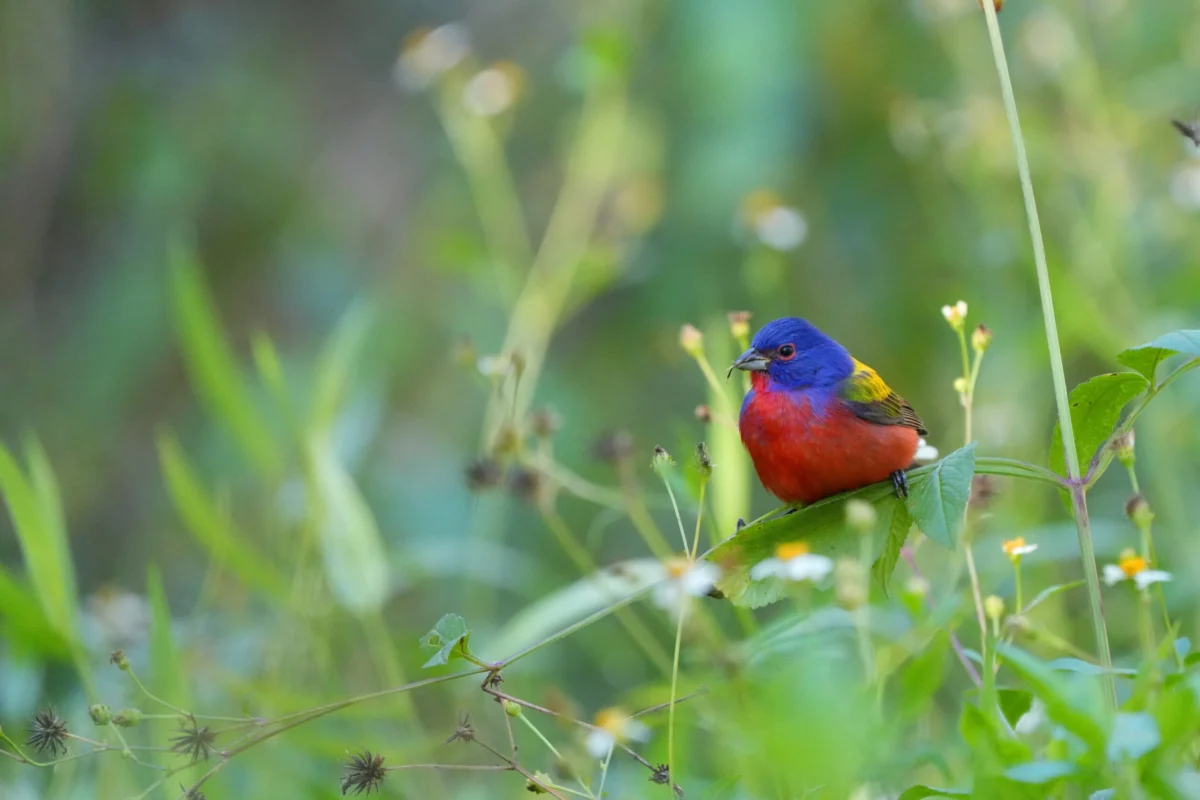
Out in the tall grasses of the restored prairie, the distinctive calls of Dickcissels (Spiza americana) announce their return. These small, sparrow-like birds migrate annually from their wintering grounds in Central and South America, their presence at TRAC signaling the successful completion of a perilous journey and the availability of suitable breeding habitat. Their persistent "dick-ciss-ciss" song is a characteristic sound of the open grasslands during late spring and summer. However, the true avian jewel of spring, often described as "falling sparkles" in song, is the Painted Bunting (Passerina ciris). With its striking plumage of brilliant red, blue, and green, the male Painted Bunting is an unmistakable and highly sought-after sight, its presence in the treetops adding a splash of unparalleled color to the forest canopy. These neotropical migrants, like many others, depend on the diverse and robust habitats offered by TRAC for breeding, foraging, and resting. The center’s strategic location within the Central Flyway, one of North America’s major migratory bird routes, amplifies its importance as a critical stopover and breeding ground for hundreds of species. Over 200 bird species have been documented within the TRAC area, highlighting its significant contribution to regional avian biodiversity.
The Trinity River Audubon Center: A Hub for Nature and Education
The Trinity River Audubon Center’s role extends far beyond merely showcasing nature; it is a dedicated institution committed to fostering a deeper understanding and appreciation of the natural world. Established in 2008, TRAC is a collaborative effort between the City of Dallas Park and Recreation Department and the National Audubon Society, built on the site of a former illegal landfill. This transformation from a derelict environmental hazard into a thriving urban nature center stands as a powerful testament to the potential for ecological restoration and community engagement. Its mission is multifaceted: to conserve and restore natural ecosystems, focusing on birds, other wildlife, and their habitats; to educate the public about the importance of these natural resources; and to inspire action to protect them.
As the official gateway to the 6,000-acre Great Trinity Forest, TRAC plays a pivotal role in connecting Dallas residents with this extraordinary urban wilderness. The Great Trinity Forest, a verdant expanse of bottomland hardwood forest, wetlands, and open prairies, represents a significant ecological asset, providing crucial habitat for a vast array of flora and fauna, improving air and water quality, and offering invaluable recreational opportunities. TRAC provides a structured and accessible entry point for visitors to explore this vast area, offering interpretive trails, educational programs, and expert guidance that enhance the visitor experience and deepen environmental literacy. The center’s facilities, including an LEED-certified building, demonstrate a commitment to sustainable practices, further reinforcing its educational message.
May Events Calendar: Engagement and Education for All Ages
TRAC offers a comprehensive calendar of engaging events throughout May, designed to cater to diverse interests and age groups, emphasizing community gathering and hands-on learning.
-
Celebrating Music and Nature: "Herd Here"
The month kicks off on May 3 with "Herd Here," a unique family-friendly chamber music performance scheduled from 11:00 a.m. to 12:30 p.m. This event ingeniously blends artistic expression with the serene backdrop of nature, offering an accessible entry point for families to experience both culture and the outdoors. Such interdisciplinary programs are vital in attracting broader audiences to environmental centers, demonstrating that nature can be a source of inspiration across various domains. The performance likely aims to evoke the sounds and rhythms of nature, connecting attendees to the environment through auditory experiences. -
Global Awareness: World Migratory Bird Day
A cornerstone event for conservation enthusiasts, World Migratory Bird Day (WMBD) will be celebrated on May 9. This global campaign, initiated in 1993, highlights the need for international cooperation to conserve migratory birds and their habitats. TRAC’s observance includes a range of hands-on activities, such as bird banding demonstrations, where visitors can observe ornithologists safely capturing, banding, and releasing birds, gathering crucial data on migration patterns, population health, and longevity. The annual "Birder Bowl" provides a fun, competitive element, challenging participants’ knowledge of avian species. Guided bird walks, led by experienced naturalists, offer intimate encounters with the center’s diverse birdlife, teaching identification skills and ecological insights. These activities collectively underscore the precarious journeys of migratory birds and the critical role of protected areas like TRAC in their survival. -
Immersive Birdwatching: The Big Sit and Guided Walks
Continuing the avian theme, May 10 features "The Big Sit," an innovative approach to birdwatching that encourages participants to observe birds from a comfortable, seated location. This event promotes patience and keen observation, proving that significant ecological discoveries can be made without extensive hiking. It’s an ideal activity for individuals of all physical abilities and offers a meditative experience with nature. Complementary peaceful weekend bird walks are scheduled for May 16 and May 24, providing additional opportunities for guided exploration and bird identification, reinforcing the educational mission of TRAC. -
Fostering Young Scientists: Science Sunday
For younger visitors, Science Sunday is a monthly staple, held on the second Sunday of each month (e.g., May 12). This program features STEM-based activities specifically designed for ages 6-12, aiming to spark curiosity and scientific inquiry in the next generation. Activities often involve hands-on experiments, ecological investigations, and interactive learning, making complex scientific concepts accessible and engaging. These programs are vital in developing environmental literacy from an early age, fostering a sense of stewardship and critical thinking about natural systems. -
Supporting Conservation: Scissortails and Cocktails
Later in the month, on May 14, TRAC hosts its annual "Scissortails and Cocktails" fundraiser. This event provides a crucial opportunity for community members to support the center’s ongoing conservation, education, and restoration efforts. Fundraisers like this are essential for non-profit organizations such as TRAC, enabling them to maintain their facilities, expand their programs, and continue their vital work in environmental protection. The name itself, referencing the beautiful Scissor-tailed Flycatcher (Oklahoma’s state bird, but also a common sight in Texas), cleverly links the event to the avian wonders the center strives to protect.
Broader Ecological and Community Impact
The activities and existence of the Trinity River Audubon Center carry significant implications for environmental health, community well-being, and scientific understanding.
-
The Imperative of Urban Green Spaces: TRAC exemplifies the critical importance of preserving and restoring urban green spaces. In rapidly developing metropolitan areas like Dallas, these natural refuges act as vital "green lungs," improving air quality, mitigating urban heat island effects, and providing essential ecosystem services such as flood control and water filtration. They are also biodiversity hotspots, providing crucial habitat for a multitude of species that would otherwise be displaced by urbanization. TRAC’s success in transforming a brownfield site into a vibrant ecological asset serves as a model for other urban centers globally.
-
Cultivating Environmental Stewardship: Through its diverse educational programs, TRAC plays a pivotal role in cultivating environmental literacy and stewardship among its visitors. By offering hands-on experiences, guided explorations, and scientifically informed interpretations, the center empowers individuals to understand their connection to the natural world and the impact of human activities on ecosystems. This fosters a sense of responsibility and encourages active participation in conservation efforts, from backyard gardening to advocacy for policy changes. Officials at TRAC frequently emphasize that engaging the public, especially youth, is paramount to ensuring a future where nature is valued and protected.
-
Economic and Social Dividends: Beyond its ecological and educational benefits, TRAC contributes significantly to the social and economic fabric of Dallas. It serves as a major ecotourism destination, drawing visitors from across the region and beyond, thereby supporting local businesses. Furthermore, access to nature has well-documented benefits for mental and physical health, providing opportunities for stress reduction, exercise, and social interaction in a natural setting. The center also relies heavily on a dedicated network of volunteers, whose contributions represent a substantial economic and social asset, fostering community cohesion and shared purpose.
As spring unfolds, the Trinity River Audubon Center stands as a beacon of ecological vitality and educational opportunity. Its commitment to preserving biodiversity, engaging the community, and inspiring environmental action makes it an indispensable resource for Dallas and the broader region. Visitors are encouraged to explore the center’s wonders, participate in its diverse offerings, and contribute to the ongoing legacy of conservation.
For those eager to experience the marvels of spring at TRAC and engage with its programs, detailed information on all events, including registration procedures, is available via the official Audubon events page at https://www.audubon.org/events?view_type=row&location=Trinity%20River%20Audubon%20Center.
