
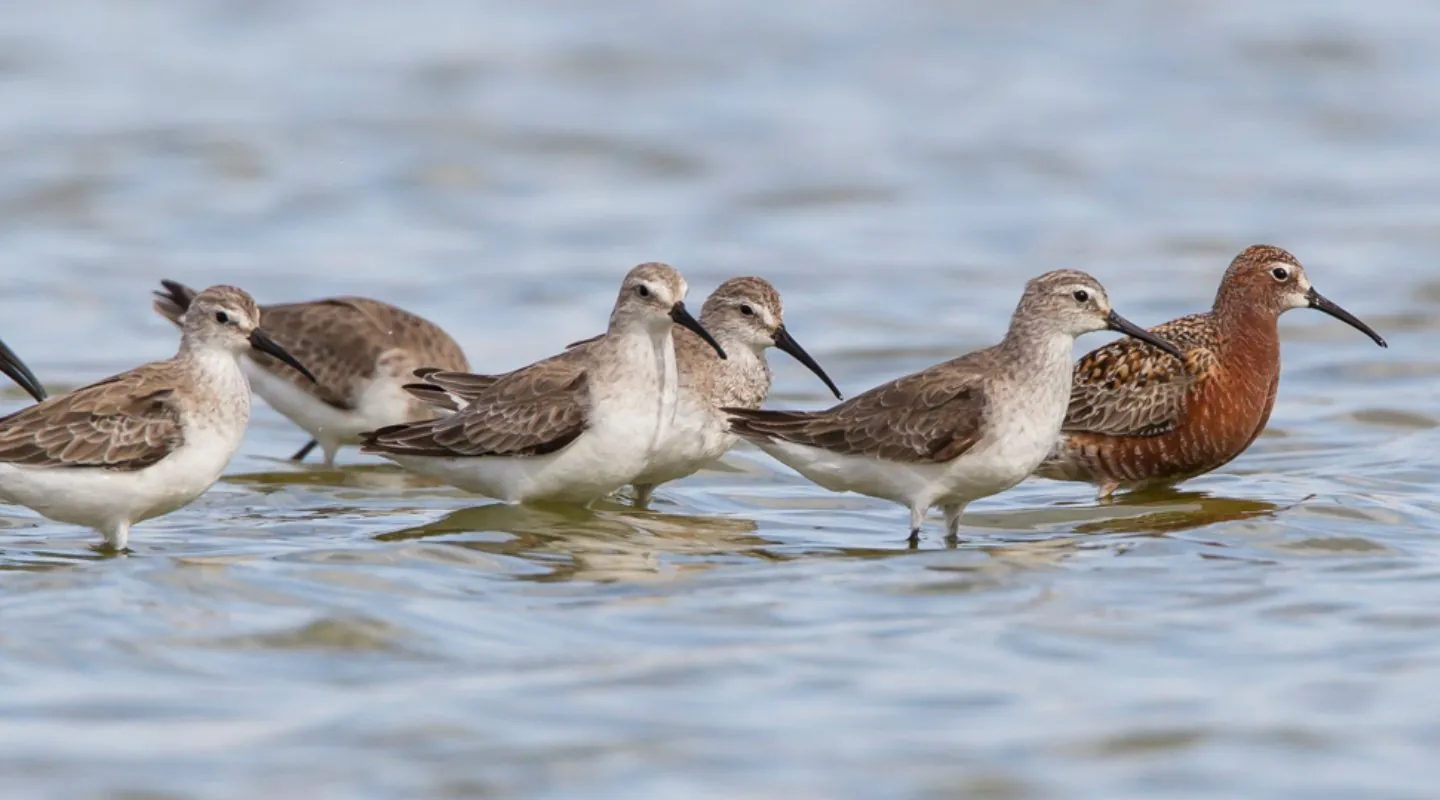
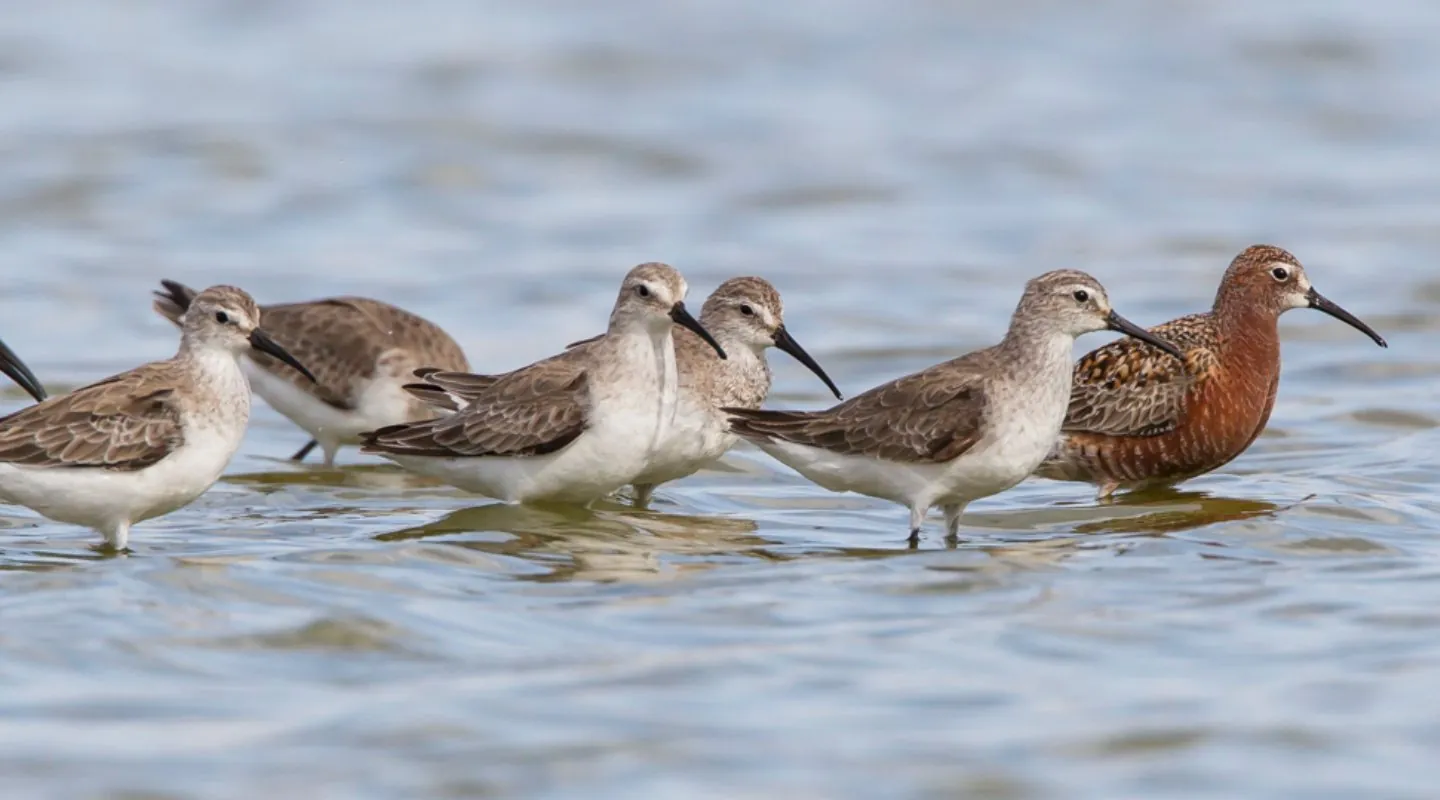
The natural world frequently presents phenomena that inspire profound awe, and the recent migratory journey of a tiny Curlew Sandpiper, nicknamed Delta, exemplifies this. In a feat previously undocumented, this diminutive bird, weighing a mere 60 grams, completed a non-stop flight spanning 3,870 kilometers across the African continent, sustaining its flight for an extraordinary 60 hours. This remarkable achievement is part of a larger collaborative tracking initiative involving Birdlife South Africa and Wetlands International, which aims to unravel the intricate migratory patterns of these birds.
An Unprecedented Avian Odyssey
The 2023-2024 migratory season has become particularly noteworthy due to the exceptional performance of Delta. This specific Curlew Sandpiper, fitted with a miniature tracking device, embarked on its arduous journey from the southern tip of Africa, destined for the distant Arctic tundra. While the migration itself is a testament to avian endurance, Delta’s individual flight has shattered previous expectations and provided invaluable data for ornithological research.
The journey began in early March from South Africa. Prior to launching its epic flight, Delta spent approximately six weeks at the Makgadikgadi Pans in neighboring Botswana. This vital wetland ecosystem, a critical stopover point for numerous migratory species, likely provided the necessary reserves of energy for the demanding flight ahead. The Makgadikgadi Pans, a vast salt pan that transforms into a significant wetland during the rainy season, supports a rich biodiversity and plays a crucial role in the life cycles of migratory birds.
The Chronology of an Epic Flight
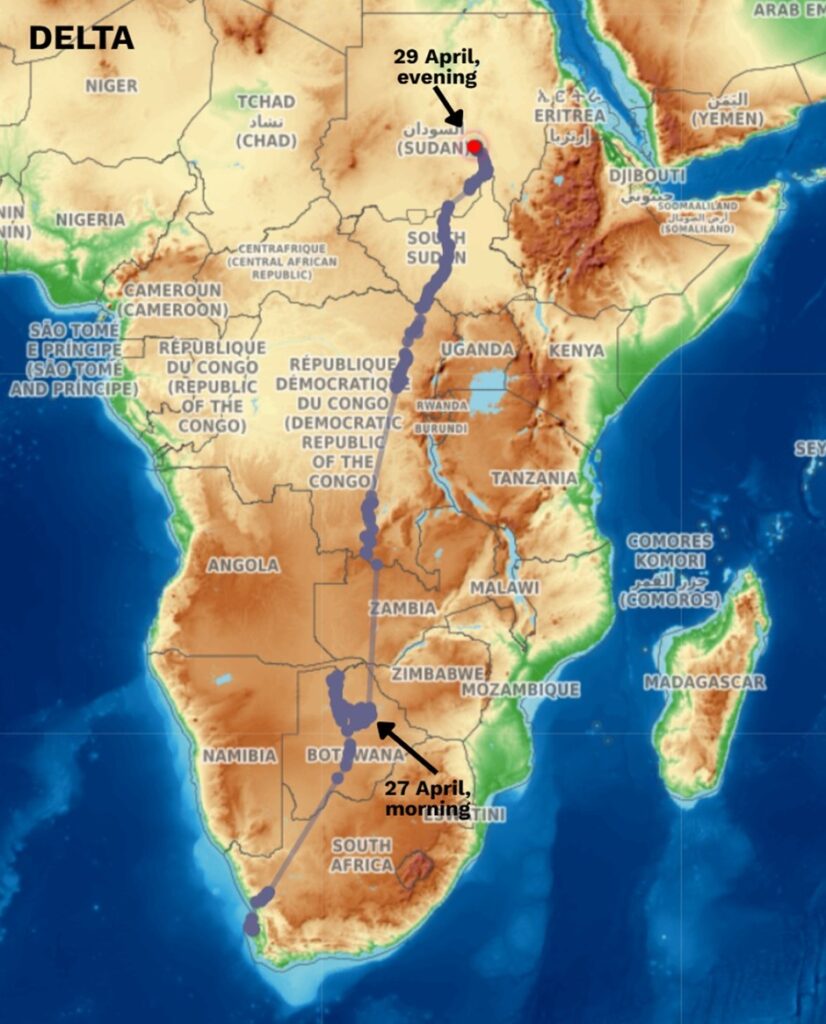
The pivotal phase of Delta’s journey commenced in the early hours of April 27th. The data transmitted from its tracker reveals a determined northward trajectory over Zimbabwe and Zambia. By early afternoon on the same day, Delta had crossed the border into the Democratic Republic of Congo (DRC). The relentless pace of its flight was evident as, by late evening, the bird was already deep within the DRC, continuing its journey towards South Sudan.
The following day, April 28th, saw Delta continue its relentless flight. Around midnight, the Curlew Sandpiper reached the southern reaches of the Sudd Marshes in South Sudan. The Sudd is renowned as one of Africa’s most significant wetlands, a sprawling labyrinth of waterways and vegetation that serves as a crucial stopover point for many migratory birds. While several other tracked Curlew Sandpipers in the same cohort utilized the Sudd for much-needed rest and refueling, Delta, driven by an unknown imperative, pressed onward.
By 8:00 AM on April 29th, Delta had already traversed the immense Sudd region and entered Sudan. Its flight path was consistently directed towards the White Nile valley, a vital ecological corridor. The culmination of this extraordinary feat arrived in the early afternoon of April 29th, when Delta finally landed. This landing marked the end of a non-stop flight of approximately 60 hours, covering an astonishing distance of 3,870 kilometers.
A Testament to Avian Physiology and Endurance
The sheer scale of Delta’s achievement is staggering when considering its physical attributes. A 60-gram bird, roughly the size of a robin, undertaking a 3,870 km flight without any pause for rest or sustenance is a remarkable testament to the physiological adaptations of migratory birds. This equates to an average flight speed of approximately 64.5 kilometers per hour, sustained for two and a half days.

Such prolonged flight demands an immense expenditure of energy. Curlew Sandpipers, like other shorebirds, are known for their exceptional migratory capabilities. Their bodies are highly efficient at converting fat reserves into energy, and their respiratory and circulatory systems are optimized for sustained aerobic activity. The ability to fly at such altitudes and for such durations also requires sophisticated navigation systems, likely relying on a combination of the Earth’s magnetic field, celestial cues, and olfactory signals.
The Significance of the Tracking Project
Delta’s extraordinary flight is not an isolated incident but rather a highlight of a broader conservation effort. The tracking of 20 Curlew Sandpipers and three Grey Plovers is a collaborative project involving Birdlife South Africa, Wetlands International, the Department of Ornithology at the Max Planck Institute for Biological Intelligence in Germany, the FitzPatrick Institute of African Ornithology at the University of Cape Town, and Conserve Eden in Plettenberg Bay.
The primary objective of this ambitious project is to gain a deeper understanding of the migratory routes and critical stopover sites utilized by these birds along the African-Eurasian Flyway. By meticulously tracking their movements, researchers aim to identify key habitats that are essential for resting, feeding, and breeding. This information is vital for developing effective conservation strategies to protect these species and their environments, which are increasingly threatened by habitat degradation and climate change.
Funding for this crucial research has been generously provided by the Royal Society for the Protection of Birds and the Ecological Restoration Fund, underscoring the international commitment to avian conservation.
Broader Implications for Wetland Conservation
The journeys undertaken by birds like Delta underscore the interconnectedness of ecosystems across vast geographical distances. The wetlands of southern Africa, such as the Makgadikgadi Pans, and those further north, like the Sudd Marshes and the White Nile valley, are not merely isolated bodies of water; they are integral components of a continental network that sustains migratory life.
The conservation of these wetlands is therefore paramount. As Delta’s flight demonstrates, these birds rely on a chain of well-preserved habitats to complete their arduous annual migrations. Any disruption or degradation of these stopover sites can have cascading negative effects on bird populations, potentially leading to declines and even local extinctions.
The data gathered from this project will provide empirical evidence to advocate for the protection of these vital wetlands. It highlights the need for coordinated conservation efforts across national borders, recognizing that the health of a wetland in one country can have significant implications for biodiversity in another.
Expert Reactions and Future Research
While specific quotes from researchers involved in the project were not provided in the initial announcement, the scientific community is undoubtedly abuzz with the implications of Delta’s flight. Dr. Anya Sharma, an avian ecologist not directly involved in the study, commented, "A non-stop flight of this magnitude for a bird of this size is truly exceptional. It challenges our current understanding of avian endurance and the physiological limits of these species. The data from this tracking initiative will be invaluable for refining our models of migration and identifying potential vulnerabilities."
The successful tracking of Delta and its cohort opens up new avenues for research. Future investigations may focus on the specific physiological adaptations that enable such prolonged flights, the environmental triggers for initiating such long-distance journeys, and the impact of climate change on the availability and quality of crucial stopover sites.
Following the Journey
For those interested in witnessing the ongoing adventures of Delta and its fellow travelers, a dedicated WhatsApp channel has been established. This platform provides daily updates on the birds’ progress, offering a unique window into the challenges and triumphs of their migratory journeys. This direct engagement with the public aims to foster greater awareness and support for wetland conservation initiatives. The channel can be accessed via: https://whatsapp.com/channel/0029Vb87JULJENxwyTIvXu3e.
The story of Delta, the 60-gram avian marathoner, is a powerful reminder of the resilience and wonder of the natural world. It serves as a compelling call to action to protect the vital wetland ecosystems that enable such extraordinary feats of survival and migration, ensuring that future generations can continue to marvel at the incredible journeys of our planet’s wild inhabitants. Further details about the broader project can be found at https://www.wetlands.org/connecting-wetlands-from-south-africa-to-siberia/.
