
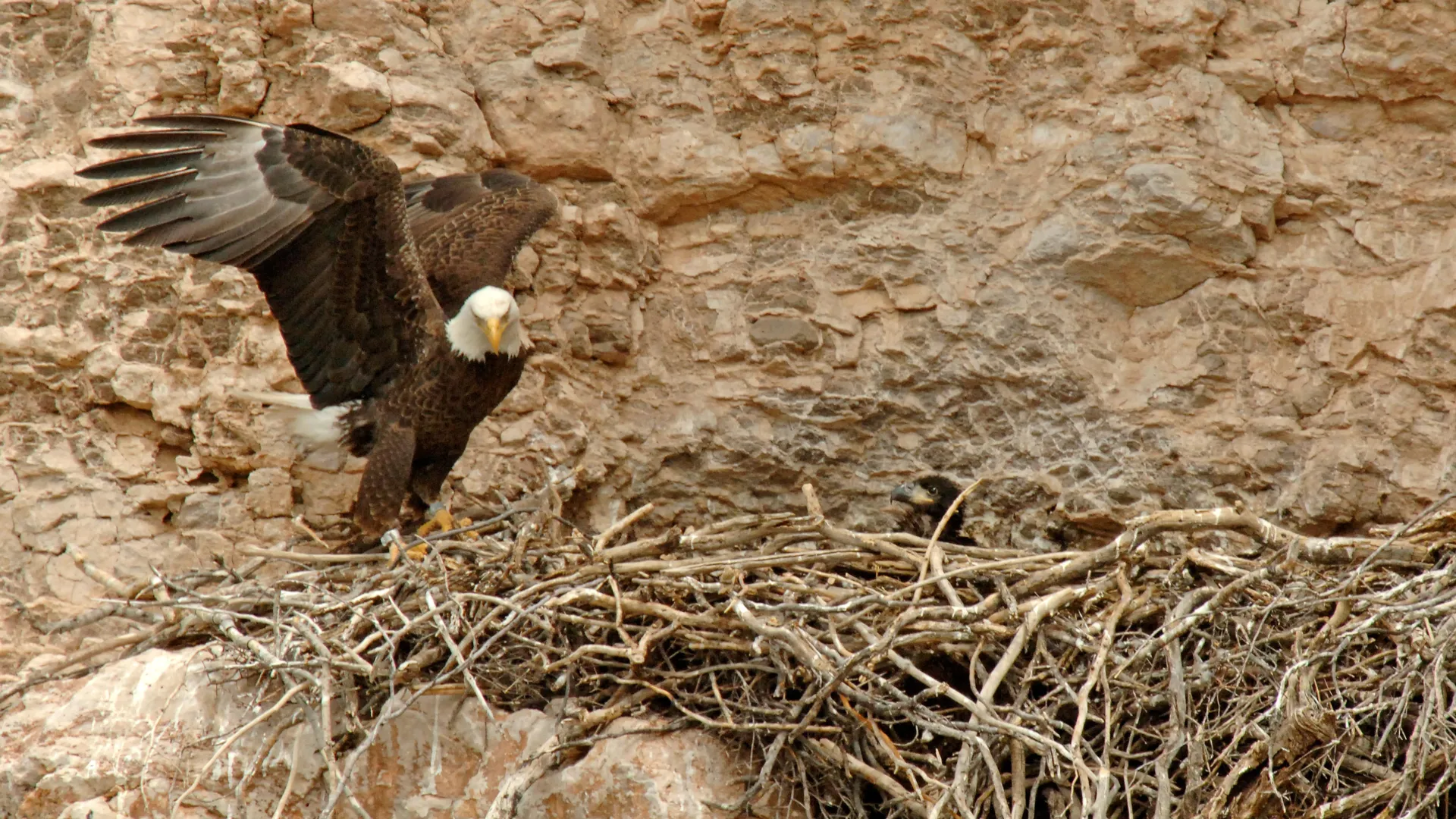
Despite the common adage that "birds of a feather flock together," a groundbreaking new study reveals that Bald Eagles ( Haliaeetus leucocephalus ) from Arizona are charting an unusual course, migrating north instead of following the typical southward trajectory of most temperate migratory birds. Published in the Journal of Raptor Research, the paper titled "Northward Migrations of Nonbreeding Bald Eagles from Arizona, USA" provides crucial insights into the adaptability and exploratory nature of these iconic raptors. The research also documented a single eagle that ventured from Arizona to ultimately settle in California, a finding that significantly challenges long-held assumptions about emigration rates and population dispersal within the species. Researchers conclude that southwestern Bald Eagles exhibit a high degree of exploratory behavior, a strategy likely driven by the need to locate ephemeral food sources in dynamic landscapes. As global climates and ecosystems undergo rapid transformation, studies that precisely document how wildlife adjusts its movements become indispensable for formulating effective conservation strategies and safeguarding vital travel corridors for vulnerable species.
A Divergent Migration Pattern: Unpacking the Northward Journey
The traditional understanding of avian migration in North America dictates a seasonal southward movement to warmer climates and more abundant resources during the nonbreeding season, typically coinciding with winter. However, the Arizona Bald Eagle population presents a unique anomaly. Unlike their northern counterparts, Bald Eagles in Arizona commence their nesting activities in the winter months. Consequently, their nonbreeding season occurs during the summer and autumn. This inverted seasonal timing directly influences their migratory patterns, leading them to journey northward when other species are heading south.
Lead author Dr. Caroline D. Cappello, whose expertise lies in avian ecology and movement patterns, expressed her fascination with this divergent behavior. "Northward migratory behavior raises interesting questions about the recent and historical pressures that shape these movement strategies," Dr. Cappello noted, underscoring the ecological puzzles presented by this population. The implications extend beyond mere curiosity, suggesting that environmental factors, possibly including resource availability or predator dynamics unique to the Southwest, have sculpted an evolutionary response distinct from the species’ broader migratory tendencies. This northward shift could represent a highly adaptive strategy to capitalize on seasonal resource pulses found at higher latitudes, such as spawning salmon runs or abundant waterfowl populations, which become available as the northern spring and summer progress.
Tracking the Explorers: Methodology and Key Findings
Between 2017 and 2023, a dedicated Arizona-based research team embarked on an ambitious project to meticulously map the movements of these eagles. Utilizing state-of-the-art satellite transmitters, they tracked 24 newly fledged Bald Eagles and two nonbreeding adults. The devices provided unprecedented, real-time data on how these birds navigated within and beyond Arizona’s borders. While the movements of breeding Bald Eagles in Arizona are relatively well-understood, with most believed to remain close to their nesting territories year-round, information regarding the behavior of nonbreeding individuals has historically been scarce. This knowledge gap is significant because survival rates vary across different life stages. By meticulously comparing the movement patterns and survival rates of nonbreeding eagles with those of their breeding counterparts, scientists gain a far more comprehensive understanding of the species’ overall health across its range and how population-level processes are intrinsically shaped by the behaviors of all age classes.
The researchers assiduously followed individual eagles for as long as their tracking devices remained operational, in some instances for up to four years within the seven-year study period. This extended monitoring allowed for a detailed observation of developmental changes in migratory behavior. A key observation was that as eagles matured, their migration pathways became notably more precise and refined, indicating a learning process and the establishment of preferred routes and stopover sites. Most eagles tracked for at least two years demonstrated a clear pattern: they returned to Arizona in the fall of their hatch year after spending the summer months roaming extensively farther north. This cyclical return suggests a deep-seated connection to their natal grounds, even amidst their exploratory northward forays. The researchers theorize that these young, exploratory eagles might be opportunistically exploiting seasonal "food bonanzas" such as abundant spawning salmon in northern rivers, nesting waterfowl populations in vast wetland systems, or the carcasses of large mammals that become available after winter thaws or hunting seasons. Verifying this hypothesis will necessitate additional focused research, potentially involving dietary analysis or more granular observation of feeding behaviors at these northern sites.
Echoes of the Past: Enduring Habitats and the Intermountain Flyway
A particularly striking finding of the study was the remarkable fidelity of the tracked eagles to many of the same lakes and rivers previously identified as crucial stopover sites for Bald Eagles in a comprehensive study conducted in the 1980s. This consistent overlap, spanning multiple decades, strongly reinforces the notion that these specific habitats have maintained their ecological integrity and continued to serve as vital gathering points for successive generations of eagles. Such long-term ecological consistency is invaluable for conservation planning.
Beyond confirming the persistent use of these historical stopover sites, the study firmly established a strong reliance on the Intermountain Flyway. This major avian migratory route extends through the mountainous western interior of North America, connecting breeding grounds in the north with wintering areas in the south, and, as this study reveals, also serving as a corridor for northward nonbreeding dispersal. The eagles’ dependence on the network of lakes and rivers along this flyway underscores the critical importance of these aquatic ecosystems for their survival and movement. Coauthor Dr. Javan M. Bauder, a USGS researcher, Assistant Unit Leader at the Arizona Cooperative Fish and Wildlife Research Unit, and Assistant Professor at the University of Arizona, emphasized the profound significance of this finding. "Managing and conserving wildlife populations requires that we understand the movement patterns of individuals of all age classes within those populations," Dr. Bauder stated. This highlights the necessity of holistic conservation strategies that account for the entire life cycle and migratory spectrum of a species, not just its breeding adults.
The Perilous Path: Threats to Young Raptors
Bald Eagles, like many other large raptors, must navigate a complex array of hazards in an increasingly human-dominated world. The study provided a poignant illustration of these dangers through the journey of one particular eagle. This individual embarked on an extraordinary odyssey, traversing ten U.S. states and four Canadian provinces during her early life. Her travels culminated in her apparent settlement in northern California, where she seemed poised to establish a breeding territory. However, at just four years old, her promising life was tragically cut short by electrocution, an alarmingly common cause of death for large birds of prey.
The loss of this eagle was particularly troubling, as Dr. Cappello explained, because it "underscored the ongoing risks these birds face." Furthermore, this incident highlighted the inherent difficulties in measuring emigration, a critical aspect of population dynamics. The eagle’s apparent decision to live and breed in California would have offered exceptionally rare insight into the frequency with which Bald Eagles hatched in Arizona disperse to other regions, contributing vital data to understanding population connectivity and gene flow.
Electrocution accounts for a significant portion of raptor mortalities, particularly among young, inexperienced birds who are less adept at identifying safe perching spots on power poles and transmission lines. A 2017 review of raptor mortality data, for instance, indicated that electrocution remains a leading non-natural cause of death for several large raptor species across North America. Beyond electrocution, young raptors face a gauntlet of other anthropogenic threats. These include poisoning from lead ammunition residues ingested from carrion and secondary poisoning from rodenticides used in agricultural and urban areas. Collisions with wind turbines, a growing concern with the expansion of renewable energy infrastructure, also pose a substantial risk. Habitat loss and fragmentation, driven by urbanization and agricultural expansion, continue to erode essential breeding, foraging, and stopover grounds. Lastly, the overarching uncertainty related to a rapidly changing climate introduces novel and unpredictable stressors, from altered food availability to shifts in weather patterns affecting migratory success. By diligently studying raptors at every stage of life, including the extensive and often hazardous exploratory journeys of young birds, scientists can develop evidence-based recommendations. These recommendations are crucial for identifying which stopover sites are most important to protect, and which types of human infrastructure, particularly electrical systems, could be modified or redesigned to significantly improve survival rates for eagles and other large raptors.
The Broader Canvas: Bald Eagle Recovery and Ongoing Challenges
The findings of this study gain even greater resonance when placed within the broader context of Bald Eagle conservation history. Once teetering on the brink of extinction due to widespread pesticide use (primarily DDT), habitat destruction, and illegal shooting, the Bald Eagle’s remarkable recovery stands as one of the most significant success stories in modern conservation. Following the ban of DDT in 1972 and the protections afforded by the Endangered Species Act (ESA) in 1973, Bald Eagle populations rebounded dramatically across the contiguous United States. By 2007, the species was famously delisted from the ESA, a testament to decades of concerted effort by government agencies, conservation organizations, and private citizens.
However, the Arizona study serves as a stark reminder that "recovery" does not equate to the absence of threats. Even a species as resilient as the Bald Eagle continues to face significant challenges in a human-altered environment. The unique migratory patterns observed in Arizona highlight that even within a recovered species, distinct regional populations may exhibit specialized behaviors and face localized threats that require tailored conservation approaches. Understanding these nuances is vital to ensure the long-term viability of the species, preventing future declines and adapting conservation strategies to new environmental realities. The sheer adaptability of the Arizona eagles to seek out novel foraging grounds via northward migration might itself be a survival trait honed by specific environmental pressures in the arid Southwest, potentially offering insights into how other species might adapt to future climate change scenarios.
Implications for Conservation in a Changing Climate
The observed exploratory behavior of young Bald Eagles and their northward migration from Arizona carry profound implications for contemporary conservation strategies, particularly in an era defined by rapid climate change. As climate shifts alter precipitation patterns, vegetation zones, and the distribution of prey species, traditional migratory routes and established food sources may become unreliable. The ability of these eagles to explore vast new territories and adapt their movements to exploit ephemeral resources could be a critical survival mechanism. This flexibility suggests that conservation efforts must move beyond static protected areas and embrace a more dynamic, landscape-scale approach that identifies and safeguards crucial travel corridors and a diversity of potential stopover and foraging sites.
The study’s emphasis on the long-term importance of specific lakes and rivers along the Intermountain Flyway provides clear targets for conservation action. Protecting these aquatic habitats from degradation, pollution, and excessive human disturbance is paramount. Furthermore, the tragic death by electrocution underscores the urgent need for collaboration between wildlife agencies and utility companies to retrofit existing power infrastructure with raptor-safe designs and to implement new, bird-friendly construction standards. Such modifications have proven effective in reducing raptor mortalities and represent a tangible way to mitigate a persistent anthropogenic threat. The insights gained from tracking these exploratory young birds can guide conservationists in making evidence-based recommendations about which stopover sites are most critical to protect and which types of infrastructure modifications will yield the greatest benefits for eagles and other large raptors.
The Road Ahead: Future Research and Adaptive Management
The research team advocates for several avenues of future inquiry to build upon their foundational findings. A key recommendation involves investigating route fidelity – determining whether the consistent patterns of northward migration observed in young eagles solidify into established, repeatable routes as they mature. As Dr. Cappello notes, "if consistent patterns exist it could help focus conservation efforts on specific, high-use areas along their migratory route." Pinpointing these reliable pathways would allow for more targeted and efficient allocation of conservation resources, maximizing their impact.
Additionally, the researchers highlight the importance of comparative studies. By comparing the unique northward migration strategy of Arizona Bald Eagles to other wildlife populations that migrate north from the southern edge of their range, scientists can gain a deeper understanding of the ecological tradeoffs, energetic costs, and evolutionary benefits associated with this specific movement strategy. Such comparative analyses could reveal broader principles of adaptive migration in response to environmental pressures, offering insights applicable to a wider array of species.
Ultimately, this pioneering study on Arizona’s Bald Eagles provides a compelling testament to the dynamic nature of wildlife behavior and the ongoing need for rigorous scientific investigation. In an era of unprecedented environmental change, understanding the intricate ways in which species adapt their movements and life histories is not merely academic; it is foundational to developing adaptive management strategies that can effectively safeguard biodiversity for generations to come. The exploratory spirit of these eagles, mirroring the investigative drive of the scientists who track them, offers a beacon of hope for navigating the complex conservation challenges of the 21st century.
