
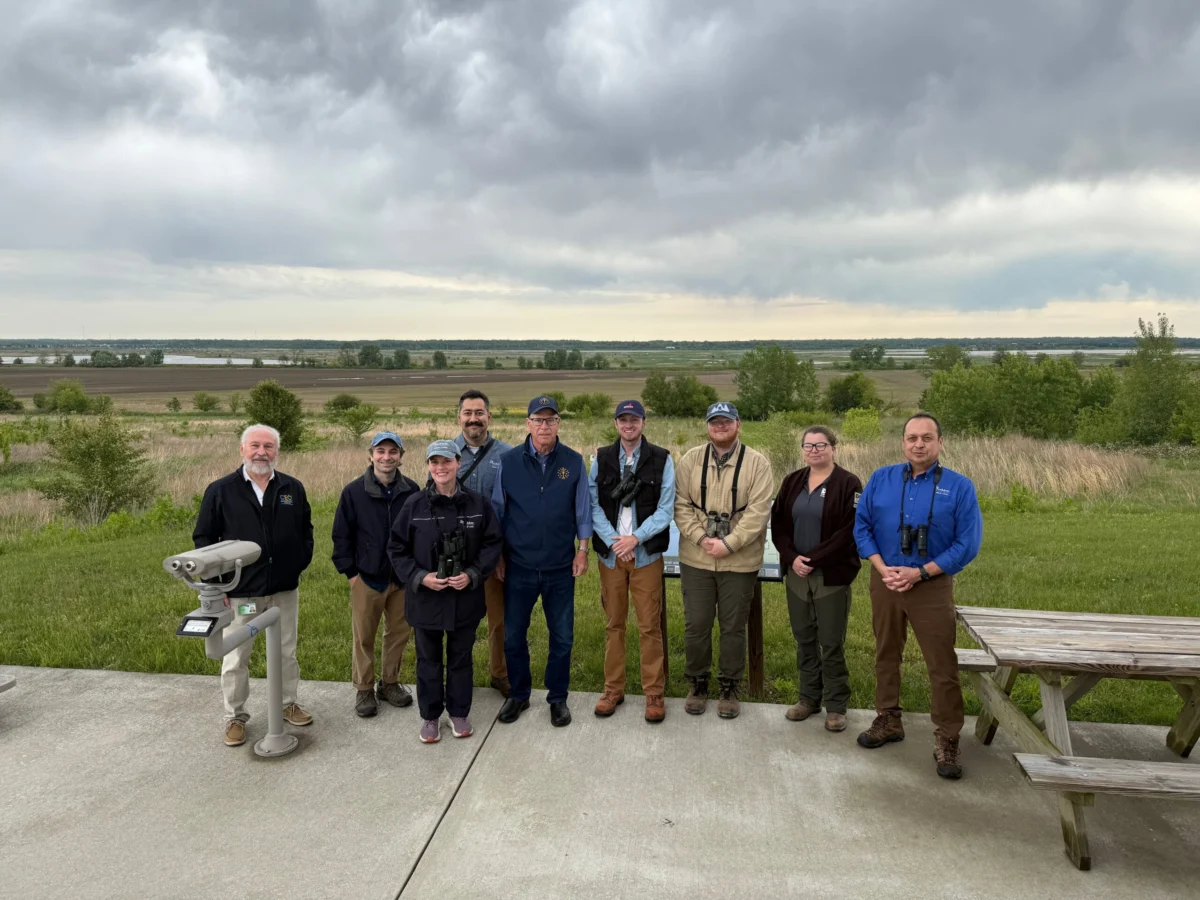
Linton, IN (May 6, 2026) – At the height of spring migration, a critical period when millions of birds navigate their arduous journeys back to the Midwest, Indiana Governor Mike Braun undertook a significant visit to the Goose Pond Fish and Wildlife Area. On Monday, May 4, Governor Braun joined representatives from Audubon Great Lakes, the Sassafras Audubon Society, the Amos Butler Audubon Society, and the Indiana Department of Natural Resources (IDNR) at the expansive Linton site. The purpose of this high-profile visit was to celebrate the successful return of migratory birds to Indiana and to underscore the paramount importance of protecting the vital habitats upon which these species depend. This event, occurring just days before the global observance of World Migratory Bird Day on May 9, served as a powerful reminder of the ongoing conservation efforts and the growing threats faced by avian populations worldwide.
Goose Pond: A Beacon of Wetland Restoration
The Goose Pond Fish and Wildlife Area stands as a testament to ambitious and successful ecological restoration, widely recognized as one of the largest and most impactful wetland restoration projects in the United States. For over two decades, this sprawling complex, encompassing 5,000 acres of meticulously restored wetlands and an additional 1,300 acres of reconstructed tallgrass prairies, has provided indispensable critical habitat for a vast array of bird species and other wildlife. Its transformation from intensively farmed agricultural land, much of it previously drained for cultivation, into a thriving wetland ecosystem, represents a monumental achievement in conservation.
From Farmland to Flourishing Habitat
The history of Goose Pond’s restoration is a compelling narrative of ecological vision and persistent effort. Acquired by the Indiana Department of Natural Resources beginning in the late 1990s and early 2000s, the site was systematically converted from a landscape dominated by corn and soybean fields back to its historical wetland and prairie conditions. This involved extensive hydrological engineering, including the disabling of drainage tiles, the construction of levees, and the reintroduction of native wetland vegetation. The goal was to recreate the complex mosaic of shallow water, emergent marsh, and wet meadow habitats that once characterized much of the Wabash River lowlands. The success of these efforts has been nothing short of remarkable, demonstrating that large-scale habitat restoration is not only possible but can yield profound ecological benefits. The long-term management by IDNR ensures the continued health and productivity of these restored ecosystems.
An Important Bird Area: A Haven for Avian Diversity
Reflecting its immense ecological value, Goose Pond Fish and Wildlife Area has been formally designated as an Audubon Important Bird Area (IBA). This designation signifies that the site provides essential habitat for breeding, migrating, or wintering birds, often supporting significant populations of threatened or endangered species. Indeed, Goose Pond now boasts an incredible diversity, providing habitat for more than 300 distinct bird species. This rich biodiversity makes it a premier destination for birdwatchers, attracting enthusiasts from across the state and beyond, eager to witness its vibrant avian life. For migratory birds, it serves as a crucial stopover point, offering much-needed food, water, and resting areas during their strenuous biannual journeys. Species such as the Sandhill Crane, various ducks and geese, and numerous shorebirds utilize Goose Pond extensively, while vulnerable marsh birds like the Least Bittern, American Bittern, and King Rail find sanctuary in its dense wetland vegetation. The presence of such a wide array of species underscores the critical role Goose Pond plays in regional and continental bird conservation strategies.
The Urgency of Avian Conservation
The Governor’s visit and the focus on Goose Pond come at a time of heightened awareness regarding the perilous state of bird populations globally. Scientific reports consistently indicate a widespread decline in avian numbers, driven by habitat loss, climate change, pesticide use, and other anthropogenic factors.
The 2025 State of the Birds Report: A Call to Action
A recent publication, the 2025 State of the Birds Report, compiled by a coalition of leading science and conservation organizations, painted a stark picture of the challenges confronting avian life. This comprehensive report, which draws on decades of data from sources such as the North American Breeding Bird Survey and eBird, found that birds across most habitats have suffered significant losses since 1970. The report highlighted a sobering statistic: nearly 3 billion birds have been lost from North American skies since 1970, representing a decline of approximately 29%. While some conservation efforts have yielded positive results for specific groups, the overall trend underscores the urgent need for expanded and accelerated conservation action. Wetlands, in particular, remain one of the most threatened habitat types, making projects like Goose Pond even more critical. The report emphasized that continued habitat restoration, protection of existing wild spaces, and mitigation of threats like window collisions and cat predation are essential to reversing these declines.
World Migratory Bird Day: A Global Reminder
The timing of Governor Braun’s visit, just ahead of World Migratory Bird Day (WMBBD) on May 9, amplified the message of conservation. WMBBD is a global campaign dedicated to raising awareness of migratory birds and the need for international cooperation to conserve them. Organized by Environment for the Americas, the Convention on Migratory Species (CMS), and the African-Eurasian Waterbird Agreement (AEWA), the day typically features a unifying theme. While the specific theme for 2026 was not explicitly stated in the context of the visit, past themes have focused on topics such as the importance of insects, the impact of light pollution, and the value of water for birds. The global nature of bird migration means that conservation efforts in one region, like Indiana, have far-reaching impacts on bird populations across hemispheres, underscoring the interconnectedness of ecosystems and the shared responsibility for their protection. It serves as a potent reminder that the threats faced by birds on their incredible journeys demand collective, cross-border solutions.
Voices from the Field: Leadership and Advocacy
The event provided a platform for key leaders and advocates to articulate their commitment to conservation and highlight the successes and ongoing challenges.
Governor Braun’s Endorsement of Conservation
Governor Mike Braun, a vocal proponent of outdoor recreation and conservation, shared his personal connection to avian life during the visit. "As a landlord to a colony of Purple Martins that largely depend on human-provided housing, I appreciate the opportunity to go bird watching alongside Audubon Great Lakes," said Governor Braun. His statement highlighted a tangible, personal commitment to fostering bird populations. He further affirmed, "I will continue my commitment to conserving Indiana’s natural heritage to benefit both wildlife and Hoosiers who enjoy our great outdoors." This endorsement from the state’s highest office sends a clear signal about the importance of environmental stewardship and its dual benefits for ecological health and human well-being. His previous support for critical funding mechanisms like the Great Lakes Restoration Initiative during his tenure in the U.S. Senate further solidifies his conservation credentials, indicating a consistent dedication to these issues at both state and federal levels.
Audubon Great Lakes: Bending the Bird Curve
Michelle Parker, Vice President & Executive Director of Audubon Great Lakes, emphasized the critical juncture for bird conservation. "Birds are in decline, and migration is one of the most dangerous times of their lifecycles," Parker stated, underscoring the urgency. She articulated Audubon’s core mission: "To reverse this decline, or ‘bend the bird curve,’ we must protect and restore the habitats birds depend on. Places like Goose Pond show us what’s possible when habitats are restored." Parker expressed gratitude for the Governor’s participation, noting, "We’re grateful to Governor Braun for joining us to experience the wonders of spring migration and this critical work." Her remarks highlighted the scientific basis of Audubon’s work, linking habitat restoration directly to population recovery, and underscored Goose Pond as a successful model that can be replicated. Audubon Great Lakes actively monitors vulnerable marsh birds at 29 sites across Indiana, including Goose Pond, to understand their responses to restoration efforts. This data-driven approach is crucial for informing future conservation strategies and ensuring the long-term protection of these sensitive species.
Local Partners and Community Engagement
The presence of the Sassafras Audubon Society and the Amos Butler Audubon Society, alongside the Indiana Department of Natural Resources, underscored the collaborative nature of conservation. Local Audubon chapters play a crucial role in grassroots advocacy, citizen science, and community education. Their members often contribute countless hours to habitat monitoring, bird counts, and local restoration projects, providing invaluable support to larger initiatives. The Indiana Department of Natural Resources, as the managing agency for Goose Pond FWA, plays a foundational role in land acquisition, restoration design, and ongoing ecological management. Their expertise in wildlife biology, hydrology, and land management has been instrumental in the success of Goose Pond, ensuring that the site remains a vibrant and healthy ecosystem for birds and other wildlife. These partnerships demonstrate a multi-faceted approach, combining state agency resources with the passion and expertise of non-profit organizations and local volunteers.
The Broader Impact: Great Lakes Restoration Initiative
Much of the significant wetland restoration work, including aspects related to Audubon Great Lakes’ broader efforts, is underpinned by the Great Lakes Restoration Initiative (GLRI). This crucial federal program has been a game-changer for environmental health across the Great Lakes basin.
A Vital Funding Mechanism
The GLRI, launched in 2010, is a comprehensive federal program designed to protect and restore the largest freshwater system on Earth. It has provided critical funding for thousands of projects addressing the most pressing environmental challenges facing the Great Lakes. Since its inception, the GLRI has supported more than 8,000 projects, leading to tangible improvements in water quality, the remediation of contaminated sites, the restoration of wetlands and coastal habitats, and the control of invasive species. For Audubon Great Lakes, the GLRI has been an indispensable partner, enabling the restoration and conservation of over 10,000 acres of wetland habitat. These efforts directly support vulnerable marsh birds, contribute to cleaner drinking water sources for millions of people, and provide vital flood protection for communities throughout the region. Governor Braun’s past support for the GLRI during his time in the U.S. Senate was specifically acknowledged by Michelle Parker, highlighting the bipartisan nature of this critical environmental funding.
Regional Successes and Future Goals
Audubon’s work in Indiana, supported by GLRI, extends beyond Goose Pond. In Northwest Indiana, the organization is actively collaborating with local communities to restore 420 acres of high-priority wetlands, including critical areas along the West Branch of the Little Calumet River in Gary. This work is part of a larger, ambitious goal: over the next decade, Audubon, in partnership with various stakeholders and community groups, aims to positively impact 5,750 acres across Northwest Indiana. These regional efforts are crucial for creating a network of interconnected habitats that can support a greater diversity and number of birds, bolster ecological resilience, and provide numerous benefits to human communities. The GLRI’s continued funding is essential for the realization of these long-term objectives and for the sustained health of the Great Lakes ecosystem.
Economic and Community Benefits
The restoration efforts at Goose Pond Fish and Wildlife Area yield benefits that extend far beyond avian populations, significantly impacting human communities and local economies.
Beyond Birds: Water Quality and Flood Control
Wetlands are often referred to as "nature’s kidneys" due to their remarkable ability to filter pollutants from water. As water flows through these natural systems, wetland vegetation and soils effectively remove excess nutrients, sediments, and even some contaminants, thereby improving overall water quality. This natural purification process is vital for downstream communities, reducing the costs associated with municipal water treatment and enhancing the health of aquatic ecosystems. Furthermore, wetlands act as natural sponges, absorbing and storing vast quantities of floodwater. This capacity is particularly crucial in regions prone to heavy rainfall and flooding, offering a natural defense against property damage and safeguarding human lives. By slowing down water flow and reducing peak flood levels, restored wetlands like those at Goose Pond provide invaluable flood protection, strengthening community resilience in the face of increasingly extreme weather events. The deep root systems of wetland plants also help to stabilize soils, preventing erosion and maintaining the integrity of the landscape.
Boosting Local Economies Through Ecotourism
The transformation of Goose Pond into a premier birdwatching destination has generated substantial economic benefits for the surrounding communities. Ecotourism, particularly birdwatching, is a rapidly growing industry. Visitors to Goose Pond support local businesses by spending money on lodging, food, fuel, and supplies. Local restaurants, hotels, and retail establishments experience increased revenue, leading to job creation and economic diversification in rural areas. The influx of birdwatchers and nature enthusiasts also contributes to a sense of local pride and fosters a deeper appreciation for natural resources. Educational programs and guided tours often accompany such sites, providing opportunities for local employment and skill development. The presence of a thriving natural attraction can also enhance property values in the vicinity and draw new residents or businesses seeking a high quality of life with access to nature. This demonstrates a powerful synergy between environmental conservation and sustainable economic development.
Looking Ahead: A Model for Sustainable Conservation
The story of Goose Pond Fish and Wildlife Area serves as a powerful model for future conservation initiatives, demonstrating the profound positive impacts of dedicated restoration efforts and strategic partnerships.
Public-Private Partnerships as a Blueprint
The success of Goose Pond and the broader conservation work in Indiana exemplifies the effectiveness of public-private partnerships. The collaboration between a state agency like the Indiana Department of Natural Resources, national non-profits such as Audubon Great Lakes, and local grassroots organizations like the Sassafras and Amos Butler Audubon Societies, creates a robust framework for achieving ambitious conservation goals. This multi-stakeholder approach leverages diverse expertise, resources, and community engagement, ensuring both scientific rigor and local relevance. Such partnerships can serve as a blueprint for addressing complex environmental challenges across the nation, showcasing how shared vision and coordinated action can lead to transformative ecological recovery and sustainable management of natural resources. The inclusion of political leadership, as demonstrated by Governor Braun’s visit, further solidifies the importance of these collaborations and helps to secure ongoing support and funding.
The Enduring Legacy of Goose Pond
The enduring legacy of Goose Pond Fish and Wildlife Area is multifaceted. It stands as a living laboratory for wetland ecology, providing valuable insights into restoration science and adaptive management techniques. More importantly, it is a vibrant sanctuary for countless bird species, a critical node in the vast network of migratory pathways, and a testament to the power of human intervention to heal degraded landscapes. For the people of Indiana, Goose Pond offers unparalleled opportunities for recreation, education, and connection with nature, fostering a deeper environmental ethic among current and future generations of Hoosiers. Its continued success ensures that Indiana plays a vital role in continental bird conservation, contributing to the health and biodiversity of North America’s natural heritage. The recognition by Governor Braun, especially in the context of World Migratory Bird Day, reinforces the importance of this work and inspires continued commitment to protecting the precious places that birds and communities alike depend on.
