
Audubon Southwest launched an expansive series of community outreach, educational initiatives, and habitat restoration projects throughout April, engaging over 2,650 individuals across Arizona and New Mexico in hands-on conservation efforts and environmental education, reaffirming its commitment to fostering a deeper connection between people and nature far beyond the singular observance of Earth Day. The organization’s multifaceted approach spanned urban centers and rural communities, targeting diverse demographics from preschoolers to corporate volunteers, and underscored the critical role of grassroots action in protecting vital ecosystems and migratory bird populations. This intensive period of activity highlighted the urgent need for ongoing environmental stewardship, illustrating how daily actions contribute significantly to the long-term health of the planet and its avian inhabitants.
A Month of Unprecedented Engagement: The Core of Audubon Southwest’s Mission
For Audubon Southwest, April’s arrival signifies not just Earth Day festivities but the peak of spring migration, the resurgence of native flora, and an invigorated drive to connect communities with the natural world. This year, the organization’s education teams achieved a remarkable milestone, directly interacting with more than 2,650 people through a diverse array of programs. These initiatives ranged from vibrant Earth Day festivals and guided bird walks to immersive student field trips at their flagship centers, the Rio Salado Audubon Center in Phoenix and the Randall Davey Audubon Center in Santa Fe. Additionally, outreach efforts extended into classrooms and after-school programs, broadening access to environmental learning. The palpable enthusiasm from community members—sharing observations of favorite birds or newly sprouted plants—serves as a powerful testament to the impact of these programs, fostering a collective sense of hope and inspiring people of all ages to actively participate in safeguarding the planet and its avian inhabitants. This robust engagement reflects Audubon’s enduring mission to protect birds and the places they need, today and tomorrow, through science, advocacy, education, and on-the-ground conservation.
Planting Seeds for the Future: Valle de Oro National Wildlife Refuge
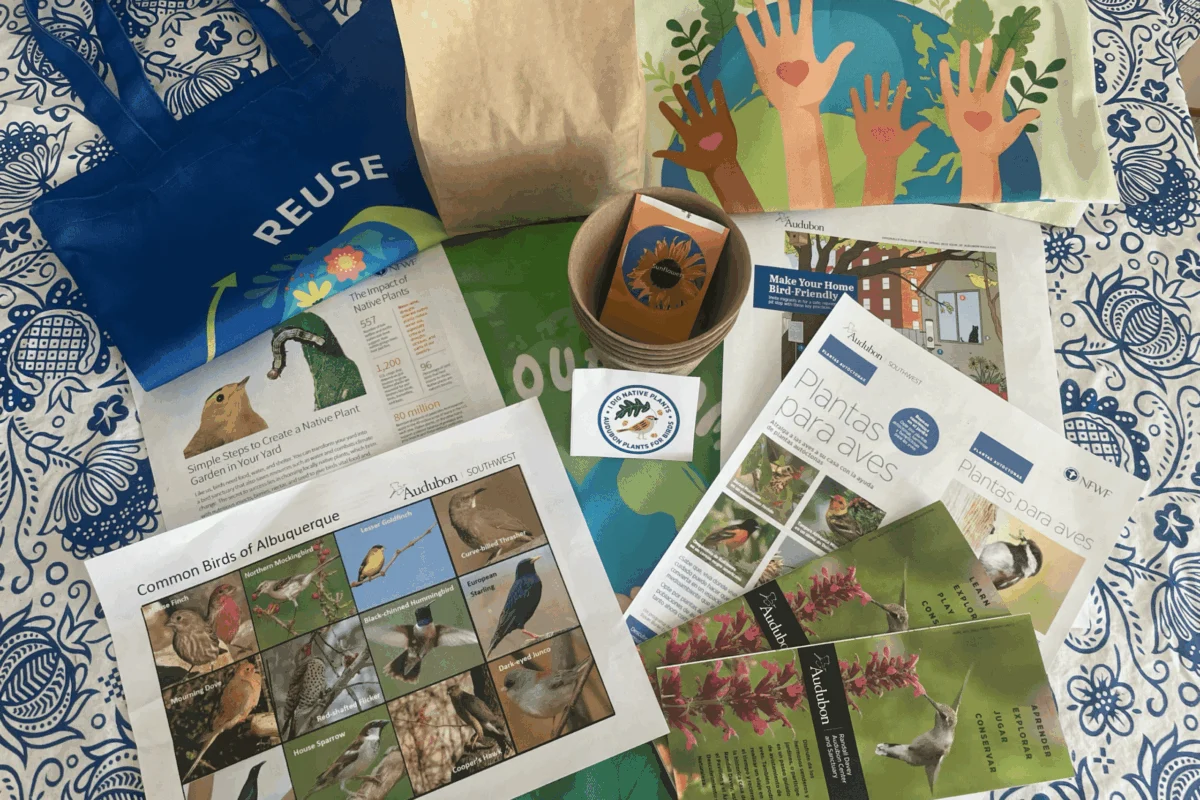
A cornerstone of Audubon Southwest’s Earth Month activities was a significant habitat restoration event at the Valle de Oro National Wildlife Refuge in Albuquerque, New Mexico. On Earth Day, 16 dedicated volunteers, including families with young children, converged to plant 86 native plants across three basins situated near the Refuge entrance. This effort is part of a larger, year-long project supported by the National Fish and Wildlife Foundation (NFWF) and its Urban Bird Conservation Program, underscoring a strategic approach to creating and enhancing critical urban bird habitats. Cathy Wise, Senior Manager for Community Building at Audubon Southwest, emphasized the event’s dual impact: "Volunteers included families and young ones who enjoyed making seed balls, a fun and effective way to disseminate native plant seeds." Beyond the planting, the initiative distributed thirty "Grow Your Own Sunflowers" bags, empowering residents to cultivate backyard habitats throughout the summer. These urban green spaces are indispensable for migratory birds traversing the Rio Grande corridor, offering essential resting and foraging opportunities in increasingly developed landscapes.
The Valle de Oro National Wildlife Refuge, established in 2012, is a unique urban refuge—the first of its kind in the Southwest—transformed from a former dairy farm. Its strategic location along the Rio Grande makes it a vital stopover for hundreds of bird species on the Pacific Flyway. The collaboration with partners like the Ciudad Soil and Water Conservation District and the National Fish and Wildlife Foundation highlights a comprehensive, multi-agency approach to conservation. NFWF’s Urban Bird Conservation Program specifically targets the enhancement of urban ecosystems to support diverse bird populations, recognizing that cities can serve as crucial conservation hubs. These localized efforts contribute to a broader regional strategy aimed at mitigating habitat loss, which is a primary driver of bird population declines across North America. Data from the Cornell Lab of Ornithology and other research indicate that North America has lost nearly 3 billion birds since 1970, with habitat degradation being a significant factor. Initiatives like those at Valle de Oro directly address this challenge by restoring native vegetation, which provides food, shelter, and breeding grounds essential for avian survival.
Nurturing the Next Generation: The Randall Davey Audubon Center in Santa Fe
In Santa Fe, the Randall Davey Audubon Center served as a vibrant hub for environmental education, particularly during Earth Month. Senior Education Coordinator Meghan Baker led a group of preschoolers and their families on an engaging hike, highlighting the wonder of nature for young minds. "One of my favorite parts of these programs is getting to see their little eyes get wide and excited when they notice a bird or spot a butterfly," Baker remarked. "Introducing young kids to nature, helping them get comfortable, and explore our ecosystems is so important!" This early exposure to nature is crucial for developing environmental literacy and stewardship from a foundational age. Research consistently shows that children who spend time in nature are more likely to develop a lifelong appreciation for the environment and engage in conservation behaviors.
Throughout April, the Randall Davey Audubon Center welcomed over 400 students, spanning all age groups from preschool to high school. A significant aspect of these visits was the accessibility provided by the Outdoor Equity Fund from the State of New Mexico’s Outdoor Recreation Division. This grant-funded scholarship program ensures that Title I schools—which serve a high percentage of students from low-income families—can access hands-on outdoor science field trips without facing prohibitive financial barriers. This initiative is vital in a state like New Mexico, where economic disparities can limit access to enriching educational experiences. The programs covered a wide range of topics, including the vital role of pollinators, the intricacies of migratory bird patterns, and the complex ecosystems of the surrounding forest. Each field trip concluded with students learning actionable ways to become "conservation champions" within their own schools and neighborhoods, reinforcing the message that individual actions contribute to collective impact.
Beyond these field trips, the Center concluded a year-long partnership with Santa Fe Prep, where middle and high school students regularly engaged in service projects. These projects included essential tasks such as repairing outdoor classroom spaces, raking lawns, and maintaining the Nature Discovery Area. Such partnerships provide invaluable experiential learning opportunities, fostering a sense of responsibility and practical skills in environmental management. These sustained engagements move beyond one-off events, embedding conservation principles into the educational curriculum and community service ethos of local schools.
Expanding Horizons: Reaching Students Across Northern New Mexico
Audubon Southwest’s commitment to community engagement extended far beyond its established centers, with a robust outreach program across Northern New Mexico in April. Kanah Waltman, Community Outreach Coordinator, spearheaded efforts that reached schools and events in Espańola, Las Vegas, Gallina, and various locations around Santa Fe. These initiatives successfully engaged over 1,000 individuals, demonstrating the critical importance of mobile outreach in a large, rural state where geographical distances can pose significant barriers to accessing central conservation hubs like the Randall Davey Audubon Center.
Waltman emphasized the transformative potential of these interactions: "Giving young people the opportunity to learn about and explore the place where they live can be one of the most impactful parts of growing up." She highlighted the exposure to new career paths and different facets of their local world that students might otherwise overlook, even if geographically close. A particularly impactful session at Carlos Vigil Middle School focused on freshwater conservation, a critical issue in the arid Southwest. "We talked about freshwater conservation, and it really hit home to some students that we are talking about a finite resource," Waltman explained. "There’s not that much of it to go around, and if we want to have a future where the Rio Grande still runs through their community, we all need to be working together to conserve that water." This direct, localized education on resource management empowers students to understand the tangible implications of conservation for their own communities and future well-being. The Rio Grande, a lifeline for millions of people and countless species, faces significant challenges from climate change, drought, and increased demand, making such educational outreach critically important.
Community Building and Education in Phoenix: The Rio Salado Audubon Center
In Phoenix, the Nina Mason Pulliam Rio Salado Audubon Center experienced a similarly busy and impactful Earth Month, demonstrating a thriving rhythm of community engagement. Juliana Gomez, Senior Education Coordinator, expressed the team’s enthusiasm: "We had a great month of meeting and teaching people all around Phoenix. It was a busy few weeks, but everyone is just so excited to be talking to us, learning about birds, and wanting to get involved with programs or other projects!" Since the beginning of 2024 (correcting the likely typo from "2026"), Gomez has hosted 13 different groups on field trips and conducted numerous off-site school programs, significantly expanding the Center’s reach.
The Rio Salado team actively participated in various outreach events, including engagements with the Gila River Indian Community, the Salt River Pima Maricopa Indian Community, the Desert Botanical Garden, and Odysea Aquarium. These partnerships are crucial for reaching diverse audiences and fostering inclusive conservation efforts. Furthermore, Gomez has been piloting two innovative new programs at the Center: a "Guided Nature Walk" on Thursdays, designed for a slower pace of observation and reflection, and "Nature Explorers," a Saturday family hike program aimed at fostering curiosity and discovery among younger participants.
On Earth Day itself, Gomez engaged with young learners at the Phoenix Children’s Museum, inspiring curious questions about bird adaptations. That evening, the Center hosted its inaugural collaborative teacher training with Arizona Project WET (Water Education for Teachers), introducing educators to the wonders of wetlands and their real-world conservation implications at the Rio Salado Audubon Center. Wetlands, though often overlooked, are biodiversity hotspots and crucial for water purification and flood control, making their understanding and protection paramount. The Rio Salado habitat itself is a remarkable example of urban riparian restoration, transforming a former landfill and wastewater treatment area into a vibrant ecosystem.
Restoring Habitat and Empowering Volunteers at Rio Salado
Beyond educational programs, the Rio Salado Audubon Center mobilized hundreds of community members for volunteer days throughout April, focusing on vital habitat restoration. These dedicated volunteers, alongside community partners, successfully removed hundreds of bags of invasive weeds and meticulously installed numerous native plants. These efforts are fundamental to Audubon’s strategy for restoring the native habitat around Rio Salado, enhancing its ecological value for both resident and migratory species. Invasive species, like saltcedar (Tamarisk) and giant reed (Arundo donax), can outcompete native vegetation, alter water flow, and reduce biodiversity, necessitating sustained removal efforts.
Volunteers also contributed to critical infrastructure improvements, installing new signage and cleaning up trails, further enhancing the visitor experience and ecological integrity of the Center. Audubon Southwest expressed immense gratitude to all who donated their time and efforts, specifically acknowledging corporate partners such as Wells Fargo, Microsoft, AZSA, Tiger Mountain Foundation, and Sundt. These corporate engagements highlight a growing trend in corporate social responsibility, where businesses actively support environmental initiatives, providing both financial backing and vital volunteer manpower. For example, Sundt, a major construction firm, often encourages its employees to participate in community service, aligning with the broader goals of environmental stewardship. Such partnerships are essential for scaling conservation efforts and embedding environmental values within the wider community.
The Broader Implications: A Holistic Approach to Conservation
Audubon Southwest’s extensive Earth Month activities underscore a holistic and integrated approach to conservation. By combining direct habitat restoration with comprehensive educational outreach, the organization addresses both the immediate ecological needs and the long-term imperative of fostering environmental literacy and stewardship. The sheer volume of engagement—thousands of individuals across diverse programs and locations—demonstrates the widespread public appetite for connecting with nature and contributing to its protection.
The regional focus, encompassing both the arid landscapes of Arizona and the unique riparian corridors of New Mexico, reflects an understanding of the interconnectedness of ecosystems. Migratory birds, the flagship species for Audubon, rely on an unbroken chain of healthy habitats across vast geographical ranges. Therefore, protecting and restoring sites like Valle de Oro and Rio Salado is not merely a local endeavor but a critical component of a continental conservation strategy. The emphasis on equitable access to nature, particularly through programs like the New Mexico Outdoor Equity Fund, highlights a commitment to social justice within environmentalism, ensuring that all segments of society have the opportunity to experience and benefit from the natural world.
The partnerships forged with government agencies (NFWF, New Mexico Outdoor Recreation Division), other non-profits (Ciudad Soil and Water Conservation District, Arizona Project WET), and corporate entities (Wells Fargo, Microsoft, Sundt) exemplify a collaborative model essential for tackling complex environmental challenges. No single organization can achieve large-scale conservation alone; collective action, shared resources, and diverse expertise are paramount.
As Earth Month concludes, the lingering enthusiasm and strengthened community bonds serve as a powerful reminder that conservation is not a seasonal activity but an ongoing, collective responsibility. The smiling faces, the shared stories of discovery, and the tangible results of restored habitats offer profound hope for the future. Audubon Southwest’s work continues to inspire and empower, transforming awareness into action and ensuring that the joy of nature, and the critical need for its protection, resonate throughout the year and for generations to come. Individuals interested in contributing to these vital efforts can find more information on volunteer opportunities and educational programs through Audubon Southwest’s official channels, continuing the ripple effect of conservation action in their local communities.
