
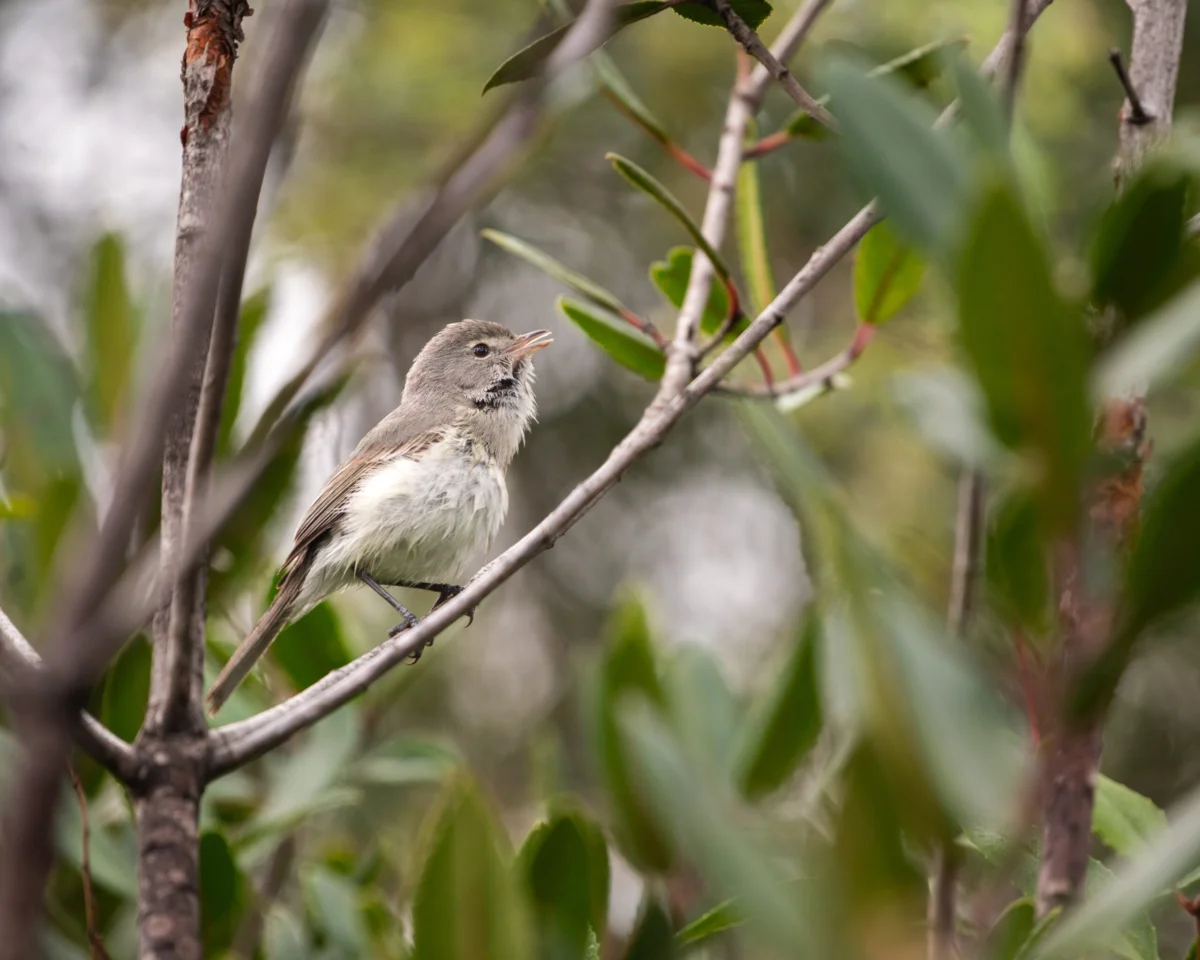
Early this spring, a sweet song, "Cheedle-cheedle-chee? Cheedle-cheedle-chew!", resonated through the air at the Audubon Center at Debs Park in northeast Los Angeles, signaling the arrival of the migratory Least Bell’s Vireo. This small, endangered songbird, likely returning from its wintering grounds in Mexico, paused at the center for sustenance, carrying with it an important comeback story that continues to unfold in the heart of one of America’s largest urban landscapes. Its re-emergence is not merely a heartwarming natural phenomenon but a testament to decades of dedicated conservation efforts aimed at revitalizing the once-degraded Los Angeles River and its surrounding ecosystems.
A Fragile Voice Returns: Understanding the Least Bell’s Vireo
The Least Bell’s Vireo ( Vireo bellii pusillus ) is a diminutive passerine, a subspecies of the Bell’s Vireo, characterized by its soft grayish plumage, faint eye-ring, and, most notably, its complex, melodious song. Weighing barely more than a nickel, this unobtrusive bird plays a crucial role in the riparian ecosystems it inhabits. Historically, the Least Bell’s Vireo was a common summer resident across much of lowland California, nesting in dense, shrubby vegetation along perennial and intermittent streams, rivers, and washes from Tehama County south to Baja California. Its diet consists primarily of insects and spiders gleaned from the dense foliage, making it an important natural pest controller within its habitat.
During the breeding season, typically from mid-March to late July, these vireos construct delicate, cup-shaped nests, intricately woven from plant fibers and spider silk, suspended precariously from forked branches in the understory of willow thickets, mulefat, and elderberry patches. They are fiercely territorial, with males often arriving first to establish breeding grounds before females join them. The successful rearing of chicks is highly dependent on the availability of undisturbed, dense riparian habitat, which provides both nesting sites and ample insect prey. Their annual migration from Mexico highlights their dependence on a healthy network of habitats spanning international borders.
A History of Decline: The Path to Endangered Status
The melodic presence of the Least Bell’s Vireo across California’s riparian corridors faced a severe threat throughout the 20th century. Its precipitous decline was primarily driven by two major factors: extensive habitat loss and nest parasitism. As California experienced unprecedented population growth and agricultural expansion, vast stretches of its natural waterways were transformed. Rivers were dammed for water supply and flood control, channelized with concrete to protect burgeoning urban centers, and their adjacent floodplains cleared for agriculture, housing, and infrastructure. This systematic destruction of riparian ecosystems, particularly the willow-cottonwood forests and dense scrub the vireo relies upon, eliminated approximately 90-95% of its historical breeding habitat.
The Los Angeles River epitomized this transformation. Once a meandering, dynamic river supporting a rich tapestry of wetlands and riparian forests, it was largely encased in concrete following devastating floods in the early to mid-20th century. This engineering marvel, designed for flood control, effectively sterilized miles of the river, eradicating nearly all native vegetation and wildlife habitat. For the Least Bell’s Vireo, this meant the loss of critical breeding grounds, foraging areas, and migratory stopovers.
Compounding habitat loss was the pervasive threat of the Brown-headed Cowbird (Molothrus ater). Cowbirds are brood parasites; they lay their eggs in the nests of other bird species, including the vireo, leaving the host parents to raise their young. Cowbird chicks typically hatch earlier, grow faster, and are larger and more demanding than vireo chicks, often outcompeting them for food and parental attention. This often results in the starvation or expulsion of the host’s own offspring. The increased fragmentation of habitats due to urbanization also inadvertently provided more access points for cowbirds into vireo territories, exacerbating the problem.
By the 1970s, the Least Bell’s Vireo population had plummeted dramatically, with only a few hundred pairs remaining, primarily in southern California. Recognizing the dire situation, the state of California listed the subspecies as endangered in 1980. This was followed by its federal listing as endangered under the U.S. Endangered Species Act in 1986, a critical step that mandated federal protection and spurred significant conservation efforts.
The Los Angeles River: From Concrete Channel to Ecological Corridor
The transformation of the Los Angeles River from a natural, biodiverse waterway to a utilitarian flood control channel is a stark narrative of human impact on nature. Prior to extensive urbanization, the river was a dynamic, braided system, its banks lined with vast expanses of riparian woodlands and marshlands. These habitats supported an incredible array of wildlife, including healthy populations of Least Bell’s Vireos, salmon, and numerous other species. Major floods, particularly those in 1914, 1934, and the devastating flood of 1938, prompted the U.S. Army Corps of Engineers to undertake massive channelization projects. By the 1960s, much of the river, from the San Fernando Valley to Long Beach, was encased in concrete, ostensibly taming its destructive potential but at an immense ecological cost.
For decades, the concrete river was largely forgotten as a natural entity, viewed merely as a storm drain. However, a paradigm shift began in the late 20th century, fueled by growing environmental awareness and the efforts of grassroots organizations. Visionaries began to advocate for the river’s ecological restoration, recognizing its potential as a green artery through the urban fabric of Los Angeles. This movement gained significant momentum in the early 2000s, leading to various restoration projects aimed at softening the concrete, re-establishing native vegetation, and improving water quality and flow. The vision shifted from purely flood control to integrated river management that balanced flood protection with ecological enhancement and public access.
A Chronology of Hope: Milestones in Vireo Recovery
The comeback of the Least Bell’s Vireo is a story spanning decades, marked by crucial legislative action, scientific research, and persistent on-the-ground restoration:
- 1980: The State of California lists the Least Bell’s Vireo as endangered. This early recognition set the stage for state-level conservation initiatives.
- 1986: The U.S. Fish and Wildlife Service lists the Least Bell’s Vireo as federally endangered. This critical designation brought the full weight of the Endangered Species Act to bear, mandating protection of the species and its habitat, and unlocking federal funding for recovery efforts.
- Early 1990s: Targeted Brown-headed Cowbird control programs are initiated in key vireo breeding areas, particularly in protected habitats like Camp Pendleton. These programs proved highly effective in reducing nest parasitism and increasing vireo reproductive success.
- Late 1990s – Early 2000s: Initial, small-scale habitat restoration projects begin along sections of the Los Angeles River, spearheaded by various environmental groups and local agencies. These early efforts focused on planting native riparian species and removing invasive plants.
- 2005 – Present: The Audubon Center at Debs Park, in collaboration with California State Parks and other partners, intensifies habitat restoration efforts at sites like Rio de Los Angeles State Park in Cypress Park. These multi-year projects focus on creating dense, complex riparian scrub, specifically designed to meet the Least Bell’s Vireo’s nesting and foraging needs.
- 2010s: Coordinated population monitoring across Southern California begins to show glimmers of hope, with small but significant increases in vireo numbers in restored habitats. Reports, such as those from Howell et al. (2010), highlight breeding records in areas of the Central Valley following decades of extirpation, indicating broader recovery trends.
- Recent Years: Consistent sightings and breeding activity are observed along the Los Angeles River, confirming that these urban restoration efforts are providing viable habitat. Data from eBird Trends further suggests an encouraging 25% increase in the species’ population across California, reflecting the cumulative impact of conservation work.
Supporting Data and Scientific Validation
The recovery of the Least Bell’s Vireo is not merely anecdotal; it is supported by robust scientific data and consistent monitoring. While the largest contiguous populations still reside in well-managed preserves like Marine Corps Base Camp Pendleton (as detailed in USGS annual reports such as the 2022 report), the significance of increasing urban populations cannot be overstated. The 25% increase observed in California via eBird Trends is a powerful indicator that the species is responding positively to sustained habitat protection and restoration.
Scientists emphasize that the key to this recovery lies in a multi-faceted approach. First, the creation of dense, structurally complex riparian habitat, mimicking the natural conditions the vireo evolved to use, is paramount. This involves planting native species like various willows (Salix spp.), mulefat (Baccharis salicifolia), and California elderberry (Sambucus nigra ssp. caerulea), which provide the necessary cover for nesting and foraging. Second, active management, including targeted Brown-headed Cowbird population control, has been crucial. As Griffith and Griffith (2000) highlighted, effective cowbird control has been a management success story in vireo recovery, significantly boosting nesting success rates. These programs involve the humane trapping and removal of cowbirds from critical vireo breeding areas, thereby reducing parasitism pressure.
Ongoing monitoring protocols are also vital. During the breeding season, restoration activities are carefully managed or paused in areas where vireo nesting is detected, preventing disturbance. California State Parks, as managers of sites like Rio de Los Angeles State Park, establish specific zones where human activity is limited, ensuring that these sensitive songbirds can breed without undue stress. This adaptive management approach allows conservation teams to respond to the birds’ needs in real-time.
Voices of Hope: Statements from Related Parties
The success witnessed along the Los Angeles River is a collaborative achievement, involving numerous organizations and individuals. Representatives from the Audubon Center at Debs Park express profound optimism regarding the vireo’s return. "The Least Bell’s Vireo serves as an incredible indicator species for the health of our urban riparian ecosystems," states a spokesperson for the center. "Their presence confirms that our long-term efforts in habitat restoration are genuinely making a difference. We are not just planting trees; we are rebuilding an entire ecological community, piece by piece."
California State Parks, as crucial partners and stewards of the land, echo this sentiment. "Our collaboration with Audubon and other environmental groups at Rio de Los Angeles State Park exemplifies how urban parks can become vital sanctuaries for endangered species," explains a park official. "We are committed to creating and maintaining these essential habitats, understanding that the health of our natural spaces directly impacts the well-being of both wildlife and our human communities."
Environmental scientists and ornithologists who have tracked the vireo’s journey highlight the broader implications. "The Los Angeles River, once written off as an ecological wasteland, is now emerging as a beacon of urban conservation," comments Dr. Elena Ramirez, an independent ornithologist specializing in riparian birds. "The vireo’s increasing numbers here demonstrate that even heavily modified landscapes can be rehabilitated with sustained effort and scientific guidance. It offers a powerful model for cities worldwide facing similar environmental challenges."
Broader Impact and Implications: A Model for Urban Conservation
The comeback of the Least Bell’s Vireo in Los Angeles extends far beyond the survival of a single species. It signifies a profound ecological shift and offers a compelling model for urban conservation globally. The restoration of the Los Angeles River is transforming it from a mere conduit for floodwaters into a vibrant, interconnected ecological corridor, capable of supporting a rich diversity of life.
The benefits radiate throughout the ecosystem:
- Biodiversity Enhancement: As the dense, native riparian habitat returns, it provides shelter and food for a multitude of other species, including migratory songbirds, pollinators (butterflies, bees), amphibians, reptiles, and even small mammals. The vireo’s recovery acts as an umbrella effect, safeguarding other dependent species.
- Ecosystem Services: Healthy riparian zones improve water quality by filtering pollutants, help stabilize riverbanks, and contribute to local climate regulation through shading and evapotranspiration. They also provide crucial green infrastructure within a densely populated urban environment.
- Human-Nature Connection: The revitalized river corridor offers invaluable recreational opportunities for Los Angeles residents, including walking, biking, birdwatching, and simply connecting with nature. These green spaces are vital for mental and physical well-being, fostering a sense of community pride and environmental stewardship. Educational programs centered around the river and its wildlife, like those offered by the Audubon Center, help inspire future generations of conservationists.
- Resilience to Climate Change: Restored natural habitats are often more resilient to the impacts of climate change, such as extreme heat and altered precipitation patterns. Diverse plant communities can better withstand environmental stressors, providing more stable environments for wildlife.
However, the work is far from over. Ongoing challenges include the persistent threat of invasive species, the need for continued funding for maintenance and expansion of restoration projects, and managing the delicate balance between public access and wildlife protection. The sustained engagement of local communities, policymakers, and scientific institutions will be crucial for the long-term success of these efforts.
How You Can Contribute to the Vireo’s Future
The continued recovery of the Least Bell’s Vireo, and the broader health of the Los Angeles River ecosystem, depends significantly on community involvement. Individuals can play a direct role in supporting these delicate songbirds:
- Volunteer for Habitat Restoration: Participate in habitat restoration events organized by groups like the Audubon Center at Debs Park. These events involve planting native species, removing invasive plants, and maintaining restored areas, directly contributing to the creation of vital vireo habitat.
- Plant Native Species at Home: Transform your own garden into a mini-habitat by planting native California species. These plants provide food and shelter for local wildlife, reduce water consumption, and help create stepping stones for birds moving through urban areas.
- Keep Dogs on Leash in Natural Areas: In parks and natural open spaces, especially those adjacent to riparian zones, keeping dogs on a leash is paramount. Least Bell’s Vireos nest closer to the ground, and off-leash pets can inadvertently disturb nests, damage critical nesting habitat, or cause parent birds to flee, leaving eggs or chicks vulnerable to predators or exposure.
- Report Injured or Orphaned Birds: If you encounter an injured or orphaned bird, contact local wildlife rehabilitation centers for guidance (resources like Audubon’s "What to Do if You Find an Injured or Orphaned Bird" provide valuable information).
With sustained community involvement, scientific guidance, and dedicated conservation efforts, the quiet, hopeful song of the Least Bell’s Vireo can remain a cherished part of Los Angeles’s natural soundscape for generations to come, a living symbol of urban ecological triumph.
