
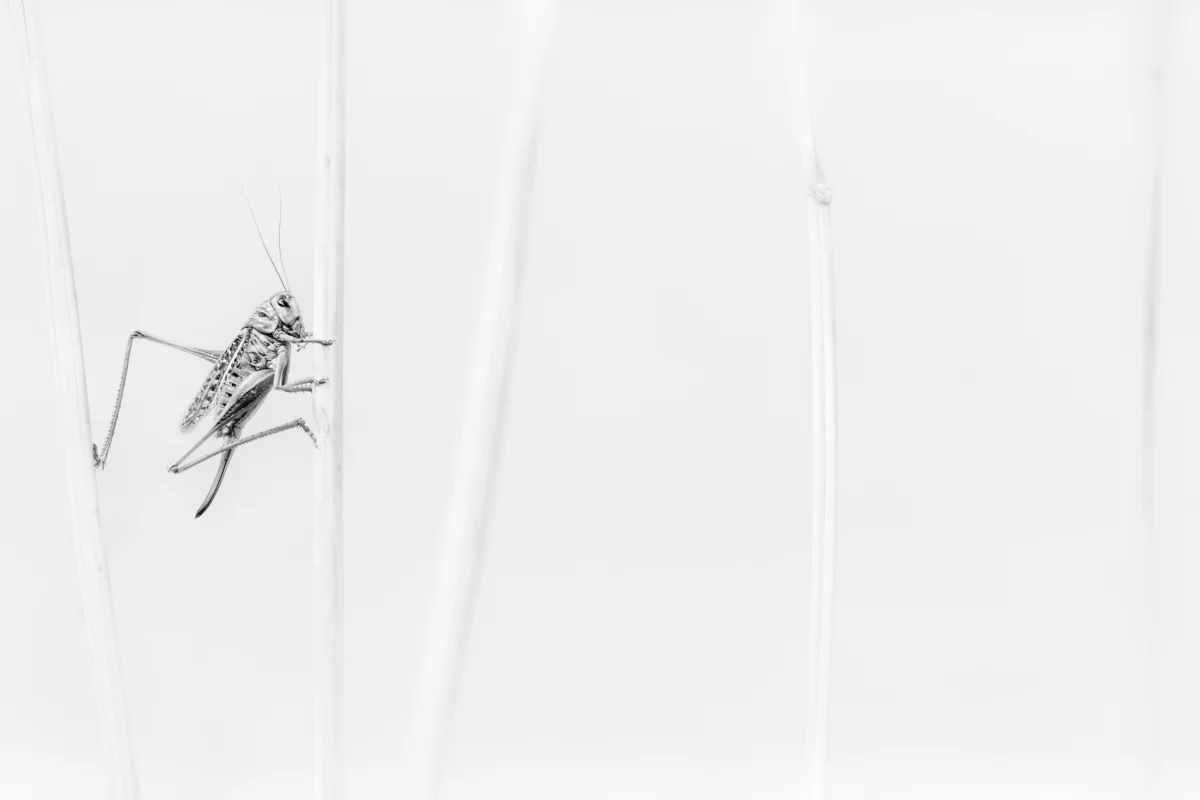
Elisa Confortini, a renowned nature photographer, has cultivated a profound passion for capturing the natural world, particularly through the intricate lens of macro photography, with arthropods as her primary muses. This specialized focus began with the practical advantage of these creatures being readily accessible, often found even in her immediate surroundings. Beyond convenience, the act of observing them up close proved consistently fascinating and deeply instructive, revealing behaviors and characteristics that often escape casual human notice. Confortini’s annual photographic ritual involves seeking out cherished subjects or discovering new species, engaging in long-term observation that enables her to document intricate behaviors, such as mating rituals, predatory tactics, or subtle interactions within their micro-habitats, which would otherwise remain unseen. Her artistic objective is to portray these creatures in diverse ways, striving to convey their unique traits and habits in a manner that profoundly captivates the viewer, often through a striking departure from conventional color photography.
The Allure of the Miniature World: Arthropods as Artistic Inspiration

Arthropods, a phylum encompassing insects, arachnids, and crustaceans, represent the most diverse group of animals on Earth, accounting for over 80% of all known animal species. Their sheer variety, ranging from the iridescent wings of a butterfly to the complex exoskeletons of beetles and the delicate webs of spiders, has captivated human imagination for millennia. Throughout history, these creatures have elicited a complex spectrum of emotions, from admiration for their beauty and ecological efficiency to primal fear and revulsion. Their presence is inextricably woven into the fabric of daily life, shaping human culture, agriculture, and even mythology. This enduring, multifaceted relationship—a blend of love, hate, veneration, and fear—continues to inspire artists globally. The intricate forms, diverse life cycles, and often alien beauty of arthropods offer an inexhaustible wellspring for creative expression. For photographers like Confortini, their representation serves as a powerful reflection of humanity’s evolving connection with the natural world, a relationship that remains a perpetual source of wonder and scientific inquiry. Beyond their aesthetic appeal, arthropods play critical roles in ecosystems, acting as pollinators, decomposers, and integral components of food chains, making their detailed photographic documentation valuable for both art and science.
The Art of Macro Photography: A Window into Hidden Universes
Macro photography, the art of capturing extreme close-up images of small subjects, allows photographers to reveal details invisible to the naked eye. This genre demands not only specialized equipment, such as macro lenses and extension tubes, but also immense patience, precision, and an intimate understanding of the subject’s behavior and environment. The challenges are numerous, from achieving razor-sharp focus on minute features to managing incredibly shallow depths of field and dealing with the often skittish nature of small creatures. Confortini’s dedication to long-term observation underscores a commitment to understanding her subjects beyond mere superficial capture. By spending extended periods with individual species, she gains insight into their routines, movements, and characteristic postures, enabling her to anticipate photographic opportunities and capture authentic, unposed moments. This deep engagement transforms photography from a fleeting act into a form of biological study, where each click of the shutter contributes to a broader narrative about the life of these miniature inhabitants.

A Timeless Medium: The Enduring Power of Black and White
In an era saturated with vibrant digital imagery, where technological advancements allow for effortless color manipulation, black and white photography persists as a potent and timeless medium. Far from being a relic of the past, monochrome imagery has experienced a resurgence, cherished for its unique ability to transcend the literal and delve into the evocative. Historically, black and white was the only option available to photographers from the medium’s inception in the 19th century until the widespread adoption of color film in the mid-20th century. Pioneers like Ansel Adams elevated landscape photography to an art form through their masterful use of light, shadow, and tonal range. Today, choosing to work in black and white is a deliberate aesthetic and stylistic decision, a conscious choice to strip away the potentially distracting elements of color and instead emphasize form, texture, light, and emotional resonance. This deliberate simplification often amplifies the core message or feeling of an image, allowing it to communicate on a deeper, more primal level.
Why Monochrome? A Photographer’s Rationale

Confortini articulates several compelling reasons for her preference for monochrome in capturing the miniature world:
- Focus on the Subject: Color, while often beautiful, can inadvertently draw attention away from the primary subject. In the often chaotic and visually dense environments of arthropods, the removal of color can isolate the subject, eliminating chromatic distractions and allowing its form, intricate details, and unique characteristics to command full attention. The viewer’s eye is guided directly to what the photographer intends to highlight.
- Highlighting Textures, Contrasts, and Shapes: The absence of color forces the viewer to engage with the image’s fundamental elements. Textures, such as the segmented armor of a beetle or the delicate fuzz on an insect’s leg, become more pronounced. Contrasts between light and shadow are intensified, creating dramatic interplay. Shapes and lines, whether geometric or organic, gain prominence, contributing significantly to the image’s overall composition and emotional impact. These elements often convey a sense of gravitas, mystery, or fragility that might be diluted by a colorful palette.
- Evoking Drama and Mystery: The tonal nuances inherent in black and white photography—from deep, velvety blacks to luminous whites and a spectrum of grays—can powerfully evoke feelings of drama, solemnity, and mystery. A monochrome image often possesses a timeless quality, inviting contemplation and encouraging a deeper emotional connection with the subject, transforming a simple observation into a narrative.
- Emphasis on Composition and Light: Without the vibrancy of color to rely on, photographers are compelled to pay meticulous attention to composition, light, shadow, and contrast. These become the paramount tools for creating an effective and compelling image. The interplay of light and dark can sculpt the subject, defining its contours and adding dimensionality. Strong compositions, such as leading lines, rule of thirds, or negative space, become even more critical in guiding the viewer’s eye and creating visual harmony.
- Discovering the True Essence: Monochrome photography challenges both the photographer and the viewer to look beyond the superficial appeal of color and discover the true essence, character, and intrinsic beauty of the image. It encourages a more analytical and contemplative gaze, stripping away external layers to reveal the core visual message.
- Enhanced Post-Processing Control: In the digital darkroom, black and white conversion offers unparalleled control over light and shadow. Photographers can selectively adjust the luminosity of specific color channels, fine-tune contrast, and manipulate tonal curves to achieve precise artistic effects that would be impossible or significantly less effective in color. This allows for a refined level of expression, shaping the mood and narrative of the final image.
Approaches to Monochrome: From Field to Post-Processing
There are fundamentally two approaches to black and white photography. The first involves photographing as usual, but with a heightened awareness of scenes that inherently possess strong compositional elements, textures, or light conditions that would translate well into monochrome. This requires a keen eye for potential black and white conversions even when shooting in color.

The second, more immersive approach, is to deliberately commit to working exclusively in black and white. For photographers adopting this method, setting the camera’s picture style to monochrome can be an invaluable training tool. This forces the photographer’s brain to "see" and think in terms of tones, contrasts, and shapes rather than colors. This practice helps to develop a new visual sensitivity, sharpening the ability to identify compelling monochrome compositions and anticipate how colors will translate into shades of gray. This mental shift is particularly challenging when photographing subjects like insects, which often inhabit vibrant, colorful environments of grasses and flowers. Learning how various colors—a bright red ladybug, a green leaf, a blue sky—will render as specific shades of gray is a crucial skill. Experimenting by photographing diverse bright colors and then reviewing their black and white conversions helps to build this understanding and reveal the transformative power of monochrome.
Confortini personally favors converting images to black and white during post-processing. This method offers several advantages. Firstly, it provides maximum control over tonal nuances and intricate details, allowing for precise adjustments that might not be possible with in-camera monochrome settings. Secondly, as monochrome is not her sole photographic modality, it grants her the flexibility to calmly assess each image and determine whether its artistic potential is best realized in color or black and white. Some images immediately resonate with a monochrome vision, while others require careful conversion and meticulous adjustments before their effectiveness becomes fully apparent, highlighting the nuanced decision-making involved in her creative process.
Revisiting the Archive: The Value of Older Works

An often overlooked yet highly rewarding practice is to revisit older photographic archives and experiment with converting existing color images to black and white. This process can be transformative, revealing new perspectives, generating fresh ideas, and inspiring future photographic endeavors. An image that may have been deemed ordinary in color could suddenly gain a powerful, timeless quality in monochrome, emphasizing elements previously obscured by chromatic distractions.
However, a critical eye is essential. Not all images are suitable for black and white conversion. If color plays an integral role in conveying the story, mood, or scientific information within an image, then converting it to monochrome would detract from its intended message. Confortini maintains this principle: "If color contributes meaningfully to the story I want to tell, I never convert to black and white." Conversely, when the atmosphere, graphic qualities, or emotional depth are paramount, monochrome can significantly enhance the artistic outcome, elevating the image beyond a mere literal depiction.
Strategic Applications: When Black and White Excels in Macro

Confortini outlines specific scenarios where black and white photography offers distinct advantages in her macro work:
- Subject Isolation: In the often visually busy and cluttered environments where arthropods reside, isolating the subject is crucial. Monochrome achieves this by chromatically separating the subject from its surroundings, reducing visual noise and emphasizing its form. This allows the viewer to focus exclusively on the creature itself, appreciating its structure and presence without distraction.
- Harsh Light and Shadow: Challenging lighting conditions, particularly harsh midday sun that creates strong contrasts, can be difficult to manage in color photography. However, in black and white, these conditions can be harnessed. Monochrome accentuates dramatic shadows and highlights, allowing for effective use of negative space and creating images with stark, powerful compositions. The interplay of light and dark becomes a central element of the visual narrative.
- High-ISO Images and Chromatic Noise: When shooting in low-light conditions, photographers often need to increase their camera’s ISO sensitivity, which can introduce digital noise, particularly chromatic noise (colored speckles). While often undesirable in color images, monochrome conversion can transform this noise into a film-like grain, adding atmosphere and character rather than appearing as a technical flaw. This effectively "rescues" images that might otherwise be unusable in color.
- Correcting Color Casts: Environmental factors can sometimes introduce undesirable color casts that are difficult to correct in post-processing. For instance, water in certain ponds might have a green or yellow tint. By converting such images to black and white, these intractable color casts are eliminated, allowing the photographer to focus on the subject and composition without the distraction of an unnatural color palette.
- Experimental Techniques: When employing experimental techniques like double exposures or intentional camera movement (ICM), color can sometimes appear unnatural or distracting, undermining the abstract or ethereal quality intended. Monochrome, in these instances, can unify the disparate elements, focusing attention on the artistic movement, forms, and textures created by these techniques, enhancing their interpretive power.
It might seem that monochrome serves as a convenient solution for technically imperfect images, but Confortini asserts the opposite. She converts only a select few images—those that inherently possess strength, graphic clarity, or a profound expressive potential that transcends color. The decision to go monochrome is an enhancement, not a cover-up for deficiencies.
Minimalism and Abstraction: Unveiling the Essence of Form

In macro photography, black and white provides a powerful avenue for exploring minimalism. By stripping away color, clutter, and unnecessary complexity, photographers can focus on simple, yet compelling compositions. This approach encourages viewers to engage with the fundamental elements of the image. Enhancing the silhouette of an arthropod against a contrasting background is a particularly intuitive application of black and white, but the possibilities extend far beyond.
Exploring shapes becomes paramount. Geometric forms, whether naturally occurring or implied by the subject’s structure, offer a sense of order and stability. Irregular shapes, conversely, introduce dynamic movement and an element of unpredictability. Without the distraction of color, the subtle differences in light and shadow become more pronounced, allowing contrasts to emerge with striking clarity, defining the subject’s form and adding depth.
Composition is often the cornerstone of creativity in photography. Even in macro, the subject does not always need to fill the frame. Close-up work, especially in monochrome, lends itself well to abstraction. By focusing on a segment of an arthropod’s body—a single eye, a textured leg, or a delicate antenna—the image can transcend literal representation and become an abstract study of form, texture, and light.

Limited depth of field, a common characteristic of macro photography, can also be employed creatively in black and white. By isolating a single sharp element, everything else melts into an elegant, ethereal blur. This guides the viewer’s eye directly to the intended focal point, creating an intimate connection with the subject and offering unexpected, often dreamlike, perspectives.
Texture, Grain, and Mood: Evoking Emotion
The presence of grain, whether natural or introduced, can evoke strong emotional responses in black and white photography. In monochrome macro, grain can significantly enhance the atmosphere of an image, particularly when the environment and mood are prioritized over absolute detail. While grain can result from underexposure or high ISO settings, Confortini prefers to maintain clean images in-camera and then judiciously add grain during editing. This allows for precise control over its intensity, ensuring it complements the image’s mood rather than detracting from its clarity. The judicious application of grain can imbue an image with a classic, timeless feel or amplify a sense of raw realism, adding another layer of artistic expression.

It is often suggested that black and white photography serves as a valuable learning tool for beginners, helping them understand light and composition. However, in the realm of macro photography, Confortini believes that this artistic choice typically emerges later in a photographer’s journey, once a personal visual language has already begun to develop. For her, it became a path demanding deeper exploration. She discovered that in certain photographic situations, color inadvertently limited her creative interpretation, distracting from the very atmosphere, emotion, and sensations she aimed to convey during the act of photographing.
Ultimately, while the creation of vibrant, meticulously detailed color close-ups of insects is a valid and popular approach, Confortini’s work demonstrates an alternative. Her choice to express their beauty through monochrome allows for a more interpretive portrayal, one that evokes the essence of their environment, behavior, or character in a profoundly unique way. This represents a personal creative choice—a deliberate artistic decision that unveils a small, yet immense universe: rich, unfamiliar, fascinating, and at times unsettling, seen through a remarkably different perspective. Her images challenge viewers to reconsider their preconceived notions of these often-overlooked creatures, inviting them into a world where light and shadow dance to reveal the true artistry of nature’s design.
