
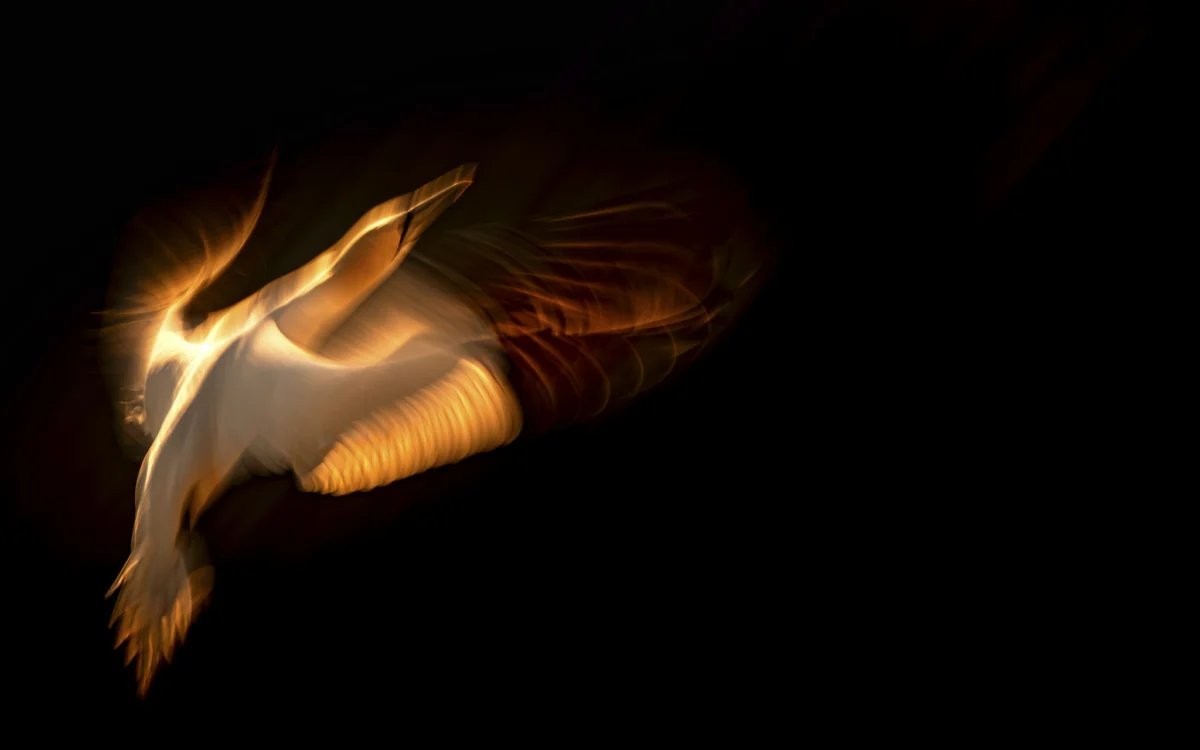
Photographer Rachel Bigsby is redefining the landscape of wildlife photography, moving beyond traditional documentary approaches to capture the profound essence and emotional reality of the natural world, particularly seabirds. Her philosophy, which she terms "natural artistry," emphasizes witnessing, patience, and translating the innate grammar of nature into images that resonate deeply with viewers. Bigsby’s work seeks not merely to record what an animal looks like, but to convey the visceral experience of being in its presence, transforming observations into evocative narratives that speak to the deeper stories of species and their environments.
Bigsby articulates a specific moment that epitomizes her approach: the pause just before pressing the shutter, when the world seems to distill into a single, profound instant. She describes this as a shift from mere "wildlife photography" to "a sentence being written in a language older than any of us." This philosophy underpins her pursuit of "natural artistry," a term she carefully defines as recognizing and translating the inherent beauty and essence that already exists in nature, rather than imposing an external style. For Bigsby, this artistry resides in the fluid grace of a seabird riding the wind, the delicate interplay of light and feather, the stillness preceding a dive, or the dynamic chaos of a storm-tossed colony. Her goal is to photograph seabirds not as subjects or objects, but to communicate the feeling of proximity to them, expressing their essence through light, movement, texture, color, behavior, environment, and perspective.
A Deep-Rooted Connection to the Wild: A Chronology
Rachel Bigsby’s profound connection to the natural world predates her photographic career, tracing back to formative childhood experiences. Her late grandfather, a dedicated naturalist and fisherman, instilled in her a foundational reverence for nature, teaching her to "truly see" rather than merely observe. This early mentorship focused on cultivating attention and respect for the environment, viewing nature not as a collection of facts but as a living entity to be understood.

At the age of six, Bigsby joined the Scout Association, an affiliation that significantly shaped her life’s trajectory. Weekends spent on rugged trails, navigating with weathered maps, fostered a practical intimacy with the outdoors. This sustained engagement allowed the land to transcend "scenery" and become a constant companion, establishing nature as her primary classroom.
Photography entered her life more subtly. A childhood friend introduced her to the medium, prompting Bigsby to experiment with an iPod camera. Her initial attempts were small explorations of light and form: the way morning dew caught the light, or how a dandelion’s silhouette mimicked a drawn image. While her friend’s interest waned, Bigsby’s deepened, leading her to independently pursue the craft.
A pivotal moment occurred when she observed a Northern Fulmar gliding along coastal cliffs. Its effortless mastery of the air, defying gravity with stiff, sure wings, captivated her. This encounter sparked an intense research period, revealing the Fulmar’s kinship with the albatross, a bird of legend that had resonated with her childhood dreams. From this point, seabirds ceased to be merely a photographic subject; they became her world.
Driven by this newfound passion, Bigsby saved diligently for her first DSLR camera. This acquisition broadened her horizons, granting access to new species, colonies, and an expanded array of photographic questions. As her images gained public recognition, opportunities arose, revealing the non-linear path of a nature photographer. She embraced volunteer work to gain access to remote locations, undertaking arduous tasks such as scrubbing compost toilets on secluded islands, scything bracken in summer heat, and repairing weathered structures with antiquated tools. These periods of intensive labor were invariably followed by precious dusk hours when the seabird colonies reclaimed their space, and Bigsby immersed herself in watching, listening, and learning. This extensive immersion, focused on understanding behaviors, biology, and ecology rather than immediate photography, forms the bedrock of her work’s credibility.
Beyond Technical Perfection: Embracing Imperfection and Emotion

Bigsby’s photographic philosophy directly challenges the prevailing emphasis on technical perfection in wildlife photography. She argues that an overreliance on razor-sharp focus, pristine backgrounds, and textbook compositions can lead to images that are competent but ultimately forgettable—photographs that show what a bird looks like, but fail to convey what it is.
A defining moment in her artistic development came with a photograph of an Atlantic Puffin. This image, which she describes as not traditionally "perfect" due to soft focus, a slow shutter speed, and a cluttered background, nevertheless moved her profoundly. The golden light piercing the puffin’s delicate wings, combined with the blur of its movement, transcended mere documentation. It became "a whisper of motion, dissolving into atmosphere like breath on wind," and crucially, "looked like a feeling." This experience solidified her understanding that wildlife photography is fundamentally about storytelling, emotion, and artistry, rather than just documentation.
The inherent untidiness of the wild, where seabirds operate under the relentless influences of weather, tide, hunger, fear, devotion, and instinct, reinforces Bigsby’s artistic stance. She questions why images should pretend otherwise, advocating for a truthful portrayal of this chaotic, fluid, and vibrant reality. This approach was further refined during a week of volunteering on an island plagued by continuous rain, fog, and mist. Initially despairing of the "bad weather," Bigsby realized her perspective was skewed by an imposed idea of photographic perfection. For the birds, these were simply the conditions of life. By ceasing to resist and instead collaborating with the environment, the fog transformed into a "blank page," the whiteness a "canvas." This accidental foray into high-key imagery subsequently became a signature element of her visual style, demonstrating that meaningful images often emerge when one stops demanding specific conditions and instead observes what is already present.
The Pillars of Natural Artistry: Light, Shape, Texture, Environment
For Bigsby, the elements of photography serve as conduits for emotion and narrative. Light, she asserts, is not a mere technical setting but the "emotional spine of an image," defining how a subject is seen, felt, and remembered. She recounts a morning in Shetland where the first light illuminated distant rock peaks while the colony below remained in darkness. A single Gannet ascended from shadow into this illumination, its white wings glowing against the dark cliff—a moment that revealed light’s power to create drama and visible mood.

Color is also approached with intention, primarily to support the emotional tone of a scene. She notes how the subtle, stormy tones of Northern Fulmars are best complemented by chalk-white cliffs or dark grey rock, allowing their inherent mood to emerge, rather than being overwhelmed by a bright blue background. When color becomes a distraction, Bigsby opts for monochrome, viewing black and white not as a shortcut to seriousness but as a deliberate choice to emphasize shape, light, and texture—the foundational "bones" of the image.
Texture, in her view, imbues a photograph with tangibility, allowing the viewer to "feel salt in the air." Shape ensures intentionality, transforming wildlife into design through curves, arcs, symmetry, and contrast. Crucially, Bigsby emphasizes that the environment is not merely a backdrop but a character. A bird without context, she argues, is "just" an animal; honestly placed within its world, it becomes a story of scale, struggle, intimacy, resilience, and fragility. This includes acknowledging difficult truths, where beauty and grief, life and loss, coexist, portraying the natural world as a complex reality rather than a romanticized postcard.
Patience, Presence, and the Language of Birds
Central to Bigsby’s practice is the concept of patience—not merely waiting, but "knowing what you are waiting for." This profound understanding stems from treating animal behavior as a language, learning to recognize patterns and cues that transform the wild from random occurrences into readable narratives. This deep observational practice allows her to anticipate events rather than merely react, turning photography into an act of intention.
She dedicates countless hours to observing seemingly ordinary behaviors: preening, shifting, calling, settling, rising. Yet, it is in the smallest, subtle changes—a tightening posture, a lifted glance, a repeated gesture—that she discerns signals of impending action. This immersive observation fosters a transformative relationship between photographer and subject, shifting from "taking" an image to "listening" to the story unfolding.

Through this deep listening, Bigsby receives what she describes as "gifts": reunion rituals, courtship exchanges, synchronized movements of bonded birds, or moments of unexpected softness amidst colony chaos. These are more than mere behaviors; they are profound stories of devotion, endurance, and survival, played out on precarious cliff edges where the wind never truly rests. It is this combination of freedom and resilience, sculpted by time and tide in places that feel like the "edge of the world," that keeps seabirds as her enduring muse, granting her a sense of profound liberation in their presence.
Implications and Broader Impact: An Invitation to Authenticity
Rachel Bigsby’s approach has significant implications for the broader field of wildlife photography and its role in conservation. In an era where digital tools can easily create technically flawless but emotionally sterile images, her work champions authenticity and artistic integrity. Her philosophy challenges photographers to look beyond conventional metrics of success and instead cultivate a personal, deeply felt connection with their subjects.
Supporting Data and Context:
The field of wildlife photography has long grappled with the tension between scientific documentation and artistic expression. Early wildlife photography, exemplified by figures like George Shiras III, often prioritized scientific accuracy and trophy shots. Over time, photographers like Ansel Adams (though primarily a landscape photographer) influenced the aesthetic potential of natural subjects, while conservationists like Eliot Porter showcased the beauty of nature to inspire preservation.
In contemporary wildlife photography, the debate continues regarding the use of post-processing, artificial lighting, and the pursuit of "hero shots" that might misrepresent an animal’s natural behavior or environment. Bigsby’s "natural artistry" offers a compelling counter-narrative, advocating for an approach where the imperfections of the wild are embraced as integral to its beauty and truth. This resonates with a growing movement towards "ethical wildlife photography" which prioritizes animal welfare, minimizes disturbance, and portrays subjects in their authentic habitats.

Furthermore, emotionally resonant imagery is increasingly recognized by conservation organizations as a powerful tool for public engagement. While scientific data is crucial, evocative photographs that convey the struggle, beauty, and vulnerability of species can foster empathy and inspire action in ways that purely factual presentations cannot. Seabirds, in particular, face numerous threats including climate change, plastic pollution, overfishing, and habitat loss. According to the IUCN Red List, a significant percentage of seabird species are threatened, with populations declining globally. Images that convey the inherent drama and resilience of these birds, as Bigsby’s do, can serve as vital calls to awareness and protection.
Official Responses and Industry Reception (Inferred):
While specific official statements regarding Rachel Bigsby’s individual work are not provided in the original text, her philosophy aligns with a growing segment of the photography community and conservation sector that values emotional impact and artistic integrity. Industry discussions often highlight the need for images that move beyond mere identification to create a deeper connection between humans and the natural world. Photography competitions, for instance, are increasingly recognizing and rewarding images that demonstrate creative vision, emotional depth, and a unique perspective, even if they deviate from strictly "perfect" technical standards. Her emphasis on understanding behavior and ecology through extensive fieldwork would be highly regarded by conservation scientists and seasoned naturalists, lending scientific credibility to her artistic output.
Broader Impact and Implications:
Bigsby’s work serves as an invitation, rather than a rulebook, to aspiring and established photographers alike. She contends that while technical settings provide the "scaffolding," they cannot imbue an image with "soul." The enduring power of a photograph, she argues, stems from the photographer’s unique vision, feeling, and connection. By challenging the "loudest voices" that insist on rigid rules, Bigsby champions honesty and emotional resonance as the true hallmarks of memorable images.
Her message provides permission for photographers to create work that genuinely matters to them, even if it diverges from conventional expectations. In a world saturated with formulaic wildlife photographs, Bigsby advocates for images born of the heart—photographs that educate through beauty and honor the wild by telling its unvarnished truth. This approach encourages photographers to "go gently," "look closely," "wait longer," and allow the weather to shape the frame rather than ruin it. Ultimately, she implores artists to photograph the world not only as it is, but as it feels, recognizing that each individual’s perspective is uniquely valuable and irreplaceable. Her legacy may well be in inspiring a generation of photographers to seek deeper meaning and emotional authenticity in their portrayal of the natural world, thereby enriching both the art form and our collective understanding of Earth’s precious biodiversity.
