
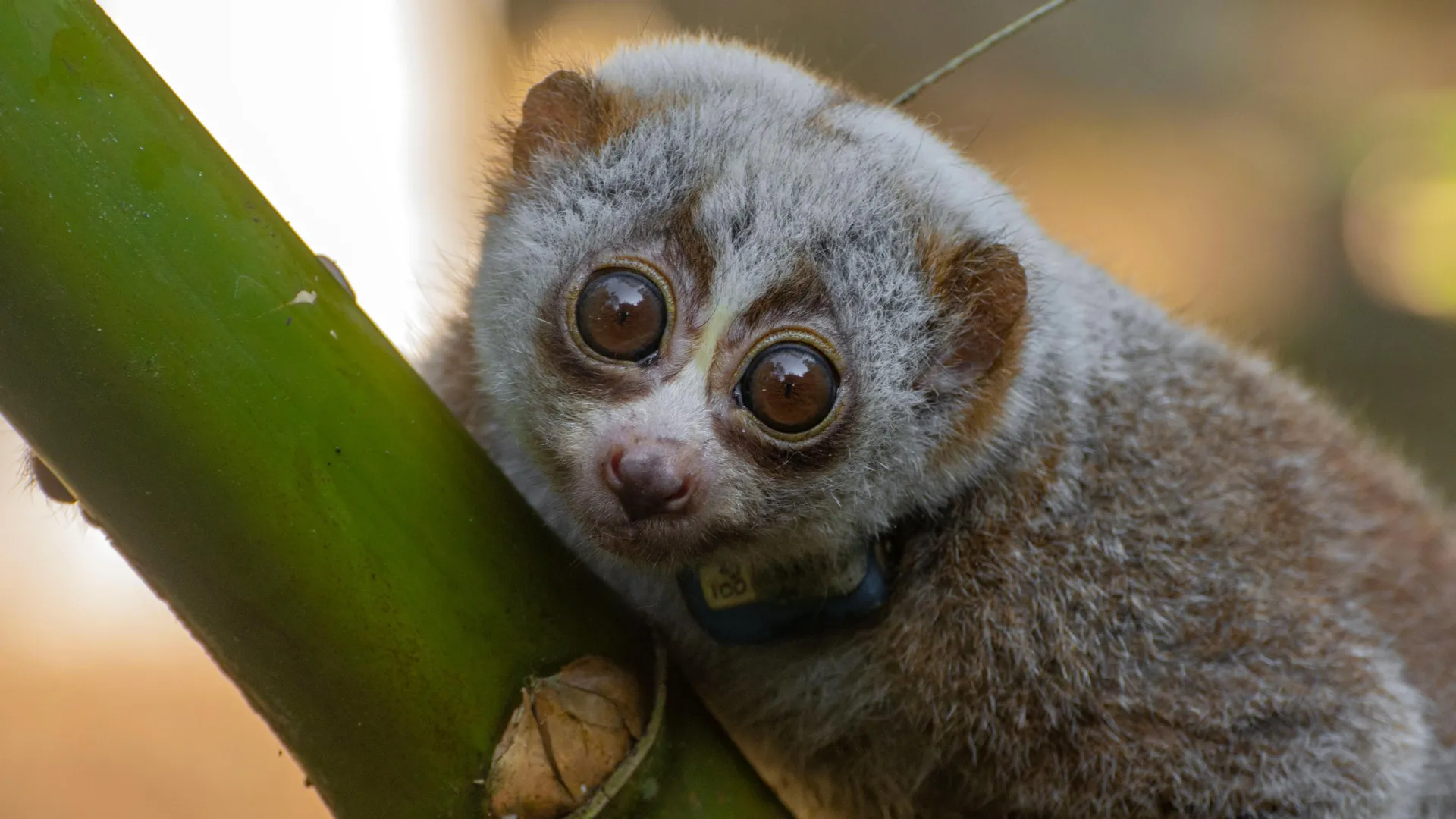
A groundbreaking scientific study has cast a critical light on the common practice of returning rescued wildlife to natural habitats, suggesting that such efforts do not always culminate in successful reintegration. Instead, for certain species, the wild can become what researchers starkly describe as a "death trap," with animals released after periods in captivity facing severe and often fatal risks. This alarming revelation challenges long-held assumptions within the conservation community and among the public regarding the automatic success of wildlife release programs.
The comprehensive findings, published in the esteemed journal Global Ecology and Conservation, detail the meticulous research conducted by a collaborative team of experts. Leading this vital work was primatologist Professor Anna Nekaris OBE of Anglia Ruskin University, alongside dedicated collaborators from the conservation organization Plumploris e.V. and the University of Western Australia. Their investigation focused on the post-release fate of Bengal slow lorises (scientific name: Nycticebus bengalensis), a species frequently targeted by illegal wildlife traders, after they were released into designated areas in Bangladesh. The study’s conclusions underscore an urgent need for re-evaluation of current release protocols, particularly for highly territorial and vulnerable species.
The Plight of the Slow Loris: A Global Conservation Crisis
Slow lorises, with their distinctive large eyes, appealingly gentle facial expressions, and compact size, possess features that have, tragically, made them highly sought after in the illicit pet trade. This intense demand has propelled them to the forefront of the illegal wildlife market, cementing their status as among the most heavily trafficked primates globally. The allure of these nocturnal creatures, often portrayed misleadingly as docile pets, fuels a brutal industry that extracts them from their natural forest homes.
All known species of slow loris are currently afforded protective status by the International Union for Conservation of Nature (IUCN), being classified as either Critically Endangered, Endangered, or Vulnerable. This precarious conservation status means that slow lorises are frequently the subjects of rescue operations, often confiscated from traffickers or seized from illegal pet owners. Following periods of rehabilitation, these rescued individuals are then typically released back into the wild, a practice intended to bolster dwindling wild populations and serve as a cornerstone of broader conservation strategies. However, the recent research indicates that these well-intentioned efforts may inadvertently be contributing to further mortality, necessitating a profound reconsideration of existing methods.
Unveiling the Post-Release Reality: A Grim Survival Rate
Despite the commendable intentions driving these release programs, the new study presents a stark and sobering reality regarding their efficacy. The researchers employed advanced tracking methods, fitting nine Bengal slow lorises with radio collars to meticulously monitor their movements and ascertain their survival rates following their release into a national park located in northeastern Bangladesh. This particular park had been previously utilized for similar wildlife release initiatives, making it a relevant and historically significant site for the study.
The results were unequivocally grim. Out of the nine slow lorises released, a mere two individuals managed to survive beyond the study’s observation period. The initial days post-release proved to be particularly perilous, with three of the nine animals succumbing to their fate within an alarming 10-day window. A further four individuals perished within six months, painting a clear picture of the significant challenges these animals faced upon returning to their natural habitat. Researchers were able to recover four of the seven deceased lorises, and a critical analysis of their remains yielded a shocking and consistent finding: all four showed irrefutable evidence of having been killed by other slow lorises. This discovery pointed directly to intraspecific aggression as a primary cause of mortality.
Territorial Warfare and the Venomous Bite: A Deeper Dive into Slow Loris Biology
The study’s findings are deeply rooted in the unique biological and behavioral characteristics of slow lorises. These primates are known to be intensely territorial animals, fiercely defending their established home ranges against intruders. What makes their territorial disputes particularly lethal is another unique aspect of their biology: slow lorises are the only known venomous primates in the world. This potent defense mechanism involves specialized teeth designed to deliver a toxic bite, a formidable weapon in inter-species and intra-species conflicts.
The recovered slow loris bodies provided compelling evidence of this deadly territoriality. All examined carcasses displayed obvious bite wounds, predominantly located on the head, face, and digits—areas consistent with defensive and aggressive encounters. These injury patterns strongly indicated that fatal territorial clashes with resident slow loris populations were directly responsible for the high mortality rate observed among the released animals. This highlights a critical oversight in many release programs: failing to account for the social dynamics and existing population densities of the target release site.
Beyond the immediate cause of death, the research also uncovered crucial correlations related to the animals’ captivity history and post-release behavior. Animals that had endured longer periods in captivity exhibited a significantly reduced survival duration after their release, suggesting that prolonged human interaction or removal from natural environments might impair their ability to cope with the demands of wild existence. Furthermore, the released lorises displayed heightened activity levels, moving across larger areas and appearing more alert than their wild Bengal slow loris counterparts typically do. This could be interpreted as a frantic search for unoccupied territory or an attempt to evade existing residents, indicating a state of stress and vulnerability.
Intriguingly, the two slow lorises that ultimately survived the study’s observation period were noted to have traveled across substantially larger areas than those that perished. This behavioral pattern suggests that survival was contingent upon their ability to successfully vacate established territories and effectively avoid direct confrontations with the existing resident loris populations. Such extensive movement, while indicative of survival, also points to the immense stress and energy expenditure involved in finding a safe, unoccupied niche within an already dense ecosystem.
Broader Implications for Wildlife Rescue and Rehabilitation
The study’s findings extend far beyond the specific case of the Bengal slow loris, offering crucial insights for the broader field of wildlife conservation. It draws a stark contrast between the intensive post-release monitoring often afforded to large, charismatic animals, such as big cats, and the comparatively minimal tracking typically applied to smaller species. For many smaller animals, the outcomes of their releases frequently remain undocumented and unknown, creating a significant knowledge gap that can hinder effective conservation strategies. This lack of data masks potential failures and prevents the refinement of release protocols.
The researchers unequivocally stress that genuinely successful wildlife releases demand meticulous planning and an evidence-based approach. A critical first step involves a comprehensive evaluation of the suitability of the proposed release site, assessing factors such as existing population densities, resource availability, and potential threats. Equally important is a thorough assessment of each individual animal’s condition, including its health, behavioral readiness, and genetic background, to ensure it possesses the necessary attributes for wild survival.
Implementing detailed habitat assessments, coupled with robust, long-term monitoring programs, are essential components for improving the chances of success. Furthermore, the development and adherence to rehabilitation guidelines that are specifically tailored to the unique ecological and behavioral needs of each species are paramount. Generic protocols, the study implies, are insufficient and potentially detrimental.
Expert Perspectives: Challenging Assumptions and Advocating for Change
Professor Anna Nekaris OBE, a senior author of the study and Professor of Ecology, Conservation and Environment at Anglia Ruskin University in Cambridge, England, as well as the head of the renowned Little Fireface Project, articulated the core challenge posed by their research. "It’s a widespread assumption that returning confiscated or rescued animals to the wild is invariably a positive conservation story," Professor Nekaris stated. "However, our research demonstrates that for highly territorial species like slow lorises, releasing them into areas that are already densely populated can, in fact, become a death trap."
Professor Nekaris further elaborated on the societal pressures influencing release decisions. "Many rescued endangered species are often released because the public expects it, driven by a perception that any return to the wild is inherently good. But for animals such as the Bengal slow loris, this is not always the optimal course of action." She emphasized the critical need for a deeper understanding: "Without fully comprehending an animal’s specific behavior, the duration and nature of its time spent in captivity, and crucially, the density of resident populations at the proposed release site, reintroductions may paradoxically cause more harm than good." Her statements call for a shift from emotionally driven releases to scientifically informed decisions.
Adding to this critical perspective, Hassan Al-Razi, the lead author of the study and team leader of Plumploris e.V. Bangladesh, highlighted the specific challenges faced in his region. "Rescue and release has become an increasingly common practice in Bangladesh," Al-Razi noted, "with many wild animals, including slow lorises, being rescued and subsequently released back into the wild."
However, Al-Razi expressed significant concerns about the execution of these programs. "In many cases, these releases are conducted inappropriately. For forest-dwelling species, release sites are often selected based more on logistical convenience—such as ease of access or proximity to rescue centers—rather than rigorous ecological suitability." This pragmatic but flawed approach has led to a worrying consequence: "As a result, certain forests have effectively become dumping grounds for rescued animals and are no longer appropriate release sites due to overcrowding, resource depletion, or other ecological imbalances."
Al-Razi underscored the broader applicability of their findings: "Although our research has focused specifically on the Bengal slow loris and clearly demonstrated the severe consequences of such practices, we firmly believe that similar patterns of high mortality and negative outcomes likely affect many other species that undergo rescue and release in similar contexts."
The Chronology of Slow Loris Trafficking and Conservation Efforts
The illegal trade in slow lorises is not a new phenomenon, but it has seen a significant surge in recent decades, driven largely by the proliferation of online wildlife markets and the increasing demand for exotic pets, particularly in parts of Asia, Europe, and North America. The timeline of this crisis can be traced back to the late 20th and early 21st centuries, as awareness of slow lorises grew through viral videos and social media, ironically contributing to their peril.
Early 2000s: Increased international attention to slow loris trafficking as conservation groups began documenting seizures and market activities.
2007: All slow loris species were listed under CITES Appendix I, offering them the highest level of protection against international trade. This crucial step aimed to halt commercial exploitation but proved difficult to enforce effectively on the ground.
Mid-2000s to Present: A proliferation of rescue centers and rehabilitation programs emerged in Southeast Asia and South Asia, including Bangladesh, in response to escalating seizures. These centers, often operating with limited resources, focused on immediate care and, where possible, release.
2010s: Concerns began to grow among primatologists about the actual success rates of these releases, with anecdotal evidence suggesting high post-release mortality for various species, but a lack of systematic studies, especially for smaller primates.
2017-2022 (approximate study period): The research by Professor Nekaris, Plumploris e.V., and the University of Western Australia was conceived and executed, aiming to scientifically quantify post-release survival for slow lorises in Bangladesh. This study provides critical empirical data to address the growing concerns.
22 May 2024: Publication of the findings in Global Ecology and Conservation, bringing the issue to the forefront of conservation discourse.
Supporting Data and The Scale of the Crisis
The slow loris genus, Nycticebus, comprises eight recognized species, each facing varying degrees of threat:
- Javan Slow Loris (Nycticebus javanicus): Critically Endangered
- Philippine Slow Loris (Nycticebus menagensis): Endangered
- Sunda Slow Loris (Nycticebus coucang): Endangered
- Pygmy Slow Loris (Nycticebus pygmaeus): Endangered
- Bengal Slow Loris (Nycticebus bengalensis): Vulnerable (the focus of this study)
- Bornean Slow Loris (Nycticebus borneanus): Vulnerable
- Kayan River Slow Loris (Nycticebus kayan): Vulnerable
- Bangka Slow Loris (Nycticebus bancanus): Vulnerable
These classifications underscore the severe pressure on all populations, primarily due to habitat loss and the illegal wildlife trade. It is estimated that for every slow loris successfully smuggled and sold into the pet trade, multiple others die during capture, transport, or within the first few weeks of captivity due to stress, malnutrition, or improper care. The economic incentive is significant; a single slow loris can fetch hundreds or even thousands of dollars on the black market, making it a lucrative trade for traffickers.
The slow loris’s venom, a fascinating biological adaptation, is produced by a brachial gland near the elbow. When threatened, the loris licks this gland, mixing the oil-like secretion with saliva to create a toxic compound. This venom can cause anaphylactic shock in humans and is potent enough to induce necrosis or even death in smaller animals. In territorial conflicts, the bite delivers not only physical trauma but also a potentially lethal dose of venom, making intra-species aggression a truly deadly affair. The observations of bite marks on the heads and faces of the deceased lorises in the study provide direct evidence of this venom being deployed in lethal encounters.
Official and Inferred Responses: A Call for Systemic Change
The study’s revelations are expected to resonate widely within the global conservation community, prompting a critical re-evaluation of existing wildlife release protocols.
Conservation Organizations: Many organizations involved in rescue and rehabilitation will likely review their practices, potentially investing more in pre-release assessment tools, longer rehabilitation periods focused on rewilding behaviors, and robust post-release monitoring. There may be calls for increased funding to support these more intensive, evidence-based approaches. Groups working with other territorial or sensitive species will likely examine their own success rates in light of these findings.
Government Agencies (e.g., Bangladesh Forest Department): The findings from Bangladesh are particularly pertinent to local authorities. It is anticipated that the Bangladesh Forest Department and similar governmental bodies in other slow loris range states will face pressure to revise their guidelines for wildlife releases. This could include stricter criteria for site selection, mandatory pre-release assessments, and requirements for post-release tracking. The concept of "dumping grounds" highlighted by Hassan Al-Razi suggests a need for centralized planning and oversight of all release efforts.
Scientific Community: The study will likely stimulate further research into post-release survival rates for a wider array of species, especially those that are small, territorial, or have complex social structures. There will be increased emphasis on ecological studies of target release sites to better understand carrying capacity and existing population dynamics.
Public Awareness Campaigns: The study presents an opportunity for conservation advocates to educate the public on the complexities of wildlife conservation. It can help dispel the romanticized notion that "rescue always equals success" and instead foster a more nuanced understanding of the challenges involved. This could lead to a decrease in demand for exotic pets as consumers become more aware of the full lifecycle of suffering that such animals endure, even after rescue.
Broader Impact and Policy Implications
The implications of this research extend beyond slow lorises, impacting the global approach to wildlife reintroductions and translocations.
Rethinking Conservation Paradigms: The study strongly advocates for a paradigm shift from a "release-at-all-costs" mentality to one centered on "responsible, evidence-based release." This requires a comprehensive understanding of species-specific ecology, behavior, and social dynamics. It underscores that conservation is not merely about saving individual animals, but about ensuring their long-term survival and integration into viable wild populations.
Ethical Considerations: The findings bring to the forefront profound ethical questions. Is it truly humane to release an animal into an environment where its chances of survival are demonstrably low, and where it may face a violent death? This dilemma necessitates a careful balancing act between the welfare of individual animals and broader population-level conservation goals. It may lead to a re-evaluation of euthanasia protocols for animals deemed unfit for release or those for whom no suitable habitat can be found.
Policy Reforms and Funding: There is an urgent need for more robust national and international policies governing wildlife rescue, rehabilitation, and release programs. These policies should mandate rigorous scientific assessment, long-term monitoring, and species-specific guidelines. Crucially, such comprehensive programs require substantial and sustained funding—a challenge for many conservation efforts globally. Investment in advanced tracking technologies, ecological surveys, and skilled personnel is vital.
Applicability to Other Species: While focused on slow lorises, the core message of the study is transferable. Many other territorial species, from reptiles to small carnivores, could face similar challenges when released into already occupied territories. The study serves as a crucial reminder that each species presents unique challenges and requires tailored strategies for successful reintroduction.
In conclusion, the research on Bengal slow lorises in Bangladesh serves as a powerful wake-up call for the conservation community. It highlights that while the impulse to rescue and release wildlife is noble and necessary, the execution of such programs must be guided by rigorous science, ecological understanding, and a deep appreciation for the complex realities of wild animal behavior. Only through such careful planning and commitment can we ensure that our efforts truly contribute to the survival of endangered species, rather than inadvertently leading them into a "death trap."
