
A groundbreaking new study, spearheaded by researcher Christa M. Seidl as part of her doctoral work at the University of California, Santa Cruz, and affiliated with the University of Hawaiʻi at Mānoa, has unveiled a critical and pervasive threat to Hawaiʻi’s unique avifauna. The research, published on February 10 in the prestigious journal Nature Communications, demonstrates that virtually every forest bird species across the Hawaiian Islands possesses the capacity to transmit avian malaria. This alarming discovery provides a robust explanation for the disease’s ubiquitous presence wherever its primary vector, the southern house mosquito, Culex quinquefasciatus, has established itself throughout the archipelago, thereby intensifying the urgency for comprehensive mosquito control measures.
The study’s findings are stark: avian malaria was detected in 63 out of 64 surveyed locations statewide, encompassing a diverse array of forest ecosystems and varying compositions of bird species. This pervasive infection is caused by Plasmodium relictum, a generalist parasite that has long been identified as a central driver in the catastrophic declines and extinctions of Hawaiʻi’s iconic native honeycreepers. The sheer breadth of transmission capability revealed by this research paints a daunting picture for conservationists, highlighting the profound challenges in safeguarding these irreplaceable species.
"Avian malaria has taken a devastating toll on Hawaiʻi’s native forest birds, and this study shows why the disease has been so difficult to contain," stated Christa M. Seidl, who also serves as the mosquito research and control coordinator for the Maui Forest Bird Recovery Project. Her work illuminates the intricate web of transmission, where numerous bird species, often silently, perpetuate the spread of the parasite. "When so many bird species can quietly sustain transmission, it narrows the options for protecting native birds and makes mosquito control not just helpful, but essential." The implication is clear: without effective intervention against the vector, the disease will continue its relentless march through the islands’ avian populations.
The Silent Scourge: Avian Malaria’s Devastating Impact
Avian malaria is a pernicious disease that targets the red blood cells of infected birds, leading to a cascade of debilitating effects including anemia, organ failure, significantly reduced survival rates, and, in many vulnerable species, outright death. For Hawaiʻi’s native birds, particularly the highly susceptible honeycreepers, the consequences have been catastrophic. These birds, having evolved for millions of years in isolation without exposure to such pathogens, possess little to no natural immunity.
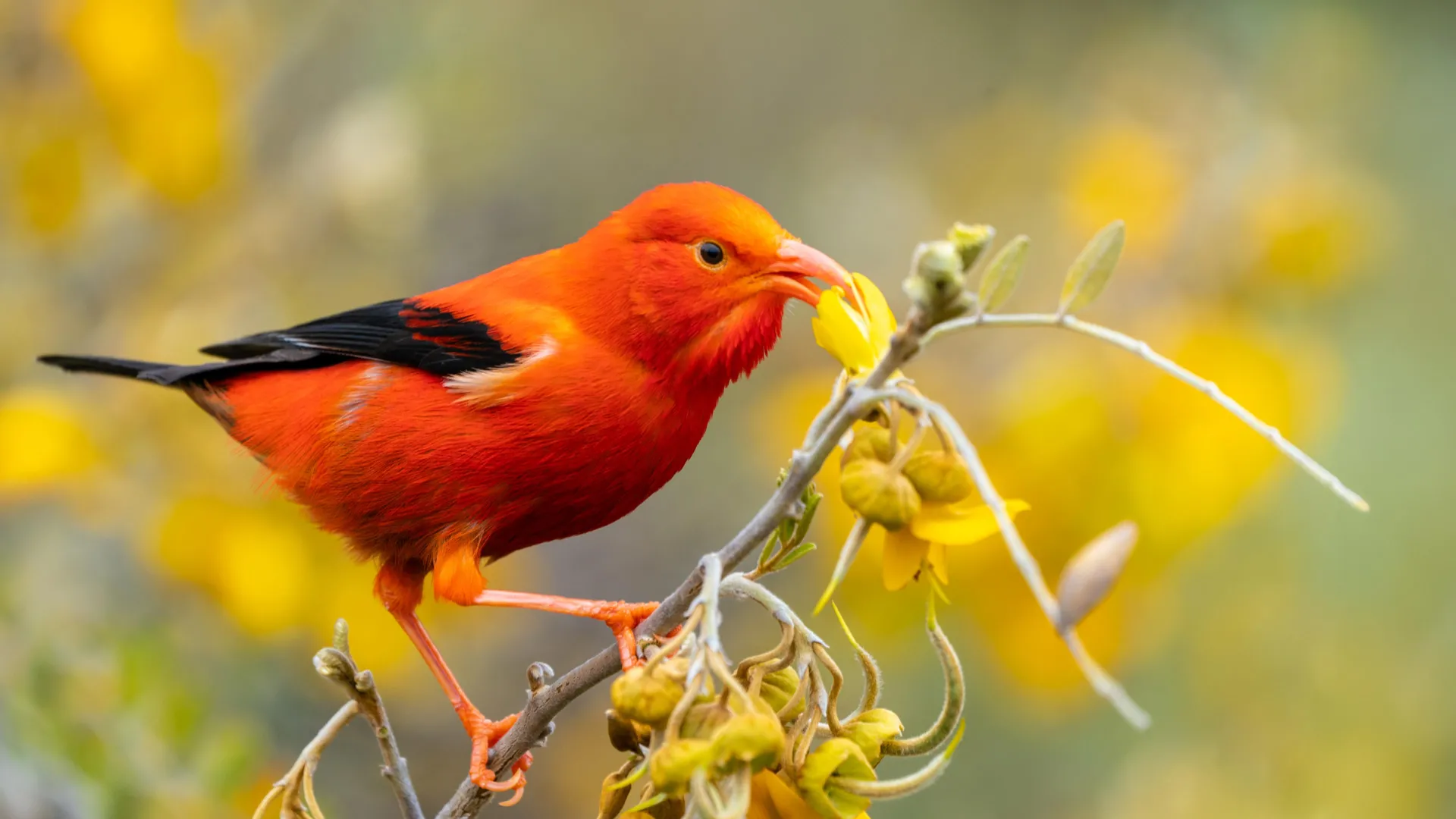
One of the most vivid examples of this vulnerability is the ‘i’iwi (scarlet honeycreeper, Drepanis coccinea), a species renowned for its vibrant crimson plumage and long, curved beak adapted for nectar feeding. Studies have tragically shown that ‘i’iwi face a mortality rate approaching 90 percent if infected with Plasmodium relictum. Similarly, the ‘akikiki (Oreomystis bairdi), a critically endangered honeycreeper endemic to Kauaʻi, is now considered extinct in the wild, with avian malaria being a primary factor in its demise. The remaining few individuals are in captive breeding programs, clinging to a fragile hope for survival. Other species like the ‘apapane (Himatione sanguinea), though more numerous, also suffer significant morbidity and mortality, particularly at lower elevations where mosquito populations are denser. The cumulative effect of these losses diminishes the ecological fabric of Hawaiian forests, impacting pollination, seed dispersal, and insect control.
Unlike many infectious diseases that rely on a limited number of "reservoir" species to maintain their spread, this research demonstrates that avian malaria in Hawaiʻi operates under a different, more insidious model. The study found that most forest birds, irrespective of whether they are native or introduced, are at least moderately capable of infecting the southern house mosquito. Crucially, even birds carrying very small, seemingly insignificant amounts of the parasite were able to transmit the infection to mosquitoes. This broad infectivity means that a vast array of bird communities, even those with diverse species mixes, can sustain ongoing malaria transmission, making eradication or even localized control incredibly difficult without targeting the vector itself.
"We often understandably think first of the birds when we think of avian malaria, but the parasite needs mosquitoes to reproduce and our work highlights just how good it has gotten at infecting them through many different birds," Seidl elaborated. This shift in focus, from solely the infected host to the efficiency of vector infection across a broad host range, is a pivotal insight for designing effective conservation strategies.
A Pernicious Parasite: Unpacking Plasmodium relictum and its Vector
Plasmodium relictum, the causative agent of avian malaria, is a protozoan parasite belonging to the same genus as the parasites responsible for human malaria. It is a generalist parasite, meaning it can infect a wide variety of bird species, a characteristic that has proven particularly devastating in the immunologically naive Hawaiian avifauna. The life cycle of P. relictum involves two hosts: a bird (the definitive host) and a mosquito (the intermediate host, where sexual reproduction occurs). When an infected mosquito bites a susceptible bird, sporozoites are injected, which then multiply in the bird’s liver and red blood cells, causing the disease. When an uninfected mosquito feeds on an infected bird, it ingests gametocytes, which mature and reproduce within the mosquito, perpetuating the cycle.
The primary vector for avian malaria in Hawaiʻi is the southern house mosquito, Culex quinquefasciatus. This mosquito species is not native to the Hawaiian Islands; it was inadvertently introduced in 1826, likely via whaling ships, marking a turning point in the ecological history of the archipelago. Culex quinquefasciatus thrives in warm, humid environments and breeds prolifically in stagnant water sources, from natural pools to artificial containers. Its rapid establishment across the islands, coupled with its efficient vector capacity for P. relictum, created the perfect storm for the malaria epidemic.
Historical Context: A Century of Decline
The ecological vulnerability of Hawaiʻi’s native species is rooted in millions of years of geographic isolation. Before human arrival, the islands were free of mammalian predators and mosquito-borne diseases, allowing native birds to evolve without defenses against these threats. The arrival of Culex quinquefasciatus in the early 19th century introduced the essential vector. The subsequent introduction of non-native bird species, many of which carried Plasmodium relictum without succumbing to severe illness themselves (having co-evolved with the parasite), completed the deadly triangle. These introduced birds, often termed "reservoirs," acted as silent carriers, effectively seeding the parasite into the mosquito population, which then transmitted it to the highly susceptible native Hawaiian birds.
The full impact of avian malaria became devastatingly apparent throughout the 20th century. While habitat loss and introduced predators also played significant roles, malaria proved to be a critical, often insurmountable, barrier to the survival of many native forest birds. Low-elevation forests, once teeming with honeycreepers, became "mosquito zones" where native birds could no longer survive. Species like the Hawaiian ‘ō’ō (Moho nobilis) and the kāma’o (Myadestes myadestinus) were driven to extinction, with disease recognized as a contributing factor alongside habitat destruction. The chronology of decline is stark: as mosquito populations expanded and malaria prevalence intensified, many honeycreeper populations retreated to higher, cooler elevations where mosquitoes historically could not survive due to temperature constraints. This created a fragile refuge, a temporary sanctuary against the encroaching disease.
Early conservation efforts, while well-intentioned, often grappled with the invisible enemy of disease. Habitat restoration and predator control were vital, but without addressing the underlying pathology of avian malaria, success remained limited. Scientists and conservationists gradually pieced together the complex puzzle, recognizing the urgent need to understand the disease’s epidemiology and develop targeted interventions against its vector.
The Groundbreaking Research: Methodology and Key Findings
The current study represents a monumental effort in understanding the dynamics of avian malaria transmission. Researchers meticulously examined blood samples from over 4,000 birds across the four major islands of Kauaʻi, Oʻahu, Maui, and Hawaiʻi Island. This extensive field data collection was complemented by rigorous laboratory experiments, where mosquitoes were allowed to feed on captured birds, enabling precise measurement of how readily the mosquitoes became infected. This dual approach allowed the team to connect parasite presence in birds to actual transmission potential, providing an unprecedented level of detail.
The results were unequivocal and profoundly concerning. A central finding was the pervasive infectivity: native and introduced birds often exhibited similar levels of infectiousness, meaning both groups contribute significantly to the parasite’s spread. This shatters any previous notions that only specific reservoir species were responsible, revealing a far more generalized and resilient transmission network. "The implication that a broad spectrum of avian hosts can serve as effective sources of infection complicates traditional disease management strategies," noted Dr. Michael Samuel, a co-author and professor at the University of California, Davis, emphasizing the study’s paradigm-shifting nature.
Perhaps even more critical was the discovery that birds can harbor chronic infections for extended periods, sometimes for months or even years. During this prolonged phase, birds may show only mild clinical signs, or none at all, making their infection difficult to detect visually. Crucially, even with these low to moderate parasite loads, they remain fully capable of transmitting the parasite to mosquitoes. The researchers estimate that this long-lasting, often subclinical, infectious stage accounts for the vast majority of malaria transmission statewide. This "stealth transmission" mechanism underscores why the disease has been so recalcitrant to control efforts, as the silent carriers continuously replenish the mosquito-borne parasite population.
Dr. Lisa “Cali” Crampton, Project Coordinator for the Maui Forest Bird Recovery Project and a long-time advocate for Hawaiian bird conservation, emphasized the urgency: "This research confirms our worst fears about the ubiquity of malaria and the efficiency of its spread. It’s a wake-up call that we can no longer delay comprehensive action." The study’s robust data provide a scientific foundation for aggressive, island-wide mosquito control as the most viable path to prevent further extinctions.
Climate Change: Erasing the Last Refuges
As if the widespread transmission capacity weren’t enough, the existential threat to Hawaiʻi’s native birds is compounded by the undeniable impacts of climate change. For decades, the cooler, high-elevation forests above approximately 4,000 feet served as critical refugia for susceptible native bird species. In these cooler climes, the Culex quinquefasciatus mosquito historically could not survive or reproduce efficiently, and the Plasmodium relictum parasite’s development within the mosquito was inhibited. This provided a crucial, albeit shrinking, sanctuary where native birds could persist relatively free from the disease.
However, rising global temperatures are rapidly eroding these last bastions of hope. Warming trends are enabling mosquitoes to expand their range into progressively higher elevations, effectively shrinking the malaria-free zones. Data from the U.S. Geological Survey and other research initiatives have documented observed upward shifts in mosquito populations, with malaria prevalence now being detected at altitudes previously considered safe. This means that birds that once lived their entire lives above the mosquito line are now increasingly exposed to infection, often without any evolved resistance.
The consequences are dire: as the climate warms, the remaining viable habitats for many native birds are diminishing, pushing already endangered species towards the brink. For species like the ‘akikiki and ‘akeke’e (Loxops caeruleirostris) on Kauaʻi, or the kiwikiu (Pseudonestor xanthophrys) on Maui, the loss of these high-elevation refuges translates directly into increased mortality and reduced reproductive success, accelerating their slide towards extinction. "Climate change is tightening the noose," commented Dr. Sam Ohu Gon III, Senior Scientist and Cultural Advisor at The Nature Conservancy of Hawaiʻi, "forcing our unique avifauna into an ever-smaller corner where the disease can reach them."
The Imperative for Action: "Birds, Not Mosquitoes" and Innovative Solutions
The stark realities presented by this study, combined with the escalating threat of climate change, have galvanized a concerted conservation effort known as "Birds, Not Mosquitoes." This collaboration represents an unprecedented partnership of academic institutions, state and federal agencies (including the Hawaiʻi Department of Land and Natural Resources (DLNR) and the U.S. Fish and Wildlife Service (USFWS)), non-profit organizations, and industry partners. Their unified mission is to advance innovative mosquito control strategies to save Hawaiʻi’s imperiled forest birds.
The flagship strategy being pursued by "Birds, Not Mosquitoes" is the Incompatible Insect Technique (IIT), which utilizes naturally occurring Wolbachia bacteria. Wolbachia are common bacteria that infect a wide range of insects, including mosquitoes, and are harmless to humans, birds, and other animals. The IIT method involves rearing male Culex quinquefasciatus mosquitoes infected with a specific strain of Wolbachia that makes them "incompatible" with the wild female mosquitoes. When these Wolbachia-infected males are released into the environment, they mate with wild females, but their eggs fail to hatch. This effectively reduces the wild mosquito population without the use of chemical pesticides.
This targeted, self-limiting approach is considered environmentally safe and species-specific, posing no threat to beneficial insects like pollinators or other wildlife. Pilot projects are underway to refine release strategies and monitor efficacy, with the goal of deploying IIT across critical high-elevation bird habitats. "The science is sound, and the technology is ready," affirmed Dr. Laura Prugh, a wildlife ecologist and collaborator from the University of Washington, highlighting the extensive research and development behind the IIT method. "This isn’t about eradicating all mosquitoes, but rather creating mosquito-free zones in the critical areas where our native birds are making their last stand."
The path to full implementation involves navigating complex regulatory frameworks, securing sustained funding, and fostering public understanding and support. The DLNR and USFWS are crucial in this process, providing necessary permits and oversight. Public engagement campaigns are vital to explain the science, address concerns, and build community consensus for what is widely recognized as a desperate but necessary intervention.
Broader Implications for Island Biodiversity
The Hawaiian Islands, often referred to as a "natural laboratory of evolution," are a global biodiversity hotspot. The crisis facing Hawaiʻi’s forest birds due to avian malaria and climate change serves as a critical case study with profound implications for island ecosystems worldwide. Islands are disproportionately vulnerable to invasive species and climate impacts due to their isolation and unique evolutionary trajectories. The lessons learned in Hawaiʻi, particularly regarding the interplay of invasive vectors, introduced pathogens, and climate change, can inform conservation strategies in other fragile island environments facing similar threats.
The preservation of Hawaiian biodiversity is not merely an ecological concern; it carries significant cultural, economic, and scientific value. Native birds are integral to Hawaiian culture, featuring prominently in chants, legends, and traditional practices. Economically, healthy ecosystems support tourism and provide invaluable ecosystem services. Scientifically, the honeycreepers, with their astonishing adaptive radiation, offer unparalleled insights into evolutionary processes. Losing these species would be an irreplaceable loss for both Hawaiʻi and the global scientific community.
The Path Forward: Policy, Funding, and Public Engagement
The findings of Seidl’s study underscore an urgent reality: the window of opportunity to save Hawaiʻi’s remaining forest birds from avian malaria is rapidly closing. The widespread transmission capacity and the relentless march of climate change into high-elevation refuges mean that incremental efforts are no longer sufficient. A bold, coordinated, and sustained response is imperative.
This response requires significant and sustained financial investment from both state and federal governments, as well as private foundations. Funding is essential not only for the large-scale implementation of mosquito control technologies like IIT but also for ongoing research, monitoring, and adaptive management. Policy frameworks must be streamlined to facilitate rapid deployment of proven conservation interventions while maintaining rigorous environmental safeguards.
"The time for debate is over; the time for decisive action is now," stated David Smith, Administrator for the DLNR Division of Forestry and Wildlife (DOFAW). "This study provides the critical evidence base we needed to underscore the urgency of our mosquito control efforts. We are committed to working with our partners to implement these solutions with the speed and scale required."
Crucially, public education and engagement are paramount. Conservation efforts are most effective when they have the informed support of the local community. Understanding the science behind avian malaria, the threat to native birds, and the safety and efficacy of proposed solutions will be key to building the necessary societal consensus.
In conclusion, the new study by Christa Seidl and her collaborators provides a definitive and sobering assessment of the avian malaria crisis in Hawaiʻi. By revealing the widespread capacity for transmission across nearly all forest bird species and highlighting the chronic nature of infections, the research solidifies the understanding that mosquito control is not merely an option but an absolute necessity. Coupled with the relentless pressure of climate change, the need for urgent, innovative, and large-scale intervention has never been clearer. The fate of Hawaiʻi’s irreplaceable honeycreepers now rests on the swift and collective action of scientists, policymakers, and the community to implement solutions that protect these evolutionary marvels for future generations.
