
Conservationists across the globe are engaged in vital work along the world’s migratory flyways, ensuring the survival of countless bird species that traverse continents. This series highlights the dedicated individuals and organizations at the forefront of these efforts, offering a glimpse into their challenges, triumphs, and the profound importance of their mission. One such critical initiative is unfolding in Malawi, a key country along the African-Eurasian Flyway, where the Wildlife and Environmental Society of Malawi (WESM) is making significant strides in safeguarding migratory birds and their habitats.
Migratory birds are extraordinary architects of global connectivity, linking diverse landscapes, countries, and even continents through their awe-inspiring long-distance journeys. These birds navigate specific aerial routes, known as flyways, as they travel between their breeding grounds, stopover sites, and non-breeding areas. The African-Eurasian Flyway, one of the world’s most extensive migratory corridors, stretches from the frigid Arctic all the way to the southern tip of Africa, encompassing a vast array of ecosystems and supporting an incredible diversity of avian life.
Recognizing the immense ecological significance and the inherent vulnerability of this flyway, international collaboration has become paramount. BirdLife International, a global partnership of conservation organizations, plays a crucial role in coordinating these efforts. In a notable partnership, BirdLife International, alongside its UK Partner, the Royal Society for the Protection of Birds (RSPB), has been working with local partners like WESM. This ambitious project, supported by the Ecological Restoration Fund (ERF) and the UK Government’s Darwin Initiative, aims to protect migratory birds and their critical habitats along this expansive route. The RSPB’s commitment to flyway conservation underscores the interconnectedness of ecosystems and the need for a holistic approach to safeguard these global travelers.

Malawi’s Pivotal Role: Chia Lagoon as a Key Biodiversity Area
At the heart of Malawi’s contribution to flyway conservation is Chia Lagoon, a site of immense ecological importance. Located in the central district of Nkhotakota, Chia Lagoon has recently been recognized as a Key Biodiversity Area (KBA). KBAs are globally identified sites critical for the persistent survival of biodiversity, encompassing species, ecosystems, and ecological processes. This designation underscores the lagoon’s irreplaceable value within the global conservation network.
Blessings Chingagwe, the Programme Manager at the Wildlife and Environmental Society of Malawi (WESM), leads the efforts at Chia Lagoon. She describes the 1,700-hectare lagoon as a shallow freshwater wetland characterized by a mosaic of open water, nutrient-rich mudflats, seasonally flooded grasslands, and surrounding agricultural landscapes. These varied habitats provide essential resources for both resident and migratory waterbirds. The seasonal fluctuations in water levels are particularly significant, as they expose extensive mudflats that teem with invertebrates, a crucial food source for the weary travelers undertaking long migratory flights.
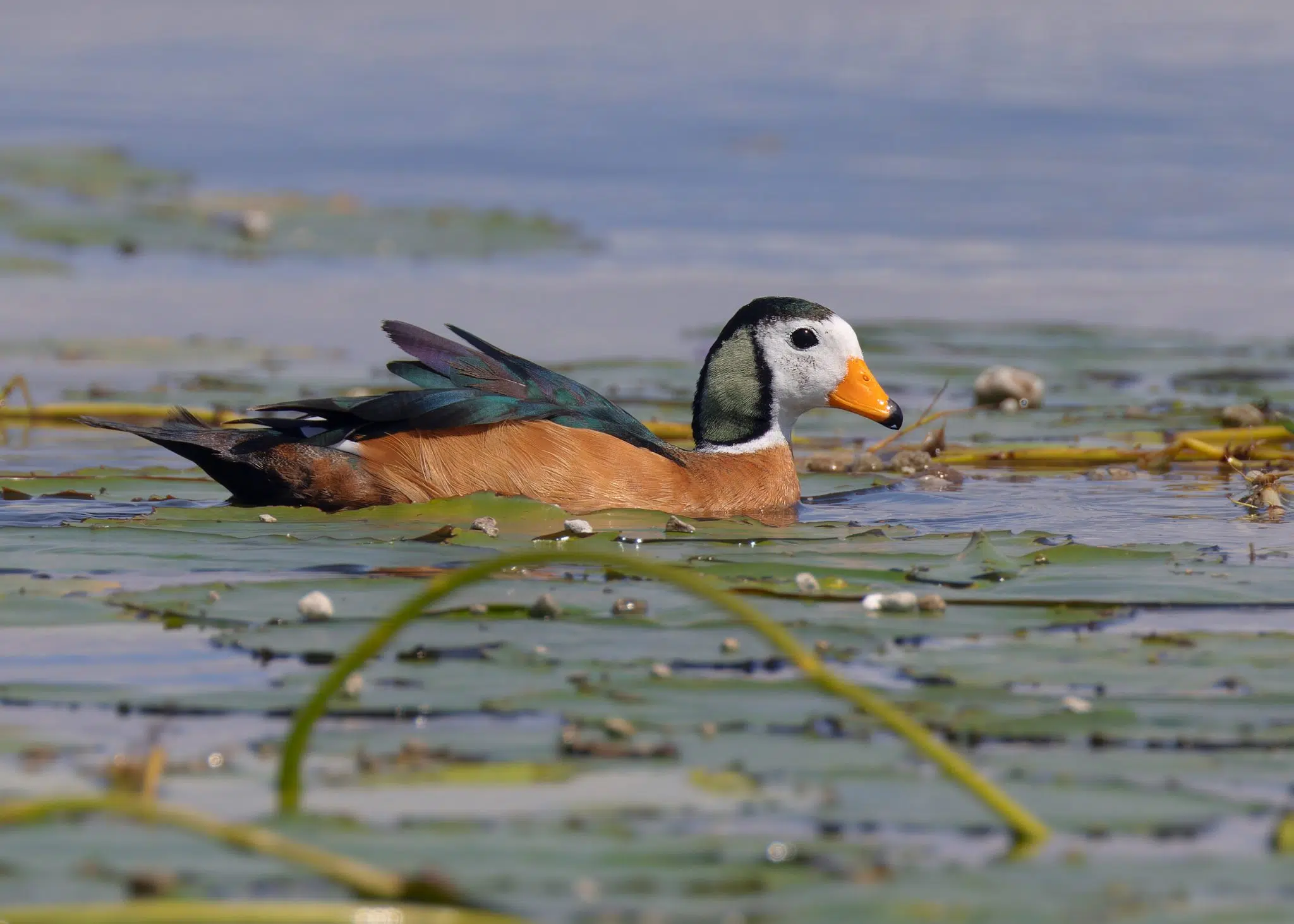
Chia Lagoon serves as a vital feeding, resting, and refuge site, particularly during the arduous migration periods and the non-breeding season. Its ecological productivity and strategic geographical location make it an indispensable link within the broader African-Eurasian Flyway network. The lagoon hosts a diverse array of species, including iconic birds such as the Black Heron (Egretta ardesiaca), known for its unique canopy-feeding technique; the common Ring-necked Dove (Streptopelia capicola); the Lesser Masked Weaver (Ploceus intermedius); the distinctive African Jacana (Actophilornis africanus), often dubbed the "Jesus bird" for its ability to walk on floating vegetation; and the diminutive African Pygmy-goose (Nettapus auritus), one of the smallest waterfowl in Africa. Each of these species, whether resident or migratory, contributes to the rich tapestry of life at Chia Lagoon and highlights its significance for biodiversity.

Comprehensive Monitoring and Assessment: Building a Foundation of Knowledge
WESM’s work at Chia Lagoon is grounded in robust scientific data collection and analysis. Over the past three years, supported by the Darwin Initiative, the organization has undertaken the first comprehensive biodiversity and ecological assessment of Chia Lagoon. This meticulous assessment is particularly noteworthy as it represents the first time such a detailed study has been conducted on an unprotected wetland in Malawi. This groundbreaking work provides a baseline understanding of the lagoon’s ecological health, species composition, and the environmental factors influencing its biodiversity.
A core component of WESM’s activities involves regular waterbird monitoring. For over two years, conservationists, led by Blessings Chingagwe, have been systematically documenting bird populations and species presence. These sustained efforts have yielded encouraging results: "Our first dataset had 68 records, but we are currently at over 110 records," Chingagwe states, highlighting a significant increase in observed bird diversity and numbers since 2023. This upward trend suggests the positive impact of ongoing conservation efforts and the inherent resilience of the ecosystem when managed effectively. The scientific data collected is invaluable, providing critical insights into migratory patterns, habitat use, and the overall health of the bird populations relying on Chia Lagoon. This evidence-based approach is crucial for informing future conservation strategies and demonstrating the tangible benefits of their work.
Empowering Communities: Beyond Bird Counts

Effective conservation, particularly for mobile species like migratory birds, cannot succeed without the active involvement and empowerment of local communities. WESM understands this fundamental principle and has integrated community engagement into the core of its project. A significant achievement has been the establishment of 18 bird hunting clubs, specifically designed to regulate and manage hunting practices around the lagoon. These clubs are tasked with holding bird hunters accountable in terms of hunting quotas, target species, and permissible hunting methods. This initiative represents a shift towards sustainable resource management, ensuring that local traditions can continue without jeopardizing bird populations.
Furthermore, WESM has trained 12 members from these clubs to conduct continual monitoring. These trained community members not only contribute directly to data collection but also play a crucial role in raising awareness among local communities and stakeholders about the ecological importance of Chia Lagoon. By empowering local residents as stewards of their environment, WESM fosters a sense of shared responsibility and ownership over conservation outcomes.
The impact of WESM’s community-centric approach extends beyond Chia Lagoon. Blessings Chingagwe proudly recounts a success story involving Mulanje Mountain, an iconic Heritage Site. "WESM mobilised the local leaders, Friends of Mulanje and the community to raise their voice against bauxite mining in the iconic Mulanje Mountain," she explains. The Mulhakho wa Alomwe, a cultural group directly benefiting from the mountain, strongly opposed the mining projects. This collective action led to a remarkable outcome: "We have recently witnessed miners being evacuated from the mountain by local communities and the district council without even the support from NGOs or WESM. We attribute this to the success of the project with support from ERF." This incident powerfully demonstrates the strength of community mobilization and local advocacy in protecting vital natural heritage.
WESM’s commitment also extends to Lake Chilwa, another priority site for migratory bird conservation. The organization is actively developing a site profile for Lake Chilwa to define existing threats, opportunities, and ongoing projects. The presence of an active Bird Hunters Association, established in 2008, further strengthens conservation prospects, as its members are willing to safeguard birds against threats such as poaching, climate change, and habitat degradation.

Addressing the Threats: A Complex Landscape
Despite the successes, conservation work is rarely without its challenges. Blessings Chingagwe candidly discusses the significant hurdles faced at Chia Lagoon. "Securing protection of the lagoon while ensuring community benefits remains a central challenge," she notes. The delicate balance between conservation needs and the livelihoods of communities dependent on the lagoon’s resources requires careful navigation. Fisheries activities, in particular, pose a significant threat. The opening of new docks and fishing within designated sanctuaries directly impacts aquatic vegetation, which is vital for many bird species, and disrupts critical bird habitats. The unfortunate coincidence of fish sanctuaries with bird sanctuaries exacerbates this conflict, necessitating integrated management solutions.
Another major ecological threat comes from Invasive Alien Species (IAS), such as Azolla and Water Hyacinth. These aggressive aquatic plants can quickly choke waterways, reducing open water areas, impacting oxygen levels, and outcompeting native vegetation crucial for birds. The removal of these invasive species presents a unique and dangerous challenge due to the presence of crocodiles in the lagoon. "The most challenging thing is the removal methodologies due to the presence of crocodiles, which are a threat to people," Chingagwe explains. "We have not progressed much with the removal of these invasive and we are still trying to find a feasible and safe way of doing this." This highlights the complex interplay of ecological and safety concerns that conservationists often face in the field.
Climate change also looms as an overarching threat, impacting water levels, rainfall patterns, and the overall ecological balance of wetlands, thereby affecting migratory routes and food availability for birds.

The Whiskered Tern: An Ambassador of Connectivity
When asked to choose one species to represent the African-Eurasian Flyway, Blessings Chingagwe selects the Whiskered Tern (Chlidonias hybrida). "With the tern being a long-range migratory bird, it is the best representation of global connectivity!" she states. The Whiskered Tern is a widespread species that breeds across Europe and Asia, migrating south to Africa and parts of Southeast Asia during the non-breeding season. Its annual journey, covering thousands of kilometers, perfectly symbolizes the interconnectedness of global ecosystems.
"Arriving in Malawi with the December rains, it reminds us that this small country, let alone a small wetland, is not isolated from the global community," Chingagwe elaborates. The tern’s reliance on a network of healthy wetlands across multiple continents underscores the fundamental truth that local conservation efforts have global ramifications. "If we are to protect the Whiskered Tern, we mean to protect every marsh, lake, river and wetland along its path. This is a perfect ambassador of the flyway because it knows no boundaries." This perspective reinforces the idea that conservation is a shared, transboundary responsibility.
Optimism and Future Horizons

Despite the significant challenges, Blessings Chingagwe expresses profound optimism about the future of their work. This optimism is fueled by the solid scientific data WESM has meticulously gathered and the growing awareness within local communities. "When local stakeholders understand the value of their wetland, conservation becomes a shared responsibility, and that gives real hope for long-term protection," she emphasizes. The shift from external imposition to internal ownership is a powerful driver of sustainable conservation.
Tangible signs of progress and institutional support further bolster this positive outlook. "I would like to acknowledge the District Council that, through this project, has now started talking about developing a comprehensive management plan for the wetland ecosystem," Chingagwe notes. This engagement from local governance is a critical step towards formalizing protection and integrating conservation into regional development plans. Furthermore, the Department of National Parks and Wildlife (DNPW), which serves as the focal point for the Convention on the Conservation of Migratory Species (CMS), has requested WESM to consider proposing Chia Lagoon as a RAMSAR site. RAMSAR sites are wetlands of international importance, designated under the Ramsar Convention, an intergovernmental treaty that provides the framework for national action and international cooperation for the conservation and wise use of wetlands and their resources. Such a designation would elevate Chia Lagoon’s status, provide greater international recognition and support, and reinforce its long-term protection.
The journey of migratory birds across the African-Eurasian Flyway is a testament to nature’s resilience and interconnectedness. Through the dedicated efforts of conservationists like Blessings Chingagwe and organizations like WESM, supported by international partners such as the RSPB, the Ecological Restoration Fund, and the Darwin Initiative, crucial habitats like Chia Lagoon are being safeguarded. This collaborative approach ensures that the incredible spectacle of migration can continue for generations to come, reminding us all that protecting a small wetland in Malawi is, in essence, protecting a global ecological system. The work at Chia Lagoon exemplifies how local action, informed by science and driven by community empowerment, can contribute significantly to the monumental task of preserving our planet’s shared natural heritage.
