
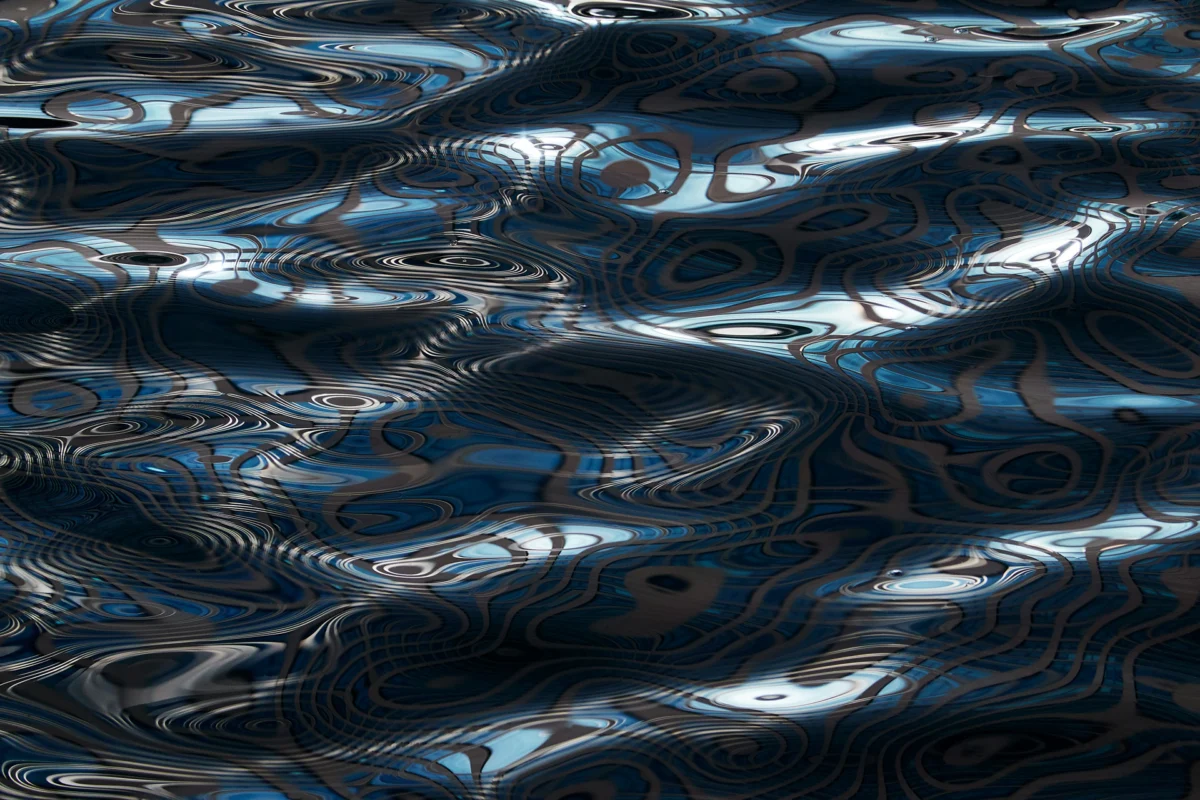
The captivating abstract images of the Fleeting Reflections series often lead first-time viewers to assume they are the product of intricate digital manipulation. However, the artist behind the collection consistently clarifies that these ethereal compositions are entirely in-camera creations, born from the interplay of light, glass, steel, and water, captured sometimes as single frames and at other times through meticulously layered multiple exposures. This commitment to authentic capture, free from post-production trickery, underscores a philosophy rooted in deep attention, disciplined repetition, and profound patience.
At the heart of the Fleeting Reflections project lies the concept of "time." Over more than a decade, the photographer has meticulously explored the docks surrounding London’s Canary Wharf, transforming this bustling financial district into an unexpected canvas for abstract and nature-inspired photography. This extensive body of work, defying conventional notions of exotic locales, is built upon three foundational pillars: accessibility, repeatability, and patience. While the technical aspects of photography – cameras, lenses, and modes – play their part, they are merely supporting elements. The true dynamism of Fleeting Reflections stems from the profound relationship cultivated between a specific place, unwavering persistence, and rigorous discipline.
The Genesis of an Urban Abstract: Canary Wharf Reimagined

The journey of Fleeting Reflections began over ten years ago, challenging a pervasive myth within nature photography that suggests worthwhile images can only be forged in dramatic, remote landscapes. The artist’s entire acclaimed series, which has since garnered international recognition, has emerged almost exclusively from a single square mile of water nestled amidst the towering structures of Canary Wharf. This area, predominantly known as a global financial hub defined by its imposing steel and glass architecture, is seen by the photographer through a radically different lens: as a complex and ever-changing array of light sources.
The towering skyscrapers of Canary Wharf, rather than being mere architectural subjects, become active participants, casting vibrant colours and sharp lines onto the water’s surface below. The wind then acts as a dynamic sculptor, transforming these reflected light patterns into a myriad of ephemeral forms – waves, delicate ribbons, and sharp fractures. The photographer’s role, as described, is to "listen" to this continuous visual symphony, to observe and respond to its subtle shifts. This intimate understanding of the environment has been possible precisely because the location is so accessible. Unlike expeditions to distant wildernesses, visiting Canary Wharf requires no flights, special permits, extended time off, or arduous pre-dawn hikes. The artist can visit at will, often for short, focused sessions of just 40 minutes, embracing diverse conditions—including conventionally "bad" light or rain, which transforms the water’s surface into a hammered metal effect, offering new textural possibilities.
This seemingly prosaic aspect of accessibility is, in fact, profoundly fundamental to the work. Without the practical ease of frequent access to the subject, the deep level of familiarity required to move beyond superficial observations would be impossible to achieve. The more readily one can engage with a subject, the more honestly and deeply one can study its essence, revealing hidden layers of beauty and complexity that would otherwise remain unseen.
The Three Pillars of Creative Endurance

1. Accessibility: Proximity as a Creative Advantage
The concept of accessibility, often overlooked in the pursuit of grand photographic narratives, is a cornerstone of the Fleeting Reflections project. The ability to return to the same location—Canary Wharf’s docks—with minimal logistical overhead has allowed the photographer to develop an unparalleled intimacy with the subject. This contrasts sharply with the common perception that impactful nature photography necessitates arduous travel to remote, pristine wildernesses. Instead, the artist demonstrates that profound artistic exploration can thrive in one’s immediate environment.
This constant presence enables the photographer to observe the docks under an infinite variety of conditions: the crisp light of a winter morning, the diffused glow of an overcast afternoon, the dramatic intensity of a stormy sky, or the gentle reflections of a calm evening. Each visit unveils new nuances in the interaction between light, architecture, and water. Such frequent exposure allows for an almost scientific study of the environment’s behaviour, far beyond what could be gleaned from sporadic visits. The practical implications are significant: reduced travel costs, lower environmental impact associated with long-distance journeys, and the freedom to pursue a creative vision without being constrained by external factors like permits or specific travel windows. This democratic approach to photographic exploration suggests that extraordinary imagery can be found in the most ordinary, overlooked places, provided one invests the necessary time and attention.
2. Repeatability: The Evolving Canvas of Canary Wharf’s Docks

The second crucial pillar, repeatability, centers on selecting a subject that possesses an inherent capacity for continuous change, surprise, and the constant offering of new possibilities with each encounter. The docks of Canary Wharf exemplify this principle in abundance. The urban waterscape is never truly static; each moment is unique, a transient composition awaiting capture.
A serene morning might present long, glassy stretches of colour, reflecting the skyline with pristine clarity. A sudden gust of wind, however, can shatter these same architectural reflections into jagged, serrated lines, evoking the iconic waveforms of Joy Division’s Unknown Pleasures. The passage of a boat can smear the reflections into painterly, hand-drawn textures. Even subtle environmental factors, such as diesel on the water’s surface, can create fleeting iridescent interference patterns that may last mere minutes and never reappear in the same form.
Because the environment is so consistently dynamic and repeatable, the photographer can return to the "same" scene hundreds or even thousands of times, yet always engage in genuinely new work. The artist describes often staying in a single spot for hours, observing a small patch of water as it cycles through an array of visual personalities. At such moments, the focus shifts from photographing static architecture to documenting the dynamic "behaviour" of light and water.
This is where specific in-camera techniques become vital. Fast burst rates are employed to freeze micro-moments in the water before their delicate structures collapse, while multiple exposure modes are used to layer gestures and deepen the inherent abstraction. However, these technical skills are only effective because the subject continuously provides rich, new raw material. The visual palette shifts with the weather, the geometric forms bend with the wind, and the overall mood changes with the tide. This dedication to repeatability is what elevates the work beyond mere "postcards" into a cohesive and evolving body of work, allowing for a profound, almost symbiotic relationship between artist and subject.

3. Patience: The Unseen Hours Behind the Image
The final, and perhaps most underestimated, pillar of the Fleeting Reflections series is patience. This is not a passive waiting but an active, deliberate engagement that permeates every stage of the photographic process.
Patience begins long before the shutter is pressed. It involves waiting for the precise alignment of suitable weather conditions with the photographer’s available time. The interaction of hard sunlight on still water yields dramatically different results than flat light during a drizzle, and not every combination is conducive to the artist’s vision. There are countless instances of walking for miles, meticulously checking angles in the water, only to find nothing that aligns with the day’s conditions, requiring the patience to accept an empty return.
Even when conditions are promising, patience transforms into a physical exercise. The photographer might stand at a single location for up to four hours, capturing as many as 3,000 frames of what an casual observer might perceive as "the same scene." This intensive, sustained focus is dedicated to finding that one fleeting instant where colour, rhythm, structure, and tension coalesce into a perfect harmony. Such a moment cannot be rushed; it demands unwavering presence and the acuity to recognize it when it manifests.

The exercise of patience continues long after the field session, extending into the post-production phase. Thousands of nearly identical-looking images are downloaded, initiating a slow, deliberate sifting process on an iMac. This stage is where discipline becomes paramount. The photographer moves purposefully through the vast collection, searching for the exact frame where every element aligns perfectly, rigorously rejecting the rest. This meticulous culling results in a "brutally low" keep rate, a testament to the uncompromising standards applied.
The processing approach is equally restrained. Working primarily in Capture One, the photographer employs only global adjustments—levels, clarity, sharpness, and contrast. There is no manipulation of shapes or forms in Photoshop. This deliberate choice is as much philosophical as it is aesthetic: the goal is not to "create" forms but to reveal what was inherently present in the water. This commitment to the honesty of the captured image is central to the artist’s integrity, allowing them to declare, hand on heart, "this happened."
Beyond the daily grind, there is the longest form of patience: the patience to allow the work to mature. The Fleeting Reflections project was not publicly showcased in any significant way for many years. The artist simply continued to return, to shoot, to refine, and to learn what felt essential and what constituted visual noise. It took approximately seven years before the collection felt coherent enough to be presented to a publisher. This culminated in the release of the first book, Fleeting Reflections, published by Triplekite in 2017. This milestone was followed by exhibitions at the Greenwich Gallery in 2017 and the Anise Gallery in London in 2019, and later, a second volume, Fleeting Reflections II, in 2023.
While these public milestones might suggest a rapid or smooth progression, the reality was one of slow, deliberate, and obsessive dedication. The visible photographs are merely the tip of an immense iceberg. Beneath them lie thousands of hours spent walking, watching, waiting, shooting, editing, rejecting, and, crucially, returning again and again to the same urban waterscape. This chronology underscores the profound investment of time and self required to cultivate a truly distinctive body of work.

Broader Impact and Implications for Aspiring Photographers
The enduring message conveyed by Fleeting Reflections offers a significant paradigm shift for photographers. It powerfully demonstrates that creating a personal and distinctive body of work does not necessitate dramatic landscapes or exotic locations. Instead, the essential ingredients are accessibility, repeatability, and patience.
This perspective encourages photographers to look inward, to their immediate surroundings, for inspiration. It suggests finding a subject that is easily and frequently reachable—whether it’s a local canal, a harbour wall, a marsh at the edge of town, or even rainwater pooling in a car park. The key is to return to this chosen place repeatedly, under all moods and in all types of weather, until an intuitive understanding of its responses and transformations is developed.
Subsequently, the commitment to "slow work" becomes paramount: walking, waiting, refining, and maintaining rigorous honesty in the editing process. This approach democratizes high-level artistic photography, making it attainable for individuals without extensive travel budgets or access to remote wildernesses. It is a call to re-evaluate the aesthetic potential of one’s everyday environment, fostering a deeper connection to place and process.

Patience, in this context, is anything but passive. It is a highly active, intentional decision to invest oneself fully in a subject for as long as it takes to achieve a profound understanding. Over time, this deep patience becomes tangibly visible in the photographs themselves. While viewers might initially be drawn to the vibrant colours and intriguing shapes, what they are ultimately perceiving, beneath the surface of the image, is the concentrated, unwavering attention of the artist. This project serves as a compelling testament to the idea that true photographic mastery often lies not in seeking the extraordinary, but in extraordinary dedication to the ordinary.
