
The pursuit of capturing the essence of wildlife has long been dominated by the quest for pristine sharpness, every detail rendered with uncompromising clarity. However, a growing movement within nature photography is embracing a more nuanced approach, one where what lies out of focus plays a pivotal role in shaping the image’s atmosphere. This technique, utilizing foreground blurs, is transforming simple scenes into profound visual narratives, inviting viewers into an emotional landscape rather than merely presenting a factual depiction. By deliberately blurring elements positioned between the camera and the main subject, photographers can guide the viewer’s eye, evoke a specific mood, and imbue an image with an emotional depth that sharpness alone often struggles to convey. This method is at the core of transforming fleeting moments into meaningful, expressive artworks.
Beyond Sharpness: A New Artistic Frontier in Nature Photography

Historically, wildlife photography’s objective leaned heavily towards documentary precision. Early pioneers and even mainstream publications often prioritized clear identification, behavioral accuracy, and technical perfection, meaning subjects had to be tack-sharp against often equally sharp backgrounds. The advent of faster lenses and more sophisticated autofocus systems further cemented this aesthetic. However, as the field matured, some photographers began to explore artistic interpretations, drawing inspiration from painting and other visual arts. This shift, which gained significant traction in the late 20th and early 21st centuries, recognized that an image could suggest as much as it shows. Foreground blurring, while not a brand-new concept in photography, has recently seen a resurgence in wildlife circles, becoming a powerful tool for this interpretive evolution. It represents a departure from purely literal representations, pushing the boundaries of what a wildlife photograph can communicate, moving it closer to a fine art expression. The technique allows for a more subjective experience, where the viewer’s imagination is engaged, prompting a deeper connection with the captured moment and the animal within its environment.
The Mechanics of Mood: Understanding Foreground Blurs
Foreground blurs are a sophisticated compositional technique involving the deliberate placement of an object or element between the camera lens and the primary subject. When this intervening element is rendered out of focus, it creates soft, ethereal blurs that subtly overlay or frame the main subject. Crucially, these blurs are designed not to detract but to enhance, adding layers of depth, mystery, and emotional nuance.

-
Definition and Purpose: At its core, the technique involves manipulating depth of field to ensure that elements closer to the lens than the subject are intentionally out of focus. This soft, indistinct layer acts as a visual filter, drawing the viewer’s attention to the sharp subject while simultaneously providing context or mood. It can create a sense of intimacy, as if the viewer is peeking through foliage, or a feeling of dreaminess and tranquility. For instance, an image like the opening photograph of vultures, where the blurred forms of other birds partially obscure the primary subject, exemplifies how this technique adds visual weight and narrative intrigue without diminishing the main focus. It transforms a simple observation into a carefully constructed visual experience.
-
Technical Foundations: Achieving effective foreground blurs relies on a solid understanding of photographic principles, primarily aperture, focal length, and the distances between camera, foreground element, and subject.
- Aperture: A wider aperture (smaller f-number, e.g., f/2.8, f/4) creates a shallower depth of field, making it easier to blur both the foreground and background. This is a fundamental control for isolating the subject.
- Focal Length: Longer focal lengths (telephoto lenses) naturally compress perspective and reduce the apparent depth of field, enhancing the blur effect. This is why telephoto lenses are popular in wildlife photography; they not only bring distant subjects closer but also offer excellent subject isolation capabilities.
- Distance: The closer the foreground element is to the lens, and the further the subject is from that element, the more pronounced the blur will be. Experimentation with these distances is key to controlling the degree and quality of the blur.
- Lens Choice: Lenses with a greater number of aperture blades often produce smoother, more pleasing bokeh (the aesthetic quality of the blur). Fast prime lenses are particularly adept at this.
-
Compositional Mastery: Beyond technical execution, foreground blurs serve as a powerful compositional tool. They can:

- Guide the Eye: The soft edges of the blur can act as natural leading lines, directing the viewer’s gaze towards the sharper subject.
- Add Depth: By creating distinct planes of focus, the technique enhances the illusion of three-dimensionality within a two-dimensional image, giving a sense of space and immersion. The image of the European Bison, partially obscured by blurred foliage, effectively demonstrates this layering.
- Frame the Subject: Blurs can create a natural, organic frame around the subject, isolating it from potential distractions in the background and foreground, yet still hinting at its environment.
- Evoke a Painterly Quality: When executed skillfully, foreground blurs can lend an image an almost impressionistic, hand-painted feel. This aesthetic resonance with traditional art forms can elevate the photograph beyond mere documentation, suggesting a deliberate artistic vision akin to starting with a blank canvas and meticulously composing a scene.
Nature’s Palette: Utilizing Environmental Elements
The beauty of foreground blurring lies in its adaptability, leveraging whatever natural elements are available in the environment. This demands keen observation and creative improvisation from the photographer.
-
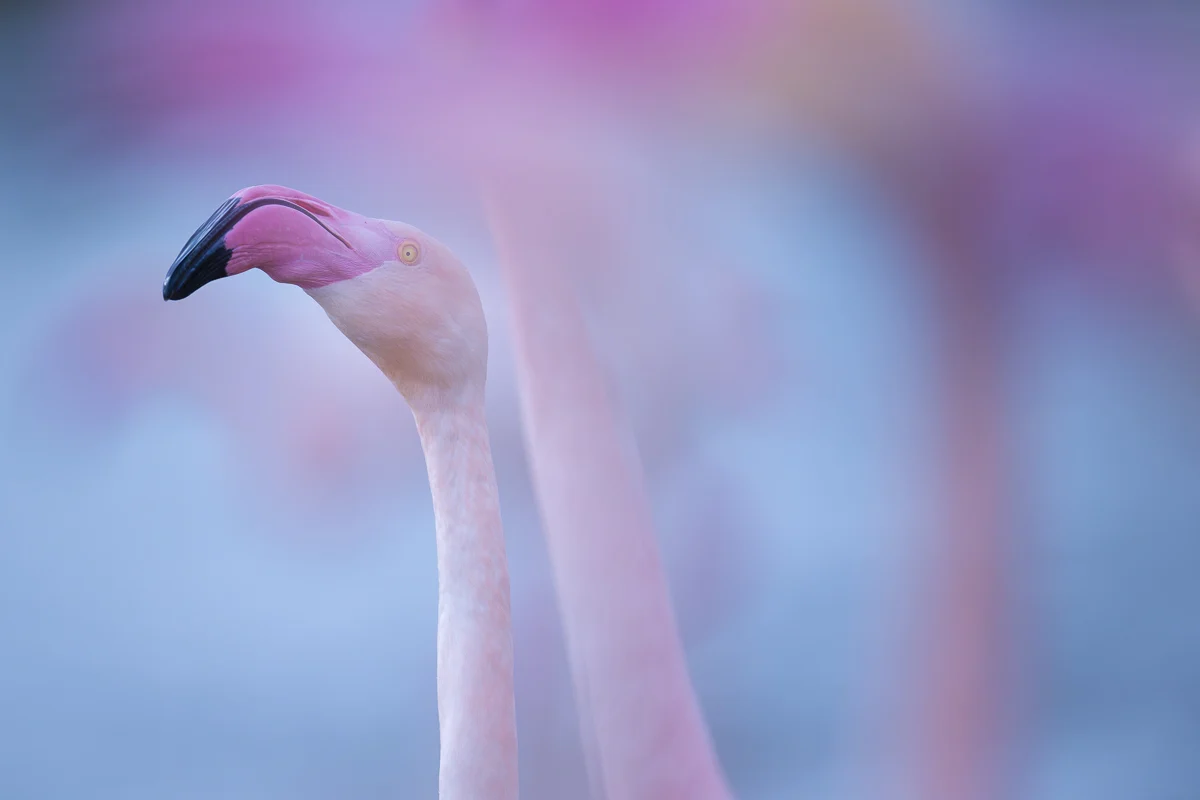
Organic Blurs: The most common elements used are plant-based: branches, leaves, flowers, or grasses. These can create soft, organic textures and colors that complement the wildlife subject. Water and snow can also be incredibly effective, producing shimmering, abstract blurs that add a sense of movement or tranquility. Geological features, like rocks or sand dunes, can provide more structured, yet still soft, foreground elements. The photograph of the Pyrenean capercaillie, framed by local shrubs and underbrush, perfectly illustrates how vegetation acts as a natural filter, softening the composition and adding depth. This specific image also benefits from the low, crepuscular light of early morning, which enhances the mood of quiet mystery, transforming documentation into storytelling. Similarly, the flamingos shot likely uses the subtle blurs of water or distant flock members to create a dreamy, layered effect.

-
Dynamic Blurs: Sometimes, the most compelling foreground elements are other animals themselves, or even the interplay of light and shadow.
- Other Animals: As seen in the vulture example, a cluster of animals in the foreground, rendered out of focus, can create a unique, dynamic blur that reinforces the subject’s context within its social or natural group. This is particularly challenging to achieve but highly rewarding.
- Light and Shadow: The strategic use of light and shadow can create its own form of "blur" or atmospheric effect. By carefully adjusting exposure and white balance, a photographer can craft a rich, tactile atmosphere. The contrast between illuminated and shaded areas sculpts the subject, drawing the eye to the focal point. The image of the goshawk, for instance, demonstrates how light and shadow can enhance three-dimensionality and guide the viewer, allowing the image to communicate with both clarity and depth without any physical foreground obstruction.
These diverse applications demonstrate that foreground blurs, while often minimalistic, are incredibly potent. They convey a sense of the surrounding environment, hint at the subject’s relationship with it, and suggest the precise moment of capture – including the animal’s behavior and habits. This subtle layering allows the viewer to intuit more than what is explicitly shown, fostering a deeper, more immersive experience.
The Art of the Unplanned: Reactive vs. Controlled Scenes

A crucial aspect of employing foreground blurs in wildlife photography is understanding the degree of control one can exert over the scene. This often dictates the approach and the elements available for use.
-
Ethical Considerations: Foremost in any wildlife photography endeavor are ethical considerations. The photographer’s priority must always be the welfare and non-disturbance of the animal. This means minimizing intrusion, maintaining respectful distances, and never altering the environment in a way that could harm wildlife. When incorporating foreground elements, this principle remains paramount; artificial elements should never be introduced if they could pose a risk or disrupt natural behaviors.
-
Patience and Observation: In many wildlife scenarios, direct control over the environment is minimal. This is where patience, observation, and a "photographic hunt" approach become essential. The photographer must be prepared to wait for the opportune moment when natural elements align to create the desired blur. This might involve positioning oneself to utilize existing foliage, waiting for an animal to move into a favorable spot, or anticipating changes in light. The image of the razorbills, for example, likely required the photographer to carefully select a vantage point where blurred coastal elements or distant birds could frame the sharp subjects, emphasizing the wild, untamed nature of their habitat. This reactive situation, with few preconceived ideas, fosters a unique and serendipitous interaction with the wild, where the art of waiting is an integral part of the creative process. Without this deep connection to wildlife observation, many photographers argue that the appeal of the craft would be diminished. While this approach carries a higher tolerance for failure, it often yields the most authentic and rewarding results.

-
Controlled Scenarios: Conversely, when photographing less skittish species from a hide or in semi-controlled environments, a photographer might have the opportunity to subtly influence or recreate parts of the scene. This could involve carefully positioning natural elements or selecting a hide location that offers ideal foreground blur opportunities. Even in these situations, the goal remains to enhance natural aesthetics rather than create an artificial setup, always adhering to ethical guidelines.
Strategic Application: When and How to Employ Blurs
The versatility of foreground blurs means they can be applied in various contexts, though some genres lend themselves more readily to this technique than others.

-
Genre Suitability:
- Portrait Photography: The most suitable genre for experimenting with foreground blurs is undoubtedly portrait photography. The softness and ethereal atmosphere created by blurs align harmoniously with the intent to capture an animal’s character, emotion, or serene presence. The blurred elements can create a sense of intimacy and contemplation, drawing the viewer into the subject’s world, as perhaps seen in the Arctic Fox or Fallowdeer images, which evoke a sense of quiet observation.
- Dynamic Scenes: In contrast, fast-paced events such as birds in flight (like the Kite), mammals in pursuit, or other highly dynamic scenes, present significant challenges. The speed at which events unfold often makes deliberate compositional intervention with foreground blurs nearly impossible. Opportunities for precise framing and element placement are severely limited, if not entirely absent, demanding a more reactive, documentary approach to capture the action itself.
-
Types of Blurs: The specific type of foreground blur employed significantly impacts the final image:
- Abstraction: Foreground objects placed very close to the camera lens become highly abstract, transforming into amorphous shapes and colors that can create a veil-like effect over the entire image. This approach prioritizes mood and artistic impression over explicit detail.
- Highlighting Content: Elements placed slightly further from the camera, closer to the subject, can retain just enough definition to add valuable content to the photograph – perhaps hinting at the environment or a key interaction, without fully obscuring the subject.
- Partial Coverage: Blurs can be used to partially cover different parts of the animal, often meticulously preserving the subject’s gaze or a key feature. This technique adds an element of mystery or plays with negative space.
- "Look-Throughs": This involves positioning the camera to shoot through a small opening in dense foliage or another element, creating a natural frame.
- "Look-Overs": When a "look-through" isn’t possible, "look-overs" involve filling the bottom of the frame with a blurred foreground, creating a grounded, layered composition. The Song Thrush image could be an example of a "look-over," providing a sense of its immediate habitat.
-
Manual Control: When working with foreground blurs, especially complex ones, photographers should be prepared to switch to manual focus. Autofocus systems, particularly in challenging light or with intricate foreground elements, may struggle to lock onto the intended subject through the blur. While this might lead to a slight loss of absolute sharpness, the artistic gain in mood and atmosphere often more than compensates, embracing a more painterly, expressive aesthetic.

Expert Insights and the Future of the Craft
Leading wildlife photographers increasingly acknowledge the power of foreground blurs to elevate their work from mere observation to profound artistic statement. Experts emphasize that while technical proficiency is crucial, true mastery lies in the blend of technical skill with an intuitive artistic vision. "The ability to see beyond the obvious, to use the elements around you to craft a narrative, is what distinguishes a great wildlife photograph," notes one prominent nature photographer (inferred statement). "Foreground blurs are not a gimmick; they are a sophisticated tool for emotional storytelling."
This technique also has significant implications for conservation storytelling. By creating images that are not just informative but deeply emotive, photographers can foster a stronger connection between viewers and the natural world. An image that evokes wonder, mystery, or vulnerability can resonate more powerfully than a purely documentary shot, inspiring greater empathy and, consequently, a stronger desire for conservation.

The broad applicability and creative potential of foreground blurs mean they are compatible with other advanced techniques, such as strategic over- or underexposure, manipulating movement with shutter speed, backlighting, double exposures, and abstraction. This synergistic relationship allows photographers to continually push the creative boundaries of the genre, ensuring that wildlife photography remains a dynamic and evolving art form. The technique enables photographers to revisit familiar species in their most familiar surroundings, photographing them in fresh and original ways, continually finding new perspectives.
In conclusion, foreground blurs are far more than a simple photographic trick. They represent a fundamental shift in how photographers approach wildlife imagery, moving towards a more artistic, evocative, and emotionally resonant style. This technique, championed by masters and visionaries, offers immense scope for improvisation and creative expression in diverse contexts, provided the photographer maintains control over their position relative to the subject and the foreground elements. For anyone seeking to add depth, mood, and a unique artistic signature to their wildlife photographs, exploring the nuanced world of foreground blurs is an endeavor truly worth undertaking.
