
Shorebirds arriving in Alaska’s Upper Cook Inlet face an immediate and profound challenge: to transition from a grueling 10,000-mile migration, often spanning continents, directly into the intense demands of the boreal breeding season. These remarkable avian travelers, having just completed one of nature’s most arduous journeys, must swiftly adapt to their Alaskan summer homes, racing against time to find mates, build nests, lay eggs, and ultimately raise chicks within the all-too-brief window of opportunity. While some pairs successfully fledge their young, integrating new generations into the population, an alarming number of breeding attempts fail. For too long, the critical questions of which wetland breeding grounds yield success and, more importantly, why certain sites foster thriving families while others falter, have remained unanswered. This spring, a collaborative research project, spearheaded by Dr. Nathan Senner, a professor at the University of Massachusetts Amherst and an Anchorage native, is set to unravel these mysteries, providing vital insights into the factors determining breeding success versus failure for shorebirds across the diverse wetland ecosystems of Cook Inlet. The findings are expected to be pivotal for conservation efforts in a region grappling with increasing environmental pressures.
The Epic Journey and the Race Against Time
The annual migration undertaken by many shorebird species that grace the Alaskan landscape is nothing short of epic. Species like the Hudsonian Godwit, Greater Yellowlegs, and Short-billed Dowitcher, among others, traverse vast distances from their non-breeding grounds in South America, Central America, and the southern United States. For instance, the Hudsonian Godwit, mentioned by Dr. Senner, is renowned for its non-stop flights over open ocean, covering thousands of miles without rest or food. These incredible journeys, often lasting weeks, push the birds to their physiological limits, burning immense energy reserves. Upon arrival in Alaska, typically in late April or early May, these birds are not afforded a period of recuperation. Instead, they plunge immediately into the next critical phase of their life cycle: reproduction.
The boreal spring and summer in Alaska, though vibrant with life, are fleeting. The clock starts ticking the moment these birds touch down. Their instinct drives them to pair up, often re-establishing bonds from previous seasons or forming new ones. Territories are fiercely defended, sometimes through elaborate aerial displays and vocalizations, securing prime nesting locations. Nests are meticulously crafted, often simple scrapes or depressions in the moss, lined with vegetation, designed to camouflage the precious cargo within. Typically, shorebird clutches consist of four dappled eggs, perfectly camouflaged against the tundra.
The Tense Weeks of Incubation and the Vulnerability of Chicks
The period of incubation, lasting several tense weeks, is fraught with peril. Both the incubating parent (often shared between male and female, though sometimes predominantly by one sex depending on the species) and the nest itself are highly vulnerable to a myriad of predators, including foxes, ravens, gulls, and even other shorebirds. The parents must balance vigilance with the need to forage, ensuring their own survival while protecting the future generation.
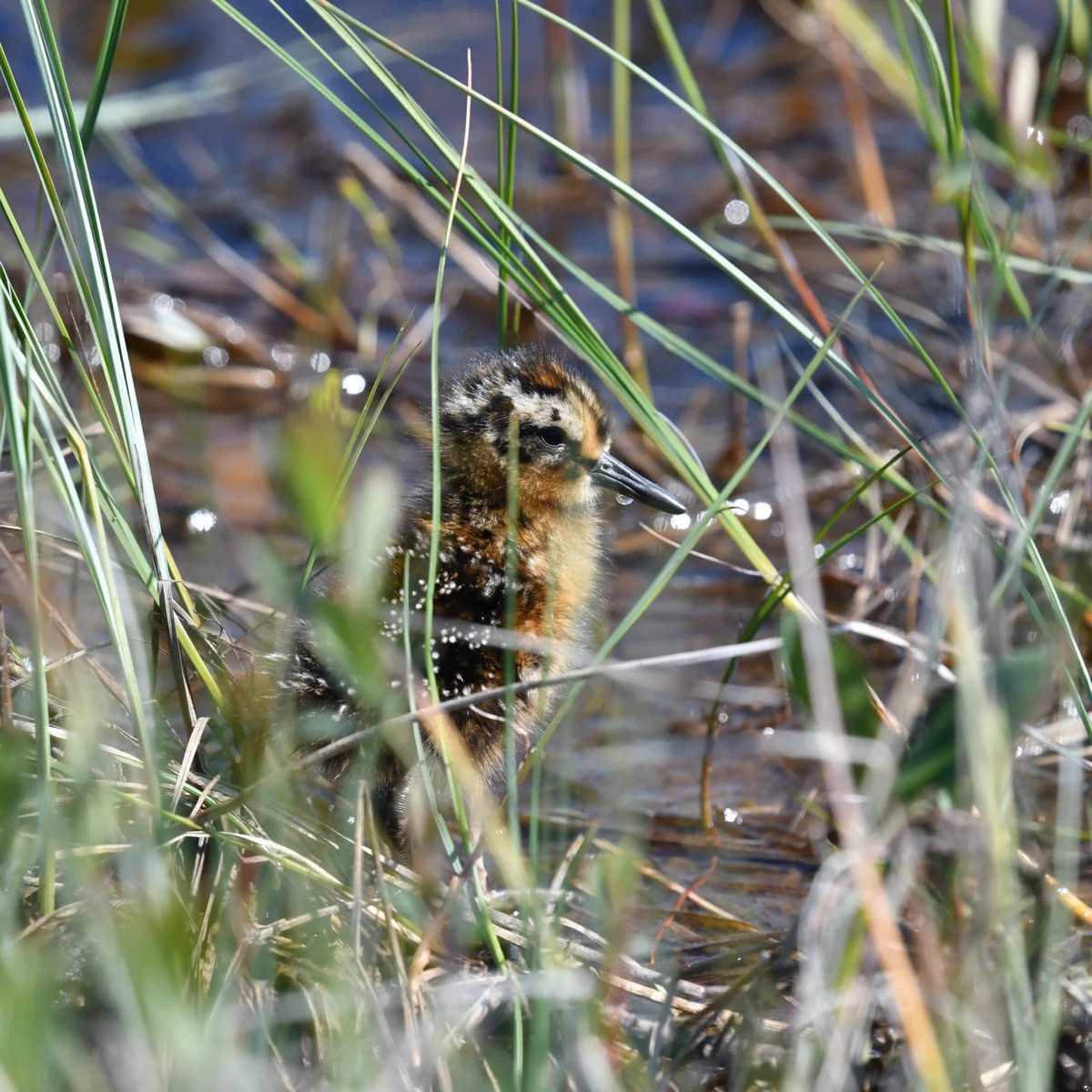
If fortune favors the pair, hatching day arrives, usually in early June. Soft chipping sounds emanate from within the eggs, signaling the imminent arrival of new life. Eventually, the shells crack, revealing tiny, wet bundles of fluff with disproportionately long, gangly legs—the shorebird chicks. Unlike many altricial bird species whose young are born helpless and remain in the nest for an extended period, shorebird chicks are precocial. Within hours of hatching, they are able to walk and follow their parents. This rapid development is a crucial adaptation to their ground-nesting lifestyle and the short breeding season, but it also exposes them to immediate dangers.
The parents, driven by an innate imperative, quickly shepherd their fragile offspring away from the now-empty nest. For the next three to four weeks, until the chicks develop their flight feathers and become fledglings, the family remains constantly on the move. The chicks rapidly adapt to their long legs, becoming adept at chasing down invertebrates – insects, larvae, and small crustaceans – which constitute their primary diet. Meanwhile, the adult birds maintain an unceasing vigil, doing their utmost to shield their young from disturbance and the ever-present threat of predators. It is these critical first weeks, from hatching to fledging, that Dr. Senner and his team are now focusing on with unprecedented detail.
Unraveling the Ecological Puzzle: Dr. Senner’s Research Objectives
The research team, operating across the entire Upper Cook Inlet, aims to address the fundamental questions that have long hindered effective shorebird conservation. Their core inquiry revolves around understanding the specific environmental parameters that contribute to chick survival. Where exactly do parents lead their chicks once they have hatched? What are the precise characteristics of the vegetation in these crucial post-hatching environments? How do water levels – whether high or low – in these specific locations influence chick foraging success and predator evasion? And, perhaps the most critical inquiry, the "million-dollar question," is whether these intrepid yet terribly vulnerable scraps of fluff and sinew manage to survive in these chosen habitats. The team understands that chick survival is the ultimate determinant between a stable, self-sustaining population and one that is rapidly dwindling, destined to become merely a historical footnote.
This meticulous, three-month-long project incorporates multiple shorebird species, recognizing that different species may have varying habitat requirements and face unique challenges. By assessing wetland breeding areas around the entirety of the Upper Cook Inlet, the researchers hope to build a comprehensive picture of habitat quality and its direct correlation with reproductive success. The data collected will include detailed observations of chick behavior, foraging rates, predator encounters, and fine-scale measurements of habitat features like vegetation height and density, soil moisture, and invertebrate abundance. The insights gleaned from this work will be invaluable for identifying "good" breeding sites and quantifying how many such sites remain viable within the region.
A Shifting Landscape: Threats in Urban and Remote Habitats
The stark reality is that the shift to the past tense, as Dr. Senner poignantly notes, is already underway for many shorebird populations, particularly on the more developed east side of Cook Inlet. Anchorage, Alaska’s largest city, possesses a unique ecological characteristic: its boggy environment has historically allowed shorebirds to breed and raise chicks even "smack-bang in the middle of the city." This unusual juxtaposition provides urban residents with the rare privilege of observing "backyard birds" that are, in fact, long-distance migrants and highly specialized wetland species.
However, this urban-wildlife interface is increasingly strained. A confluence of factors, including rapid urban development, the pervasive impacts of climate change, and the increased presence of people and their pets, is steadily degrading Anchorage’s once biodiverse and sheltered habitats. Dr. Senner’s personal experience underscores this decline: "When I was a kid, I used to be able to walk a few blocks to see breeding Hudsonian Godwits," he recalls, referencing his upbringing in Anchorage’s Turnagain neighborhood. "Those are gone now." This anecdotal evidence, while personal, reflects a broader, scientifically documented trend of habitat fragmentation and loss within urbanized areas globally.
While the Hudsonian Godwits have vanished from Anchorage’s immediate vicinity, other species are still bravely holding on. Greater Yellowlegs and Lesser Yellowlegs, Short-billed Dowitchers, and Wilson’s Snipe continue to attempt nesting in the city’s remaining bogs. Yet, the challenge extends beyond merely finding a suitable patch of wetland for egg-laying. Lee Tibbitts, a retired U.S. Geological Survey biologist whose pioneering work in the late 1990s provided the foundational motivation for the current project, highlights the perils faced by young chicks in this urban environment. "In early June, you’ve got birds moving down through the roads and through people’s yards with little chicks," Tibbitts explains. As shorebird families attempt to navigate between isolated local wetlands and marshes along the coast, the tiny, flightless chicks encounter formidable obstacles. They get trapped behind fences, become easy prey for curious or unsupervised domestic dogs, and are tragically run over by vehicular traffic. "The chicks are just trying to get across the road," Tibbitts laments, emphasizing a critical lack of public awareness: "People don’t know to watch out."
The challenges are not confined to urban centers. The western side of Cook Inlet presents a different scenario. Largely less developed and often difficult for people to access, these remote areas theoretically offer greater peace and quiet for disturbance-sensitive birds. However, even in these seemingly pristine regions, the number of breeding shorebirds has been "ticking steadily downward for the past decade." This decline appears to be intrinsically linked to the drying out of boreal bogs, a phenomenon likely exacerbated by climate change. Permafrost thaw, altered precipitation patterns, and increased evaporation rates are changing the hydrology of these vital wetland systems. Senner’s team will be meticulously collecting data to definitively quantify this connection, providing robust evidence for the relationship between shorebird reproductive success and the crucial water levels within these boreal bog ecosystems.
The Broader Ecological Tapestry and Conservation Imperatives
The plight of Cook Inlet’s shorebirds is not an isolated incident but a localized manifestation of a global trend. North American shorebird populations have experienced alarming declines, estimated at an average of 70% since 1970, according to reports by organizations like the National Audubon Society and the U.S. Fish and Wildlife Service. Alaska, particularly its vast northern and western coastal plains and its southern boreal wetlands, serves as a critical breeding ground for a significant proportion of these migratory species. The success or failure of breeding efforts in places like Cook Inlet directly impacts populations across the entire Western Hemisphere. Each shorebird that successfully fledges in Alaska contributes a vital piece to the "hemisphere-spanning jigsaw puzzle of migration," connecting ecosystems from the Arctic to Patagonia.
The research being undertaken by Dr. Senner and his team is therefore of profound significance. It moves beyond mere observation to active investigation, seeking to understand the mechanistic drivers of population dynamics. The findings will provide essential data for conservation managers, informing land-use planning, habitat restoration projects, and public education campaigns. Local conservation groups, such as Audubon Alaska and the Alaska Department of Fish and Game, are likely to view this research as critical, offering a scientific basis for advocating for stronger habitat protections and increased public engagement. Their statements would undoubtedly emphasize the need for a multi-faceted approach, combining scientific understanding with community action.
For the majority of Alaska’s human population, Cook Inlet is not just a geographical feature; it is their home, their backyard, a place where the wild is constantly on their doorstep. As Lee Tibbitts aptly puts it, "The best thing about Alaska is everybody’s interested in the natural world. It’s why people move here. And, if they move here and they don’t know that yet, they will become interested in the natural world just because it’s everywhere." This inherent connection to nature fosters a unique opportunity for engagement. The shorebirds, the salt marshes, and the bogs are not merely ecological components; they are integral to the identity and natural heritage of Cook Inlet. They embody the wild spirit of Alaska and, simultaneously, link this corner of the world to a much larger, interconnected global ecosystem.
The thousands of newly returned shorebirds foraging on the mudflats offer a powerful visual testament to this interconnectedness, a living symbol of global migration and the delicate balance of nature. The data collected this spring will provide the scientific clarity needed to understand the intricate details of their survival, illuminating the specific challenges they face and the opportunities we have to protect them. This research represents a crucial step toward informed action, ensuring that these extraordinary travelers continue to enrich Alaska’s wild landscapes for generations to come, rather than fading into memory. The future of Cook Inlet’s shorebirds hinges on this newfound understanding and the subsequent, timely implementation of effective conservation strategies.
