
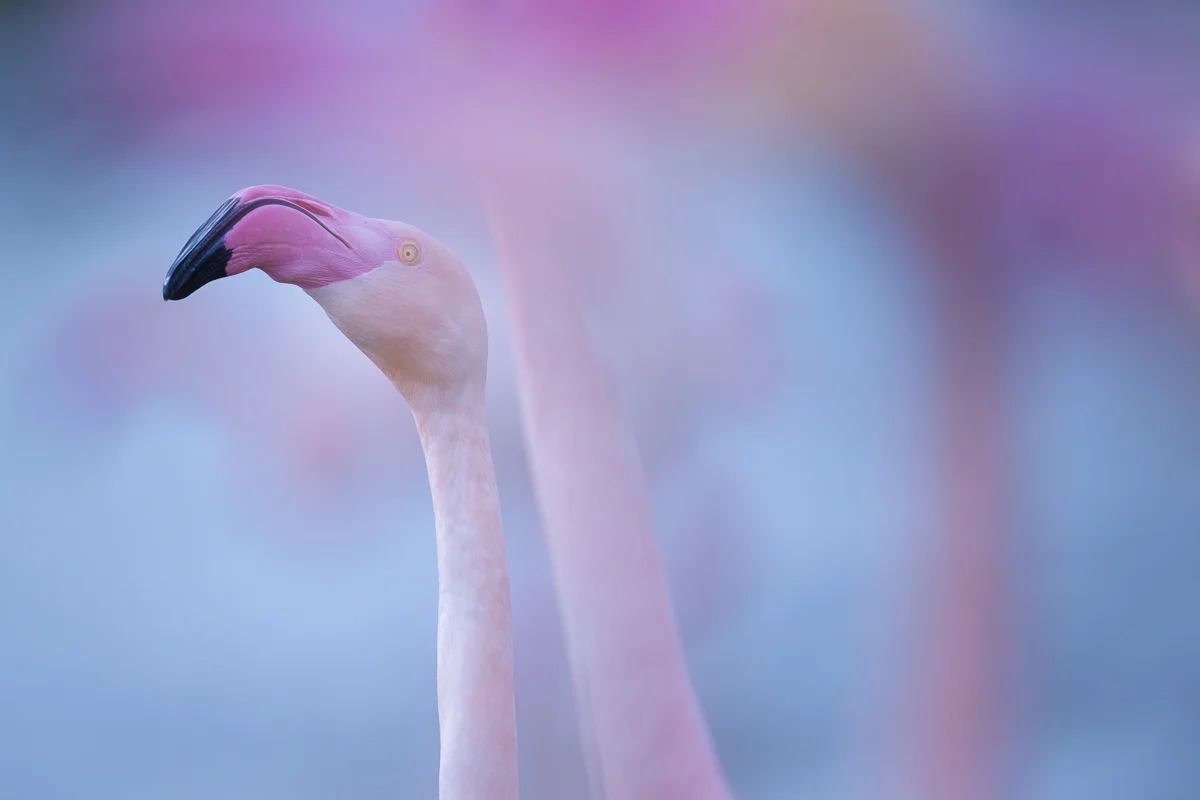
In the evolving landscape of wildlife photography, the pursuit of sharpness and intricate detail has long been a paramount objective. However, a growing number of photographers are embracing a technique that deliberately leverages what lies out of focus to craft images that resonate with profound emotional depth and atmospheric nuance: the strategic use of foreground blurs. This approach transcends mere documentation, transforming a simple scene into a visual narrative that expresses and suggests far more than sharpness alone can convey.
The Power of the Unfocused: Guiding Emotion and Gaze

At its core, photography is the art of transforming fleeting moments into enduring images. Foreground blur, rather than a technical oversight, becomes a powerful artistic tool in this quest. It functions subtly yet profoundly, serving multiple purposes within a single frame. By intentionally blurring elements positioned between the camera and the main subject, photographers can direct the viewer’s eye with remarkable precision, creating a natural visual path that leads directly to the focal point. This technique doesn’t distract; instead, it acts as a visual filter, enhancing the central subject by providing context and depth without competing for attention.
Beyond compositional guidance, foreground blurs are instrumental in evoking mood and emotional layers. A soft, ethereal blur can infuse an image with a dreamlike quality, suggesting intimacy, mystery, or a sense of quiet solitude. This psychological impact on the viewer is significant; it encourages a deeper engagement, inviting contemplation rather than just observation. The gentle diffusion can soften harsh lines, blend distracting elements, and ultimately contribute to a harmonious overall aesthetic that feels less like a snapshot and more like a carefully crafted piece of art. This move towards expressive imagery reflects a broader trend in nature photography, where storytelling and emotional connection are increasingly valued alongside scientific accuracy.
Defining Foreground Blur: A Technical and Artistic Tool

Technically, foreground blur is achieved by placing an object or element deliberately between the camera lens and the primary subject, rendering this intermediate element out of focus due to a shallow depth of field. This creates soft, diffused patterns that partially overlay the subject, yet crucially, do not diminish its visual weight or importance. The key is to manage the degree of blur and its placement to enhance rather than obscure.
The artistic intent behind this technique is multifaceted. It introduces layers of depth, making a two-dimensional photograph feel more expansive and immersive. It can imbue the scene with a sense of space, suggesting the subject’s environment without explicitly detailing every element. Perhaps most compellingly, foreground blurs can evoke a sense of mystery, partially concealing and partially revealing, thereby drawing the viewer in to explore what lies beneath the veil of softness. This deliberate obscurity often mirrors the elusive nature of wildlife itself, adding an authentic layer to the portrayal. Furthermore, the aesthetic outcome often lends a painterly quality to photographs, reminiscent of impressionistic art where atmosphere and feeling take precedence over sharp definition, fostering a perception of authenticity and artistic intentionality.
Leveraging Nature’s Canvas: Elements for Atmospheric Shots

The beauty of foreground blur lies in its adaptability, often utilizing elements readily available in the natural world. Photographers are encouraged to experiment with whatever the immediate environment offers. This can include a wide array of plant-based elements such as delicate branches, vibrant leaves, wildflowers, or tall grasses. These organic forms, when blurred, create soft, abstract shapes and colors that can frame the subject, add a touch of color harmony, or simply soften the overall composition.
Beyond flora, other natural elements prove equally effective. Water, in its various forms—splashes, reflections, or gently falling rain—can create mesmerizing, diffused effects. Snow, either falling or as a soft, undulating ground cover, provides a pristine, often melancholic blur. Geological features like rocks or sand dunes, when positioned strategically, can add texture and weight to the foreground. Even other animals, particularly in dense gatherings, can serve as a living, dynamic blur, as exemplified by the initial photograph of vultures where the birds themselves form a natural, overlapping foreground. This particular image, captured at a Pyrenees feeding site, showcases a rare precision of overlap, demonstrating the potential for serendipitous beauty when multiple subjects are present.
The photograph of a Pyrenean capercaillie, for instance, perfectly illustrates the synergy between natural elements and low light. Here, local shrubs and underbrush form a natural filter, softening the composition and adding depth. The scene, captured in the crepuscular light of early morning, benefits immensely from this technique. The long shadows and the muted light create an air of quiet mystery, transforming a mere observation into a profound narrative. In such fleeting moments, when light, subject, and environment align, photography truly transcends documentation to become powerful storytelling. Similarly, the image of the goshawk utilizes the interplay of light and shadow, with a carefully adjusted exposure and warm white balance enriching the atmosphere. The contrast subtly sculpts the subject, guiding the viewer’s eye with clarity and depth. These examples underscore how foreground blurs can create minimalist compositions that nonetheless convey a strong sense of environment, subject behavior, and the precise moment of capture, allowing viewers to intuit more than what is explicitly shown.

The Art of the "Photographic Hunt": Control vs. Serendipity
An important consideration for photographers employing foreground blurs is the degree of control they can exert over their shooting environment and subject. In some scenarios, particularly when photographing less skittish species from a hide, the photographer might have the luxury of intervening or even subtly shaping the scene. This could involve arranging plant elements, adjusting the immediate surroundings, or carefully planning the shot with a specific blur effect in mind. Such controlled environments allow for meticulous artistic vision and execution.
However, a significant portion of wildlife photography operates without such control. In these "photographic hunts," where direct intervention is often impossible and unethical, patience becomes the photographer’s most valuable tool. The challenge lies in approaching subjects cautiously, prioritizing their welfare, and waiting for natural elements to align perfectly with the subject. This reactive approach demands a keen eye for composition and an ability to adapt swiftly to changing conditions. Many seasoned wildlife photographers find immense appeal in these serendipitous interactions with the wild, where the unscripted nature of the encounter imbues the final image with a unique authenticity. While this approach carries a higher tolerance for failure, the rewards—capturing a truly organic and expressive moment—are often profoundly significant. Ethical considerations, such as avoiding disturbance to the animal, remain paramount, making the "art of waiting" an essential, conscious part of the creative process.

Genre Suitability and Dynamic Challenges
While foreground blurs offer immense creative potential, their applicability varies significantly across different genres of wildlife photography. The technique is most naturally suited for portrait photography, where the subject is relatively stationary, allowing the photographer time to compose and manipulate the foreground elements. In such contexts, the ethereal atmosphere created by soft blurs harmonizes perfectly with the intended meaning, often emphasizing the animal’s character, vulnerability, or majesty.
Conversely, dynamic scenes—such as birds in flight, mammals in pursuit, or rapidly moving subjects—present substantial challenges. The speed at which events unfold in these situations often renders deliberate compositional intervention nearly impossible. Maintaining focus on a fast-moving subject while simultaneously attempting to frame it with a foreground blur requires an almost impossible level of precision and reaction time. In these high-action scenarios, the opportunities for meticulously crafting a foreground blur are significantly reduced, if not entirely absent, forcing photographers to prioritize sharp focus on the primary subject. This highlights the importance of understanding the limitations and optimal applications of the technique.

Mastering Blur Types and Camera Settings
The versatility of foreground blurs extends to the various ways they can be deployed. Photographers can manipulate the proximity of the blurring object: placing it closer to the camera generally increases abstraction, creating larger, softer bokeh, while positioning it closer to the subject maintains more of the element’s discernible form, adding valuable contextual content.
Furthermore, blurs can be used to create "veils" that subtly cover the entire image, imparting a consistent ethereal quality. Alternatively, they can partially cover specific parts of the animal, often carefully preserving the subject’s gaze—a crucial element for establishing connection with the viewer. Two distinct compositional strategies are "look-throughs" and "look-overs." A "look-through" involves shooting through a small opening in the foreground elements, framing the subject precisely. A "look-over," conversely, fills the bottom of the frame with a blurred foreground, grounding the subject within its environment.

From a technical standpoint, mastering foreground blurs often requires stepping beyond automatic camera settings. A wide aperture (low f-number, e.g., f/2.8, f/4) is essential to achieve a shallow depth of field, rendering foreground elements beautifully out of focus. A longer focal length lens can also compress the scene and enhance blur. When employing foreground elements, the camera’s autofocus system may struggle to lock onto the intended subject through the blur. In such cases, switching to manual focus becomes imperative, allowing the photographer precise control over the plane of focus. While this might occasionally result in a slight loss of absolute sharpness on the subject, the artistic gain in mood and atmosphere often far outweighs this minor technical trade-off, contributing to a more impressionistic, artistic aesthetic.
The Evolution of Wildlife Photography as Art
Historically, wildlife photography began largely as a tool for scientific documentation, prioritizing clarity, detail, and unambiguous representation of species. Early pioneers focused on capturing identifiable images for study and public education. However, over the decades, as camera technology advanced and artistic movements influenced visual culture, the genre began to evolve. Photographers started to explore more subjective interpretations, drawing inspiration from landscape and fine art photography. The advent of faster lenses and more sophisticated sensors facilitated greater control over depth of field and light, opening new avenues for creative expression.

Today, wildlife photography occupies a unique space, straddling the line between scientific record and artistic interpretation. Techniques like foreground blurring represent this philosophical shift, moving beyond simply showing what an animal looks like to conveying what it feels like to encounter it in its natural habitat. This evolution has enriched the genre, allowing photographers to tell more nuanced stories, evoke empathy, and create images that resonate on a deeper, more emotional level with audiences. It reflects a growing appreciation for the artistic potential inherent in capturing the natural world, fostering a new generation of photographers who blend technical mastery with profound artistic vision.
Impact and Implications: Elevating Wildlife Storytelling
The widespread adoption and appreciation of artistic techniques like foreground blurring carry significant implications for wildlife photography and beyond. For emerging photographers, it offers a fresh perspective, encouraging experimentation and a departure from conventional "pin-sharp" imagery. It provides an avenue for distinguishing one’s work in an increasingly saturated field, fostering originality and personal style. Photography competitions, increasingly, are recognizing and rewarding images that demonstrate artistic merit and emotional resonance alongside technical excellence, further validating these creative approaches.

More broadly, the ability of foreground blurs to create evocative and immersive images has a powerful impact on conservation messaging. By evoking a sense of wonder, mystery, or intimacy, these photographs can forge a stronger emotional connection between viewers and wildlife. When an image stirs empathy or curiosity, it can motivate action and support for conservation efforts more effectively than purely factual depictions. The subtle layering of visual cues allows the viewer to intuit more than what is explicitly shown, creating a more immersive experience of the scene and, by extension, a greater appreciation for the delicate ecosystems being portrayed.
Concluding Remarks: An Enduring Technique for Visionary Photographers
Foreground blurs are a creative technique with broad applicability, making them an invaluable tool for any wildlife photographer. Their versatility allows for deployment in a wide range of situations, provided the photographer can exert some degree of control over their position relative to the subject and its environment. Creativity often flourishes through iterative trial and error, particularly within familiar surroundings. This technique, however, actively encourages improvisation and inspiration, allowing photographers to revisit "recurring" or familiar species and capture them in a fresh, original, and artistically compelling manner.

Crucially, foreground blurs are fully compatible with a myriad of other creative photographic techniques. They can be combined seamlessly with selective over- or underexposure to manipulate mood, with movement and varied shutter speeds to introduce dynamic blur, with dramatic backlighting to create silhouettes, or with double exposures and other forms of abstraction to push artistic boundaries further. This synergistic potential ensures that foreground blurs are not a singular trick but a foundational element in a broader artistic toolkit.
Used by masters and visionaries throughout photographic history, this technique is a testament to the power of artistic interpretation in conveying the profound beauty and complexity of the natural world. It encourages photographers to look beyond the obvious, to embrace the expressive potential of their medium, and to connect with their subjects on a deeper, more artistic level. Therefore, any aspiring or established wildlife photographer is strongly encouraged to explore and master the art of foreground blurs—a technique that truly transforms observation into art.
