
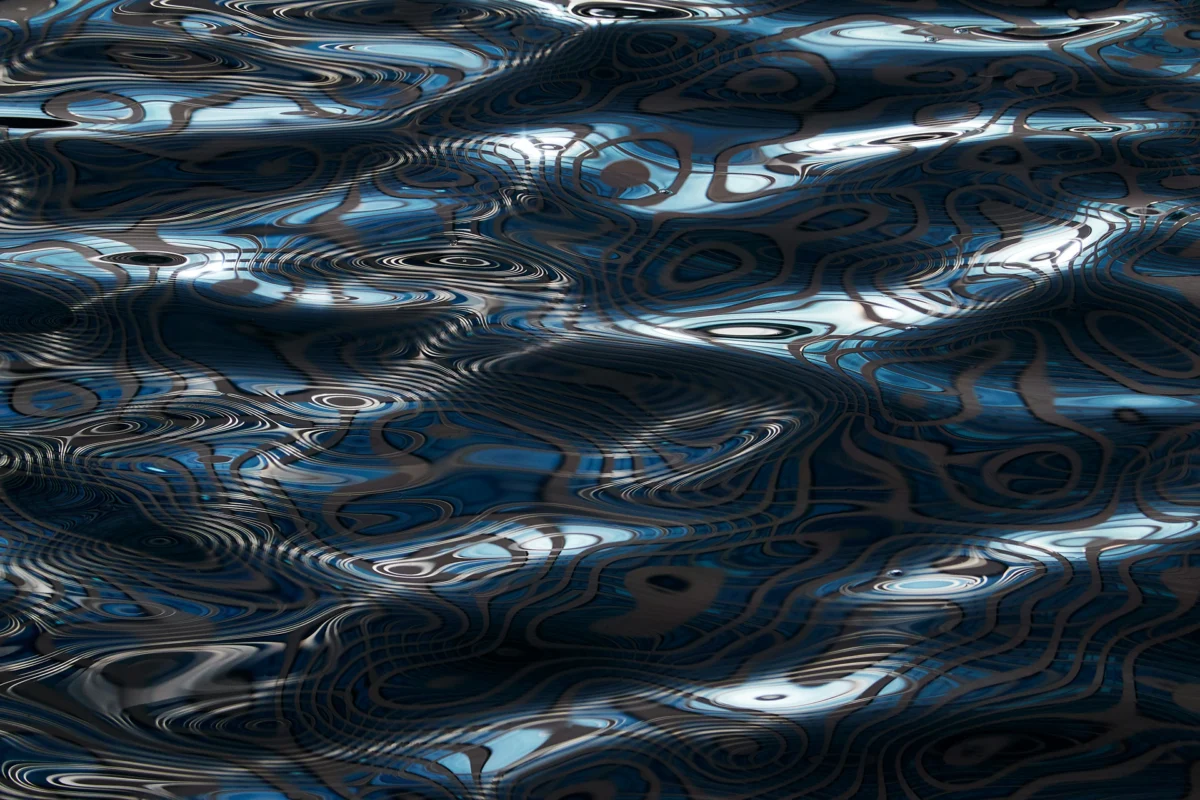
When encountering the mesmerizing images from the Fleeting Reflections series, many viewers are initially convinced they are the product of intricate digital manipulation. However, the artist behind this captivating body of work, who has dedicated over a decade to its creation, consistently affirms that these are purely in-camera captures. These striking visuals are born from the interplay of light reflecting off the towering glass and steel structures of London’s Canary Wharf, refracting and breaking upon the water’s surface, and meticulously recorded – sometimes as a single frame, other times through carefully layered in-camera multiple exposures. This commitment to authenticity underscores a profound artistic philosophy centered on attention, repetition, and the passage of time.
The Genesis of a Vision: Time as the Core Element
At the very heart of the Fleeting Reflections project lies the concept of time. For more than ten years, the photographer has immersed themselves in the dynamic environment of the Canary Wharf docks, cultivating an understanding that truly meaningful creative work, particularly in nature and abstract photography, rests upon a trinity of foundational principles: accessibility, repeatability, and patience. This framework transcends the common preoccupation with photographic equipment – cameras, lenses, and modes – which the artist views as mere supporting characters. Instead, the true power driving Fleeting Reflections emanates from the symbiotic relationship between a chosen place, unwavering persistence, and rigorous discipline.

Canary Wharf, a district synonymous with global finance and characterized by its iconic skyscrapers, might seem an unlikely canvas for abstract nature photography. Yet, it is precisely this urban landscape, with its towering edifices of steel and glass, that the artist reinterprets as a colossal "set of light sources." These architectural giants cast an ever-changing tapestry of colour and line onto the water, a canvas further sculpted by the wind into waves, ribbons, and fractured reflections. The artist’s role, as they describe it, is to "listen" to this intricate, fleeting dialogue between light, architecture, and water.
Challenging Photographic Dogma: The Pillars of Artistic Mastery
The enduring success and distinctiveness of Fleeting Reflections stems from the artist’s adherence to their three core pillars, which collectively offer a counter-narrative to conventional wisdom in photography.
Pillar One: Accessibility – The Power of the Proximate

A pervasive myth within nature photography dictates that artists must journey to dramatic, often remote, locations to capture images of worth. The Fleeting Reflections series decisively dismantles this notion. The entirety of this extensive project has emerged largely from a single square mile of water, nestled amidst the formidable office towers of Canary Wharf. This deliberate choice of a highly accessible location has been absolutely fundamental to the work’s depth and evolution.
The ability to easily reach the subject matter, to walk its perimeter, and to return repeatedly without significant logistical hurdles, frees the artist from the constraints that often plague ambitious photographic endeavors. There is no need for costly flights, cumbersome permits, extended leaves of absence, or arduous pre-dawn hikes. The artist can visit whenever a mere 40 minutes become available, embracing conditions typically deemed "bad" by conventional photographic standards, such as heavy rain that transforms the water’s surface into a textured, hammered metal.
This seemingly prosaic concept of accessibility is, in fact, revolutionary. If a photographer cannot physically and practically engage with their subject frequently, they will struggle to develop the profound familiarity required to move beyond superficial observations. The more readily one can stand before their chosen subject, the more intimately and honestly one can study its myriad manifestations. This approach not only fosters artistic depth but also aligns with a growing contemporary awareness of sustainability in creative practices, demonstrating that impactful art can be created with a minimal environmental footprint, reducing the need for extensive travel.
Pillar Two: Repeatability – The Unending Narrative of Change

The second crucial pillar is repeatability, defined as selecting a subject that possesses an inherent capacity for continuous transformation, offering fresh surprises and new possibilities with each encounter. The docks of Canary Wharf exemplify this principle with remarkable abundance. The environment is never truly static; no two moments are ever precisely alike.
A calm morning might present long, glassy stretches of reflected colour, mirroring the urban geometry with serene precision. Conversely, a gusty afternoon can shatter these same architectural reflections into jagged, serrated lines, evoking abstract patterns reminiscent of waveforms. The passage of a boat can smear the reflections into fluid, hand-drawn-like gestures, while the iridescent sheen of diesel on the water’s surface can create ephemeral interference patterns that may last only minutes and never reappear in the same form. This constant flux ensures that the subject remains an inexhaustible source of inspiration.
Because the environment is so consistently repeatable, the artist can photograph the "same" scene hundreds, if not thousands, of times, yet still feel engaged in entirely new creative work. This intensive engagement often involves remaining in a single spot for hours, observing a particular patch of water as it cycles through a kaleidoscope of personalities. At such moments, the focus shifts from merely documenting architecture to capturing the behaviour of light and water – a dynamic interplay of elements.
It is within this context of constant change that advanced in-camera techniques find their true purpose. Fast burst rates become essential for freezing micro-moments of intricate detail in the water before they dissolve, while multiple exposure modes allow for the layering of gestures and the extension of the inherent abstraction. However, these techniques are not ends in themselves; their efficacy is entirely dependent on the subject’s ceaseless offering of new raw material. The palette of colours shifts with the weather, the geometry bends with the wind, and the mood of the scene transforms with the tide. Without repeatability, the output might merely be a collection of aesthetically pleasing postcards; with it, a cohesive and profound body of work emerges.

Pillar Three: Patience – The Unglamorous Core of Mastery
The final pillar, patience, is arguably the most underestimated yet profoundly essential element of the Fleeting Reflections project. Its influence permeates every stage of the artistic process, extending far beyond the simple act of pressing the shutter.
Patience begins long before the camera is even lifted. It involves the meticulous waiting for the ideal confluence of weather conditions and the artist’s available time. The harsh glare of direct sun on still water yields a vastly different effect than the soft, flat light of a drizzly day, and not every combination is creatively viable. The artist recounts walking for miles, diligently checking angles in the water, only to find nothing that aligns with the day’s specific conditions.
When conditions do align, patience transforms into a physical exercise of sustained observation. The artist might remain at a single location for up to four hours, capturing as many as 3,000 frames of what an casual observer might dismiss as "the same scene." This intense scrutiny is dedicated to discovering that singular, fleeting instant where colour, rhythm, structure, and tension coalesce into a perfect harmony. This cannot be rushed; it demands a profound and sustained presence, an unwavering attentiveness to recognize the moment of revelation.

The discipline of patience continues in the post-capture phase. Thousands of nearly identical-looking images are downloaded, initiating a slow, deliberate sifting process on the artist’s iMac. This stage is where unwavering discipline is paramount. The artist moves through the images purposefully, searching for the precise frame where every element aligns, rigorously rejecting the vast majority. The "keep rate" is, by their own admission, brutally low, a testament to an uncompromising vision.
The artist’s approach to post-processing is equally restrained, reflecting a philosophical commitment to authenticity. Working predominantly in Capture One, adjustments are limited to global parameters such as levels, clarity, sharpness, and contrast. There is no manipulation of shapes in Photoshop; the artist does not "create" forms but rather "reveals what was already there in the water." This choice is as much philosophical as it is aesthetic, driven by a desire for the work to be honest and verifiable, allowing the artist to declare, "this happened."
Perhaps the most challenging form of patience is the patience required for the work itself to mature. The Fleeting Reflections project was not publicly presented in any significant way for many years. The artist simply continued the process – returning to Canary Wharf, shooting, refining, and learning to discern the essential from the merely visually noisy. It took approximately seven years before the artist felt the body of work had achieved sufficient coherence to be presented to a publisher. This culminated in the publication of the first book, Fleeting Reflections, by Triplekite in 2017. This initial success led to exhibitions at the Greenwich Gallery in 2017 and the Anise Gallery in London in 2019, followed by a second volume, Fleeting Reflections II, in 2023.
While these milestones might suggest a swift and seamless progression, the reality was one of slow, deliberate, and obsessive dedication. The photographs themselves, beautiful as they are, represent only the visible apex of the project. Beneath them lies an immense foundation built upon thousands of hours of walking, watching, waiting, shooting, editing, rejecting, and returning – a testament to a profound and sustained artistic commitment.

Implications for the Broader Photographic Community
The enduring message woven through the Fleeting Reflections series offers profound lessons for photographers of all levels, particularly those aspiring to create distinctive and personal bodies of work. It unequivocally demonstrates that a dramatic landscape or an exotic location is not a prerequisite for artistic profundity. What is truly indispensable is a commitment to accessibility, repeatability, and patience.
The artist encourages others to seek out and deeply engage with locations that are easily reachable and can be visited often – be it a local canal, a harbour wall, a marshland on the outskirts of town, or even the transient reflections in rainwater pooling in a car park. The key is to return to these places across all seasons, in every mood of light and weather, until an intuitive understanding of how the environment responds to these variables is cultivated.
This deep familiarity then paves the way for the slow, meticulous work: purposeful walking, attentive waiting, rigorous refining of vision, and unflinching honesty during the editing process. Patience, far from being a passive trait, is presented as a highly active and deliberate choice – an investment of oneself into a subject for as long as it takes to achieve a comprehensive understanding. Over time, this deep-seated patience becomes visibly embedded within the photographs themselves. While viewers may initially be drawn to the captivating colours and shapes, what they are ultimately perceiving, and what resonates most deeply, is the profound attention that underpins every single frame. This series stands as a powerful testament to the idea that true artistic vision is cultivated through persistent, mindful engagement with the seemingly ordinary, transforming it into the extraordinary.
