
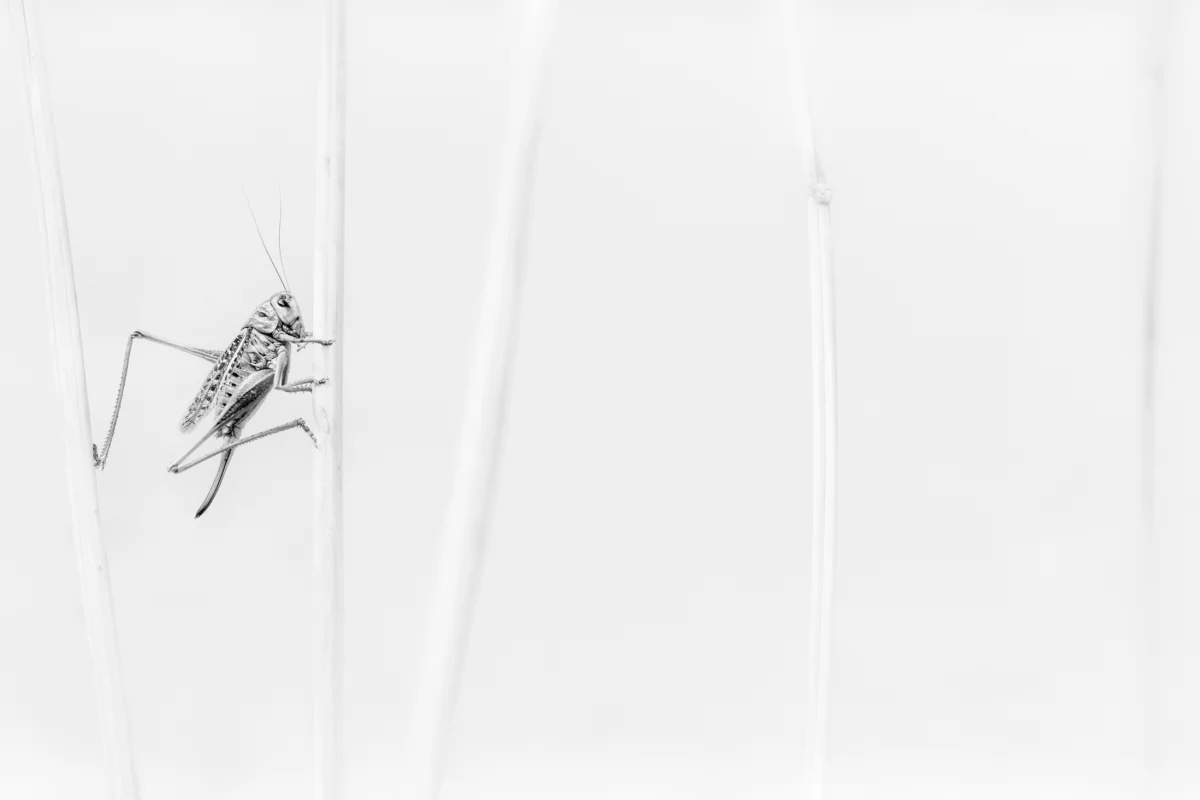
The realm of nature photography consistently draws enthusiasts, offering boundless opportunities to capture the planet’s diverse beauty. Among its many specializations, macro photography, particularly of arthropods, stands out as a unique discipline, transforming the minuscule into the magnificent. This intricate field, which allows for close observation of subjects often overlooked in daily life, gains a profound, almost philosophical dimension when rendered in black and white, as demonstrated by the evocative work of practitioners like Elisa Confortini. Her approach highlights how the absence of color can accentuate the inherent drama, texture, and form of these tiny creatures, inviting viewers into a world of unexpected wonder and complexity.
The Allure of the Miniature World: Arthropods as Photographic Subjects

Arthropods, comprising insects, arachnids, and crustaceans, represent the most diverse phylum in the animal kingdom, accounting for over 80% of all known animal species. From the common housefly to the majestic praying mantis (Mantis religiosa), their sheer variety, intricate anatomies, and fascinating behaviors make them ideal subjects for macro photography. Their prevalence in almost every ecosystem, including urban environments, means they are readily accessible, often close to home, allowing photographers to hone their skills without venturing to remote locations. The act of observing these creatures up close is inherently both fascinating and instructive, revealing details of their lives that typically escape human perception. Long-term observation, a commitment often undertaken by dedicated macro photographers, allows for the capture of subtle behaviors – such as intricate mating rituals, hunting strategies, or camouflage techniques – that are rarely seen and even less frequently documented in detail. This dedication goes beyond mere documentation; it is about portraying their characteristics and habits in a manner that captivates and educates the viewer, fostering a deeper appreciation for these vital components of our ecosystems.
Historically, insects have occupied a complex space in human culture, oscillating between admiration and revulsion. They have inspired artists, scientists, and writers for centuries, their diversity and complexity serving as an inexhaustible source of creativity. From ancient Egyptian scarab beetles symbolizing rebirth to intricate butterfly motifs in Art Nouveau, their representation in art reflects humanity’s evolving relationship with the natural world – a relationship that, despite technological advancements, remains rooted in wonder, fascination, and sometimes, primal fear. Macro photography, especially when stripping away the often distracting element of color, brings this relationship into sharp focus, forcing an unadulterated confrontation with the subject’s form and essence.

The Enduring Power of Monochrome Photography
In an era saturated with vibrant, often digitally enhanced colors, black and white photography might seem an anachronism. Yet, it remains a powerful, timeless, and profoundly expressive medium that continues to thrive across all genres of photography. While digital tools make color manipulation ubiquitous and straightforward, choosing to work in black and white today is a deliberate aesthetic and stylistic decision. It is a conscious choice to express and convey emotion, to strip away the superficial and delve into the fundamental elements of an image.

The rationale behind opting for monochrome is multifaceted and deeply rooted in photographic theory and human psychology:
- Focus on the Subject: Color, while beautiful, can often be a powerful attractor of attention, potentially distracting the viewer from the primary subject. By removing color, the eye is guided directly to the form, texture, and emotional core of the image.
- Highlighting Texture, Contrast, and Shapes: The absence of color forces these elements to the forefront. The intricate patterns of an arthropod’s exoskeleton, the delicate veins of a wing, or the sharp angles of a praying mantis’s forelegs become strikingly apparent. The interplay of light and shadow, unburdened by chromatic information, creates a richer tapestry of visual information, conveying emotions and narratives that might be lost in a riot of hues.
- Evoking Drama and Mystery: The tonal nuances of black and white are inherently dramatic. The stark contrast between light and dark, the subtle gradients of gray, can create an atmosphere of mystery, solemnity, or intensity, imbuing the subject with a timeless quality.
- Emphasis on Composition and Light: Monochrome photography demands a greater focus on compositional elements, the quality of light, the strategic use of shadows, and the inherent contrast within a scene. These are universally acknowledged as crucial elements in creating any effective photograph, and black and white serves as an excellent teacher and amplifier for them.
- Discovering True Essence: It compels both the photographer during capture and the viewer during appreciation to look beyond superficial color and to discover the true essence, character, and structure of the image. It’s a journey into abstraction and core visual truth.
- Enhanced Post-Processing Control: In the digital darkroom, black and white conversion offers unparalleled control over light, shadow, and tonal range. Modern editing software allows for precise manipulation of individual color channels into grayscale, enabling a level of creative interpretation that would be impossible or far less effective with color imagery.
Monochrome fundamentally shifts the photographic workflow, encouraging a different way of seeing and interpreting the world.

Approaches to Monochrome Macro Photography
For photographers venturing into black and white macro, two primary approaches emerge. The first is a more organic method: photographing as usual, but maintaining a heightened awareness of scenes or subjects that inherently possess strong monochrome potential. This involves an intuitive understanding of how colors will translate into shades of gray, anticipating the impact of light, shadow, and form.

The second approach is more deliberate and immersive: committing to work exclusively in black and white. For those seeking to truly train their eye, setting the camera to monochrome mode can be incredibly beneficial. This real-time grayscale preview helps photographers develop a new visual sensitivity, forcing them to think in terms of tones, contrasts, and shapes rather than relying on color information. While initially challenging – especially when faced with the vibrant colors of nature, from lush grasses to intricate insect patterns – this discipline sharpens the photographer’s ability to create impactful monochrome images. Learning how specific colors translate into particular shades of gray is a crucial skill that takes time and practice to master. Experimenting by intentionally photographing brightly colored subjects and then reviewing them in black and white can be an illuminating exercise, revealing unexpected transformations and strengthening this visual "translation" ability.
Many experienced photographers, including Confortini, prefer to capture images in color (RAW format) and then convert them to black and white during post-processing. This method offers the most precise control over tonal nuances, contrast, and fine details. It also provides the flexibility to decide, post-capture, which images are best served by color and which are profoundly enhanced by the monochromatic treatment, especially if black and white is not the photographer’s sole mode of expression. Some images immediately "speak" in monochrome, their inherent graphic qualities evident from the outset. Others require careful conversion and meticulous post-processing to reveal their full effectiveness, transforming from a colorful scene into a powerful grayscale narrative.

Revisiting the Archive: A New Perspective
An often-overlooked yet incredibly fruitful exercise for photographers is to revisit older images in their archives and experiment with converting them to black and white. This process can yield surprising insights, revealing hidden strengths, textures, and emotional qualities that were previously obscured by color. It’s a powerful tool for generating new creative ideas and inspiring future photographic projects. However, a critical eye is paramount: not all images lend themselves well to monochrome conversion. If color plays a meaningful role in the narrative or emotional impact of an image, removing it can detract from its message. Conversely, when atmosphere, graphic qualities, or a sense of timelessness are the primary goals, monochrome can significantly elevate the final result. The decision is always a nuanced one, driven by artistic intent.

Strategic Applications of Black and White in Macro Photography
The choice of monochrome in macro photography is often a strategic one, employed when specific visual goals are paramount:

- Reducing Distractions and Isolating the Subject: The natural environments of arthropods can often be visually chaotic, filled with competing colors and textures. Black and white effectively reduces this clutter, chromatically isolating the subject and directing the viewer’s attention to its form, features, and expression.
- Harnessing Harsh Light and Shadow: Conditions with strong, direct light and deep shadows, which can be challenging for color photography, become assets in monochrome. Black and white accentuates these dramatic contrasts, allowing for creative use of negative space and stark graphic compositions.
- Transforming Noise into Atmosphere: High-ISO images, often necessary in low-light macro situations, can suffer from significant chromatic noise. In black and white, this noise can be transformed from a technical flaw into an artistic element, adding a film-like grain or an ethereal atmosphere, rather than distracting colored pixels.
- Correcting Unwanted Color Casts: Sometimes, environmental factors like artificial lighting or the color of water can introduce undesirable color casts that are difficult to correct satisfactorily in color. Converting to black and white elegantly sidesteps this issue, allowing the photographer to focus on the image’s inherent strengths.
- Enhancing Experimental Techniques: Techniques such as double exposures or intentional camera movement (ICM) often produce abstract or surreal results. In these instances, natural colors can sometimes appear unnatural or distracting. Monochrome can unify these experimental images, allowing the composition, movement, and abstract qualities to take precedence.
It might appear that black and white serves as a convenient tool to "rescue" technically imperfect images. However, as experienced practitioners attest, the opposite is often true. The most impactful monochrome conversions typically stem from images that already possess strong compositional integrity, graphic clarity, or profound expressive potential that transcends mere color. It is a refinement, not a repair.
Minimalism and Abstraction in Monochrome Macro

In macro photography, monochrome is an invaluable tool for exploring minimalism. By stripping away color, the photographer can reduce clutter, complexity, and distraction, focusing instead on simple, powerful compositions. Enhancing the silhouette of an arthropod against a plain background is one intuitive application, but the possibilities extend far beyond.
The exploration of shapes, both geometric and irregular, becomes particularly effective. Geometric forms provide a sense of order and structure, while irregular shapes introduce dynamism and unpredictability. Without the interference of color, differences in light and shadow become more pronounced, allowing contrast to define and sculpt these forms with clarity.

Composition, often considered the cornerstone of creative photography, takes on new significance in monochrome macro. The subject does not always need to fill the frame; indeed, in close-up work, abstraction can become a potent narrative device. A limited depth of field, another powerful creative tool, can isolate a single, sharp element while the rest of the scene dissolves into an elegant blur. This technique guides the viewer’s eye, emphasizing the chosen detail and offering unexpected, dreamlike perspectives of the miniature world.
Even grain, which might be considered an imperfection in color photography, can evoke strong emotional responses in black and white. When the environment and mood are prioritized over meticulous detail, grain can enhance the atmosphere. While grain can result from underexposure or high ISO settings, many photographers prefer to capture clean images and judiciously add grain during editing, carefully experimenting with its intensity to achieve the desired effect.

Beyond Technique: The Philosophical Choice
While black and white photography is often recommended as a useful learning tool for beginners, especially for understanding light and composition, in macro photography, this choice often emerges later in a photographer’s journey. It becomes a conscious artistic decision once a personal visual language has already developed, signifying a deeper exploration of creative interpretation.

For many, monochrome becomes a path worth exploring precisely because color can, in certain situations, limit creative expression. It can distract from the subtle atmosphere, the raw emotion, or the profound sensations experienced while photographing a tiny creature. While vibrant, detailed close-ups of insects have their undeniable appeal, black and white offers an alternative: a way to express their beauty by evoking their environment, behavior, or character in a more interpretive, often more profound, manner.
Ultimately, the decision to use black and white in macro photography is a deeply personal creative choice. It is an invitation to perceive a small yet immense universe – a world that is rich, unfamiliar, endlessly fascinating, and sometimes even unsettling – from an entirely new and evocative perspective. This artistic lens not only transforms the subjects but also reshapes the viewer’s perception, fostering a deeper connection to the intricate wonders of the natural world.
