
Nature photography, often perceived as a pursuit of pristine beauty and accurate representation, finds a profound and evocative expression in the work of an artist who deliberately ventures into the extreme ends of photographic techniques. This approach is not merely a technical exercise but a philosophical journey aimed at transcending visual documentation to convey the deeply personal impressions and raw emotions experienced in the wild. By embracing ultra-wide or super-telephoto perspectives, stark blackout or ethereal whiteout exposures, extended shutter speeds, and challenging conventional compositional norms, this photographer seeks to strip away distractions, amplify crucial elements, and imbue each image with a more potent narrative. This methodology offers a compelling framework for aspiring and established nature photographers alike, demonstrating how pushing technical boundaries can lead to a more profound and impactful artistic statement, ultimately revealing the hidden structures and emotional core within nature’s apparent chaos.

The Philosophy of Extremes in Nature Photography
At its heart, this distinctive photographic philosophy posits that true artistic expression in nature stems from an unwavering commitment to emotional authenticity over mere replication. The natural world, with its sprawling forests, dynamic wildlife, and intricate details, often presents itself as an overwhelming tapestry of elements. For many, the challenge lies in distilling this vastness into a coherent, visually pleasing form. This photographer, however, finds order not through conventional means but by navigating the outer limits of photographic possibility. The rationale is clear: at these extremities, the superfluous fades, the essential is magnified, and the underlying story within the frame gains an undeniable power. This intentional departure from the middle ground allows for a deeper exploration of a scene’s emotional resonance, translating the artist’s personal experience into a universally comprehensible visual language. This isn’t just about capturing what the eye sees, but what the soul feels, making the act of photography a journey of introspective discovery as much as external observation. This drive to convey subjective experience aligns with contemporary art movements that prioritize personal interpretation over objective depiction, demonstrating how nature photography can evolve beyond mere documentary.

Mastering Atmosphere Through Exposure: Blackout and Whiteout Techniques
The human experience of nature is inherently multi-sensory, a rich tapestry woven from sights, sounds, smells, and textures. Still photography, by its very nature, is constrained to the visual realm, making the faithful recreation of a holistic sensory impression a formidable challenge. It is a common sentiment among photographers to feel their captured images fall short of the vivid intensity of their on-site encounters. To bridge this gap and immortalize the ephemeral atmospheres and deep-seated emotions of the wild, this photographer employs extreme exposure techniques: the dramatic underexposure known as "blackout" and the luminous overexposure termed "whiteout." These methods serve as powerful amplifiers of mood and feeling, transforming a simple scene into an emotive landscape.

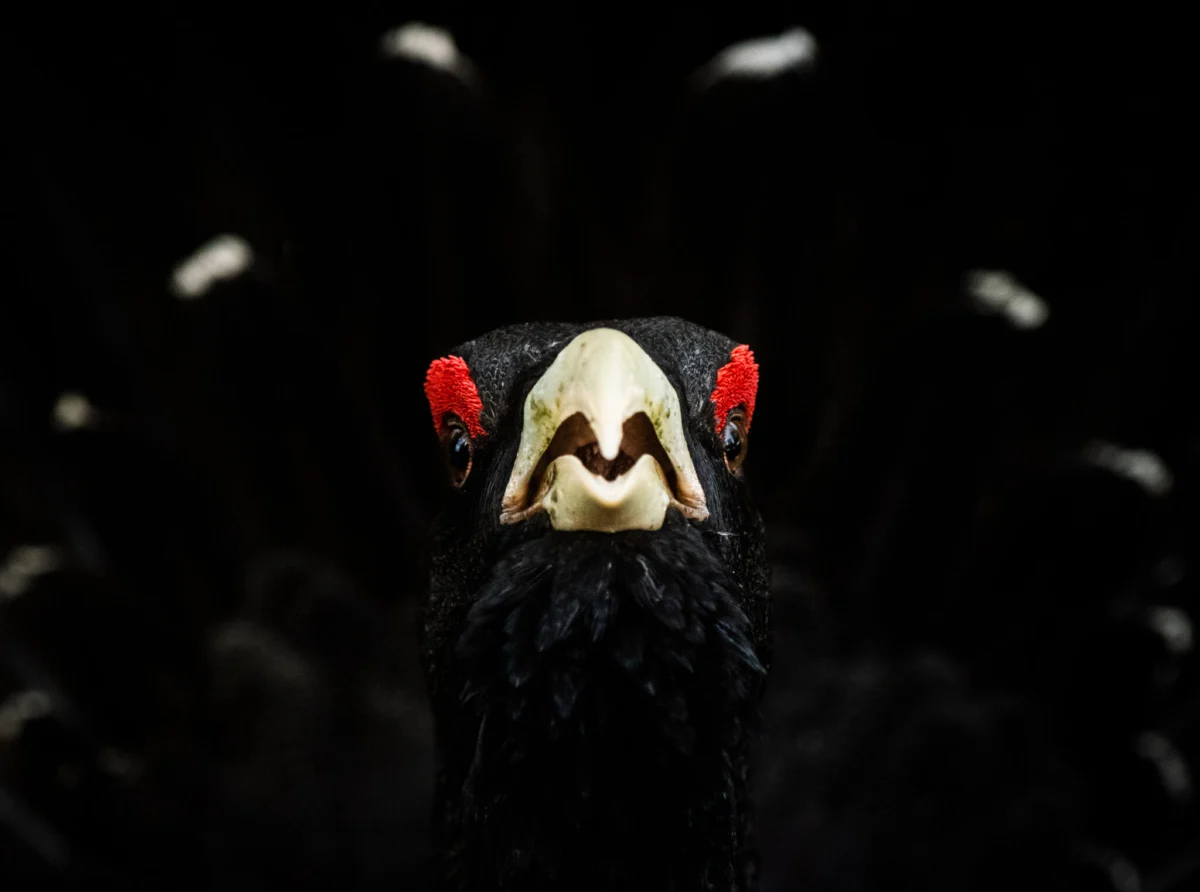
Blackout images, characterized by deep shadows, high contrast, and minimal discernible light, inherently convey a sense of drama, mystery, and profound atmosphere. They often evoke a feeling of solitude or the harshness of nature, drawing the viewer into a mood rather than merely presenting a scene. The underexposed areas become abstract shapes, pushing the viewer to focus on the illuminated subject or the subtle interplay of light. Conversely, whiteout exposures, bathed in overwhelming, often monochromatic light, typically evoke feelings of purity, elegance, and ethereal beauty. This approach is particularly effective for isolating subjects, such as a solitary bird or a delicate plant, highlighting their form against a stark, almost otherworldly backdrop. The deliberate choice of exposure thus becomes a potent tool for guiding the viewer’s emotional response, aligning it with the sensations the photographer experienced in the field. This conscious manipulation of light and shadow transforms a two-dimensional image into a conduit for profound emotional connection, moving beyond simple depiction to evoke a visceral reaction. The prevalence of these techniques has grown, especially in artistic nature photography, as photographers increasingly seek to differentiate their work in a crowded visual landscape, moving towards expressive rather than purely documentary styles, often seen in fine art photography exhibitions.
Redefining Perspective: The Power of Extreme Focal Lengths

Beyond atmosphere, perspective fundamentally shapes the viewer’s relationship with the subject. Focal length, a cornerstone of a photographer’s toolkit, offers an unparalleled means to alter the perceived appearance of a subject in relation to its environment. This artist emphasizes that the further one deviates from standard focal lengths – venturing into the realms of ultra-wide or super-telephoto – the more pronounced and impactful the storytelling potential becomes. Each end of this spectrum narrates a distinct story, drawing the viewer’s attention in specific ways and eliciting different emotional responses.
Ultra-wide lenses, typically ranging from 14mm to 24mm, can immerse the viewer directly into a vast landscape, emphasizing the subject’s place within an expansive ecosystem. They create a powerful sense of scale, drawing attention to the environment and its grandeur as much as the individual subject, fostering a feeling of immersion or even insignificance in the face of nature’s vastness. Conversely, super-telephoto lenses, often exceeding 400mm, compress perspective, isolating subjects and bringing distant details into sharp focus, often blurring backgrounds into abstract washes of color. This allows for intimate portraits of wildlife or minute natural formations, revealing aspects that are imperceptible to the naked eye or through standard lenses. These lenses excel at conveying a sense of intimacy and detail, often creating a narrative focused solely on the subject’s character or struggle.

Recent technological advancements, particularly in mirrorless camera systems, have democratized access to these extreme focal lengths, revolutionizing wildlife and landscape photography. Mirrorless cameras have facilitated the development of lighter, more capable, and often more affordable telephoto lenses due to reduced flange distance and advanced optical designs. Crucially, the improved autofocus performance and optical quality of modern teleconverters, even when paired with inexpensive zoom lenses, have opened up unprecedented possibilities. This evolution has empowered photographers to explore perspectives previously considered technically challenging or prohibitively expensive, making ultra-long focal lengths more accessible to a broader range of practitioners. This increased accessibility has, in turn, fueled more experimental approaches to framing and storytelling.
A compelling illustration of this philosophy in practice is the photographer’s project on Hornøya, a remote seabird island above the Arctic Circle in Norway. Hornøya is a globally significant breeding site for numerous seabird species, including the European shag, making it a dynamic and challenging environment for photography. Here, a population of European shags breeds amidst harsh, snow-covered conditions and striking light, often battling intense blizzards even as they establish territories. The photographer utilized an extraordinary range of focal lengths, from 24mm to 1200mm, to construct a comprehensive visual narrative of their breeding season. Wide-angle shots captured the shags within their dramatic, snow-laden environment, emphasizing the challenging breeding conditions and the vastness of their habitat. Mid-range lenses documented their territorial displays and interactions, providing context to their behavior. At the extreme end, super-telephoto lenses provided intimate, detailed close-ups of the birds battling snowstorms, their individual feathers, expressions, and resilience brought to the forefront. This expansive use of focal length allowed for a multifaceted portrayal, weaving together environmental context, detailed character studies, and creative abstract perspectives, demonstrating how a varied perspective toolkit can paint a far richer and more complete story of a species and its struggles. This blend of wide environmental shots and tight portraits is increasingly seen in conservation photography, aiming to connect viewers both to the species and its habitat on multiple emotional and intellectual levels.

Capturing Time and Motion: Long Exposures and Intentional Camera Movement
Photography’s fundamental essence lies in its ability to freeze moments, yet this artist finds particular allure in transcending this conventional role by capturing movements and temporal shifts that are beyond human perception. Long exposure photography, especially when combined with Intentional Camera Movement (ICM), unlocks an entirely new dimension of creative expression, blurring the lines between photography and painting.

ICM techniques move beyond merely capturing a static landscape. By employing a slow shutter speed—often several seconds or even minutes—and deliberately moving the camera during the exposure, the photographer effectively "paints" with the landscape’s light, colors, and textures. This results in abstract, ethereal images where forms are blurred, and colors meld, creating a painterly effect that evokes mood and atmosphere rather than sharp detail. Each ICM image is inherently unique and irreproducible, a testament to the spontaneous interplay between the photographer’s movement, the subject, and the extended exposure time. This technique, while yielding breathtaking results, demands considerable patience and a willingness to embrace a high rate of "failed" images, as mastery comes only through extensive experimentation and a refined intuitive understanding of movement and light. It represents a significant departure from traditional sharp, detailed imagery, offering an impressionistic view of nature that resonates deeply with subjective experience, often drawing comparisons to abstract expressionist art.
Furthermore, advancements in mirrorless camera technology have also pushed the boundaries of fast shutter speeds, expanding the temporal canvas available to photographers. While previously limited to around 1/8000th of a second in the DSLR era, modern mirrorless systems can achieve electronic shutter speeds of several ten-thousandths of a second (e.g., 1/32000s or even 1/64000s on some models). This capability is invaluable in extremely bright conditions, such as photographing directly into the midday sun or capturing rapidly moving subjects in intense light without resorting to ND filters. Where human eyes would be overwhelmed by the intensity, resulting in blown-out highlights, the camera can capture intricate details within both the blinding light of the sun and the backlit clouds surrounding it, revealing a visual complexity previously unattainable. This ability to capture both the extremely slow (long exposures) and the incredibly fast (ultra-high shutter speeds) allows for a comprehensive and nuanced exploration of time in photography, from the ephemeral blur of motion to the frozen detail of ultra-bright scenes. This technological leap contributes significantly to the creative freedom of photographers exploring these extremes, enabling them to capture phenomena previously thought impossible.

Challenging the Norm: Unconventional Composition
Composition, often regarded as the bedrock of visually pleasing photography, is traditionally governed by established rules such as the golden ratio or the rule of thirds. These guidelines are valuable for creating balanced and harmonious images, serving as a foundational grammar for visual communication. Yet, this artist argues that rigid adherence can stifle true creativity and lead to predictable, albeit technically correct, imagery. The conventional wisdom of leaving "leading room" in the direction a subject is facing, for instance, while often effective for conveying movement or gaze, can prevent the discovery of more dynamic and thought-provoking compositions that challenge viewer expectations.

For this photographer, composition transcends mere rule-following to become an intuitive understanding of how elements within the frame interact to create a desired emotional or narrative effect. It’s about achieving balance not through prescribed placement but through the tension, harmony, and dialogue between different visual components. An unconventional composition, one that deliberately places a subject off-center, crops it in an unexpected way, or utilizes negative space dramatically, can imbue an image with far greater power and emotional impact. Such choices can challenge the viewer’s perception, creating a sense of unease, wonder, or heightened drama that a perfectly balanced, conventional shot might miss. The emphasis shifts from static rules to dynamic visual storytelling, where the artist dictates the viewer’s journey through the frame.
Cultivating an eye that perceives these subtle interactions and balances within a scene is considered one of the most crucial skills for elevating one’s photography. It requires a willingness to experiment, to break free from ingrained habits, and to trust one’s artistic intuition. By daring to deviate, photographers can unlock unique perspectives that resonate more profoundly, offering a fresh interpretation of familiar subjects and demonstrating that true mastery often lies beyond the confines of tradition. This approach aligns with a broader trend in contemporary art where breaking established norms is seen as a pathway to innovation and unique artistic voice, pushing the boundaries of what is considered "correct" or aesthetically pleasing.

The Imperative of Play: Fostering Creative Exploration
In the professional sphere of photography, intention is often paramount. Every decision, from lens choice to shutter speed, is typically made with a clear, pre-visualized purpose. While this systematic approach is effective for achieving consistent results and predictable outcomes – providing order amidst chaos – this photographer strongly advocates for the equally vital role of "creativity for creativity’s sake." This counterbalancing philosophy encourages playfulness and embraces the serendipitous, recognizing that some of the most profound artistic discoveries happen outside a rigid plan.

Not every compelling photograph can be meticulously pre-visualized. The human eye and mind are limited in their ability to anticipate random occurrences, such as fleeting reflections, unexpected movements, or unique light interactions. It is precisely these unpredictable moments, often stumbled upon through uninhibited experimentation, that can introduce a magical, unrepeatable quality to an image. This philosophy encourages photographers to shed the pressure of immediate perfection and instead engage in a process of playful discovery, treating each outing as an opportunity for unscripted artistic exploration.
For this nature photographer, the field is a laboratory for exploration. What if a static subject is photographed with deliberate camera movement? What happens when a scene that "should" be overexposed is intentionally underexposed, or vice-versa? This experimental mindset inevitably leads to a significant number of "failed" shots, a reality readily acknowledged by the artist. However, amidst these discards, moments of unexpected brilliance emerge. Sometimes, this takes the form of a spectacular, instantly iconic image that captivates with its novelty. More often, it manifests as a crucial discovery – a novel effect, a fresh perspective, or an intriguing interaction that can be further developed and integrated into the photographer’s evolving artistic practice. This iterative process of trying, failing, and learning is seen as the engine of true artistic growth. Curiosity, therefore, is not just a trait but the most potent creative tool available to the nature photographer, enabling them to continually push boundaries and redefine what is possible within the frame, fostering continuous innovation in their craft.

Final Remarks: The Enduring Power of Curiosity and Innovation
The work of this photographer stands as a testament to the transformative power of pushing photographic boundaries. When observing the creations of peers, the most captivating images are often those that defy easy explanation, leaving the viewer to ponder the techniques and vision behind them. These are typically the works of photographers who courageously disregard established conventions, invent novel approaches, and meticulously explore the intricate interplay between the natural world and the capabilities of their cameras. Their work often sparks debate and inspires new trends within the photography community.

Whether it involves manipulating time with extended shutter speeds, altering perception with extreme focal lengths, or redefining visual harmony through audacious compositions, the wellspring of truly unique and creative images is consistently found in playfulness, relentless experimentation, and an abiding fascination with the natural world. This artistic journey underscores a fundamental truth: curiosity is not merely a trait but arguably the single greatest creative tool for any nature photographer. It fuels the drive to explore the unseen, to challenge the conventional, and to ultimately craft images that resonate with profound emotional depth and intellectual intrigue, inspiring both fellow artists and a wider audience to look at nature with fresh eyes. In an increasingly saturated visual landscape, this commitment to innovative and emotionally driven photography ensures that the art form continues to evolve and surprise. This philosophy not only enriches the photographer’s personal body of work but also contributes significantly to the broader discourse on how we perceive and portray the natural world through the lens, pushing the boundaries of what is possible in visual storytelling.
