
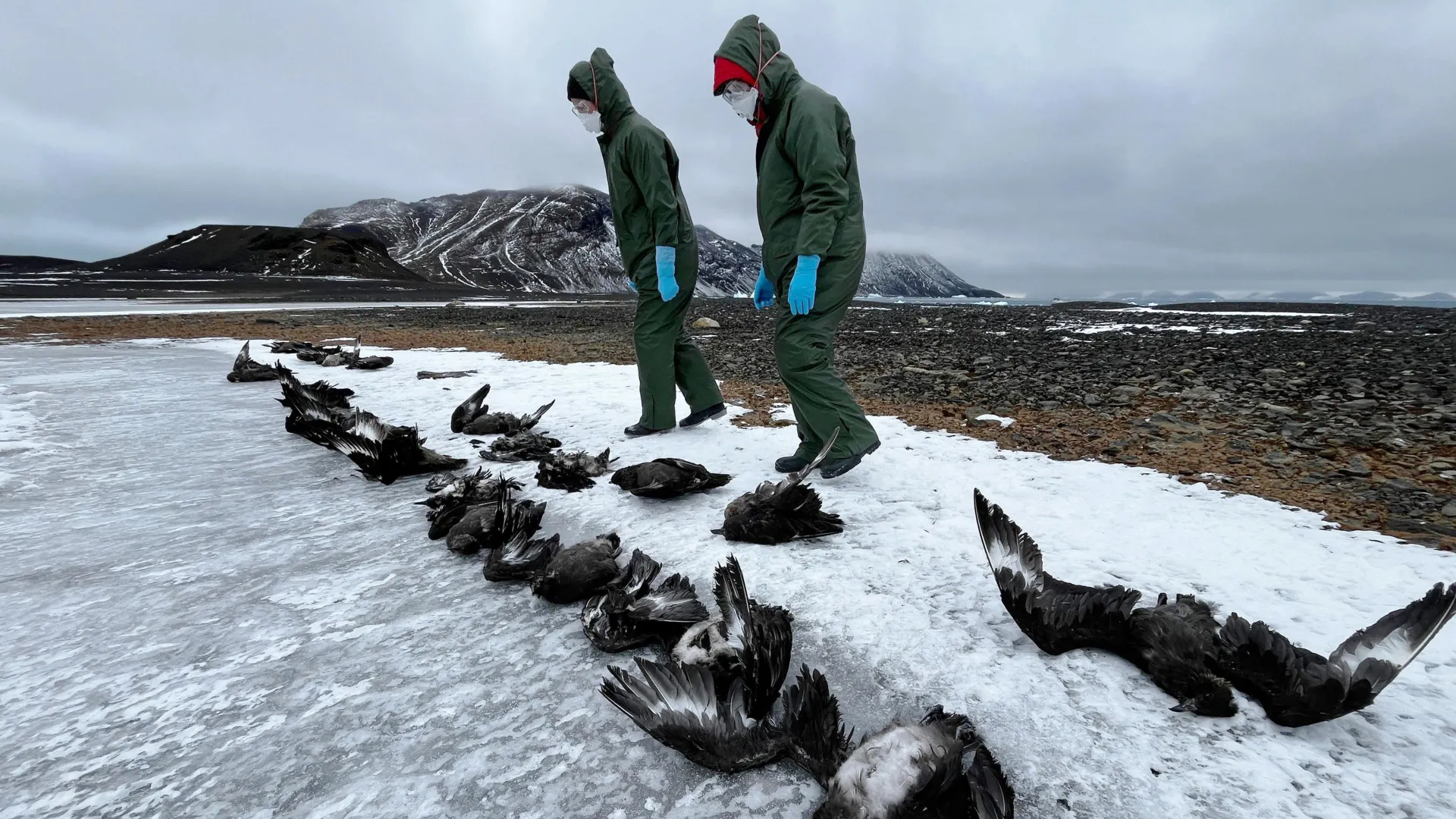
More than 50 skuas perished in the Antarctic region during the austral summers of 2023 and 2024, succumbing to the highly pathogenic avian influenza (HPAI) virus H5N1. This grim discovery marks the first unequivocally confirmed mass wildlife die-off attributed to the virus on the continent, signaling a concerning new chapter in the global pandemic’s relentless spread. The pivotal findings, which confirm H5N1 as the direct cause of death rather than mere presence, emerged from a collaborative study spearheaded by Erasmus MC in The Netherlands and the University of California, Davis, and were recently published in the esteemed scientific journal Scientific Reports. The research underscores the profound vulnerability of Antarctic wildlife to emergent pathogens and amplifies calls for intensified surveillance and conservation efforts in this remote and ecologically significant part of the world.
The Silent Scavengers: Skuas and Their Critical Ecological Role
Skuas are a group of large, robust brown seabirds belonging to the family Stercorariidae, intimately related to gulls and terns. They are formidable inhabitants of polar and subpolar regions, known for their predatory prowess and opportunistic scavenging behavior. Often likened to birds of prey in their ecological niche, skuas occupy a crucial position within the Antarctic food web. They actively hunt smaller birds, raid penguin colonies for eggs and chicks, and are indispensable in the cleanup of carrion, thus playing a vital role in nutrient cycling and maintaining ecosystem health. This very scavenging nature, however, ironically positions them at an elevated risk of contracting and disseminating viruses like H5N1 across the vast and interconnected Antarctic environment. Their mobility and dietary habits make them effective, albeit unwitting, vectors for pathogen transmission. The species most significantly affected in the recent die-off appears to be the South Polar Skua (Catharacta maccormicki), a migratory bird that breeds in Antarctica and travels widely across oceans.
A Timeline of Infection: H5N1’s Global March to the Poles
The H5N1 strain of avian influenza, which has now reached the Earth’s southernmost continent, has a well-documented and devastating global history. Its origins trace back to 1996, when it was first identified on a domestic goose farm in Southeast China. For several years, the virus circulated predominantly within poultry populations, evolving and mutating. This unchecked proliferation in domesticated birds ultimately led to a critical spillover event into wild bird populations, marking a significant turning point in its trajectory. From there, H5N1 embarked on an relentless global odyssey, carried by migratory birds. It systematically spread across Europe, the Middle East, and Africa, causing widespread mortality in both wild and farmed bird populations. The virus then crossed the Atlantic, establishing a foothold in North and South America. By late 2023 and early 2024, it had infiltrated the Southern Hemisphere’s most remote ecosystems, including the sub-Antarctic islands and, ultimately, the Antarctic Peninsula. This chronological progression highlights the interconnectedness of global ecosystems and the challenge of containing a highly adaptable virus once it establishes itself in wild reservoirs.
Early Warning Signs in the Southern Ocean
Before the definitive confirmation of H5N1 as a cause of death in skuas, scientists had already detected its presence in the Antarctic region. Earlier in 2024, H5N1 was identified in a kelp gull and two skuas found deceased in January and February. While these findings confirmed the virus’s arrival, they did not conclusively prove that H5N1 was the direct cause of death for those specific individuals. The distinction is crucial in epidemiology: presence merely indicates infection, while attributing death requires rigorous pathological investigation. "We knew there were animals with the infection, but this is the first study to show they died of the viral infection," affirmed co-senior author Ralph Vanstreels, a wildlife veterinarian with the UC Davis One Health Institute within the Weill School of Veterinary Medicine. "It’s an important distinction in the early days of an outbreak, providing critical data for understanding disease dynamics and informing response strategies."
The Expedition: Unraveling the Mystery in the Icy Wilderness
In response to the escalating concerns and preliminary detections, a dedicated research team embarked on a critical expedition to Antarctica in March 2024, strategically timed shortly after the intense breeding season for skuas and penguins. The HPAI Australis Expedition, as it was known, focused its investigations across 10 sites spanning the ecologically diverse South Shetland Islands, the northern Weddell Sea, and the dramatic Antarctic Peninsula. This extensive geographical coverage allowed researchers to assess the virus’s impact across varied habitats and populations.
Confirming the Cause of Death
Upon encountering sick or deceased wildlife, the scientists meticulously collected tissue and environmental samples. Crucially, they performed comprehensive necropsies—post-mortem examinations—to ascertain the precise cause of death. This detailed forensic work involved macroscopic examination of organs, histopathology (microscopic study of tissues), and molecular diagnostics to detect and characterize the viral agent. While the expedition examined the remains of various iconic Antarctic species, including gentoo penguins (Pygoscelis papua), Adélie penguins (Pygoscelis adeliae), and Antarctic fur seals (Arctocephalus gazella), H5N1 was not identified as the cause of death in these species during this specific investigation. This suggests a potential species-specific susceptibility or localized outbreak dynamics at the time of the study, though continued monitoring is essential. "As the expedition progressed, it became obvious quickly that skuas were a major victim," Vanstreels noted, highlighting the stark pattern observed in the field.
The virus was definitively detected in skuas at three distinct locations: Hope Bay, Devil Island, and Beak Island. Of these, Beak Island experienced a particularly severe and localized die-off event, primarily affecting South Polar Skuas. "We diagnosed high pathogenicity avian influenza as the cause of death for nearly all of the dead skuas we found at Beak Island," stated first author Matteo Iervolino, a Ph.D. candidate at Erasmus MC in Rotterdam, The Netherlands. His direct observation provided a visceral understanding of the crisis: "There, I could really see with my eyes the impact this virus can have on these populations."
A Crisis of Suffering: The Pathological Impact
The clinical manifestations of H5N1 in affected skuas were deeply distressing, painting a picture of profound animal suffering. Vanstreels described the situation as a "crisis in animal suffering," underscoring the severity of the disease. H5N1, particularly its highly pathogenic strains, targets the central nervous system, leading to severe neurological symptoms. Infected birds exhibited twisted necks, unusual body stretching, and profound disorientation. Observers reported birds walking or swimming in erratic circles, colliding with objects, or even falling from the sky mid-flight. These symptoms are characteristic of viral encephalopathy, where the brain tissue is severely compromised, impairing motor control and cognitive function. The rapid onset and severity of these symptoms indicate the aggressive nature of the H5N1 strain circulating in Antarctica and its devastating effect on individual animals.
Broader Implications: An Ecosystem Under Siege
The arrival and confirmed lethal impact of H5N1 in Antarctica carries profound broader implications for an ecosystem already grappling with a multitude of environmental stressors. The highly pathogenic nature of this strain means it can cause severe disease and high mortality rates, particularly in immunologically naïve populations. Skuas, as apex predators and scavengers, are critical to the delicate balance of the Antarctic food web. A significant decline in their numbers could have cascading effects, potentially leading to an increase in carrion, altered predator-prey dynamics, and shifts in nutrient cycling, disrupting the intricate ecological relationships that define this unique environment.
Zoonotic Spillover and Global Health Concerns
The global spread of H5N1 extends far beyond avian populations. The same strain now impacting Antarctic skuas previously caused massive mortality events among elephant seals and sea lions in Argentina, highlighting its capacity to jump species barriers into marine mammals. Globally, H5N1 has been responsible for the deaths of over 400 million poultry, leading to immense economic losses for agricultural industries. Its host range has expanded to include a diverse array of mammals, such as dairy cows, mink, foxes, bears, and otters, underscoring the virus’s zoonotic potential.
While primarily an avian disease, H5N1 can also infect humans. Of the approximately 1,000 reported human cases worldwide, roughly half have been fatal, indicating its severe pathogenicity when human infection does occur. The risk to the general public remains low, as human-to-human transmission is rare and inefficient. However, individuals with direct, prolonged exposure to infected birds or contaminated environments are at higher risk. "We let the virus slip out through our fingers when it first emerged in the poultry industry," reflected corresponding senior author Thijs Kuiken, a professor at Erasmus MC. "Once it got into wild bird populations, we lost ability to control this virus. Now it’s established in wild bird populations in all the continental regions of the world except Oceania." This assessment underscores a critical failure in early pandemic management and the dire consequences of a pathogen becoming endemic in global wildlife.
Antarctica’s Compounding Threats: Why Surveillance is Critical
Antarctic wildlife populations already face an array of serious and escalating challenges, including the pervasive impacts of climate change, the growing footprint of tourism, the threat of invasive species, relentless overfishing, and widespread pollution. The insidious arrival of highly pathogenic avian influenza now adds yet another formidable pressure to an already stressed ecosystem. The study’s findings vehemently emphasize the urgent need for substantially stronger surveillance and comprehensive monitoring programs to mitigate the risk of further, uncontrolled spread of H5N1 throughout the continent. Without robust, real-time data, the true scale of the ecological disaster unfolding could remain unknown, hindering effective conservation responses.
The Challenge of Baseline Data
One significant complication in assessing the full impact of this H5N1 outbreak is the distressing lack of contemporary population data for many Antarctic species, particularly skuas. The last comprehensive census of Antarctic skuas was conducted in the 1980s, when researchers estimated a population of approximately 800 breeding pairs. Without updated, accurate baseline numbers, it becomes exceedingly difficult to quantify the long-term significance of the loss of 50 or more birds. This data deficit impedes scientists’ ability to determine if the observed mortality represents a minor localized event or the harbinger of a more widespread and demographically significant decline. The remote and harsh environment of Antarctica makes regular, large-scale population surveys challenging and costly, but the current crisis highlights their critical importance.
International Collaboration and Future Outlook
The HPAI Australis Expedition received crucial funding from the International Association of Antarctica Tour Operators (IAATO) and Ocean Expeditions, demonstrating the vital role of private and non-governmental organizations in supporting critical scientific research in remote regions. Further support for the broader study was provided by the European Union, Consejo Superior de Investigaciones Científicas (CSIC), and PTI Global Health. Such international and multi-sectoral collaboration is indispensable for addressing global health threats that transcend national borders and affect shared global heritage sites like Antarctica.
The long-term outlook for Antarctic wildlife in the face of H5N1 remains uncertain. "Everything points toward this virus spreading further," Professor Kuiken cautioned, articulating the prevailing scientific concern. The potential for the virus to become endemic within Antarctic bird populations, or to spill over into other highly vulnerable species like penguins and seals on a larger scale, is a grave concern. The unique adaptations and often dense colonial breeding behaviors of many Antarctic species could make them particularly susceptible to rapid and widespread transmission. "If nobody is watching, we won’t know what is happening," Kuiken concluded, underscoring the urgent imperative for sustained vigilance and proactive research. The confirmed H5N1 die-off in Antarctica is a stark reminder of the interconnectedness of global health, environmental health, and human activity, demanding a unified "One Health" approach to protect the world’s last great wilderness.
