
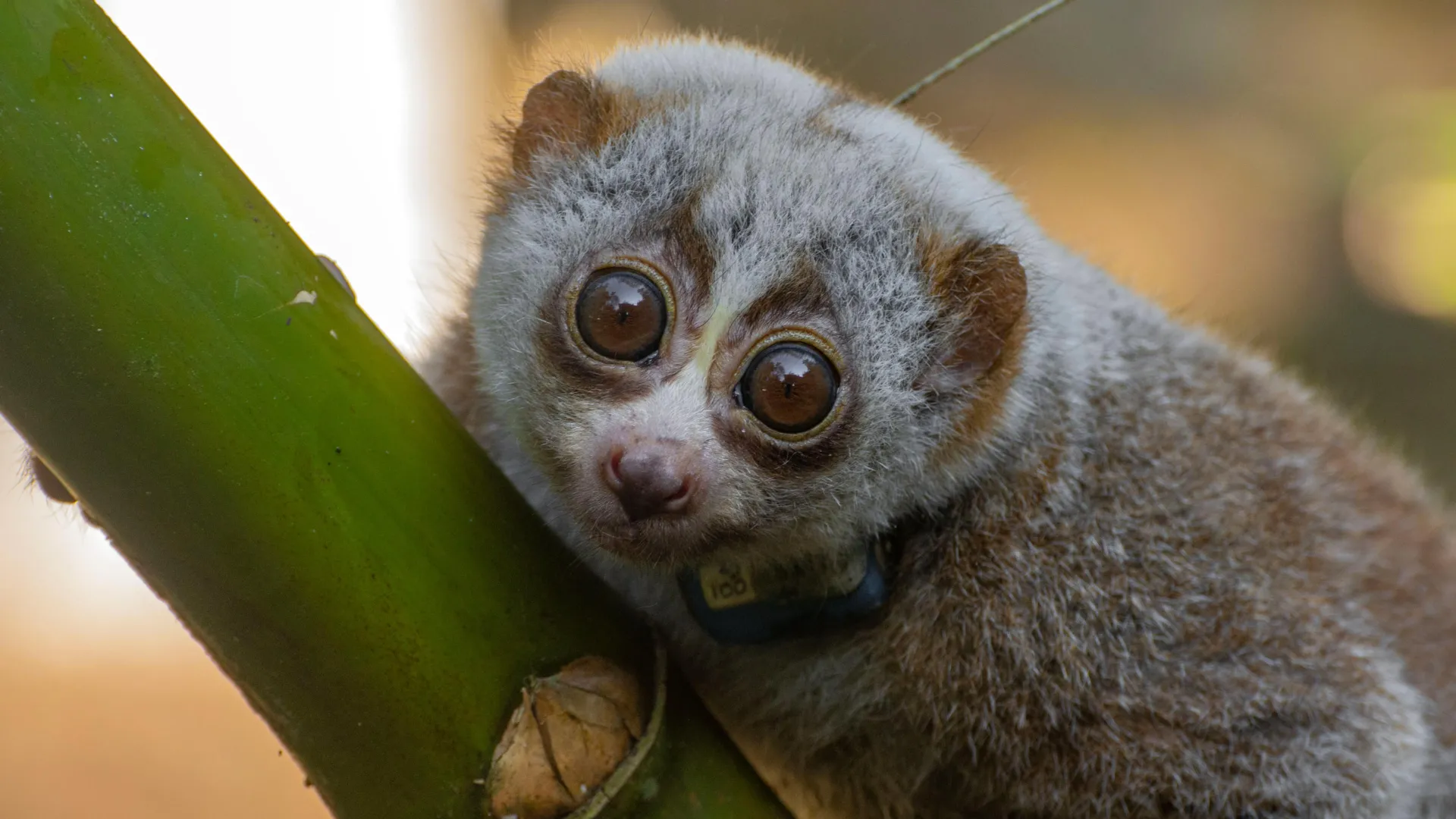
A groundbreaking new scientific study has unveiled a sobering reality: the seemingly benevolent act of returning rescued wildlife to their natural habitats does not universally culminate in success. For certain species, particularly those with strong territorial instincts, the wilderness can transform into what researchers starkly describe as a "death trap," posing severe risks to animals released after periods in captivity. This revelation challenges long-held assumptions within conservation circles and among the general public about the efficacy and ethics of current rescue and release protocols.
The critical findings of this research have been published in the esteemed journal Global Ecology and Conservation. The collaborative study was spearheaded by the eminent primatologist Professor Anna Nekaris OBE from Anglia Ruskin University, working alongside dedicated collaborators from the conservation organization Plumploris e.V. and the University of Western Australia. Their meticulous investigation focused on the post-release fate of Bengal slow lorises (Nycticebus bengalensis) in Bangladesh, providing an alarming insight into the complexities and potential pitfalls of reintroduction programs for vulnerable species.
The Plight of the Slow Loris: A Deeper Dive into Conservation Challenges
Slow lorises, renowned for their strikingly large, emotive eyes and seemingly gentle countenances, possess an undeniable charm that has, regrettably, become their undoing. These distinctive features have fueled their immense popularity within the illicit wildlife trade, cementing their tragic status as some of the most heavily trafficked primates globally. The demand for these nocturnal creatures as exotic pets, props for tourist photographs, and components in traditional medicine markets across Asia and beyond has driven a relentless and devastating trade.
All species of slow lorises are currently listed under varying degrees of threat by the International Union for Conservation of Nature (IUCN), ranging from Critically Endangered to Endangered or Vulnerable. For instance, the Javan slow loris (Nycticebus javanicus) and the Philippine slow loris (Nycticebus menagensis) are both classified as Critically Endangered, facing imminent extinction due to habitat loss and the relentless pressure from the illegal trade. The Bengal slow loris, the focus of this study, is categorized as Vulnerable, but its populations are rapidly declining. This precarious status frequently necessitates rescue operations for individuals confiscated from traffickers or found injured, leading to subsequent release efforts aimed at bolstering dwindling wild populations. These efforts, while well-intentioned, often operate under the premise that returning an animal to its natural environment is inherently beneficial and contributes positively to conservation goals. However, the recent study provides a stark counter-narrative, urging a re-evaluation of this assumption.
The illegal wildlife trade is a multi-billion dollar industry, ranking among the largest illicit trades globally, alongside drugs, arms, and human trafficking. It is estimated to be worth between $7 billion and $23 billion annually. Primates, including slow lorises, are particularly vulnerable due to their intelligence and often perceived "cuteness." The journey from the wild to the pet trade is often brutal; slow lorises frequently have their teeth crudely clipped or removed with pliers to prevent their venomous bite, leading to severe infections, inability to feed properly, and immense suffering. Many die during capture and transport, making rescue efforts a race against time and further complicating rehabilitation.
Unveiling the Study: Methodology and Stark Findings
The research team, led by Professor Nekaris, embarked on a meticulous investigation to track the fortunes of nine Bengal slow lorises following their release into a national park located in northeastern Bangladesh. This particular park had previously served as a release site for various wildlife species, making it a seemingly suitable candidate for the initiative. To monitor their movements and behavior post-release, each slow loris was fitted with a miniature radio collar, a standard practice in wildlife research designed to provide insights into survival rates, habitat use, and potential challenges faced by reintroduced animals. The study period, while not explicitly detailed in the chronology, spanned several months following the initial releases, allowing researchers to observe critical short-to-medium-term outcomes.
The results of this intensive monitoring were unequivocally stark and deeply concerning. Of the nine slow lorises released into the wild, a disheartening seven perished within a relatively short timeframe, leaving only two survivors. The mortality rate was particularly acute in the immediate aftermath of release: three animals succumbed within a mere 10 days, suggesting an inability to quickly adapt or integrate into the new environment. An additional four deaths occurred within six months, indicating prolonged challenges to survival.
Researchers were able to recover four of the seven deceased animals’ bodies, providing crucial forensic evidence. Macroscopic examination of these remains revealed a chilling and consistent pattern: all four bodies bore unmistakable signs of having been killed by other slow lorises. The findings paint a grim picture of intense inter-species conflict as a primary driver of mortality for these reintroduced individuals.
Territorial Conflicts and Venomous Bites: The "Death Trap" Explained
The study unequivocally highlights the profound impact of slow loris biology and behavior on their post-release survival. Slow lorises are notoriously territorial animals, fiercely defending their established home ranges against intruders. This territoriality is not merely a preference; it is a fundamental aspect of their ecology, dictating access to vital resources such as food, mates, and safe sleeping sites. They employ a sophisticated array of scent-marking behaviors to delineate their boundaries, but direct confrontation is not uncommon when these warnings are ignored.
Compounding this territorial aggression is another unique and dangerous characteristic: slow lorises are the only known venomous primates in the world. Their venom is produced by a brachial gland on their upper arm and is transferred to specialized teeth through a unique "comb-like" lower incisor structure, allowing them to deliver a potent, toxic bite. The venom itself is a complex cocktail of proteins, primarily a homolog of the cat allergen Fel d 1, which can cause anaphylactic shock in humans and is potent enough to induce severe pain, swelling, and even necrosis in other animals. For a conspecific, a venomous bite can be debilitating or lethal, especially if vital areas are targeted.
The bodies recovered during the study bore gruesome testament to these deadly encounters. Obvious bite wounds were observed on the head, face, and digits of the deceased lorises. Bites to the head and face are particularly indicative of lethal intent, targeting vulnerable areas that can quickly incapacitate or kill. Wounds on the digits might suggest defensive actions or attempts to dislodge an attacker. These patterns of injury strongly implicated deadly territorial encounters with resident slow lorises as the direct cause of death for the majority of the released animals.
Further analysis revealed additional correlating factors that influenced survival. Animals that had endured longer periods in captivity exhibited a significantly reduced post-release survival duration. This suggests that prolonged confinement might diminish crucial wild instincts, impair physical fitness, or hinder the development of essential survival skills. Moreover, the released lorises were observed to move across larger areas and appeared noticeably more alert compared to their wild counterparts. This heightened activity and vigilance could be interpreted as a desperate search for unoccupied territory, an attempt to evade resident lorises, or simply a manifestation of chronic stress in an unfamiliar and hostile environment. The two surviving animals, notably, traveled across considerably larger areas than those that perished, reinforcing the hypothesis that successful adaptation hinged on their ability to avoid direct confrontations by rapidly vacating established territories and finding new, uncontested spaces.
Broader Context of Wildlife Release Programs: A Global Perspective
The findings from the Bengal slow loris study resonate with a broader, often under-examined issue within wildlife conservation: the varying degrees of monitoring and planning afforded to different species during release programs. Large, charismatic animals, frequently dubbed "megafauna" – such as lions, tigers, elephants, and rhinos – typically benefit from intensive, long-term monitoring after their release. This often involves satellite tracking, ground teams, and substantial financial investment, allowing conservationists to meticulously track their movements, assess their integration, and intervene if necessary. The public and funding bodies readily support such high-profile initiatives, driven by the appeal of these iconic species.
In stark contrast, many smaller, less charismatic species, including numerous primates, reptiles, amphibians, and birds, often receive minimal to no post-release tracking. The logistical challenges and costs associated with monitoring hundreds or thousands of smaller individuals can be prohibitive for underfunded conservation groups. Consequently, the actual outcomes of these releases frequently remain unknown. The assumption often persists that once an animal is physically released, the conservation objective has been met, leading to a significant gap in our understanding of what truly constitutes a "successful" reintroduction for these species. This lack of data prevents the identification of critical failure points and the refinement of release protocols, potentially condemning countless individuals to a fate similar to that of the slow lorises in Bangladesh.
Challenges faced by released animals extend beyond territorial disputes. They must re-learn or hone skills for foraging in the wild, identify and avoid predators, cope with potential disease transmission (both to and from wild populations), and navigate complex social dynamics. The stress of transportation, unfamiliar surroundings, and the sudden shift from a controlled captive environment to the unpredictable wild can also significantly impact an animal’s chances of survival.
Expert Perspectives and Urgent Recommendations
The researchers involved in this pivotal study are emphatic about the necessity for a paradigm shift in wildlife release strategies. They stress that successful wildlife releases are not merely about good intentions; they demand meticulous planning, rigorous scientific assessment, and sustained commitment.
Professor Anna Nekaris OBE, Senior author, Professor of Ecology, Conservation and Environment at Anglia Ruskin University, and head of the Little Fireface Project, articulated the core message with conviction: "It’s assumed that returning confiscated or rescued animals to the wild is always a positive conservation story. Our research shows that for highly territorial species like slow lorises, releasing them into areas that are already densely populated can be a death trap." She further elaborated, "Many rescued endangered species are often released because the public expects it, but for animals such as the Bengal slow loris, this is not always the best course of action. Without fully understanding the animal’s behaviour, its time spent in captivity and the density of resident populations at the release site, reintroductions may do more harm than good." Her statements underscore the critical need to move beyond simplistic, feel-good narratives towards evidence-based conservation practices that prioritize animal welfare and ecological integrity.
Hassan Al-Razi, Lead author and team leader of Plumploris e.V. Bangladesh, provided crucial context from the ground: "Rescue and release have become an increasingly common practice in Bangladesh. Many wild animals, including slow lorises, are rescued and subsequently released back into the wild." He then highlighted the systemic issues observed in the region: "However, in many cases, these releases are conducted inappropriately. For forest-dwelling species, release sites are often selected based on logistical convenience rather than ecological suitability. As a result, certain forests have effectively become dumping grounds for rescued animals and are no longer appropriate release sites." Al-Razi’s observations are particularly concerning, suggesting that logistical expediency often trumps ecological suitability, leading to detrimental outcomes for released animals and potentially disrupting existing wild populations. He concluded by expressing a broader concern: "Although our research has focused on the Bengal slow loris and demonstrated the consequences of such practices, we believe similar patterns likely affect many other species."
To mitigate these risks and improve the efficacy of future release programs, the researchers put forth several crucial recommendations:
- Careful Planning and Suitability Evaluation: Prior to any release, a comprehensive assessment of both the release site’s ecological suitability and the individual animal’s physical and behavioral condition is paramount. This includes evaluating food availability, predator presence, and crucially, the density and social structure of resident populations of the same species.
- Detailed Habitat Assessments: Thorough surveys of potential release sites are essential to ensure they can sustain additional individuals without exacerbating competition for resources or escalating territorial conflicts.
- Long-Term Monitoring: Post-release monitoring, even for smaller species, is not a luxury but a necessity. The use of advanced tracking technologies, camera traps, and dedicated field teams can provide invaluable data on survival, adaptation, and integration.
- Species-Specific Rehabilitation Guidelines: Generic rehabilitation protocols are insufficient. Tailored guidelines, developed through scientific understanding of each species’ unique biology, behavior, and social dynamics, are vital to prepare animals adequately for the challenges of wild existence. This may include pre-release training to re-develop foraging skills, predator avoidance, and social interactions within a controlled environment.
- Addressing Root Causes: While rescue and release are critical, long-term conservation success also hinges on addressing the root causes of wildlife trafficking and habitat destruction through enhanced law enforcement, demand reduction campaigns, and sustainable development initiatives.
Implications for Global Conservation Policy and Practice
This study carries profound implications for global conservation policy and practice. It necessitates a critical re-evaluation of current wildlife rescue and release protocols, especially for species that exhibit strong territoriality or complex social structures. The findings highlight the ethical responsibility of conservationists to ensure that efforts to save individual animals do not inadvertently lead to greater suffering or ecological disruption.
There is an urgent need for increased funding and resources dedicated not just to rescue and rehabilitation, but also to robust, long-term post-release monitoring across all species. This will enable conservationists to gather the necessary data to refine methodologies, identify best practices, and truly measure the success of their interventions. Furthermore, the study underscores the importance of public education to manage expectations regarding "happy endings" in conservation. While the desire to see rescued animals returned to the wild is understandable and commendable, the scientific realities must inform public perception and policy.
Collaboration between rescue centers, academic researchers, governmental agencies, and local communities is crucial. By integrating scientific expertise with practical experience, conservation efforts can become more effective, humane, and sustainable. The insights gleaned from the Bengal slow loris study serve as a powerful reminder that conservation is a complex, multi-faceted endeavor that requires humility, adaptability, and an unwavering commitment to evidence-based approaches. Ultimately, prioritizing the welfare of individual animals and the long-term ecological success of their populations must guide every decision in the intricate dance of wildlife conservation.
