
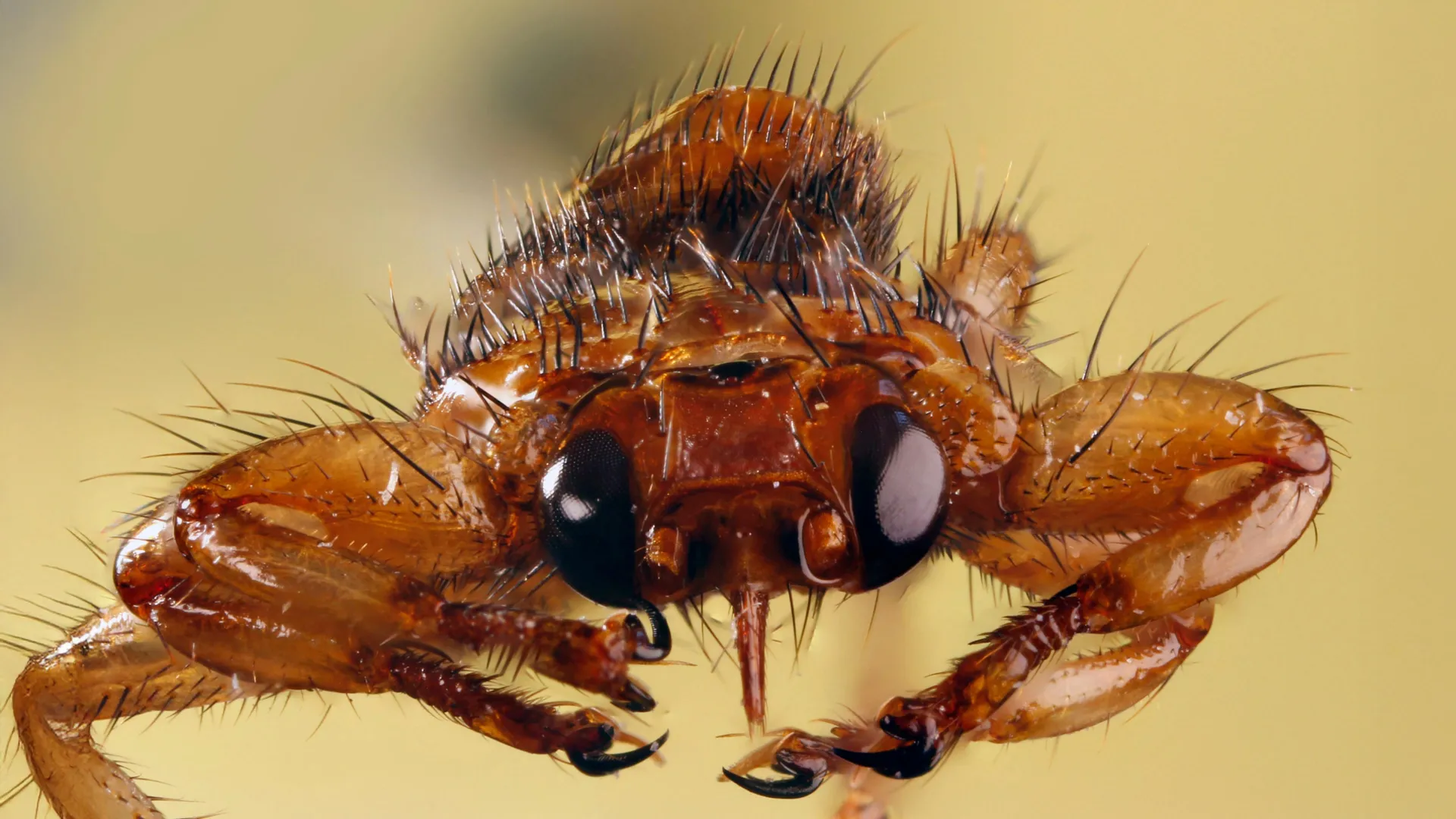
A groundbreaking study published in the Journal of Experimental Biology has unveiled a fascinating evolutionary strategy employed by deer keds (Lipoptena cervi), a pervasive blood-feeding fly found across multiple continents. Researchers have discovered that these insects undergo a profound physiological transformation upon locating a host, dramatically reducing their visual sensitivity after permanently abandoning flight. This adaptive shift underscores a fundamental principle of evolutionary biology: the efficient allocation of energy to functions most critical for survival and reproduction within a specific ecological niche.
The Dual Existence of the Deer Ked: From Hunter to Permanent Resident
Known scientifically as Lipoptena cervi, deer keds belong to the family Hippoboscidae, commonly referred to as louse flies or keds. These ectoparasites are widespread throughout Europe, Asia, and North America, including parts of the United States and Canada, where they are often encountered in forested regions. Their primary hosts are cervids such as red deer, roe deer, moose, and elk, but they are opportunistic feeders and can readily infest other mammals, including horses, cattle, dogs, and even humans, causing considerable irritation and discomfort.
The life cycle of the deer ked is marked by a dramatic metamorphosis that dictates its sensory and behavioral requirements. Adult keds emerge from pupae, which typically overwinter in soil or leaf litter, as winged insects. In this initial, free-flying stage, they are highly mobile, relying heavily on both flight and vision to actively search for a suitable host. Their visual system, much like that of other active insect hunters, is crucial for detecting the movement, size, and potentially thermal signatures of potential hosts from a distance. During this phase, they are particularly attracted to dark, moving objects, a characteristic exploited in trapping efforts.
However, once a deer ked successfully lands on a host, its lifestyle undergoes an irreversible and radical transformation. The insect immediately sheds its wings, a swift and permanent act that signals its commitment to a parasitic existence. From this point onward, the deer ked ceases to fly and dedicates the remainder of its life to moving through the host’s fur, clinging tenaciously to hairs, and repeatedly feeding on blood. This sedentary, yet highly specialized, existence within the dense fur of its host necessitates a complete re-evaluation of its biological priorities.
The Energetic Imperative: Cost-Benefit of Sensory Systems
Vision, while indispensable for many species, is an energetically demanding sensory modality. The maintenance of complex optical structures, the constant regeneration of light-sensitive photopigments (opsins), and the intensive neural processing required to interpret visual information all consume significant metabolic resources. In the context of evolutionary biology, organisms are constantly under pressure to optimize energy expenditure, channeling resources toward traits that maximize fitness – survival and reproductive success.
For a free-flying insect actively seeking a host, the investment in a highly sensitive visual system is a clear evolutionary advantage. It enables rapid detection, navigation, and evasion of predators. However, once that insect transitions to a permanent parasitic lifestyle, embedded within a dark, confined, and relatively static environment like a deer’s fur, the utility of sophisticated long-range vision diminishes dramatically. The selective pressures shift: energy previously allocated to vision could potentially be redirected to other vital functions, such as blood digestion, immune responses to host defenses, and, crucially, reproduction. This principle of energy reallocation is a cornerstone of life history theory, where trade-offs between different life functions determine an organism’s overall fitness.
Unveiling the Sensory Shift: The Research Journey and Methodology
The collaborative research, led by Dr. Roger Santer from the Department of Life Sciences at Aberystwyth University in the UK and involving scientists from the University of Florence in Italy, aimed to dissect how deer keds adapt their sensory systems to this profound lifestyle change. The team sought to understand the molecular underpinnings of this dramatic transition, specifically focusing on the visual system.
To achieve this, the researchers adopted a comparative approach, studying deer keds at two distinct points in their adult life cycle. They meticulously collected:
- Winged adults: These were individuals actively engaged in host-seeking behavior, representing the phase where vision and flight are paramount. These specimens were likely captured using traps or by observing newly emerged keds.
- Wingless adults: These were collected directly from deer hosts, having already shed their wings and fully adopted their parasitic, blood-feeding lifestyle. This group represented the post-transition state.
The core of their investigation centered on genes associated with visual sensitivity, particularly opsins. Opsins are a class of G protein-coupled receptors that form photopigments, which are essential for converting light into electrochemical signals in photoreceptor cells. The expression levels of opsin genes serve as a direct indicator of the physiological investment an organism makes in its visual capabilities. By employing molecular techniques, likely quantitative polymerase chain reaction (qPCR) or RNA sequencing, the researchers were able to quantify the activity of these opsin genes in both groups of keds. This allowed for a precise comparison of visual gene expression before and after the insects’ dramatic lifestyle shift.
Key Findings: A Calculated Reduction in Visual Investment
The study yielded compelling results, demonstrating a significant downregulation of opsin gene activity in parasitic deer keds. Dr. Santer elucidated the findings, stating, "We found that a flying deer ked’s visual system is much like that of a tsetse fly, which famously hunt out mammal hosts in Africa." This comparison is particularly insightful, as tsetse flies (Glossina species) are highly visual hunters, known for their ability to locate hosts over considerable distances, making their visual systems energetically robust. The initial similarity highlights the deer ked’s proficiency as an aerial hunter.
However, the contrast post-host-acquisition was stark. "After a deer ked loses its wings and becomes an ectoparasite, activity of its opsin genes reduces to around half the previous level," Dr. Santer explained. This quantitative reduction of approximately 50% in opsin gene activity is a striking molecular signature of the insect’s adaptive strategy. It signifies a deliberate scaling back of the machinery required for acute vision. The researchers concluded that this does not imply complete blindness, but rather a substantial reduction in visual sensitivity. The deer ked likely retains some rudimentary light perception, perhaps sufficient for distinguishing light from dark or detecting gross changes in illumination within the host’s fur, but it no longer requires the finely tuned vision necessary for aerial navigation and host detection.
This finding strongly supports the hypothesis that the fly is "sacrificing sight to conserve energy for functions such as digestion and reproduction." The implications are profound: energy saved from maintaining an elaborate visual system can now be reallocated to other biological processes that are critically important for survival and propagation within the parasitic niche.
The Adaptive Advantage: Redirection of Resources for Survival and Reproduction
The observed reduction in visual sensitivity in parasitic deer keds represents a highly effective adaptive strategy. Once an insect is firmly embedded in the fur of its host, the selective pressures change entirely. Flight is no longer necessary, and broad-spectrum vision becomes largely redundant. Instead, the priorities shift to efficient blood feeding, rapid digestion, robust immune responses to the host’s defenses, and maximizing reproductive output.
By downregulating opsin gene expression and, consequently, reducing the energetic burden of its visual system, the deer ked frees up valuable metabolic resources. This energy can be redirected to:
- Enhanced Digestion: Blood meals are rich in protein but often deficient in other nutrients, and their digestion can be metabolically intensive. More energy can be allocated to synthesizing digestive enzymes and processing nutrients.
- Reproductive Output: For any parasite, reproductive success is paramount. Increased energy availability can translate into higher egg production, faster larval development (as deer keds are pupiparous, giving birth to fully developed larvae that immediately pupate), and a more robust reproductive cycle.
- Immune Function: Living on a host exposes the parasite to various challenges, including the host’s immune system, microbial pathogens, and environmental stressors within the fur. A stronger immune system, supported by reallocated energy, can enhance the ked’s ability to withstand these challenges.
- Movement and Attachment: While not flying, the ked still needs to navigate through dense fur, find optimal feeding sites, and maintain a secure attachment to avoid being dislodged by the host’s grooming. Energy can be invested in musculature for crawling and specialized structures for clinging.
This finely tuned energy reallocation exemplifies the remarkable efficiency of natural selection, shaping organisms to thrive in highly specific and often extreme environments. The deer ked’s life cycle is a testament to phenotypic plasticity, where an organism’s traits can dramatically change in response to environmental cues, optimizing its chances of survival and reproduction.
Broader Implications for Evolutionary Biology and Pest Management
The findings from this study extend beyond the fascinating biology of deer keds, offering fresh insights into fundamental aspects of evolutionary biology and potentially informing strategies for pest management.
Evolutionary Biology:
- Sensory System Evolution: The study provides a clear example of how sensory systems are fine-tuned by natural selection, evolving not just to acquire new capabilities but also to shed costly ones when they become superfluous. It highlights the dynamic nature of sensory ecology and the intricate trade-offs involved in resource allocation.
- Parasite Adaptation: This research contributes to a deeper understanding of how parasites, often characterized by simplified body plans and specialized adaptations, optimize their physiology to their obligate lifestyles. It reinforces the concept that evolutionary pressures can lead to the reduction or loss of complex organs (like wings or sophisticated eyes) if they no longer confer an advantage in a particular niche. This phenomenon is observed across various parasitic lineages, from tapeworms lacking digestive systems to cave-dwelling organisms losing sight.
- Phenotypic Plasticity: The deer ked’s ability to dramatically alter its visual system within its adult lifespan showcases remarkable phenotypic plasticity. This capacity to adjust to changing environmental demands without genetic mutation is crucial for survival in environments with distinct life stages.
Pest Management and Control Strategies:
- Understanding Vulnerabilities: A better understanding of how deer keds and other biting flies utilize their senses can be crucial for developing more effective monitoring and control strategies. If the host-seeking phase is heavily reliant on vision, then visual traps designed to mimic host cues (e.g., dark, moving objects) could be optimized.
- Targeting Sensory Systems: While direct control based on visual reduction in parasitic keds might be challenging, understanding the energetic trade-offs could open avenues for future research. For instance, if certain energetic pathways are over-invested in reproduction post-host acquisition, perhaps those pathways could be targeted.
- Ecological Context: Deer keds, while primarily an annoyance, can transmit pathogens. For example, Bartonella schoenbuchensis has been isolated from deer keds. Understanding their biology, including sensory adaptation, contributes to a holistic view of their role in disease ecology and potential impact on wildlife health and livestock.
Future Research Directions
While this study offers significant breakthroughs, it also paves the way for further inquiry. Future research could explore:
- Other Sensory Modalities: Investigating how other sensory systems, such as olfaction, thermoreception, or mechanoreception (touch), are adapted or enhanced once the deer ked is settled on a host. These senses would become critically important for navigating fur and finding feeding sites.
- Genetic Regulatory Mechanisms: Delving deeper into the molecular mechanisms that regulate the downregulation of opsin genes. What specific signaling pathways are activated or deactivated upon host attachment and wing shedding?
- Quantifying Energy Savings: Precisely measuring the energy saved from reduced visual investment and quantifying how this energy is reallocated to other physiological processes, particularly reproduction and immune function. This could involve metabolic rate studies.
- Comparative Studies: Extending this research to other Hippoboscidae species or other parasites with similar dramatic lifestyle shifts to see if this pattern of sensory downregulation is a conserved adaptive strategy.
- Impact on Host Behavior: How does the deer ked’s presence and behavior (including its sensory adaptations) influence host grooming behavior and immune responses over time?
In conclusion, the study on deer keds provides a compelling illustration of evolutionary economy in action. By shedding their wings and drastically reducing their visual investment, these blood-feeding flies exemplify a sophisticated adaptive strategy that optimizes resource allocation for a life dedicated to parasitism. This research not only enriches our fundamental understanding of insect sensory biology and evolution but also lays groundwork for innovative approaches to managing biting flies and understanding their broader ecological impacts. The remarkable adaptability of life, even in its smallest forms, continues to offer profound lessons in biological efficiency and survival.
