
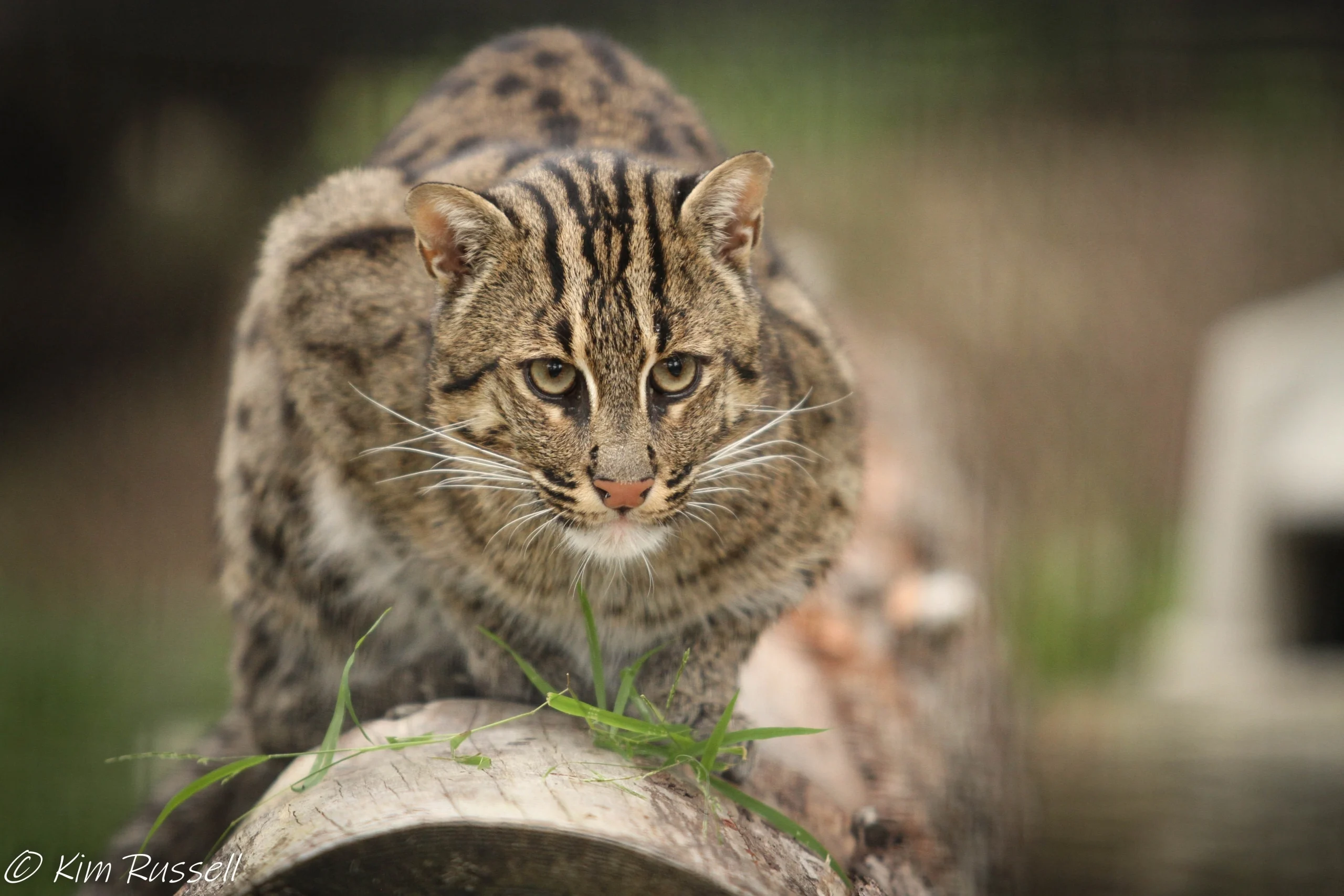
March 3rd marks the annual observance of World Wildlife Day, a global initiative dedicated to celebrating and raising awareness about the world’s diverse flora and fauna. This year’s theme, "Partnerships for Wildlife Conservation," underscores the critical need for collaborative efforts between individuals, organizations, and governments to safeguard endangered species and their habitats. Against this backdrop, the story of River, a six-year-old fishing cat residing at the Hawk Creek Wildlife Center, emerges as a compelling example of how individual animals can become powerful ambassadors for conservation, inspiring a deeper understanding and commitment to protecting vulnerable wildlife.
The Plight of the Fishing Cat: A Vulnerable Species in Peril
Fishing cats (Prionailurus viverrinus) are a fascinating and often overlooked species native to the wetlands and mangrove forests of South and Southeast Asia. Their unique adaptation for a semi-aquatic lifestyle, including partially webbed paws and a dense, waterproof coat, allows them to hunt effectively in and around water, preying primarily on fish, but also amphibians, crustaceans, and small mammals. Despite their specialized niche, these captivating felines face an increasingly precarious future.
The International Union for Conservation of Nature (IUCN) Red List, the most comprehensive inventory of the global conservation status of biological species, classifies fishing cats as "Vulnerable." This designation signifies that the species is facing a high risk of extinction in the wild. The primary drivers of this decline are habitat loss and degradation, driven by agricultural expansion, urbanization, and the destruction of coastal wetlands for aquaculture and infrastructure development. In many regions, fishing cats are also victims of retaliatory killings by local communities who perceive them as a threat to livestock or, ironically, to fish populations in their ponds. Furthermore, the elusive nature of fishing cats makes them incredibly difficult to study, hindering comprehensive research efforts and the development of effective conservation strategies. Many people remain unaware of their existence, let alone the challenges they confront.
River: An Ambassador for a Forgotten Feline
River, at six years old, plays a pivotal role at the Hawk Creek Wildlife Center. She is not just an animal under human care; she is an ambassador. Through her presence and interactions with visitors, River provides a tangible connection to the wild world of fishing cats, a world that remains largely inaccessible to most people. Her story is designed to ignite empathy and foster a sense of responsibility towards her wild counterparts.
Ambassador animals like River are instrumental in conservation efforts for several key reasons. Firstly, they bridge the gap between abstract conservation goals and the reality of endangered species. Seeing a living, breathing fishing cat allows individuals to connect emotionally, making the abstract concept of species decline more personal and urgent. Secondly, they serve as educational tools. Through guided programs and educational materials at centers like Hawk Creek, visitors can learn about the unique biology, behavior, and ecological importance of fishing cats, as well as the threats they face. This knowledge is the first step towards inspiring action.
The direct impact of supporting centers like Hawk Creek on World Wildlife Day is explicitly linked to fishing cat conservation. Donations are not merely charitable contributions; they are investments in the survival of a species teetering on the brink. These funds can support a range of activities, from habitat restoration projects in the wild to the care and well-being of ambassador animals like River, ensuring they can continue their vital educational mission.
The Power of Partnership: Bridging Research and Conservation
The significance of partnerships in wildlife conservation is amplified by the challenges inherent in studying elusive species. The presence of the founder of the Fishing Cat Conservancy at Hawk Creek to meet River highlights a crucial aspect of this year’s World Wildlife Day theme. This visit signifies a powerful collaboration, where a dedicated conservation organization seeks to learn from an ambassador animal managed by a wildlife center.
The founder’s ability to study River’s movements and her remarkable fishing techniques, despite the inherent elusiveness of fishing cats, is invaluable. Such direct observation, even of an individual in captivity, provides critical data that can inform conservation strategies for wild populations. Understanding how fishing cats utilize their paws to catch prey, their preferred hunting grounds, and their daily routines offers insights that are difficult to obtain through traditional fieldwork.
This inter-organizational collaboration is a microcosm of the broader partnerships needed for effective conservation. It demonstrates how zoos, wildlife centers, and dedicated conservation organizations can work together, pooling expertise and resources. By studying ambassador cats like River, scientists gain a deeper understanding of fishing cat behavior and ecology. This knowledge is then translated into more effective conservation programs aimed at protecting wild populations. These programs might include identifying critical habitats, developing community engagement strategies, or advocating for policy changes.
The Fishing Cat Conservancy: A Model for Action
The Fishing Cat Conservancy, as exemplified by its founder’s visit and ongoing work, represents a proactive approach to addressing the conservation crisis facing this species. Their multifaceted strategy includes several key pillars:
- Creating Nature Preserves: Establishing protected areas where fishing cats and their wetland habitats can thrive undisturbed is fundamental. These preserves act as safe havens, allowing populations to recover and reproduce without the constant pressure of human encroachment and development.
- Forming Partnerships with Landowners: Recognizing that protected areas alone are insufficient, the Conservancy actively engages with private landowners whose properties may overlap with fishing cat territories. By fostering cooperative agreements and providing guidance on sustainable land management practices, they aim to preserve vital ecosystems on private lands, creating crucial corridors for wildlife movement and gene flow.
- Inspiring Change: Beyond tangible conservation actions, the Conservancy is dedicated to raising public awareness and inspiring a broader movement for change. This includes educational outreach, advocacy campaigns, and fostering a greater appreciation for the ecological significance of fishing cats and their habitats.
The Conservancy’s work is a testament to the fact that successful conservation requires a holistic approach, addressing both the direct threats to species and the underlying drivers of habitat loss. Their website, fishcat.org, serves as a hub for information, resources, and opportunities for individuals to get involved and support their vital mission.
Supporting Conservation: A Call to Action
World Wildlife Day serves as a crucial annual reminder of our collective responsibility to protect the planet’s biodiversity. The story of River and the efforts of organizations like the Fishing Cat Conservancy underscore the power of dedicated individuals and collaborative partnerships in confronting the challenges of wildlife conservation.
The data on species decline is stark. According to the World Wildlife Fund, wildlife populations have plummeted by an average of 69% since 1970. This alarming trend highlights the urgency of conservation efforts and the need for increased public engagement. The fishing cat, as a vulnerable species, is a poignant symbol of this broader biodiversity crisis.
By supporting organizations like the Hawk Creek Wildlife Center and the Fishing Cat Conservancy, individuals can directly contribute to vital conservation initiatives. These contributions can fund crucial research, habitat protection, anti-poaching efforts, and educational programs that foster a deeper understanding and appreciation for wildlife. The partnerships highlighted on World Wildlife Day are not abstract concepts; they are the tangible actions that can make a difference in the survival of species like the fishing cat. The journey from awareness to action, catalyzed by ambassador animals like River, is essential for securing a future where all wildlife can thrive.
Broader Implications: The Interconnectedness of Ecosystems
The conservation of fishing cats extends beyond the fate of a single species. Wetlands and mangrove forests, their primary habitats, are vital ecosystems that provide numerous benefits to both wildlife and humans. These environments act as natural filters, purifying water, protecting coastlines from erosion and storm surges, and serving as critical nurseries for fish populations that support global fisheries. The decline of fishing cats can be an indicator of the broader degradation of these essential ecosystems.
Therefore, efforts to conserve fishing cats inherently contribute to the health and resilience of these vital habitats, which in turn benefits countless other species and human communities. The partnerships forged for fishing cat conservation, therefore, have far-reaching implications, promoting a more holistic and integrated approach to environmental stewardship. This interconnectedness emphasizes that the fate of a seemingly obscure feline is intrinsically linked to the health of the planet and the well-being of humanity.
The success of conservation initiatives often hinges on the ability to mobilize diverse stakeholders. This includes governments enacting protective legislation, local communities acting as stewards of their environment, scientists providing critical data, and non-governmental organizations driving on-the-ground action. The involvement of ambassador animals in raising public awareness and inspiring philanthropic support is an indispensable element in this complex web of collaboration. As World Wildlife Day continues to evolve, the focus on partnerships will undoubtedly remain a cornerstone, recognizing that the challenges facing wildlife are too great to be overcome by any single entity acting alone. The ongoing story of River and the dedicated work of the Fishing Cat Conservancy serve as a powerful reminder of what can be achieved when diverse efforts converge with a shared commitment to safeguarding our planet’s precious natural heritage.
