
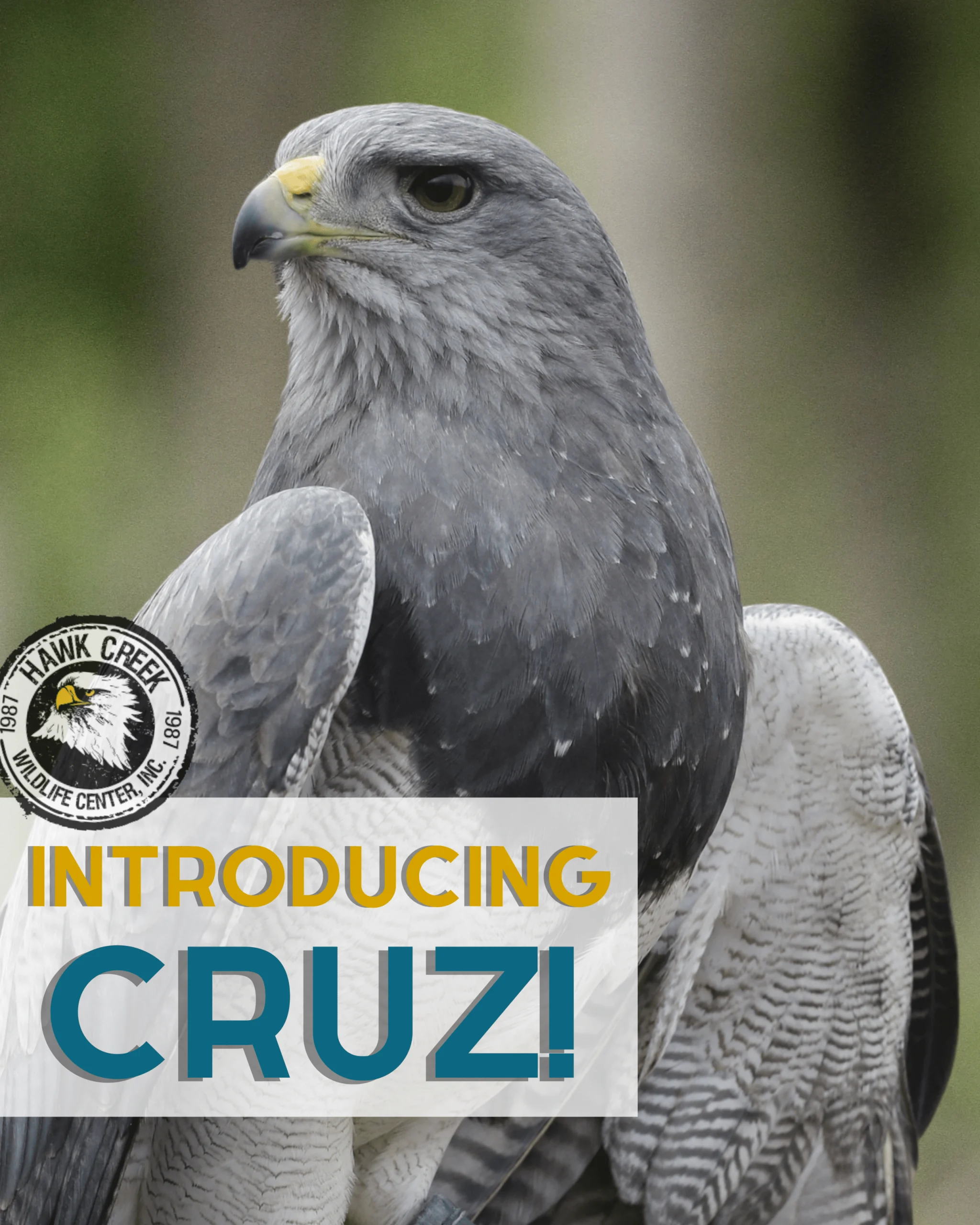
Hawk Creek, a renowned sanctuary dedicated to wildlife education and conservation, has proudly unveiled its newest avian resident, a magnificent specimen of the Black-Chested Buzzard-Eagle. Known by a multitude of monikers across its native South American range, including the Chilean Blue Eagle, Patagonian Eagle, and Gray Buzzard Eagle, this impressive raptor will be affectionately known as Cruz within the Hawk Creek community. This introduction marks a significant moment for the organization, expanding its capacity to educate the public about diverse and often underrepresented eagle species, and underscoring its commitment to global conservation efforts.
A Glimpse into the Life of Cruz and His Species
Cruz, the Black-Chested Buzzard-Eagle, is a captivating bird of prey whose presence at Hawk Creek offers a rare opportunity for the public to observe a species typically found in the remote, elevated open habitats of South America. These birds are characterized by their impressive wingspan and keen eyesight, essential for their survival in vast, often treeless landscapes. Their primary hunting strategy involves soaring at considerable heights, patiently scanning the terrain below for prey. Their diet primarily consists of small mammals, such as degus, and in some regions, they have adapted to prey on invasive species like the European hare, playing a role in local ecological balance.
The Black-Chested Buzzard-Eagle (scientific name: Geranoaetus melanoleucus) is a member of the Accipitridae family, which also includes hawks, kites, and other eagles. This species is distributed across a wide swathe of South America, from Colombia and Venezuela south to Tierra del Fuego. They favor open country, including grasslands, savannas, scrublands, and mountainous regions up to an altitude of approximately 2,500 meters (8,200 feet). Their plumage is striking, typically featuring dark gray to black upperparts with a distinct black band across the chest, contrasting with lighter underparts. Males and females are generally similar in appearance, though females can be slightly larger.
A Partnership Forged in Conservation: Sia and Hawk Creek
The arrival of Cruz at Hawk Creek is a direct result of a valuable partnership with Sia, a leading eagle conservation organization based in Oklahoma. This collaboration exemplifies a shared vision for advancing raptor conservation and public awareness on a global scale. Through this alliance, Hawk Creek gains access to and support for the care of extraordinary avian species that are seldom seen in North America, thereby enriching its educational programs and offering the local community a unique window into the world of these magnificent birds.
Sia, also known as the Comanche Ethno-Ornithological Initiative, plays a pivotal role in this partnership. Their work encompasses a broad spectrum of activities aimed at protecting eagle populations and their habitats worldwide. This includes research, habitat restoration, community engagement, and captive breeding programs. By sharing species like Cruz, Sia and Hawk Creek are able to transcend geographical boundaries and foster a greater appreciation for avian biodiversity.
This partnership has previously facilitated the introduction of other remarkable eagle species to Hawk Creek, including Jara, a Short-toed Snake Eagle (Circaetus gallicus), and Onyx, a Verreaux’s Eagle (Aquila verreauxii). The Short-toed Snake Eagle, as its name suggests, has a specialized diet primarily consisting of reptiles, particularly snakes, which it hunts in open woodlands and grasslands across Europe, Asia, and Africa. Verreaux’s Eagles, on the other hand, are iconic African raptors known for their association with mountainous terrain and their primary prey of rock hyraxes. The presence of these diverse species at Hawk Creek highlights the organization’s dedication to showcasing the incredible variety within the eagle family.
The Wild Earth Event: A Celebration of Eagles and Conservation
The introduction of Cruz coincides with Hawk Creek’s upcoming Wild Earth event, scheduled for May 13th. This event promises to be a cornerstone for engaging the community in discussions about raptor conservation. A special highlight of the event will be the presence of Waha Thuweeka, also known as William "Two-Raven" Voelker, a prominent Global Eagle Conservationist from Sia. Mr. Voelker, representing the Comanche Ethno-Ornithological Initiative, will share his extensive knowledge and passion for eagle conservation, offering insights into the challenges and successes of protecting these apex predators and their vital ecosystems.
The Wild Earth event serves as more than just an introduction to new residents; it is a platform for education and advocacy. Attendees will have the opportunity to learn about the ecological significance of eagles, the threats they face, and the critical conservation efforts underway. The inclusion of speakers like Mr. Voelker underscores Hawk Creek’s commitment to providing accurate, science-based information and fostering a deeper connection between people and the natural world. The event aims to inspire attendees to become active participants in conservation initiatives, both locally and globally.
Background and Chronology of the Partnership and Acquisition
The relationship between Hawk Creek and Sia has been cultivated over a period of time, built on mutual respect and a shared dedication to wildlife preservation. While specific dates for the initial establishment of the partnership are not publicly detailed, the ongoing success of species introductions indicates a sustained and fruitful collaboration. The process of acquiring and integrating a new species like Cruz into a sanctuary environment is a complex undertaking. It typically involves extensive planning, including:
- Species Assessment: Evaluating the suitability of the species for the sanctuary’s climate, available space, and resources, as well as its conservation status and potential for public education.
- Acquisition Protocol: Working through established channels with reputable conservation organizations like Sia to ensure the bird is legally and ethically sourced, often from captive-bred populations or rescue and rehabilitation programs where appropriate.
- Health and Acclimation: Thorough veterinary examinations and a period of acclimation in a controlled environment to ensure the bird’s health and well-being before public display.
- Habitat Preparation: Designing and constructing specialized enclosures that mimic the species’ natural habitat as closely as possible, providing for its physical and psychological needs.
- Educational Integration: Developing comprehensive educational materials and programs to inform visitors about the species, its role in its native ecosystem, and the importance of its conservation.
The successful integration of Cruz suggests that these protocols have been meticulously followed, demonstrating a high level of professionalism and commitment from both Hawk Creek and Sia. The consistent introduction of new and exotic species over time indicates a strategic approach to expanding Hawk Creek’s educational mission and its contribution to global conservation awareness.
Supporting Data: The Plight and Importance of Eagles
Eagles, as apex predators, play a crucial role in maintaining the health and balance of their ecosystems. Their presence often serves as an indicator of environmental well-being. Unfortunately, many eagle species worldwide face significant threats, leading to declining populations. These threats include:
- Habitat Loss and Degradation: Deforestation, agricultural expansion, and urbanization reduce the available hunting grounds and nesting sites for eagles.
- Pollution: Pesticides, heavy metals, and other pollutants can accumulate in the food chain, poisoning eagles and affecting their reproductive success. The iconic bald eagle population in the United States, for example, was severely impacted by the pesticide DDT in the mid-20th century.
- Poaching and Illegal Trade: Eagles are sometimes targeted for their feathers, body parts, or for the pet trade, further exacerbating population declines.
- Human-Wildlife Conflict: In some areas, eagles may be perceived as a threat to livestock or game birds, leading to retaliatory killings.
- Climate Change: Shifting weather patterns and extreme weather events can disrupt prey availability and nesting cycles.
The International Union for Conservation of Nature (IUCN) Red List provides a global assessment of the conservation status of species. While the Black-Chested Buzzard-Eagle is currently listed as "Least Concern" by the IUCN, meaning its populations are relatively stable and widespread, this status can change. Furthermore, conservation efforts are crucial for maintaining this status and for protecting other eagle species that are more imperiled. For instance, the Philippine Eagle (Pithecophaga jefferyi) is critically endangered, with estimates suggesting fewer than 400 individuals remaining in the wild.
The work of organizations like Sia and Hawk Creek is therefore vital. By educating the public, supporting research, and engaging in direct conservation actions, they contribute to the long-term survival of these magnificent birds. The introduction of species like Cruz serves as a powerful educational tool, fostering empathy and understanding that can translate into tangible support for conservation initiatives.
Official Responses and Expert Commentary
While direct quotes from Hawk Creek representatives or Sia officials regarding Cruz‘s arrival were not included in the initial announcement, the sentiment of honor and excitement is palpable. Inferred statements from Hawk Creek would likely emphasize their dedication to providing the best possible care for Cruz and their commitment to using his presence to educate the public. A representative might state: "We are thrilled to welcome Cruz to Hawk Creek. His majestic presence offers an unparalleled opportunity for our visitors to connect with the incredible biodiversity of South America and to understand the importance of protecting these vital predators and their habitats. We are deeply grateful for our enduring partnership with Sia, which makes these unique introductions possible."
Similarly, from Sia’s perspective, Waha Thuweeka a.k.a. William "Two-Raven" Voelker might express his enthusiasm for the collaboration and the educational impact it creates. His commentary would likely highlight the broader mission: "Our partnership with Hawk Creek is instrumental in our mission to raise global awareness for eagle conservation. By bringing species like Cruz into direct view of communities that may never otherwise encounter them, we foster a sense of stewardship and inspire action. The Comanche Ethno-Ornithological Initiative believes that understanding leads to respect, and respect leads to protection. Events like the Wild Earth gathering are crucial in bridging that gap."
The presence of Mr. Voelker at the Wild Earth event is particularly significant. His expertise, rooted in both scientific knowledge and potentially indigenous perspectives on raptors, promises a rich and multifaceted discussion on eagle conservation. The Comanche people have a deep historical and spiritual connection with eagles, often viewing them as sacred messengers and symbols of strength and vision. This dual perspective offers a unique and powerful lens through which to examine conservation challenges and solutions.
Broader Impact and Implications for Conservation Awareness
The introduction of Cruz and the ongoing partnership between Hawk Creek and Sia have several important implications for conservation awareness and education.
Firstly, it democratizes access to rare species. For many people, encountering a Black-Chested Buzzard-Eagle would require extensive travel to South America. By bringing Cruz to Hawk Creek, the organization makes this educational experience accessible to a local audience, fostering a connection that can lead to greater advocacy for conservation.
Secondly, it highlights the interconnectedness of global ecosystems. The presence of species from different continents at Hawk Creek demonstrates that conservation challenges and successes are not confined by borders. It encourages a holistic view of environmental stewardship.
Thirdly, it provides a tangible focal point for discussions about broader conservation issues. The story of Cruz, his diet, his habitat, and the threats he might face, can be used as a springboard to discuss issues like invasive species management (European hares), habitat preservation, and the impact of human activities on wildlife populations.
Finally, the partnership itself serves as a model for collaborative conservation. It demonstrates how different organizations, even those geographically distant, can work together effectively to achieve shared goals. This collaborative approach is increasingly recognized as essential for tackling complex global environmental problems.
The Wild Earth event on May 13th, featuring Waha Thuweeka, will undoubtedly be a pivotal moment in amplifying these messages. It is an opportunity for the community to engage directly with experts, learn about remarkable species like Cruz, and become more informed and active participants in the critical work of protecting raptors and their environments for generations to come. The continued success of such initiatives by Hawk Creek and its partners is a testament to the power of education and collaboration in safeguarding the planet’s precious biodiversity.
