
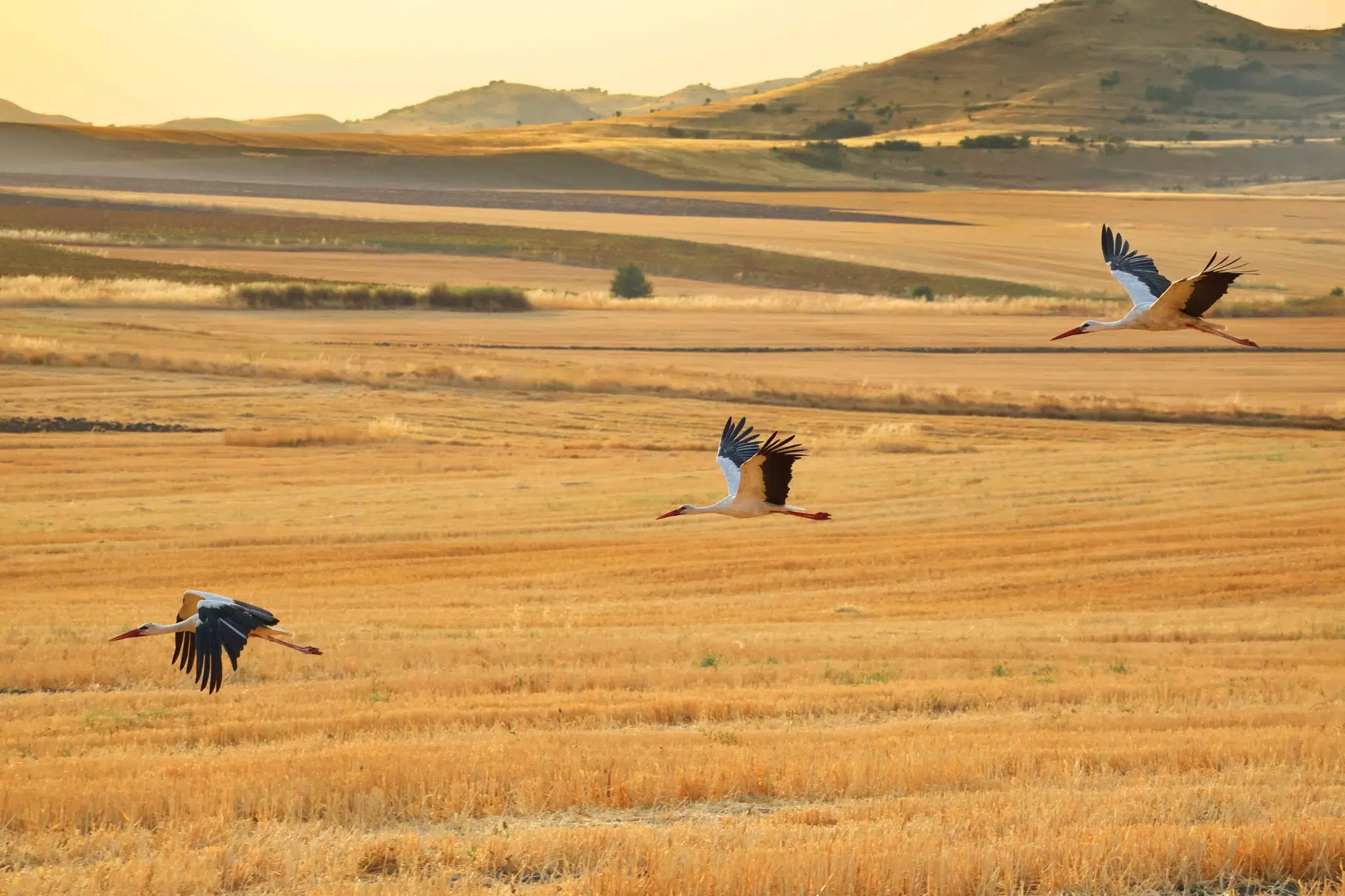
The Ecological Restoration Fund (ERF) has announced a significant three-year grant of £7.5 million to BirdLife International, earmarking crucial resources for the intensified protection and restoration of vital sites along the African-Eurasian Flyway. This substantial commitment arrives at a critical juncture for migratory bird populations, with alarming statistics revealing that one in nine migratory bird species faces the threat of extinction, and a staggering 45% are currently in decline. The grant is poised to dramatically scale up conservation efforts, aiming to secure priority flyway sites and landscapes, rejuvenate essential wetlands, foster robust international collaboration, and pioneer innovative financing mechanisms for the intertwined goals of nature preservation, climate action, and human well-being.
The African-Eurasian Flyway: A Global Ecological Arterial System Under Threat
The African-Eurasian Flyway stands as one of the world’s most extraordinary natural phenomena, an immense migratory superhighway stretching over 13,000 kilometers from the Arctic tundra in the north to the southernmost tip of Africa. This intricate network serves as a lifeline for an astonishing diversity of avian life, facilitating the annual journeys of over 2 billion migratory birds belonging to more than 500 different species. These incredible travelers rely on an ecologically coherent network of sites across dozens of countries, utilizing them as critical resting points, refueling stations, breeding grounds, and wintering havens to complete their epic annual migrations. Without these interconnected "stepping stones," the arduous journeys would be impossible, leading to the collapse of populations and the disruption of ecosystems across three continents.
However, this vital ecological corridor, a testament to nature’s resilience and interconnectedness, is under unprecedented pressure. Habitat destruction and degradation, primarily driven by unsustainable agricultural expansion, urbanization, and wetland drainage, pose the most immediate threats. According to the International Union for Conservation of Nature (IUCN), wetlands are disappearing three times faster than forests, directly impacting the waterbirds that depend on them. Climate change exacerbates these challenges, altering migration patterns, impacting food availability, and intensifying extreme weather events such as droughts or floods that devastate breeding or wintering grounds. Other significant dangers include illegal hunting and poaching, which disproportionately affect large migratory species, collisions with burgeoning energy infrastructure like wind turbines and power lines, the widespread use of pesticides in agricultural landscapes that poisons birds and their food sources, and pollution from industrial and agricultural runoff.
The cumulative effect of these anthropogenic pressures has pushed numerous species to the brink. For instance, the European Turtle-dove (Streptopelia turtur), once a common sight and sound across Europe, has experienced precipitous declines of over 80% across its range due to habitat loss in breeding areas and unsustainable hunting practices along its migratory routes. Similarly, the majestic Egyptian Vulture (Neophron percnopterus), a scavenger crucial for ecosystem health, faces severe threats from illegal poisoning targeting carnivores and collisions with power lines, contributing to its Endangered status. Even the iconic White Stork (Ciconia ciconia), a symbol of good fortune and harbinger of spring in many cultures, navigates an increasingly hazardous landscape, often nesting on human structures but encountering dangers from power lines and habitat degradation in its African wintering grounds. The urgency of a global, coordinated response to protect these "avian ambassadors" and their critical habitats cannot be overstated. Their decline signals a broader degradation of the ecosystems they depend on, which in turn impacts the human communities coexisting within these landscapes, affecting everything from pest control to seed dispersal and cultural heritage.

A Comprehensive Strategy for Flyway Conservation
The £7.5 million grant from the Ecological Restoration Fund is designed to implement a multi-faceted, strategic approach over the next three years, focusing on tangible, on-the-ground interventions coupled with broader policy and financial innovations. The initiative will specifically target key sites within seven countries: Romania, Bulgaria, Iraq, Jordan, Uganda, Malawi, and Zimbabwe. These nations represent diverse ecological zones and crucial migratory bottlenecks or stopover sites along the African-Eurasian Flyway, spanning its European, Middle Eastern, and African segments. The selection of these countries reflects strategic priorities where interventions can yield the greatest impact on bird populations and associated ecosystems.
In these priority regions, the grant will support extensive habitat restoration and protection work. This includes the rehabilitation of degraded wetlands, which are among the most biodiverse and productive ecosystems globally, providing essential breeding and feeding grounds for countless waterbird species, including ducks, geese, waders, and herons. Wetlands also offer invaluable ecosystem services to human communities, such as natural water purification, flood control, shoreline stabilization, and carbon sequestration. Beyond wetlands, efforts will focus on restoring and safeguarding crucial forest patches, grasslands, and coastal areas that migratory birds rely on for shelter, breeding, and sustenance during different phases of their annual cycle. A core component of this work involves engaging local communities directly, fostering the development of nature-based economies and creating sustainable jobs that align with conservation goals. This approach recognizes that long-term conservation success is inextricably linked to the well-being and active participation of the people living alongside these vital ecosystems. Examples include supporting sustainable ecotourism initiatives focused on birdwatching, promoting responsible agricultural practices that minimize pesticide use and protect buffer zones, and developing alternative livelihoods such as sustainable aquaculture or handicraft production that reduce pressure on natural resources.
Furthermore, a significant portion of the funding will be allocated to strengthening rapid-response capabilities against harmful development projects that threaten key flyway sites. This involves proactive monitoring, advocacy, and legal intervention to challenge or mitigate the negative impacts of large-scale infrastructure projects, such as dams, industrial developments, or even poorly planned renewable energy installations. BirdLife International, through its extensive network of national partners, can quickly mobilize expertise to assess threats, engage with developers and governments, and advocate for bird-friendly solutions. The goal is to ensure that development proceeds in an environmentally responsible manner, minimizing disruption to migratory routes and critical habitats. This also entails working with governments and developers to integrate biodiversity considerations early in the planning process, promoting "smart" infrastructure that avoids or minimizes negative impacts on wildlife, rather than retrofitting costly solutions after damage has occurred.
A groundbreaking aspect of this new phase is the continued support for the collaboration between BirdLife International and the World Bank, a partnership initiated in 2025. This collaboration is designed to embed flyway conservation directly into large-scale infrastructure planning, particularly for renewable energy projects, which are crucial for climate change mitigation but can pose significant risks to migratory birds if not strategically planned. The initiative seeks to ensure that new energy infrastructure, while vital for a green transition, is developed in a bird-safe manner, incorporating design modifications, strategic siting to avoid key migratory corridors, and robust mitigation measures to reduce bird collisions and habitat fragmentation. Moreover, this collaboration aims to unlock new, transformative financial mechanisms for flyway conservation, moving beyond traditional grant funding to explore innovative approaches like blended finance (combining public and private capital), green bonds, and payment for ecosystem services schemes that can provide sustainable, long-term funding streams for nature, ensuring the longevity of conservation efforts.
A Legacy of Collaborative Success: Building on Previous Achievements
This new £7.5 million grant from the Ecological Restoration Fund is not an isolated effort but represents a significant escalation of an already successful partnership. It follows the successful completion of an initial three-year phase of project work in the African-Eurasian Flyway, which was also funded by ERF and delivered by BirdLife International in collaboration with its UK Partner, the Royal Society for the Protection of Birds (RSPB). This chronological progression underscores a strategic, long-term commitment to the flyway’s health. The achievements of this foundational phase, which concluded recently, underscore the effectiveness of a coordinated, cross-border conservation approach and provided the critical insights and momentum for the current expansion.

One of the most notable successes of the previous phase was securing UNESCO World Heritage status for Sierra Leone’s Gola Rainforest National Park. This designation, achieved after years of dedicated effort, is a powerful testament to the park’s outstanding universal value, recognizing its exceptional biodiversity and ecological integrity. The Gola Rainforest is not only a critical habitat for numerous endemic and endangered species, including pygmy hippos and chimpanzees, but also forms a vital part of the Upper Guinean Forest ecosystem, which is important for many migratory birds that overwinter in West Africa. The World Heritage status provides a higher level of international protection, elevates its global profile, and helps leverage further support for its long-term conservation, benefiting both wildlife and the local communities who depend on its resources through sustainable forestry and ecotourism.
Furthermore, the initial project successfully leveraged an additional £19 million for habitat restoration efforts across the flyway. This impressive mobilization of funds demonstrates the catalytic effect of strategic investments and strong partnerships. These additional resources were directed towards a range of conservation activities, including the restoration of key wetlands in Eastern Europe and the Middle East, the establishment of protected areas in critical stopover sites along major migratory routes, and the implementation of community-based conservation programs that empower local populations to become stewards of their natural heritage. The ability to attract significant co-financing is crucial for addressing the vast scale of conservation needs along such an expansive flyway, far exceeding what any single grant can provide.
Crucially, the first phase also laid the groundwork for the now-expanded collaboration with the World Bank. This initial engagement, which began with exploratory dialogues and pilot projects, focused on identifying synergies between biodiversity conservation and sustainable development objectives, particularly in regions where large-scale development projects are planned or underway. By integrating conservation considerations into economic development frameworks, the partnership aims to create a paradigm where human progress and ecological health are mutually reinforcing rather than antagonistic. This pioneering approach acknowledges that the millions of people living along the African-Eurasian Flyway depend directly on healthy ecosystems for their food, water, and livelihoods, making flyway conservation inherently a human development issue. This initial collaboration proved the viability and necessity of engaging major development finance institutions in conservation, paving the way for the deepened partnership announced with this new grant.
Visionary Leadership and Strategic Partnership
The leaders of BirdLife International and the Ecological Restoration Fund have articulated a clear and ambitious vision for the future of the African-Eurasian Flyway, emphasizing the transformative potential of this new grant. Their statements reflect a deep understanding of the ecological challenges and the collaborative spirit required to overcome them.
Martin Harper, CEO of BirdLife International, underscored the significance of the grant, stating, "This grant is a major milestone in our efforts to unite and strengthen conservation across borders. Working with our 80 Partners in the African-Eurasian Flyway, we want to ensure that an ecologically coherent network of sites is protected, managed and restored to make sure that birds can fly free from harm. By protecting the sites that migratory birds need we shall also deliver enormous benefits for people and for the climate. We will do this by mobilising finance, restoring critical habitats, and ensuring new infrastructure is safe for nature. We are incredibly grateful to ERF for supporting our ambition of a world where migratory bird populations are thriving, connecting and inspiring people across countries and continents." Harper’s statement highlights the interconnectedness of the flyway, the necessity of a vast partner network to cover its immense geographical span, and the multiple dividends conservation pays – not just for birds, but for human societies and the planet’s climate resilience. He emphasizes the practical mechanisms: financial mobilization, habitat restoration, and advocating for bird-safe infrastructure.

Echoing this sentiment, Lenke Bálint, Executive Director at the Ecological Restoration Fund, reiterated ERF’s commitment to the long-term health of the flyway. "The African-Eurasian Flyway is one of the world’s great ecological networks, connecting landscapes, cultures and communities across three continents," Bálint remarked. "We are delighted to continue our partnership with BirdLife International and support its work to protect and restore critical sites along the flyway. By strengthening conservation across borders, restoring vital wetlands and habitats, and helping to unlock new sources of finance for nature, this programme will benefit not only migratory species but also the communities that depend on healthy ecosystems for their livelihoods and wellbeing." Bálint’s statement reinforces ERF’s broader mission, which champions work that protects areas of high biodiversity value, rejuvenates degraded land and seascapes, and ensures good environmental governance. The fund is dedicated to re-establishing nature’s essential interconnections while fostering cultural, social, and economic opportunities for the communities inhabiting those landscapes, making the African-Eurasian Flyway initiative a perfect alignment with its core principles. The synergy between BirdLife’s on-the-ground expertise and ERF’s strategic funding vision creates a powerful alliance for conservation impact.
Broader Implications: A Model for Sustainable Development and Global Cooperation
The £7.5 million grant and the comprehensive program it supports carry profound implications, extending far beyond the immediate benefit to migratory bird populations. This initiative serves as a powerful model for integrated conservation and sustainable development, demonstrating how targeted ecological interventions can yield widespread ecological, social, and economic dividends.
Ecological Resilience and Biodiversity: By focusing on the protection and restoration of critical sites and wetlands, the program directly addresses the primary drivers of biodiversity loss. Healthy flyways mean not only thriving bird populations but also robust ecosystems that support a myriad of other species, from insects to mammals. The restoration of wetlands, for instance, significantly enhances local biodiversity, providing habitats for amphibians, fish, and various plant species, while also improving water quality and natural resource availability. The ecological coherence sought ensures that the entire chain of migratory sites functions optimally, preventing bottlenecks that could doom species.
Climate Change Mitigation and Adaptation: Wetlands are powerful carbon sinks, capable of sequestering significant amounts of atmospheric carbon, particularly in their peat-rich soils. Their restoration therefore contributes directly to climate change mitigation efforts. Furthermore, healthy wetland ecosystems enhance climate resilience by buffering communities against extreme weather events such as floods and droughts. By maintaining natural hydrological cycles, these restored habitats contribute to local climate adaptation strategies, providing cleaner water, regulating water flow, and creating more stable environments for both wildlife and human populations in an era of increasing climate volatility.
Socio-Economic Empowerment and Sustainable Livelihoods: The emphasis on nature-based economies and sustainable jobs is crucial. In many regions along the flyway, communities are highly dependent on natural resources for their survival. By promoting sustainable practices – such as responsible fishing, eco-tourism development, and sustainable agriculture that avoids harmful chemicals – the program empowers local populations to derive economic benefits from healthy ecosystems without depleting them. This approach creates a virtuous cycle where local communities become active partners in conservation, recognizing the tangible benefits of protecting their natural heritage. This not only improves livelihoods but also fosters a sense of ownership and stewardship over shared natural resources, reducing conflict between human needs and conservation goals.

Policy Influence and Governance: The collaboration with the World Bank and the focus on rapid-response actions against harmful development signal a significant push towards integrating environmental considerations into large-scale planning and policy-making at national and international levels. This proactive engagement aims to shift development paradigms, ensuring that economic growth does not come at the expense of critical natural capital. By influencing infrastructure development to be bird-safe and ecologically sensitive, the initiative sets new standards for responsible development, potentially impacting policy frameworks across the diverse nations of the flyway. This kind of integration is vital for achieving the UN Sustainable Development Goals, particularly SDG 15 (Life on Land) and SDG 13 (Climate Action), and for reversing global biodiversity decline. It champions the principle of "mainstreaming" biodiversity into all sectors of development.
Strengthening International Cooperation: The African-Eurasian Flyway inherently demands international cooperation due to its transboundary nature. The grant strengthens this collaborative framework, uniting dozens of BirdLife Partners and numerous stakeholders across Europe
