
What begins as a pragmatic quest for community service hours can often blossom into a profound, lifelong dedication. Such is the compelling narrative of Sterling Hollman, a young enthusiast whose initial search for National Honor Society requirements led him to the immersive world of crane season volunteering at Rowe Sanctuary. His journey, marked by an evolving fascination with birds, a burgeoning talent for wildlife photography, and a deep commitment to conservation, exemplifies the transformative power of hands-on experience in environmental stewardship. Through an interview with Katie Moore, Rowe Sanctuary Volunteer Coordinator, insights into Hollman’s unique avian odyssey, his most cherished photographic captures, and a particularly memorable highlight from the recent season have been brought to light, illustrating how individual passion contributes to broader ecological understanding and preservation efforts.
The Genesis of a Passion: Early Encounters with Avian Wonders
Sterling Hollman’s profound interest in birds was not an innate, always-present facet of his childhood but rather a spark ignited during a formative period in his education. It was in the eighth grade that his scientific curiosity was decisively steered towards the avian world. A dedicated science teacher, recognizing the rich biodiversity of their local environment, decided to integrate a specialized module on Nebraska birds into the standard curriculum. This seemingly minor addition proved to be a pivotal moment for Hollman, transforming a casual interest into an intense fascination. "I became obsessed with birds after that," he recounts, reflecting on the immediate and profound impact of this educational exposure.
This newfound obsession was not passive. Driven by an insatiable desire for knowledge, Hollman embarked on a self-directed deep dive into ornithological literature. He voraciously consumed a significant portion of the "National Geographic Complete Birds of North America," a comprehensive tome spanning 752 pages dedicated solely to the diverse avian species of the continent. This rigorous self-study laid a robust foundation for his understanding of bird identification, behavior, and habitats. Concurrently, he acquired his first camera, a tangible tool that allowed him to actively engage with his passion. The camera became an extension of his observational skills, enabling him to document and analyze the myriad bird species he encountered in his everyday surroundings, thus marrying scientific inquiry with artistic expression from a young age.
Balancing Academics and Avian Pursuits: High School and University Influence
The demands of adolescence and academic rigor often necessitate prioritization, and for Sterling Hollman, high school presented a temporary diversion from his intense birding activities. "During high school, I was too busy with sports and grades to spend my time birding," he explains, acknowledging the constraints placed upon his leisure pursuits. Birdwatching, during this period, became a cherished but infrequent activity, primarily reserved for family vacations when the opportunity to explore new environments and observe different species arose. This hiatus, however, did not diminish his underlying passion; it merely placed it on hold, awaiting the opportune moment for re-ignition.
That moment arrived emphatically during his senior year of high school, a period marked by significant transitions and renewed intellectual engagement. Hollman’s dual enrollment at a local university proved instrumental in rekindling his avian fervor. His enrollment in a biology class taught by the university’s ornithology professor provided the perfect catalyst. This academic setting, combined with direct mentorship from an expert in the field, served to "reignite my love for birds," as Hollman describes it. The theoretical knowledge gained in the classroom, coupled with practical insights and encouragement from a seasoned ornithologist, revitalized his earlier passion, providing it with a more structured and academic framework. This period also coincided with his initial foray into volunteering at Rowe Sanctuary, creating a powerful synergy between academic learning and practical conservation work.
Rowe Sanctuary: A Convergence of Passion and Purpose
The initial connection between Sterling Hollman and Rowe Sanctuary was rooted in a practical necessity: fulfilling community service hours for his National Honor Society (NHS) requirement. The NHS, a prestigious organization recognizing high school students for academic achievement, leadership, service, and character, typically mandates a certain number of volunteer hours. Hollman, struggling to find consistent opportunities, received a list of volunteer openings from the honors program at the local university where he was dual-enrolled. Rowe Sanctuary, with its focus on wildlife and conservation, immediately caught his eye. "Since I love birding and wildlife, I sent an email," he recalls, detailing the pragmatic yet serendipitous beginning of his involvement.
What began as a means to an end quickly transformed into something far more profound. After successfully accumulating the required hours, Hollman found himself unwilling to disengage. The unique environment of Rowe Sanctuary, coupled with the fulfilling nature of the work, proved deeply engaging. "After getting all my hours, I decided I didn’t want to stop volunteering, so I keep coming back!" he affirms, highlighting the compelling draw of the sanctuary.
Rowe Sanctuary, formally known as the Iain Nicolson Audubon Center at Rowe Sanctuary, is strategically located near Kearney, Nebraska, along a vital stretch of the Platte River. Established in 1970, its mission is multifaceted: to protect and restore habitat for Sandhill Cranes and other migratory birds, to educate the public about the importance of wetland ecosystems, and to inspire conservation action. The sanctuary encompasses thousands of acres of river channels, wet meadows, and agricultural fields, managed specifically to provide critical roosting and foraging grounds for the immense numbers of cranes that pass through during their annual migration. Volunteers like Hollman are indispensable to the sanctuary’s operations, assisting with everything from habitat maintenance to, crucially, guiding visitors during the peak crane season. Their dedication ensures that the sanctuary can effectively manage its resources and offer an unparalleled educational experience to the public, fostering a deeper appreciation for this globally significant natural event.
The Spectacle of the Sandhill Cranes: A Natural Phenomenon
The annual migration of Sandhill Cranes (Grus canadensis) through the Platte River Valley in central Nebraska stands as one of the most awe-inspiring natural spectacles on Earth. Each spring, typically from late February through early April, an astonishing 80% of the world’s Sandhill Crane population—an estimated 500,000 to 600,000 birds—converges on this relatively narrow 80-mile stretch of the river. This mass congregation is not merely a stopover; it is a critical refueling point where cranes rest and replenish their energy reserves before continuing their arduous journey to breeding grounds in Canada, Alaska, and even Siberia.
The Platte River itself is a unique braided river system, characterized by its wide, shallow channels and numerous sandbars. These features are precisely what make it an ideal roosting habitat for the cranes. The shallow water and exposed sandbars provide a safe haven from predators during the night, as cranes prefer to sleep standing in water where they can detect approaching threats. During the day, they fan out into the surrounding wet meadows and cornfields to forage, consuming waste grain, invertebrates, and plant matter, building up the fat reserves necessary for their onward migration and successful breeding.
Rowe Sanctuary, situated within this critical corridor, plays an indispensable role in safeguarding this phenomenon. Through strategic land acquisition, habitat restoration projects, and careful water management, the sanctuary ensures that adequate resources are available for the cranes. The consistent presence of these magnificent birds draws tens of thousands of visitors annually, from professional ornithologists to casual nature enthusiasts, all eager to witness the breathtaking sight and sound of hundreds of thousands of cranes descending upon the river at dusk or rising in unison at dawn. The cacophony of their calls, often described as a primordial trumpeting, creates an unforgettable auditory experience that complements the visual grandeur. For volunteers like Sterling Hollman, guiding tours during this peak season means not only facilitating this viewing experience but also educating the public about the ecological significance of the migration and the ongoing conservation challenges.
Guiding Tours and Sharing the Wonder
Sterling Hollman’s role as a volunteer guide during the crane season at Rowe Sanctuary is central to the visitor experience. His responsibilities include leading groups to optimal viewing blinds, providing interpretive information about the Sandhill Cranes, their migration, and the Platte River ecosystem, and ensuring a respectful and educational encounter for all guests. This direct interaction with the public, sharing his burgeoning expertise and infectious enthusiasm, is a significant aspect of his volunteer work.
A particularly poignant moment from the past season involved Hollman guiding a crane tour for his own family, an event made even more special as it coincided with his birthday. His family, like many locals living in the vicinity of the Platte River, had a general awareness of the migration but had never fully grasped its immense scale and profound significance. "My family had never fully given Sandhill Cranes the time of day before I brought them for a tour," Hollman admits, highlighting a common sentiment among those who live near, but not necessarily engage with, such natural wonders. The proximity often leads to a casual acceptance rather than an active appreciation.
The experience proved transformative for them. Initially, they were "quite amused" by his invitation, perhaps viewing it as a novel way to celebrate his birthday. However, as the tour progressed and they witnessed the sheer volume of cranes, heard their ancient calls echoing across the river, and absorbed the educational insights provided by their son, their perspective shifted dramatically. "By the end of the tour, they were amazed," Hollman proudly recounts. The realization that "one of the largest migrations happens in their backyard!" resonated deeply, fostering a newfound appreciation for the natural heritage surrounding them. This personal anecdote underscores a broader impact of Rowe Sanctuary’s work: to connect individuals, even those geographically close, to the natural world and inspire a sense of wonder and stewardship. His mother’s expression of pride at his graduation party, acknowledging his role in leading the tour for them, further cemented the personal significance of this experience.
A Photographer’s Eye: Capturing Avian Beauty
Beyond his role as a guide, Sterling Hollman is also an avid and talented bird photographer, a passion that developed concurrently with his birding interest. His dedication to capturing avian life is evident in the sheer volume of his work. "As of writing this answer, I have an album on my phone with over 1,200 photos of birds, so it’s difficult to pick," he states, illustrating the extensive nature of his photographic endeavors. This commitment to documentation reflects not only an artistic inclination but also a scientific one, allowing him to closely observe and study the intricate details of various species.
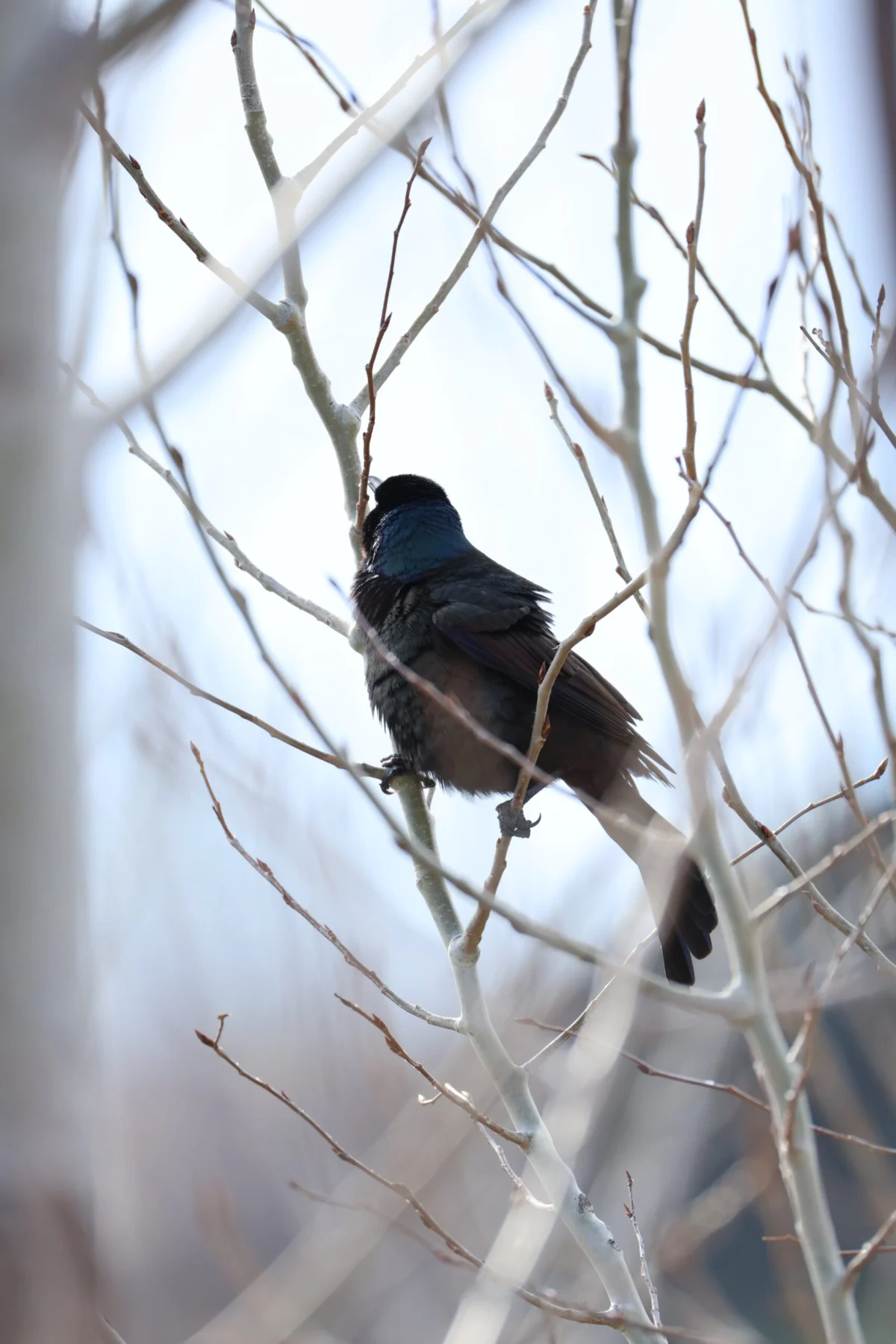
His photographic journey recently received a significant boost through an opportunity provided by his university’s ornithology professor, who granted him access to a high-quality camera. This professional-grade equipment allowed Hollman to explore new levels of detail and clarity in his work. A recent photographic highlight, and arguably his current favorite, features a Common Grackle (Quiscalus quiscula) captured in his own backyard. This choice is particularly insightful, as the Common Grackle is a widespread and often overlooked species, sometimes even considered a "nuisance bird" due to its prevalence in urban and suburban environments.
"On a whim, I took a photo of a Common Grackle in my backyard. Upon reviewing the picture, I realized the beauty of this bird," Hollman explains. The advanced camera successfully captured the grackle’s iridescent plumage, revealing the subtle blues, greens, and purples that shimmer in the sunlight, often unnoticed by the casual observer. This experience underscored a crucial lesson in natural appreciation: "The camera did very well in capturing the simple, yet extraordinary features of this common bird. Many would consider it a nuisance species, but by taking a minute to really look at it, I saw an amazing living being living the best life it can." This reflection speaks to the broader philosophical underpinnings of birding and wildlife photography – the capacity to find extraordinary beauty in the ordinary, fostering a deeper respect for all forms of life, regardless of their perceived commonness. It highlights how keen observation, aided by tools like a good camera, can transform perception and foster a more inclusive appreciation for biodiversity.
Competitive Birding and Collaborative Learning
Sterling Hollman’s engagement with the birding community extends beyond individual observation and guiding, encompassing collaborative and competitive aspects as well. His decision to join a "birding bowl" team with Katie Moore, Anne, and Brian speaks to his desire for shared experiences and continuous learning. Birding bowls are often team-based events or competitions where participants identify as many bird species as possible within a given timeframe and geographical area, often serving as fundraisers for conservation initiatives or as educational outreach tools.
For Hollman, the motivation was multifaceted. "I really like to see how other people experience birding," he notes, emphasizing the value of diverse perspectives in the field. He also highlights the personal connections within the team: "I know Katie, Anne, and Brian pretty well, and I think they are very fun birders." The team composition offers a rich learning environment. Brian, with his presumed extensive experience, represents a source of knowledge and mentorship: "I know that Brian is someone I can learn from because of his experience." Meanwhile, Katie and Anne contribute enthusiasm and a dynamic approach to birding: "I really like the enthusiasm Anne and Katie have for birding."
This collaborative setting provides a structured yet enjoyable platform for skill development. "Being on this team gives me more opportunities to get out birding, learn, and have fun!" Hollman concludes. Such team activities are vital in the birding world, fostering camaraderie, encouraging shared knowledge, and often contributing to citizen science efforts by generating valuable data on bird populations and distributions. They also serve to strengthen the bonds within the conservation community, ensuring that passion for nature is sustained and passed on through mentorship and shared experiences.
The Future of Conservation: Sterling’s Path Forward
As Sterling Hollman transitions to the next phase of his academic journey, his commitment to conservation and his passion for birds remain steadfast, albeit with some practical adjustments. He plans to attend the University of Lincoln, a move that will place him a couple of hours away from Rowe Sanctuary. This geographical distance, unfortunately, means he will not be consistently available during the intense crane season. "I will be moving a couple hours away for college next year (going to University of Lincoln) which unfortunately means I’ll be away during crane season," he confirms, acknowledging the logistical challenges.
However, this move does not signal an end to his involvement. Instead, it represents a temporary shift in the intensity of his direct participation. Hollman’s dedication is such that he intends to return and contribute whenever feasible: "but I plan to come back to help as much as I can!" This commitment underscores the deep impact Rowe Sanctuary and the Sandhill Cranes have had on him, solidifying his role as a long-term advocate for conservation. His future studies at a major university will likely provide further opportunities to deepen his understanding of biology, ecology, and potentially ornithology, equipping him with an even stronger scientific foundation for future contributions to environmental protection.
Sterling Hollman’s journey serves as a powerful testament to the critical importance of engaging youth in conservation efforts. His initial requirement for community service hours evolved into a profound personal passion, demonstrating how early exposure and hands-on experience can cultivate lifelong environmental stewardship. Programs like those at Rowe Sanctuary, which actively involve volunteers, are essential for nurturing the next generation of conservationists. These experiences not only provide invaluable support for the organizations but also empower young individuals to discover their potential and make meaningful contributions to the natural world. As environmental challenges continue to mount, the dedication of individuals like Hollman, who bridge the gap between academic learning and practical application, becomes increasingly vital for the sustained health of our planet’s ecosystems. His story is a beacon of hope, illustrating that with the right opportunities and mentorship, a simple interest can transform into a powerful force for good.
In conclusion, Sterling Hollman’s trajectory from a curious middle schooler to an informed and passionate crane tour guide at Rowe Sanctuary encapsulates the profound impact of experiential learning and dedicated volunteerism. His story highlights how a seemingly mundane requirement for community service can unveil a deep-seated passion for the natural world, fostering a commitment to conservation that extends beyond immediate obligations. Through his meticulous bird photography, his collaborative spirit in birding bowls, and his unwavering dedication to the Sandhill Cranes, Hollman embodies the future of environmental stewardship. As he embarks on his university studies, his promise to return to Rowe Sanctuary whenever possible reinforces the enduring legacy of places like Rowe and the critical role individuals play in protecting the planet’s most magnificent natural phenomena. His journey underscores that the future of conservation rests not only on scientific advancements and policy changes but also on the continued nurturing of individual curiosity, passion, and the selfless act of giving back to nature.
