
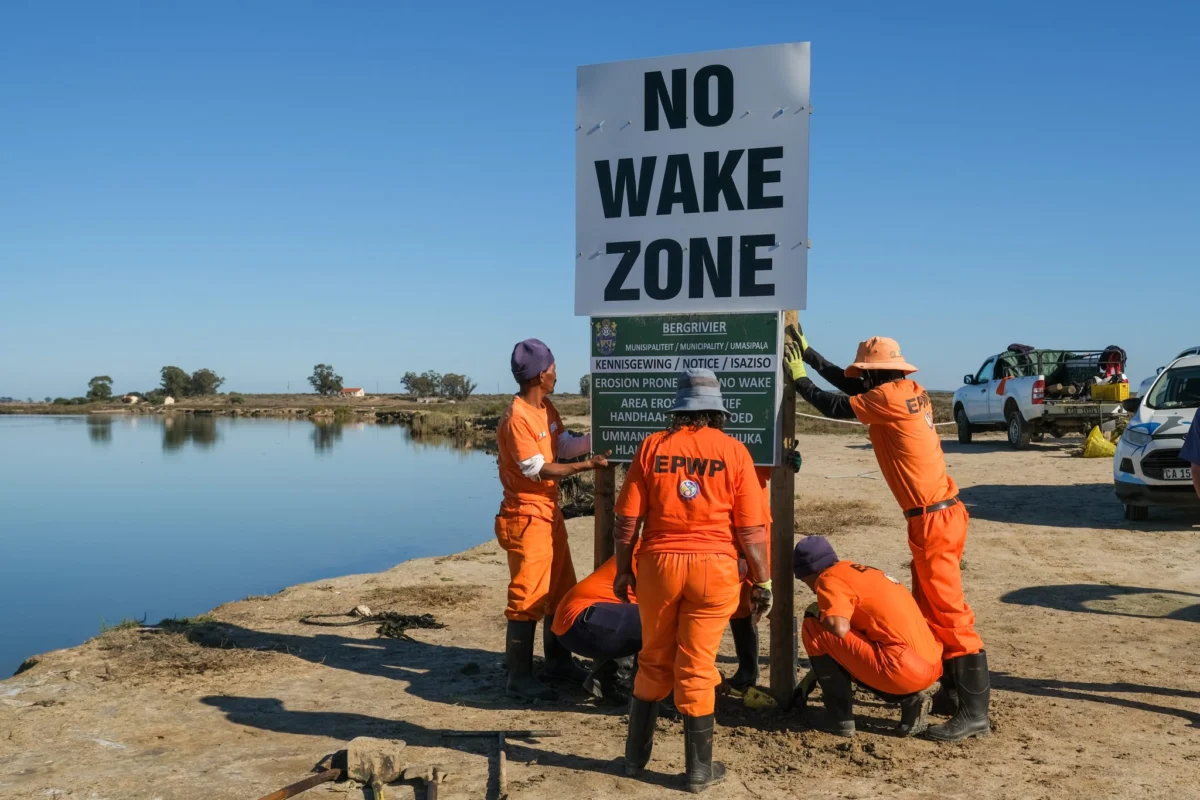
The Berg River Estuary, a vital wetland on South Africa’s west coast, stands at the forefront of an ambitious international conservation initiative. BirdLife South Africa, in close collaboration with its United Kingdom partner, the Royal Society for the Protection of Birds (RSPB), and with substantial financial backing from the Ecological Restoration Fund (ERF), is implementing a multi-faceted project to safeguard migratory birds traversing the vast African-Eurasian Flyway. This comprehensive effort integrates crucial habitat restoration with groundbreaking satellite tagging technology, offering unprecedented insights into the epic journeys and ecological needs of these remarkable avian voyagers.
The African-Eurasian Flyway: An Artery of Life

Migratory birds undertake some of nature’s most extraordinary feats, connecting diverse landscapes, countries, and even continents through their arduous, long-distance journeys. These avian superhighways, known as flyways, are essential for the survival of hundreds of bird species. The African-Eurasian Flyway, one of the world’s most extensive, stretches an incredible distance from the Arctic breeding grounds, across Europe and Asia, all the way to the southern tip of Africa. It serves as a critical pathway for billions of birds annually, supporting a vast array of species from tiny waders to majestic raptors.
The health of this flyway is paramount, as disruptions at any point along its length can have catastrophic consequences for entire populations. Birds rely on a network of strategically located stopover sites – wetlands, estuaries, and coastal areas – to rest, refuel, and recuperate during their taxing migrations. Without these vital staging posts, their chances of completing their journeys and successfully breeding are drastically reduced. Global threats such as habitat loss, climate change, pollution, and unsustainable hunting practices pose significant dangers to these migratory populations, leading to alarming declines in many species. Recognizing this urgency, organizations like BirdLife International and its partners, including BirdLife South Africa and the RSPB, are dedicating resources to ensure the continued viability of these global pathways.
The Berg River Estuary: A Jewel of the Western Cape

Located approximately two hours north of Cape Town, the Berg River Estuary is recognized as one of South Africa’s most ecologically significant estuarine systems. Its importance for biodiversity, particularly for avian life, is immense, supporting over 270 bird species, including globally threatened populations. For migratory waders, the estuary is an indispensable non-breeding site, offering a rich bounty of food and safe roosting areas after their thousands-of-kilometres-long flights. Species such as the Curlew Sandpiper (Calidris ferruginea) and Little Stint (Calidris minuta), which breed in northern Europe and the Arctic tundra, arrive here in their thousands during the southern hemisphere summer, transforming the mudflats into bustling feeding grounds.
The estuary’s ecological value extends beyond birds; it functions as a crucial nursery area for a multitude of fish species, encompassing both estuarine residents and larger marine species. This rich aquatic life underpins the local economy, with fishing, saltworks, and burgeoning tourism sectors providing vital livelihoods for the surrounding communities. Giselle Murison, Western Cape Estuaries Programme Manager at BirdLife South Africa, emphasizes the diverse nature of the Berg, describing it as "a real mosaic of different habitats including intertidal mudflats and saltmarsh, sedge marsh, reed marsh, salt pans and open water." She further stresses that "we need to conserve each part of the mosaic in order to ensure the overall health of the system." This intricate tapestry of habitats provides varied foraging opportunities, shelter, and breeding grounds for a wide array of wildlife, underscoring the necessity of a holistic conservation approach.
Pioneering Conservation: The ERF Project in Action

The collaborative project, supported by the Ecological Restoration Fund, addresses critical threats facing the Berg River Estuary. A primary concern is the accelerated loss of estuarine habitat due to erosion. This erosion, exacerbated by human activities such as inappropriate land use, as well as natural processes and the impacts of climate change, degrades vital feeding and roosting sites for birds and reduces the overall ecological productivity of the system.
Under the ERF project, BirdLife South Africa is implementing innovative "soft engineering" bank stabilization methods. Unlike hard engineering solutions (e.g., concrete walls) that can destroy natural habitats, soft engineering utilizes natural materials and ecological principles to stabilize banks and restore degraded areas. This includes planting native vegetation, using bio-degradable coir logs, and re-seeding saltmarsh areas. Saltmarshes are particularly crucial coastal ecosystems, acting as natural filters for water, providing abundant food sources, and protecting shorelines from erosion and storm surges. By rehabilitating these areas, the project aims to not only combat erosion but also enhance the ecological resilience and biodiversity of the estuary.
Unlocking Migration Mysteries: The Power of Satellite Tagging

A truly pioneering aspect of the ERF project is the satellite tagging and colour-ringing initiative launched in February 2026. This groundbreaking research focuses on two key migratory wader species, the Curlew Sandpiper and the Grey Plover (Pluvialis squatarola). Jessica Wilmot, Flyway & Migrants Project Manager at BirdLife South Africa, highlights the significance of this work: "Tagging work of this kind has never really been done before for migratory waders in South Africa, so there are lots of questions to answer!"
Miniature satellite tags, weighing mere grams, are carefully attached to individual birds, transmitting data on their movements to researchers. This technology provides an unprecedented, real-time window into the birds’ migration patterns. The immediate data generated has already been nothing short of astonishing. Within hours of tagging, one Curlew Sandpiper reached South Sudan, demonstrating the incredible speed and endurance of these tiny birds. Other tagged individuals have revealed diverse routes, with some crossing the Red Sea into Asia, and another embarking on a different trajectory across the vast Sahara Desert, heading towards Europe.
This data is invaluable for understanding both localized movements within the west coast estuarine network and the broader picture along the African-Eurasian Flyway. Critically, it helps identify the essential stop-over sites that these birds rely upon for rest and refuelling. "It’s really important to protect those sites too – they essentially connect the pathway that these birds use," Wilmot explains. "So if those sites aren’t protected, then it forces the individuals to travel further distances, or they might not get enough food en route." The implications of this research are profound, guiding targeted conservation efforts across multiple countries and fostering international collaboration.

The project also serves as a vital capacity-building exercise for South African conservationists. The funding has facilitated collaboration with international partners such as Wetlands International and the Max Planck Institute for Biological Intelligence, institutions with specialized expertise in trapping waders and attaching these delicate trackers. This partnership ensures that advanced scientific methodologies are transferred and integrated into local conservation practices, strengthening South Africa’s ability to lead future research.
Challenges and the Call for Custodianship
Despite the scientific breakthroughs and dedicated efforts, significant challenges persist. South Africa’s estuarine systems, though incredibly productive and ecologically vital, are among the most threatened ecosystems in the country. Alarmingly, many, including the Berg River Estuary, lack formal protection status. While the Berg River Estuary was designated a Ramsar site (a Wetland of International Importance) in 2022, this international recognition does not automatically confer national legal protection, leaving it vulnerable to development pressures, pollution, and unsustainable resource exploitation.

Giselle Murison underscores this critical issue: "At BirdLife South Africa we’re trying to increase formal protection of our estuaries, including the Berg, and improve its management." The absence of robust national protection frameworks leaves these crucial habitats exposed, undermining long-term conservation goals.
Jessica Wilmot articulates a powerful message about public perception: "I wish people here saw migratory birds coming to South Africa as a privilege. We are in a way custodians of the environment that they’re dependent on for an entire season of their lives." She believes that visualizing the immense distances travelled by these birds through tracking maps can ignite a sense of responsibility and encourage individuals to support conservation efforts. The Curlew Sandpiper, a species she champions, weighing a mere 50 to 70 grams, exemplifies this extraordinary resilience, flying over 3,100 km in just 45 hours. Its recent uplisting to ‘Vulnerable’ on the IUCN Red List further underscores the urgency of protecting its entire flyway.
Optimism and the Broader Impact

Despite the formidable challenges, both Murison and Wilmot express profound optimism driven by the dedication of their colleagues and the inherent resilience of nature. "Protecting the African-Eurasian Flyway is a partnership effort. We are just one link in the chain and we all have to play our part to make sure that this important flyway is protected and the birds are conserved," Murison asserts, highlighting the collaborative spirit essential for success.
Wilmot reflects on the dual nature of conservation work: "I think caring deeply about the natural world is both a privilege and a burden – a privilege because of that innate connection with nature, which so many people have lost, and a burden because conservation can sometimes feel hopeless. But the people involved are some of the most passionate and inspiring individuals you’ll ever meet, and that gives me a lot of hope."
The project at the Berg River Estuary serves as a powerful model for conservation across the African-Eurasian Flyway and beyond. By demonstrating effective habitat restoration techniques, utilizing cutting-edge tracking technology, and fostering international partnerships, BirdLife South Africa is not only safeguarding a vital ecosystem but also contributing to a global understanding of migratory bird ecology. The data gathered will inform policy decisions, enhance public awareness, and inspire future generations to become stewards of our shared natural heritage. Ultimately, the health of these flyways reflects the health of our planet, a continuous reminder of the interconnectedness of all life.

Acknowledgements
The Ecological Restoration Fund (ERF) plays a crucial role in enabling this vital work. ERF supports initiatives that protect biodiverse hotspots, rejuvenate degraded landscapes, and promote local environmental activism. It is committed to re-establishing nature’s essential interconnections while fostering cultural, social, and economic opportunities for the communities inhabiting those landscapes.
