
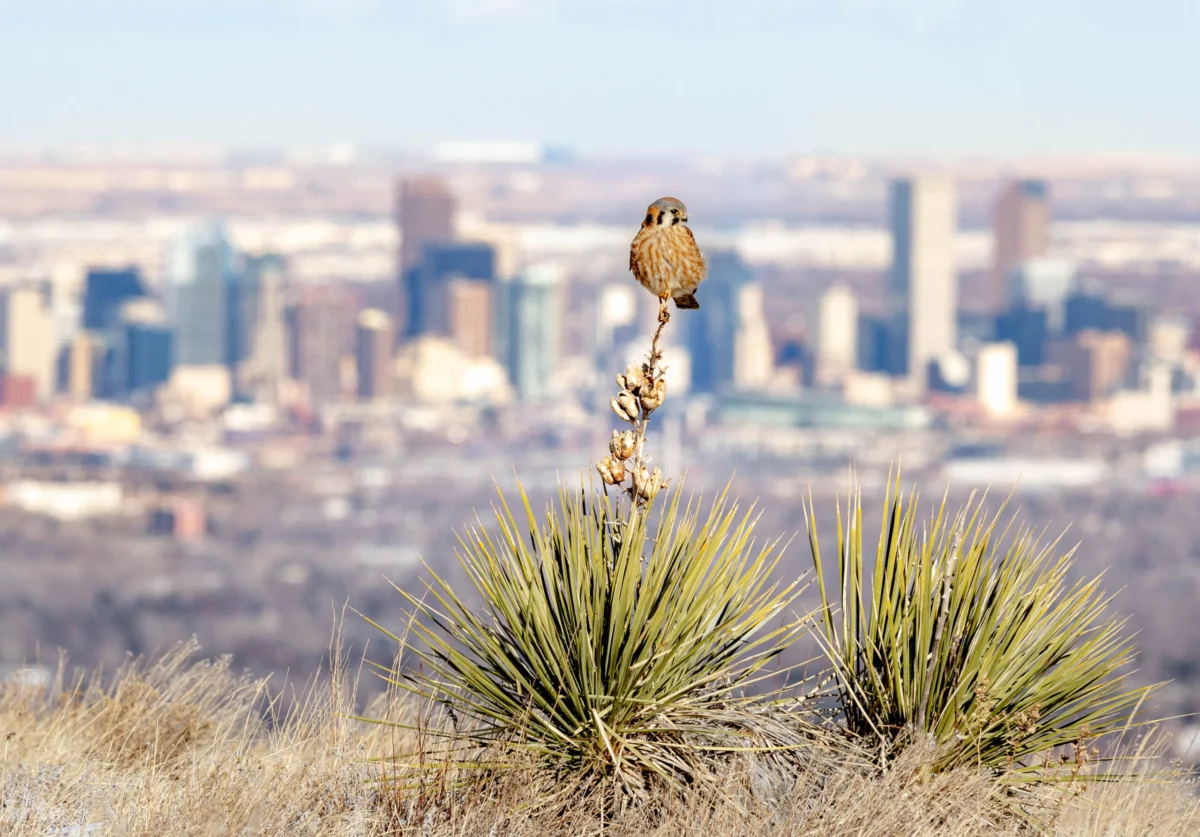
Washington, D.C. — On Wednesday, June 11, 2026, the House Natural Resources Committee delivered a significant victory for avian conservation and community-led environmental initiatives by approving the Local Communities and Bird Habitat Stewardship Act (H.R. 3276). This bipartisan legislation, championed by Representatives Debbie Dingell (D-MI) and Ben Cline (R-VA), is poised to establish a dedicated funding mechanism for local conservation projects across the United States, benefiting both diverse bird populations and the human communities they share space with. The bill’s passage through committee marks a crucial step toward empowering cities, towns, and suburban areas—from bustling metropolises to serene small towns—with the resources needed to foster healthier, more resilient ecosystems within developed landscapes.
Legislative Momentum and Key Provisions
The journey of H.R. 3276 began with its introduction by its lead sponsors, Representatives Dingell and Cline, who recognized a pressing need for a structured federal program to support local-scale bird conservation. The bill’s approval by the House Natural Resources Committee signals strong bipartisan consensus on the importance of addressing environmental challenges at the community level. Following this pivotal committee vote, the legislation now advances to the full House of Representatives for consideration, where proponents hope for swift passage before moving to the Senate for further review and ultimately, presidential assent.
At its core, the Local Communities and Bird Habitat Stewardship Act aims to fill a critical void in conservation funding by directly supporting initiatives that integrate bird habitat protection into community development and urban planning. The legislation is designed to provide financial and technical assistance to a broad spectrum of local partners, including municipal governments, non-profit community groups, tribal entities, and other local organizations. These funds would facilitate a range of vital activities, such as the restoration of green spaces, including parks, urban forests, and community gardens; the revitalization of wetlands and riparian zones crucial for migratory birds; the implementation of environmental education programs to foster public engagement; the expansion of community science initiatives that gather invaluable data on local bird populations; and, critically, the reduction of hazards to birds in urban environments, such as window collisions and light pollution. By focusing on these localized efforts, the act seeks to create a mosaic of interconnected habitats that can sustain bird life throughout their annual cycles.
The Urgent Imperative for Avian Conservation
The advancement of H.R. 3276 comes at a time of unprecedented concern for bird populations across North America and globally. Scientific studies have painted a stark picture of decline, with a landmark 2019 study published in Science revealing that North America has lost nearly 3 billion birds—or roughly 29% of its total bird population—since 1970. This staggering loss, driven primarily by habitat destruction, pesticide use, climate change, and other anthropogenic factors, underscores the urgency of comprehensive conservation strategies. Birds are not merely aesthetic components of our natural world; they are vital indicators of ecosystem health and perform indispensable ecological services, including pest control, pollination, seed dispersal, and nutrient cycling. Their decline signals broader environmental degradation that ultimately impacts human well-being.
Urban and suburban areas, often overlooked in traditional conservation narratives, play an increasingly critical role in supporting avian biodiversity. As natural landscapes are fragmented and developed, cities and towns can serve as crucial refuges, migratory stopovers, and even breeding grounds for a variety of bird species. However, these environments also present unique challenges, including habitat fragmentation, increased predation by domestic animals, exposure to pesticides, and hazards posed by human infrastructure. The existing federal conservation frameworks, while robust in protecting vast wilderness areas and national parks, often lack dedicated mechanisms to address the specific and localized needs of urban and suburban bird conservation. Programs like the Migratory Bird Treaty Act (MBTA), enacted over a century ago, provide foundational protections, but contemporary challenges demand more adaptable and community-centric approaches. The North American Wetlands Conservation Act (NAWCA) has been instrumental in preserving crucial wetland habitats, yet a gap remains in specifically funding and empowering local, smaller-scale, diverse habitat projects within developed areas. H.R. 3276 seeks to bridge this gap, recognizing that conservation success hinges on a multi-faceted approach that integrates efforts from the largest national parks to the smallest community gardens.
Voices from Legislators and Advocates
The bipartisan nature of the Local Communities and Bird Habitat Stewardship Act has been a cornerstone of its progress, reflecting a shared understanding across the political spectrum of the ecological and societal value of bird conservation. Felice Stadler, vice president of government affairs at the National Audubon Society, lauded the committee’s decision, emphasizing the integral role of healthy habitats within human-dominated landscapes. "Birds rely on healthy habitat not only in natural areas, but in the places where people live, work, and recreate," Stadler stated. "Audubon is grateful for the partnership with Reps. Dingell and Cline, and their commitment to leading this important effort. Communities need more tools to conserve and restore the habitat birds depend on throughout their annual journeys. The Local Communities & Bird Habitat Stewardship Act would help meet that need while creating healthier, more resilient neighborhoods." Her remarks highlight Audubon’s long-standing advocacy for comprehensive bird conservation, particularly through community engagement.
Representative Debbie Dingell, a vocal champion for environmental protection, underscored the broader ecological significance. "Birds are an essential part of our ecosystems and our everyday lives, and every community has a role to play in protecting them," Dingell asserted. She reiterated the alarming statistic of the one-third decline in North American bird populations since 1970, emphasizing the urgency. "Today’s passage of the Local Communities and Bird Habitat Stewardship Act by the House Natural Resources Committee is an important step toward giving cities, towns, and local partners the tools they need to restore habitat, reduce hazards to birds, and engage more people in conservation. I am grateful to Audubon for its partnership as we work to get this bill passed into law." Her statement reflects a commitment not only to ecological restoration but also to fostering a culture of conservation among the public.
Echoing the bipartisan spirit, Representative Ben Cline emphasized the practical benefits and the principle of local control. "Birds play an important role in maintaining healthy ecosystems, and responsible conservation efforts can help protect migratory pathways while reducing the risk of avian diseases," Cline noted. He stressed the efficacy of locally-driven initiatives: "These initiatives are most effective when led by local communities and municipal leaders who understand the unique needs of their regions. I am pleased that this legislation advanced through the House Committee on Natural Resources. As this measure moves forward, we must ensure that any federal support remains targeted, transparent, and accountable to the taxpayers who fund it." Cline’s emphasis on local leadership and fiscal accountability provides a critical perspective that has helped garner broader support for the bill.
Beyond these direct statements, the bill’s progression is likely to be met with enthusiasm from a wider array of environmental organizations, such as the National Wildlife Federation and the Cornell Lab of Ornithology, which frequently highlight the impact of habitat loss on birds. Municipal associations, including the National League of Cities and the U.S. Conference of Mayors, would also foreseeably welcome the prospect of dedicated federal funding for local green infrastructure and environmental projects, aligning with their goals for sustainable urban development and improved quality of life for residents. Scientists and ornithologists, in particular, would likely commend the bill for its scientific grounding and its potential to support data-driven conservation efforts, particularly through enhanced community science programs.
Mechanisms of Local Empowerment: How the Act Would Work in Practice
Should the Local Communities and Bird Habitat Stewardship Act be enacted, it would unleash a wave of locally tailored conservation projects. Funding would flow directly to eligible local entities, bypassing some of the more complex federal-state funding structures, thereby increasing efficiency and responsiveness to specific community needs. For instance, a municipality might apply for grants to transform underutilized urban lots into native plant gardens, creating critical foraging and nesting sites for local and migratory birds. Another community group might secure funds to implement "Lights Out" programs during peak migration seasons, significantly reducing bird collisions with illuminated buildings, a major cause of avian mortality in cities.
The act would also promote the restoration of small, localized wetlands and riparian areas, which serve as vital stopovers for migratory waterfowl and provide crucial breeding habitat for numerous species. These projects often yield co-benefits, such as improved water quality, flood mitigation, and enhanced recreational opportunities for residents. Educational components would be integral, enabling communities to develop interpretive signage, host bird-watching events, and establish school programs that teach children about local biodiversity and conservation practices. Furthermore, the emphasis on community science would empower residents to become active participants in data collection, contributing valuable information on bird populations, migration patterns, and habitat usage—data that can then inform future conservation strategies and demonstrate the effectiveness of the funded projects. This citizen-led data collection, often coordinated through platforms like eBird, offers a powerful, scalable approach to ecological monitoring.
Broader Implications and Future Outlook
The passage of the Local Communities and Bird Habitat Stewardship Act holds significant implications for the future of conservation in the United States. It represents a potential paradigm shift, recognizing that conservation is not solely the domain of remote wilderness areas but must be deeply integrated into the fabric of human communities. By investing in local initiatives, the act could foster a sense of ownership and stewardship among residents, transforming passive observers into active participants in environmental protection.
Beyond its direct impact on bird populations, the legislation offers a myriad of co-benefits. The creation and restoration of green spaces contribute to improved public health by increasing access to nature, reducing urban heat island effects, and enhancing air quality. Such projects can also stimulate local economies by creating "green jobs" in landscaping, ecological restoration, and environmental education. Furthermore, healthy bird populations support ecotourism, from local bird-watching groups to regional festivals, generating revenue and promoting appreciation for natural heritage.
However, the path forward is not without potential challenges. Ensuring sustained funding levels, establishing effective monitoring and evaluation mechanisms, and coordinating efforts across diverse local stakeholders will be critical for the act’s long-term success. The bipartisan support demonstrated in the House Natural Resources Committee will need to be maintained as the bill navigates the full legislative process. As the measure moves to the full House for a vote, and subsequently to the Senate, advocates will continue to emphasize its broad appeal and the tangible benefits it promises for both America’s cherished bird species and the communities that host them. This legislation, if enacted, could stand as a testament to the power of collaborative, community-driven conservation in an increasingly urbanized world, offering a hopeful vision for the coexistence of human society and thriving natural ecosystems.
