
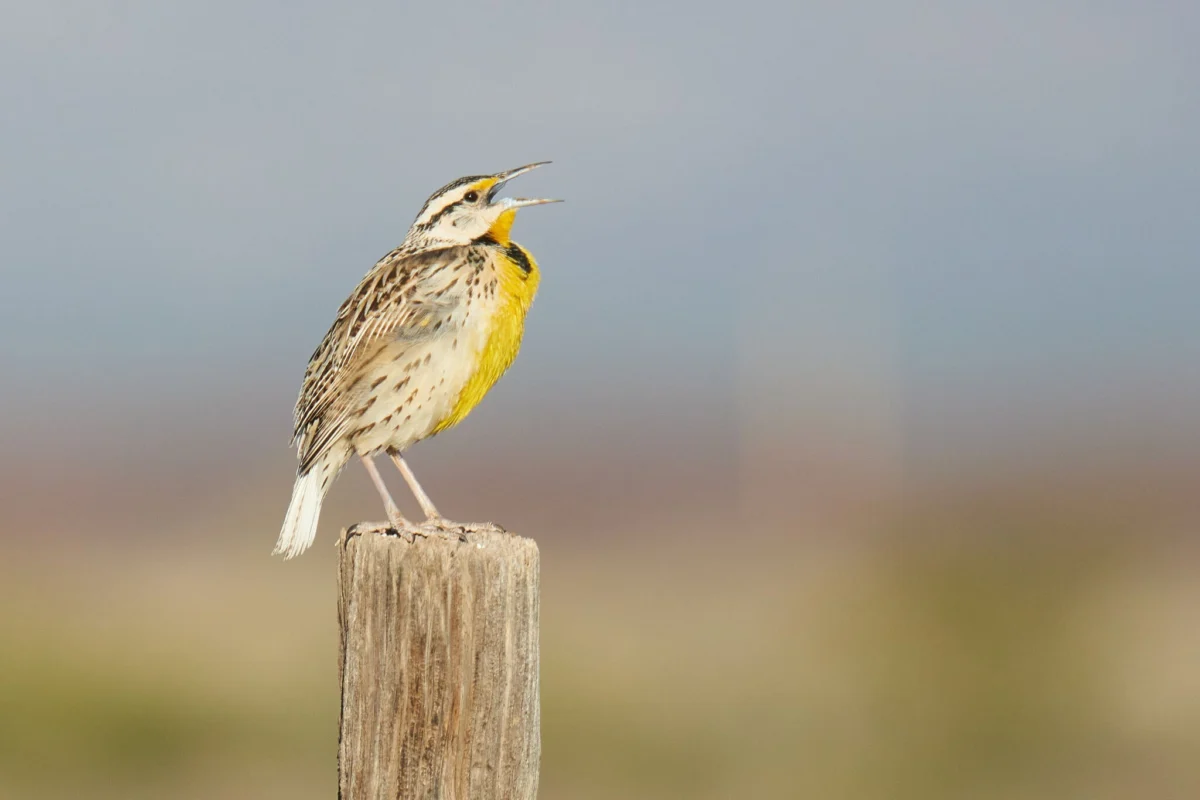
The National Audubon Society marked a significant milestone on June 10, 2026, with the official expansion of its Audubon Conservation Ranching (ACR) program into the Southwestern United States. This strategic move, underpinned by the establishment of a dedicated "Working Lands" team in Arizona and New Mexico, signals a renewed commitment to safeguarding critical grassland ecosystems and the diverse bird species that depend on them. The initiative aims to forge robust partnerships with livestock producers, implementing science-based management practices tailored to the unique challenges and ecological nuances of the arid Southwest. This expansion is not merely a geographical extension but a targeted effort to address pressing environmental concerns, including habitat degradation, water scarcity, and climate change impacts, through collaborative, economically viable conservation solutions.
A New Vanguard for Southwestern Conservation
Leading Audubon Southwest’s Working Lands initiative as Senior Program Manager is Nick Beauregard, a resident of Patagonia, Arizona, whose extensive background brings over 15 years of applied conservation research, stewardship, and community engagement experience to the forefront. A lifelong birder and naturalist, Beauregard holds a PhD in biology from Northern Arizona University, providing him with a profound understanding of the region’s ecological intricacies. He articulated a clear vision for the program’s impact, stating, "My goals in the Southwest are centered on implementing a program that delivers meaningful, measurable results for bird habitat as well as communities who rely on the working lands economy. Conservation ranching practices that are tailored to our unique arid conditions have been shown to improve grassland health and make ranches more resilient to environmental stressors like climate change and drought." This statement underscores the dual objective of the program: fostering ecological health while simultaneously bolstering the economic resilience of ranching communities.
Joining Beauregard are Ariel Léger, Program Manager for Arizona, and Isaiah Meza, Program Manager for New Mexico. Léger, who has called Arizona home since early 2018, earned her master’s in environmental science at the University of Arizona, bringing specialized knowledge in rangeland ecology and hydrogeology. Meza, a lifelong New Mexico resident, contributes expertise in soil health and environmental policy, holding a master’s in environmental science and policy from Northern Arizona University. Their combined expertise forms a multidisciplinary foundation crucial for addressing the complex environmental and agricultural challenges of the Southwest. Léger emphasized a collaborative and adaptive approach, noting, "We are rolling out this program with a great deal of humility—seeking to learn from ranchers, farmers, and land managers—about how to make the program work well for this new and unique region. Conservation ranching can be a powerful tool to protect open landscapes and rangeland ecosystems across the Southwest." This ethos of humility and partnership is central to the program’s strategy, acknowledging the invaluable generational knowledge held by local land stewards.
Audubon Conservation Ranching: A Proven Model of Success
The expansion into the Southwest builds upon a successful national framework established by Audubon Conservation Ranching since its inception in 2017. The program has consistently partnered with livestock producers across the United States to implement grazing practices designed to benefit both avian populations and the economic viability of ranching operations. In less than a decade, ACR has certified over 150 ranches, encompassing nearly 4.5 million acres, as "bird friendly." This significant acreage demonstrates the scalability and appeal of the program, which provides a tangible benefit to ranchers through a market-based approach. Meat products bearing the distinctive "Audubon Certified Bird-Friendly Land" seal are now available in more than 2,000 retail stores nationwide, offering consumers a direct way to contribute to grassland conservation. This consumer-driven demand creates a positive feedback loop, incentivizing more ranchers to adopt sustainable practices and participate in the program.
The certification process involves rigorous, science-based monitoring of bird populations, habitat quality, and rangeland health indicators. Ranchers commit to management plans that often include rotational grazing, prescribed burning, invasive species control, and water source development designed to mimic natural ecological processes. These practices are tailored to local conditions, ensuring that conservation efforts are effective and sustainable. The success of the program nationally, with its measurable conservation outcomes and economic incentives, provides a robust precedent for its anticipated impact in Arizona and New Mexico.
The Ecological Imperative of the Southwest: A Landscape Under Pressure
The decision to expand ACR into the Southwest was a natural and critical progression, given the region’s immense ecological significance and the intense pressures it faces. Arizona and New Mexico are predominantly rangeland, with approximately 80-90% of their land area falling into this category. These vast expanses of grasslands, shrublands, and riparian corridors represent some of North America’s most biodiverse and threatened ecosystems. The unique interplay of geology, climate, and elevation has fostered an extraordinary array of plant and animal life, including numerous endemic species.
However, these vital landscapes are under severe threat. Thomas Schroeder, Audubon Conservation Ranching Partnerships Manager, articulated the urgency: "We expanded the program into the Southwest because the region’s grasslands are both ecologically critical and under heavy pressure from drought, fragmentation, invasive plants, and development. The future of many bird species and native grassland ecosystems depends heavily on how grazing lands are managed." Data from the U.S. Geological Survey and other environmental organizations consistently highlight significant declines in grassland bird populations across North America, often attributed to habitat loss and degradation. In the Southwest, these threats are exacerbated by the relentless march of climate change, manifesting as prolonged droughts, increased frequency and intensity of wildfires, and shifting precipitation patterns.
Water scarcity is arguably the most defining characteristic and formidable challenge for land management in this arid region. The availability and distribution of water dictate everything from vegetation composition to livestock carrying capacity. Unpredictable rainfall patterns further complicate planning and resource management, making resilience a paramount concern for both ecosystems and human communities. The region’s grasslands are particularly vulnerable to desertification, a process where fertile land becomes desert, often driven by a combination of climate change and unsustainable land use practices. This degradation reduces biodiversity, diminishes forage for livestock, and contributes to soil erosion, creating a vicious cycle that is difficult to reverse.
Tailoring Conservation for Arid Lands
Ranching in Arizona and New Mexico presents unique challenges that necessitate highly adapted conservation strategies. The inherent vulnerability of these grasslands to desertification and degradation means that generic approaches are insufficient. The ACR program in the Southwest is specifically designed to address these arid conditions, focusing on practices that enhance ecosystem health and bolster resilience. Key among these are strategies aimed at improving soil health and promoting the growth of perennial grasses. Healthy soils, rich in organic matter, act like sponges, dramatically improving water infiltration and retention. This is crucial in a region where every drop of rainfall is precious. Better water infiltration reduces runoff and erosion, allowing more moisture to be absorbed by the soil and made available to plants, even during dry spells. The presence of robust perennial grasses further stabilizes the soil, prevents erosion, and provides consistent forage.
These practices, often involving adaptive multi-paddock grazing or targeted rest periods for pastures, are not just theoretical; they are scientifically proven to enhance rangeland productivity and ecological function. By working closely with individual ranchers, the ACR team helps develop customized grazing plans that consider the specific topography, vegetation, and water resources of each property. The goal is to create a mosaic of habitats that supports diverse wildlife while simultaneously making ranches more productive and resilient to environmental stressors. Isaiah Meza underscored the immense potential, stating, "The Southwest has incredible potential for conservation and restoration since there are substantial areas of contiguous habitat that have not been lost to development. Water scarcity is the primary concern for many producers, conservationists, and managers alike." This highlights the opportunity to conserve large, intact landscapes before they are fragmented, a critical factor for wide-ranging species and ecosystem connectivity.
Focus on Critical Habitats and Avian Diversity
The initial focus of Audubon’s program is on southern New Mexico and southeast Arizona’s Chihuahuan Grasslands. This vast ecoregion is a critically important habitat for a myriad of bird species. For breeding birds, it provides essential nesting grounds for species like the Cassin’s Sparrow and the iconic Chihuahuan Meadowlark, whose vibrant songs are a hallmark of the open plains. During the winter months, these grasslands become a crucial refuge for migratory species, including the Mountain Plover and the Chestnut-collared Longspur, which travel vast distances to escape colder northern climates.
Beyond the grasslands themselves, the program also recognizes the disproportionate importance of riparian areas, springs, and groundwater-fed wetlands known as ciénegas. These water-rich habitats, often linear oases cutting through the arid landscape, are lifelines for countless species and are disproportionately threatened by water abstraction and degradation. They are particularly crucial for species like the Western Yellow-billed Cuckoo, a federally threatened species whose survival is intimately linked to the health of these unique wetland ecosystems. By focusing conservation efforts on both the expansive grasslands and these critical aquatic habitats, Audubon aims for a holistic approach that benefits a wide spectrum of biodiversity.
A Collaborative Vision: Engaging Diverse Stakeholders
Successful conservation in the American Southwest necessitates a complex web of partnerships due to the region’s intricate land ownership patterns. As Beauregard aptly described, "The Southwest is a mosaic of private, public, and tribal lands, with boundaries that often don’t conform to natural ecological transitions. Management success relies heavily on strong relationships with many different stakeholders representing diverse priorities." This mosaic includes privately owned ranches, vast tracts of public lands managed by agencies like the Bureau of Land Management (BLM) and the U.S. Forest Service (USFS), and culturally significant tribal lands. Effective conservation efforts must bridge these jurisdictional divides, fostering collaboration and shared stewardship.
Audubon’s approach emphasizes building trust and finding common ground among these diverse stakeholders. This involves engaging with individual ranchers, collaborating with government agencies on public lands grazing leases, and respecting the sovereignty and traditional ecological knowledge of tribal nations. The program aims to demonstrate that conservation goals can align with economic livelihoods and cultural values, leading to more durable and widespread positive outcomes. The commitment to understanding and integrating the perspectives of all parties is a cornerstone of the ACR team’s strategy, recognizing that sustainable solutions are inherently collaborative.
Funding, Future Ambitions, and Broader Implications
The expansion of Audubon Conservation Ranching into Arizona and New Mexico has been made possible through critical financial support from the National Fish and Wildlife Foundation (NFWF) and the Natural Resources Conservation Service (NRCS). These partnerships are vital, providing the necessary resources to fund staffing, outreach, technical assistance, and monitoring efforts. NFWF, a leader in public-private conservation funding, and NRCS, a federal agency providing technical and financial assistance to agricultural producers, represent powerful allies in this endeavor.
Over the next three years, the newly established team has set ambitious goals: to certify at least 30 ranches and a minimum of 100,000 acres under the Audubon Certified Bird-Friendly Land program. This targeted growth will not only expand the physical footprint of conservation but also deepen the network of partnerships with ranchers and the wider community. Beyond the immediate metrics of acres and ranches, the broader implications of this expansion are far-reaching.
Economically, the "Audubon Certified Bird-Friendly Land" seal offers ranchers a competitive advantage in the marketplace, potentially commanding premium prices for their products. This provides a direct financial incentive for sustainable land management, linking conservation directly to economic prosperity in rural communities. Environmentally, the widespread adoption of these practices will lead to healthier grasslands, improved water quality, enhanced biodiversity, and increased carbon sequestration, contributing to regional climate resilience. By restoring perennial grasses and improving soil health, ranches can become more effective carbon sinks, playing a role in mitigating climate change.
Socially, the program fosters a sense of shared responsibility and collaboration among ranchers, conservationists, and consumers. It challenges the historical perception of agriculture and conservation as opposing forces, instead demonstrating their synergistic potential. Consumers, by choosing certified products, become active participants in conservation, their purchasing decisions directly supporting environmentally responsible land stewardship.
In conclusion, Audubon Conservation Ranching’s expansion into Arizona and New Mexico represents a pivotal moment for conservation in the American Southwest. By uniting scientific expertise with the practical knowledge of land stewards, and by forging strong partnerships across diverse stakeholders, the program is poised to create a lasting legacy of healthy grasslands, thriving bird populations, and resilient ranching communities. The efforts of Nick Beauregard, Ariel Léger, and Isaiah Meza, backed by robust funding and a proven model, offer a beacon of hope for a region where the future of both people and wildlife is intrinsically linked to the careful stewardship of its precious working lands. For more information about Audubon Conservation Ranching in Arizona and New Mexico, inquiries can be directed to Nick Beauregard at [email protected].
