
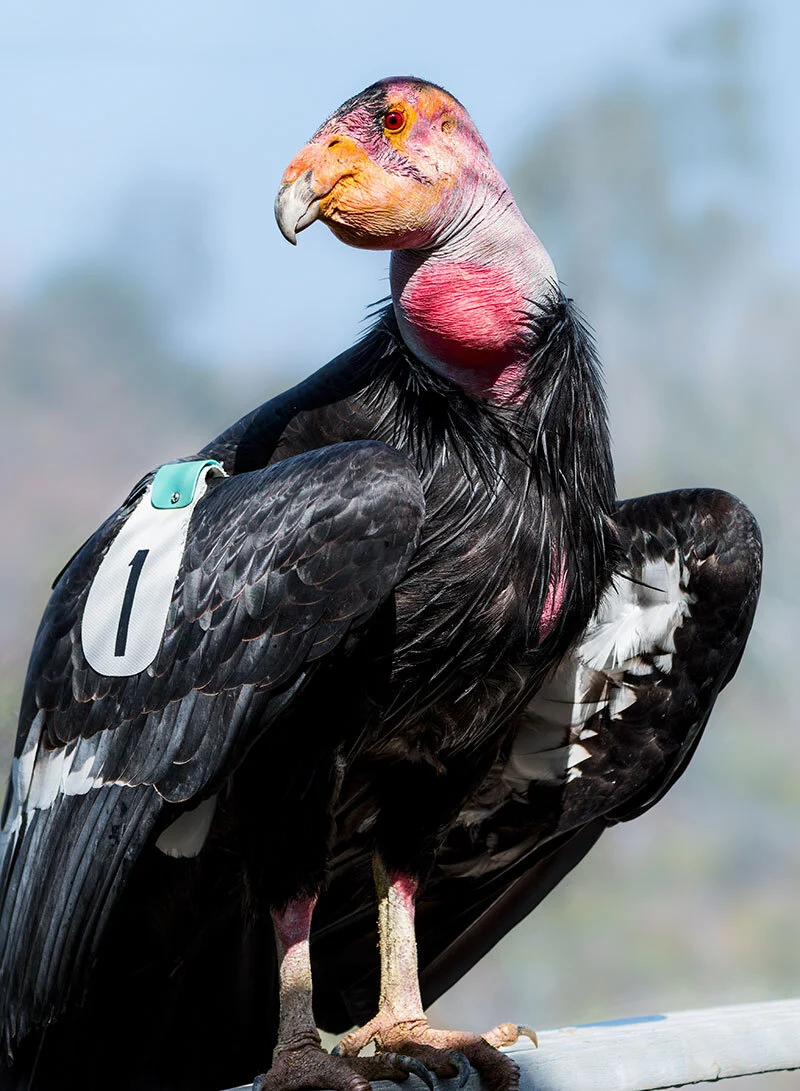
The Los Angeles Zoo is marking an extraordinary milestone: the 60th anniversary of Topa Topa, a venerable male California condor whose life has become intrinsically woven into the fabric of this species’ remarkable recovery. Rescued as a nearly helpless fledgling six decades ago, Topa Topa has transcended his initial vulnerability to become a symbol of hope, a crucial participant in a groundbreaking breeding program, and an invaluable educational ambassador for one of North America’s most iconic and critically endangered birds. His enduring presence at the zoo underscores the vital role of dedicated conservation efforts and the profound impact a single individual, be it human or animal, can have on the survival of an entire species.
The narrative of Topa Topa is not merely a personal story of survival; it is a microcosm of the broader saga of the California condor’s perilous journey from the brink of extinction to a fragile but determined resurgence. In the mid-20th century, the majestic California condor (Gymnogyps californianus) faced an existential crisis. Its population plummeted due to a confluence of factors including habitat loss, lead poisoning from ingesting carrion shot by hunters, eggshell thinning caused by pesticide use (particularly DDT), and direct persecution. By the 1980s, the situation had become dire, with the wild population dwindling to an alarming low. The U.S. Fish and Wildlife Service, along with numerous conservation organizations and zoos, recognized the urgent need for a comprehensive and aggressive intervention.
A Fledgling’s Perilous Beginning and a Zoo’s Pivotal Role
Topa Topa’s story began in 1964, when he was discovered as a one-year-old fledgling in a severely weakened and malnourished state, weighing a mere 17 pounds. This discovery marked the beginning of a lifelong relationship with human caretakers, albeit one born out of necessity. After ten days of intensive rehabilitation at the Los Angeles Zoo, where he received critical care to overcome his fragile condition, Topa Topa was released back into the wild. The hope was that he would integrate into existing condor flocks and learn the essential survival skills necessary to thrive.
However, the challenging reality of the condor’s precarious population dynamics soon became apparent. Without adult condors to guide and mentor him in foraging and other critical behaviors, Topa Topa struggled to adapt. His foraging skills were notably weak, a deficiency that significantly jeopardized his chances of long-term survival in the wild. Recognizing that his prospects in his natural habitat were exceedingly dim, conservationists made the difficult but ultimately crucial decision to bring Topa Topa back to the Los Angeles Zoo. This decision was not a surrender to defeat but a strategic shift, positioning him to play a different, yet equally vital, role in the species’ future.
His permanent residency at the LA Zoo in 1964 marked a historic moment. Topa Topa became the very first California condor to live under the care and protection of a zoological institution. At a time when the species was teetering on the edge, this move represented an early, pioneering step in the development of captive breeding programs as a last resort to safeguard a vanishing species.
The Genesis of a Species Recovery Program
The California condor’s plight escalated dramatically in the ensuing decades. By 1982, the species was classified as critically endangered. The low numbers and the ongoing threats underscored the urgent need for a coordinated, large-scale conservation effort. In response, the California Condor Recovery Plan was formally launched in 1987. This ambitious initiative brought together federal and state agencies, scientific institutions, and zoological facilities, most notably the Los Angeles Zoo and the San Diego Zoo, to implement a multi-faceted strategy.
At the inception of this intensive recovery program, the total population of California condors had dwindled to a devastatingly low 27 individuals. This stark figure highlighted the urgency and the immense challenge ahead. The recovery plan hinged on two primary pillars: captive breeding and eventual reintroduction into the wild. The goal was to create a safety net through breeding in protected environments, thereby increasing the population, and then to gradually reintroduce these birds back into suitable habitats to re-establish wild populations.
The success of this endeavor has been nothing short of remarkable. Through dedicated efforts, sophisticated breeding techniques, and a commitment to understanding the complex needs of these magnificent birds, the captive breeding programs at both the Los Angeles Zoo and the San Diego Zoo have yielded extraordinary results. From the meager 27 individuals in 1987, the total California condor population, including both wild and captive birds, has now surged to over 600 individuals. This represents an over 2,200% increase, a testament to the power of dedicated conservation.
However, despite this phenomenal growth, the California condor remains one of the rarest birds on Earth. It continues to be listed as Critically Endangered by the International Union for Conservation of Nature (IUCN), a designation that reflects the ongoing threats and the need for continued vigilance and conservation efforts.
Topa Topa: An Unlikely Patriarch and Educational Icon
Within this monumental conservation undertaking, Topa Topa emerged as an unlikely but indispensable patriarch and a powerful educational ambassador. His unique journey, from a vulnerable fledgling to a seasoned resident of the zoo, provided a tangible face to the condor’s struggle and inherent beauty. His presence allowed zoo visitors and the wider public to connect with the species on a personal level, fostering empathy and support for conservation initiatives.
A pivotal moment in Topa Topa’s legacy came in 1993 when he participated in his first breeding season, helping to raise two chicks. This marked the beginning of his direct contribution to the very program designed to save his species. Over the years, Topa Topa played a crucial role in the breeding program, contributing to the population growth that has added hundreds of birds to the recovery effort. His involvement was particularly significant because a key objective of the program was to ensure that the young condors were raised to be as wild as possible, minimizing their dependence on human intervention.
This required meticulous planning and a deep understanding of condor behavior. It took years of careful preparation and observation to train Topa Topa to exhibit the necessary behaviors and temperament to effectively lead and guide the development of young condors within the breeding program. His success in this role transformed him from a survivor into a cornerstone of the program’s achievements, demonstrating the potential for captive-raised birds to contribute meaningfully to the re-establishment of wild populations.
Today, at 60 years old, Topa Topa remains a central figure at the Los Angeles Zoo. He is not only a living testament to the success of conservation but also an active participant in the ongoing breeding program. It is estimated that his lineage has contributed to approximately 100 birds currently within the breeding program, with an additional 94 of his descendants now flying free in the wild. This enduring impact highlights his profound genetic and behavioral contributions to the species’ survival.
Broader Implications and Future Outlook
The story of Topa Topa and the California condor recovery program offers profound insights into the complexities and triumphs of modern conservation. It demonstrates that even species on the precipice of extinction can be brought back through sustained, collaborative efforts. The program serves as a powerful case study in captive breeding, reintroduction techniques, and the importance of public engagement in conservation.
The continued threats, however, such as the persistence of lead poisoning and the ongoing need for habitat protection, underscore that the work is far from over. The success achieved thus far provides a strong foundation, but it necessitates continued research, adaptive management strategies, and unwavering commitment from all stakeholders. The data from the program, including survival rates of reintroduced birds, genetic diversity within the population, and the effectiveness of different management interventions, continuously informs and refines conservation approaches.
The enduring legacy of Topa Topa is a potent reminder that every individual life matters in the grand tapestry of biodiversity. His journey from a struggling fledgling to a vital contributor to his species’ survival is an inspiring narrative that resonates far beyond the confines of the Los Angeles Zoo. It speaks to the resilience of nature and the profound capacity for dedicated human intervention to safeguard the planet’s most vulnerable inhabitants. As Topa Topa continues to live out his remarkable life, he stands as a living monument to hope, a testament to what can be achieved when science, dedication, and a deep respect for the natural world converge. The future of the California condor, once shrouded in uncertainty, now holds a brighter, more hopeful outlook, thanks in no small part to the quiet, enduring strength of this extraordinary condor.
