
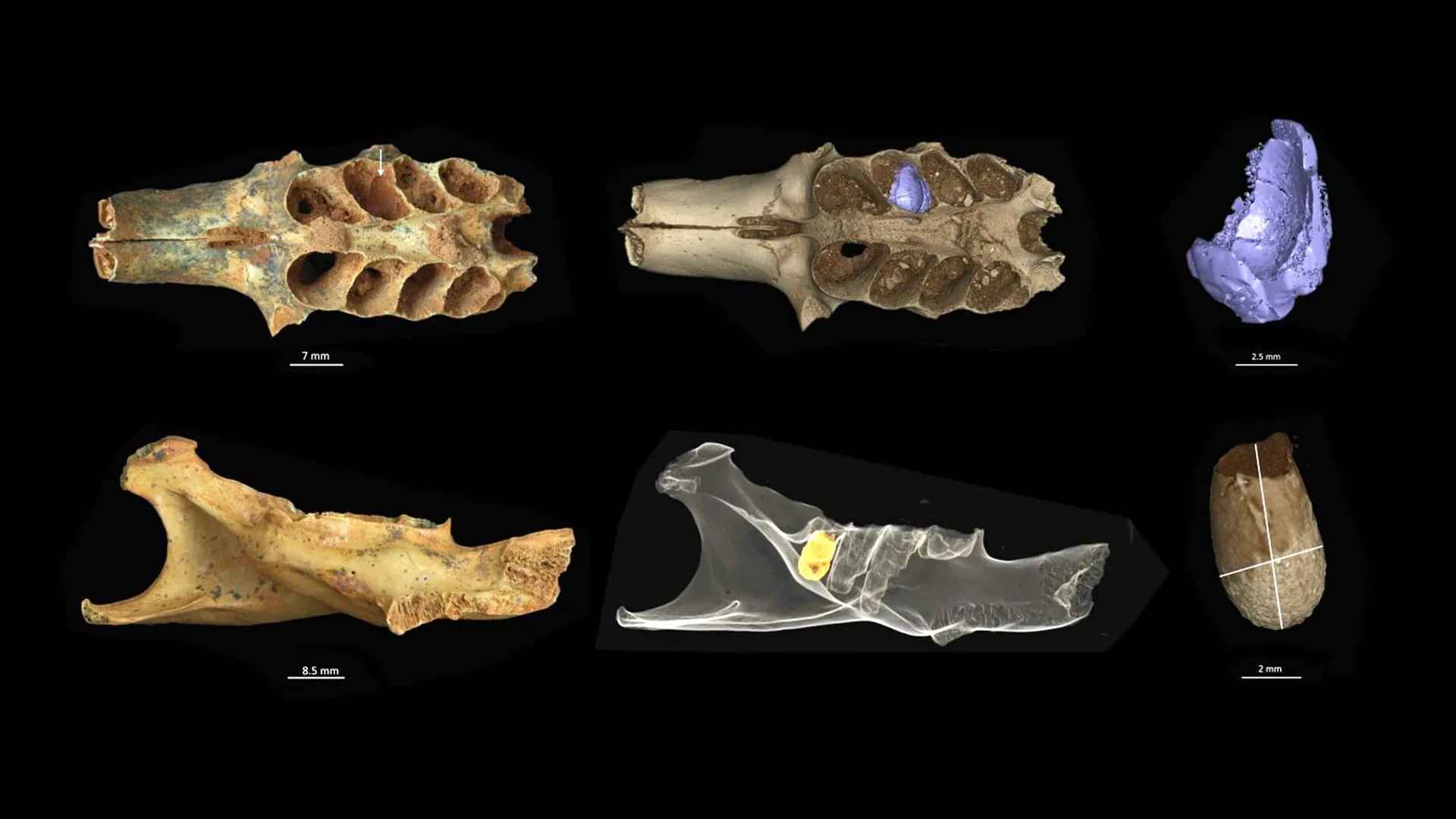
This ancient riddle, rooted in a remarkable paleontological discovery, unveils a complex ecological narrative spanning thousands of years on the Caribbean island of Hispaniola. Far from a mere anecdote, this scenario describes a unique interaction between predator, prey, and an unexpected third party—an insect that repurposed the remnants of a meal into a home. This chain of events, meticulously pieced together by researchers, offers unprecedented insights into ancient ecosystems, insect behavior, and the surprising ways life adapts to challenging environments.
An Ancient Caribbean Ecosystem: Predators, Prey, and Unique Landscapes
Thousands of years ago, Hispaniola, an island now divided between Haiti and the Dominican Republic, was home to a diverse array of endemic species, many of which have since vanished. Among its inhabitants was a formidable predator, the giant barn owl (Tyto pollens), an extinct species significantly larger than its modern relatives, with an estimated wingspan that could exceed 2 meters. These apex avian predators played a crucial role in controlling local rodent populations. Their hunting strategy often involved perching and swooping, carrying their captured prey back to secluded roosts or feeding sites, frequently within the safety and darkness of caves.
One of their primary prey items was the hutia, a large, herbivorous rodent endemic to the Caribbean. The hutias (Plagiodontia species, for instance, are still extant but many ancient species are extinct) were a vital component of the island’s pre-human food web. These creatures, ranging in size, provided a substantial meal for predators like the giant barn owl. The owl’s consistent use of specific caves as feeding stations meant that over generations, these sites accumulated vast quantities of skeletal remains—a macabre yet scientifically invaluable archive of ancient life.
The geological backdrop of this story is Hispaniola’s prevalent karst topography. Karst landscapes are characterized by soluble bedrock, typically limestone, which is eroded by water to create distinctive landforms such as sinkholes, caves, and underground drainage systems. While visually striking, karst terrain often presents significant challenges for life. The rapid drainage of surface water means that stable, fertile soil is scarce. What little soil accumulates on the surface is frequently washed into the labyrinthine cave systems, settling in pockets and crevices, creating isolated patches of suitable substrate within an otherwise barren environment. It was precisely these unique conditions that set the stage for the extraordinary discovery.
The Unfolding of a Prehistoric Drama: From Meal to Nest
The narrative begins with the giant barn owl bringing a freshly caught hutia back to its cave in the southern Dominican Republic, known as Cueva de Mono. The owl’s powerful talons and beak quickly dispatched the rodent, and the remains, stripped of flesh, were scattered across the cave floor. Over subsequent centuries and millennia, more hutias, and occasionally other prey like the now-extinct Caribbean tree sloths, met a similar fate, their bones accumulating and becoming embedded in the fine, clay-rich silt that steadily built up in the darker, undisturbed sections of the cave.
Much later, after the owl’s meal had long since decomposed and its bones had begun the slow process of fossilization, another creature arrived: a burrowing bee. Driven by the primal instinct to reproduce and protect its offspring, the bee sought a secure location to construct its nest. In a landscape devoid of stable soil, the cave’s sediment-filled pockets offered a rare opportunity. As the bee began to dig into the accumulated silt, it encountered the fossilized remains of the hutia.
This encounter proved to be serendipitous. The hutia’s jawbones, though ancient and mineralized, contained empty sockets where teeth once resided, known as alveoli. These hollow spaces, perfectly preserved, were just the right size and shape for a bee’s nest. Instead of laboriously excavating a new burrow from scratch, the bee capitalized on these pre-existing natural cavities. This innovative adaptation marked the beginning of an unprecedented biological phenomenon, repeated over generations by countless bees seeking refuge and security for their young.
A Careful Observation Leads to a Groundbreaking Discovery
The remarkable story remained hidden within the cave’s stony embrace until the meticulous work of paleontologists brought it to light. The discovery might easily have been overlooked, a testament to the importance of careful observation in scientific research.
Lazaro Viñola Lopez, then a doctoral student at the Florida Museum of Natural History, was excavating fossils from Cueva de Mono. His particular interest lay in a species of hutia that was rarely found elsewhere on Hispaniola. The cave, he realized, had served as a long-term feeding site for giant barn owls, accumulating thousands of fossils from what appeared to be the same hutia species over many generations.
During the painstaking process of excavation and initial preparation, paleontologists typically clean away all sediment from fossil specimens, including the material lodged within natural cavities like alveoli. However, Viñola Lopez, driven by a keen eye and perhaps a touch of intuition, chose a different approach. Instead of immediately cleaning the fossils, he inspected them closely. One particular cavity caught his attention. Its inner surface was unusually smooth, strikingly different from the rough, porous texture of the surrounding bone.
"Usually, when collecting fossils, you get all the sediment out of the alveoli while cleaning the specimen," Viñola Lopez explained, highlighting the standard practice he deliberately deviated from. This crucial decision allowed the subtle clue to remain visible, sparking a line of inquiry that would ultimately redefine our understanding of ancient insect behavior.
From Mistaken Identity to Scientific Breakthrough
Viñola Lopez initially recalled a similar finding from his past experience. "I’d seen something similar in Montana when I was collecting dinosaur fossils in 2014," he recounted. In that instance, he and his colleagues had discovered wasp cocoons intermingled with fossil material. His immediate assumption was that the same explanation applied here; he envisioned a "short paper reporting the occurrence of these wasp nests in the mandibles."
He shared his preliminary idea with fellow doctoral student Mitchell Riegler, also at the Florida Museum. Riegler, initially skeptical of what seemed a niche project amidst his own demanding research, was not immediately swayed. "I was like, Lazaro, that’s a niche project, and I have a lot of other things to do," Riegler admitted. The idea was put on hold until Riegler accepted a challenge from a former advisor: to write a scientific paper within a week. This playful yet productive endeavor reignited their collaboration. "He and I played this game back and forth in which we tried to write a paper in a week," Riegler described.
As the team delved deeper into the research, consulting literature on ichnofossils—trace fossils that record the activity of past life, such as footprints, burrows, or nests—a critical detail emerged. A discrepancy between their initial hypothesis and the observed evidence became apparent. Wasp nests, constructed from chewed plant material mixed with saliva, typically possess rough, irregular walls. The structures within the fossilized bones, however, were notably smooth.
This seemingly minor detail proved to be the pivotal clue. Bees, particularly certain species of burrowing bees, are known to line their nests with a waxy, waterproof secretion. This secretion creates a polished, smooth interior, providing a protective environment for their developing larvae. The smooth internal surfaces of the fossil cavities unequivocally pointed to bees as the architects of these ancient dwellings, not wasps. The initial misidentification had been corrected, and with it, the significance of their discovery escalated dramatically.
A Rare and Unprecedented Behavior: Redefining Paleoentomology
The correction—identifying the nest builders as bees rather than wasps—transformed the discovery from an interesting observation into a major scientific breakthrough. The implications for paleoentomology (the study of fossil insects) and paleoecology were profound.
Prior to this finding, only one other known instance of burrowing bees nesting inside a cave had been documented globally. Crucially, that case did not involve the bees utilizing pre-existing fossil structures without altering them. While there have been reports of bees drilling into human bones to create nests, the Hispaniola discovery presented a unique scenario where bees simply occupied and lined natural cavities already present within the fossilized remains, showcasing an unparalleled level of opportunistic adaptation. This represented a novel form of biological interaction preserved in the geological record.
Realizing the immense importance of their findings, the researchers prudently slowed their pace, expanding the scope of their study. They engaged with experts in modern bee biology and meticulously reviewed existing scientific literature. Viñola Lopez even returned to Cueva de Mono, conducting further geological surveys to understand the stratigraphy and environmental context of the cave more thoroughly.
During this period, the cave faced an unexpected modern threat. An attempt was made to develop the land, which included a proposal to convert the ancient cave into a septic tank. This alarming prospect galvanized the research team into a "rescue mission." "We had to go on a rescue mission and get as many fossils out as possible, and we got a lot of them," Viñola Lopez recalled, underscoring the urgent need to preserve this invaluable paleontological site from anthropogenic destruction. Their swift action ensured that a wealth of additional evidence was secured for future study.
Nests Beyond Hutia Jaws: A Multi-Species Habitation
The comprehensive study, which would eventually be published in the prestigious journal Proceedings of the Royal Society B, provided a detailed chronicle of the cave’s ancient history and the extraordinary nesting behavior of these bees. The findings revealed that the bees’ opportunistic nesting was not confined solely to the alveoli of hutia jaws.
In one instance, a bee nest was discovered within the pulp cavity of a sloth tooth. These arboreal tree sloths, once common in the Caribbean, vanished from the islands following the arrival of humans, adding another layer of historical context to the discovery. Another nest was identified inside a hutia vertebra, utilizing the space that once housed the spinal cord. These diverse locations demonstrated the bees’ remarkable flexibility and resourcefulness in finding suitable pre-formed cavities within the available fossilized remains.
Advanced imaging techniques, specifically CT scans, further unveiled the intricate internal architecture of these fossilized nests. The scans revealed that some cavities contained multiple layers of nests, stacked one inside another. This "Russian doll" arrangement indicated that instead of digging new tunnels, some bees reused existing, empty ones, optimizing their energy expenditure and further highlighting their adaptive strategies. In one striking example, a single alveolus was found to contain six distinct nests, meticulously arranged in concentric layers.
The "Why": Environmental Pressure and Resourceful Adaptation
The study also provided a compelling explanation for this highly unusual behavior. The prevailing environment of the surrounding landscape, as previously noted, is characterized by its harsh karst topography. This geological formation, composed of sharp, edgy limestone, is inherently poor in stable, well-developed soils. "The area we were collecting in is karst, so it’s made of sharp, edgy limestone, and it’s lost all of its natural soils," Riegler elaborated, humorously adding, "I actually fell on it at one point, so I can tell you all about it."
In such an environment, surface soil is a precious and transient commodity. Any soil that does accumulate is often quickly washed away by rainfall, with a significant portion being carried into the underground cave systems. Within the protected confines of these caves, the fine sediments settle and accumulate, forming pockets of clay-rich silt. These unique deposits, sheltered from the elements and erosion, would have provided some of the only viable nesting conditions for burrowing bees in the entire region.
The bees, facing intense environmental pressure from the scarcity of suitable nesting substrates, developed an ingenious solution. By exploiting the ready-made cavities within the fossilized bones, they bypassed the arduous and potentially impossible task of digging burrows in the surrounding bedrock or unstable surface soils. This specialized nesting strategy represents a remarkable example of ecological plasticity and resourcefulness, allowing a species to thrive in an otherwise challenging habitat. The implications of this finding extend to our understanding of how ancient insects adapted to their specific environments and how past ecological pressures could drive evolutionary innovations in behavior.
Broader Implications and Future Discoveries
The discovery from Cueva de Mono is more than just a fascinating anecdote; it contributes significantly to several scientific fields. For taphonomy, the study of how organisms decay and become fossilized, it illustrates how biological activity (in this case, bee nesting) can influence the preservation and alteration of skeletal remains. For paleoecology, it offers a rare glimpse into the complex interdependencies of an ancient ecosystem, from predator-prey dynamics to the intricate world of insect-habitat interactions. It also underscores the importance of caves as invaluable repositories of paleontological data, often preserving records that are lost on the surface.
The research team is far from finished with Cueva de Mono. They are continuing to study other fossils recovered from the cave, anticipating additional findings that promise to further illuminate the prehistoric life of Hispaniola. Each bone, each fragment of ancient sediment, holds untold stories waiting to be deciphered.
Their groundbreaking work, published in Proceedings of the Royal Society B, stands as a powerful testament to the unexpected ways life can adapt and persist. In a cave that served as a long-term feeding ground for giant owls, leaving behind a graveyard of their prey, a completely different kind of inhabitant found a novel shelter, weaving its own story into the geological fabric of the island. The discovery not only enriches our understanding of the past but also highlights the enduring ingenuity of life in the face of environmental challenges.
