
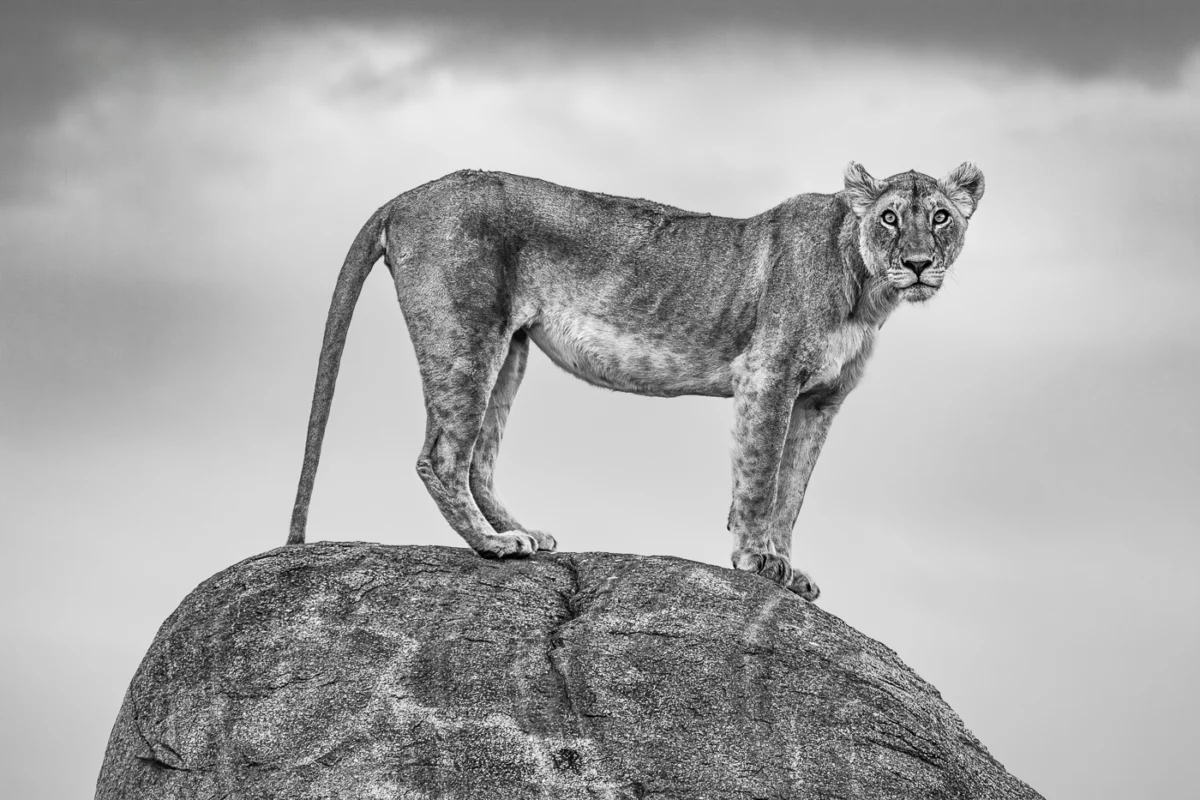
Gabi Guiard, a compelling voice in contemporary wildlife photography, has articulated the profound philosophy underpinning her distinctive black and white imagery, revealing a deliberate artistic choice aimed at transcending mere documentation to capture the raw essence and emotional depth of nature. Her work, characterized by its stark contrasts, minimalist compositions, and powerful narratives, stands as a testament to her belief that monochrome is not merely a stylistic filter but a potent language for conveying the untamed spirit of the wild. This unique approach, born from a lifelong fascination with animals and a career transition from the dynamic world of advertising, positions Guiard at the intersection of art and advocacy, inviting viewers to engage with wildlife on a deeply intuitive level.

The Genesis of a Passion: From Childhood Curiosity to Professional Lens
Guiard’s journey into the heart of wildlife photography began not with a camera, but with an innate, childhood curiosity about the natural world. From a very young age, she found herself profoundly drawn to animals, observing their intricate behaviors and marveling at their sheer presence. This early, natural attraction gradually evolved into a sustained and shaping interest, profoundly influencing her perception and connection to the environment. This foundational passion, however, initially took a professional detour. Guiard dedicated her early career to graphic design and art direction within the advertising industry, a field demanding keen visual acumen and storytelling prowess.
It was within this commercial realm that her interest in photography, initially a peripheral skill, began to crystallize. Inspired by the iconic black and white fashion and advertising photographers she admired, and maintaining a constant connection to the visual arts, Guiard recognized photography as a powerful medium. It became the perfect conduit to merge her accumulated artistic knowledge with her enduring passion for wildlife. This pivotal realization marked the genesis of her current photographic practice, allowing her to bridge two worlds she held dear: the intricate beauty of wild animals and the expressive potential of photography. This evolution is not uncommon in the art world, where artists often leverage skills from one domain to innovate in another, bringing fresh perspectives to established genres.

Black and White: A Language of Essential Truths
For Guiard, the choice of black and white for her wildlife photography is far from arbitrary; it is a fundamental artistic declaration. She views monochrome not as a mere stylistic preference or an attempt to appear "artistic" or "classic," but as a deliberate "language" – her primary mode of communication. Through the absence of color, Guiard aims to strip away distractions, compelling the viewer to focus on the irreducible core of her subjects. This intentional removal of chromatic information is designed to highlight textures, shapes, and contrasts, allowing these elemental components to articulate the narrative and convey the emotions she experiences when immersed in nature.
This philosophy aligns with a long-standing tradition in photography, where monochrome has often been employed to emphasize form, light, and shadow, thereby enhancing emotional impact and timelessness. Renowned photographers from Ansel Adams to Henri Cartier-Bresson utilized black and white to distill reality, arguing that color could sometimes detract from the essential message. Guiard echoes this sentiment, defining black and white photography as an "exercise in honesty." What remains after the removal of color, she posits, is the unfiltered truth, the "essential" character of the scene or subject, unburdened by superfluous visual information. This approach demands a heightened sensitivity to light, composition, and the subject’s intrinsic qualities, pushing both the photographer and the viewer to look beyond the superficial.

The Essential Over the Superfluous: A Minimalist Ethos
Central to Guiard’s artistic vision is the unwavering belief in the power of conveying only what truly matters, a principle she encapsulates in the adage, "The important thing is not to show everything, but to show what truly matters." This philosophy drives her minimalist aesthetic, where the goal is to simplify reality to its most essential elements, allowing the inherent wildness of nature to take center stage. Her objective is for a mere gaze, a distinct silhouette, or a subtle gesture to be sufficient to tell a compelling story.
In a world saturated with visual stimuli, Guiard’s approach offers a refreshing counter-narrative. By intentionally reducing visual clutter, she seeks to forge a profound connection between the viewer and the strength of the moment, creating an experience akin to hearing "the silence of the instant." This dedication to simplicity is a conscious artistic choice that distinguishes her work. It is a testament to the idea that profundity can often be found in restraint, and that by removing the extraneous, the core message becomes more resonant and impactful. This principle resonates with the broader artistic movement of minimalism, which advocates for focusing on the absolute necessities to convey meaning and evoke emotion.

"Less Is More": The Power of Suggestion
Guiard firmly embraces the influential design principle of "less is more," applying it rigorously to her photographic practice. By simplifying an image, she systematically removes any element that might divert attention from the primary subject or message. This deliberate reduction guides the viewer directly to the photograph’s true focus, demonstrating that often, a single gesture, a play of shadow, an intense look, or a decisive line is ample to imbue a photograph with immense power.
She finds compelling strength in what she describes as visual emptiness or "noise-free space." This intentional negative space is not a void but an active participant in the composition, allowing the viewer to breathe within the image and, crucially, to complete the narrative with their own emotions and interpretations. This participatory aspect of her work empowers the observer, transforming them from passive recipients to active collaborators in the artistic experience. In an era where photographic trends often lean towards hyper-realistic detail and vibrant color, Guiard’s commitment to "less is more" stands out as a powerful statement, advocating for an artistic engagement that values suggestion and emotional resonance over comprehensive visual information. This approach arguably creates a more enduring and introspective experience, as the viewer is prompted to delve deeper than the surface.

Composition as the Unseen Framework
For Guiard, composition serves as the fundamental "backbone" of every photograph. It extends beyond the mere arrangement of elements within the frame; it is the strategic art of guiding the viewer’s eye towards the story she intends to tell. In the realm of black and white photography, where the guiding cues of color are absent, composition assumes an even more critical role. The interplay of lines, shapes, and spaces gains heightened significance, dictating the visual flow and emotional impact of the image.
She meticulously considers the placement of an animal within its environment, the delicate balance between light and shadow, and the profound quietude of empty space. These elements coalesce to generate a simultaneous sense of harmony and tension, essential for compelling visual storytelling. Guiard often seeks inherent simplicity in her compositions, diligently avoiding unnecessary elements that could dilute the message. A strong diagonal line leading to the piercing gaze of a lion, the elegant curve of a tree branch framing a silhouette, or the expansive negative space enveloping a subject are all tools she employs to create images imbued with strength and intimacy. This deliberate compositional strategy is not about rigidly adhering to rules but about understanding when to artfully break them to evoke a more potent emotional response. Ultimately, for Guiard, effective composition is the "invisible structure" that allows the image to breathe while simultaneously amplifying its inherent power, ensuring that every element serves the overarching narrative.

Contrast: The Painter’s Palette of Light and Shadow
In Guiard’s black and white lexicon, light and shadow are not merely photographic phenomena; they are her primary "brushes," with which she meticulously paints each image. This dramatic interplay of contrast is far more than an aesthetic choice; it is a fundamental tool for articulating her message and giving voice to her artistic intent. The deep blacks in her photographs serve to obscure what she deems unnecessary to show, creating mystery and focus, while the luminous lights reveal precisely what she wants the viewer to feel and perceive.
In the absence of color, the weight of shadows becomes as significant as the subjects themselves. Shadows are not just areas of darkness; they are compositional elements that define form, create mood, and add dramatic depth. They can suggest presence, evoke solitude, or highlight the raw power of an animal. This masterful manipulation of light and shadow allows Guiard to sculpt her subjects, giving them a three-dimensional quality and an almost tangible presence, even within a two-dimensional monochrome frame. The stark contrasts amplify textures, from the rough hide of an elephant to the intricate patterns of a bird’s feathers, drawing the viewer deeper into the tactile reality of the scene. This artistic command of contrast is a hallmark of great black and white photography, transforming ordinary scenes into extraordinary visual experiences that resonate with primal emotions.

Emotion Behind Every Image: Beyond Mere Depiction
While Guiard’s photographs are undeniably rooted in the observation of wildlife, her ultimate quest extends beyond simple documentation: she seeks to evoke profound emotion. Her ambition is for her images to transcend the mere depiction of an animal or a landscape, to convey something far deeper – be it power, solitude, majesty, or even fragility. This emotional resonance is what transforms a picture into a narrative, a moment into an experience.
For Guiard, creatures like lions are not simply biological specimens; they are, in her artistic perception, "kings and queens of a territory that breathes at its own rhythm." Each image is intended to preserve a fragment of their story: a serene gaze that subtly conceals immense strength, a tranquil gesture that communicates an innate dignity. By focusing on these nuanced expressions and behaviors, Guiard imbues her subjects with personality and a sense of individual being. The deliberate choice of black and white intensifies this emotional narrative, as it forces the viewer to concentrate on the raw sentiment and inherent drama, uncolored by the potential distractions of a vibrant palette. This emphasis on emotion elevates her work from natural history photography to a form of fine art, where the animal becomes a symbol, a mirror, or a vessel for universal human feelings and reflections.

The Timelessness of Black and White: A Universal Mirror
A compelling aspect of Guiard’s commitment to black and white photography lies in its inherent timeless quality. She believes there is a "magical" element to monochrome that imbues images with an enduring relevance, allowing a photograph captured today to possess the aesthetic and emotional impact of one taken decades ago, and to retain that same power far into the future. This timelessness is a critical component of her artistic intent.
By stripping away the temporal markers that color often provides, Guiard allows nature to be presented as something eternal and unchanging – a profound "mirror of who we are and who we were." This universal appeal enables her photographs to resonate across generations and cultures, speaking to a shared human experience of awe and connection with the natural world. Furthermore, the absence of color creates a contemplative space, inviting each viewer to project their own memories, emotions, and personal narratives onto the image. This interactive quality transforms every black and white photograph into an intimate dialogue between the artwork and its observer, fostering a deeper, more personal engagement that transcends specific moments or fleeting trends. It underscores the enduring power of classic aesthetics in a rapidly changing visual landscape.

Technique, Yes, But Above All, Sensitivity
Guiard acknowledges the undeniable role of technical proficiency in her craft. The meticulous search for optimal light, the precise execution of composition, and the unwavering attention to detail are all integral components of every image she creates. These technical skills form the bedrock upon which her artistic vision is built. However, she firmly asserts that what truly imparts meaning and depth to her work is the profound "sensitivity" with which she observes the world.
For Guiard, this sensitivity is paramount, guiding crucial decisions: what to reveal and what to deliberately conceal in the shadows, the precise moment to press the shutter, and, equally important, when to simply "remain silent" and observe without intervening. This nuanced understanding of when to act and when to simply be present speaks to a deep respect for her subjects and their environment. She articulates this symbiotic relationship succinctly: "Technique without sensitivity tells nothing; when both come together, a photograph is born that can move, inspire, and invite reflection." This statement encapsulates her holistic approach, where technical mastery serves as the vehicle for an empathetic and intuitive understanding of nature, resulting in photographs that are not only visually striking but also emotionally resonant and intellectually stimulating.

Implications for Wildlife Photography and Conservation
Gabi Guiard’s distinctive approach to black and white wildlife photography carries significant implications for the genre itself and for the broader narrative of conservation. In a field often dominated by vibrant, hyper-realistic color images, her monochrome aesthetic offers a powerful alternative, compelling viewers to slow down and engage with the fundamental forms, textures, and emotional content of the subjects. This can be particularly impactful in a world increasingly desensitized to visual information. By focusing on the essential, Guiard’s work encourages a deeper appreciation for the inherent beauty and dignity of wildlife, rather than merely presenting a colorful spectacle.
Her philosophy of "less is more" and the emphasis on emotion over exhaustive detail serve to humanize her animal subjects, fostering a sense of connection and empathy that is crucial for conservation efforts. When viewers are moved by the "power, solitude, majesty, or even fragility" conveyed in her images, they are more likely to develop a personal investment in the protection of these species and their habitats. The timeless quality of her black and white photographs further reinforces the message of nature’s enduring value, reminding us that these wild landscapes and creatures have existed for millennia and deserve to persist for generations to come. Guiard’s art, therefore, transcends aesthetic pleasure; it becomes a poignant call to reflection, understanding, and ultimately, action, contributing to a more profound and lasting engagement with the natural world.

In Summary: The Unifying Principles
Gabi Guiard’s evocative imagery is meticulously constructed upon a foundation of core artistic principles. These tenets guide her lens and define her unique contribution to wildlife photography:
- Black and White as Language: More than a style, it is her chosen medium to speak, tell stories, and express deep emotion by eliminating distractions and focusing on essentials.
- The Essential Over the Superfluous: A dedication to simplifying reality, ensuring that the wild character of nature always commands center stage.
- "Less Is More": A belief that by removing visual clutter, the photograph’s power is amplified, inviting personal emotional completion from the viewer.
- Composition as the Backbone: The invisible structure that guides the viewer’s eye and infuses the image with harmony, tension, and narrative strength.
- Contrast as a Tool: The deliberate use of light and shadow to sculpt forms, convey mood, and selectively reveal or conceal information, creating dramatic impact.
- Emotion Behind Every Image: The primary objective to evoke feelings of power, solitude, majesty, or fragility, transforming mere depiction into profound storytelling.
- The Timelessness of Black and White: A magical quality that renders images eternal, fostering universal connection and allowing viewers to project their own experiences.
- Sensitivity Guiding Technique: The conviction that technical mastery must be infused with an intuitive understanding and respect for nature to create truly moving and reflective art.
For Guiard, the adoption of black and white is not merely a filter; it is a vital, conscious choice, a profound act of asking the world for silence so that she might truly listen to what nature has to communicate. It is within this profound silence, she asserts, that she discovers and captures the images that most authentically represent her artistic soul and her deep connection to the wild.
