
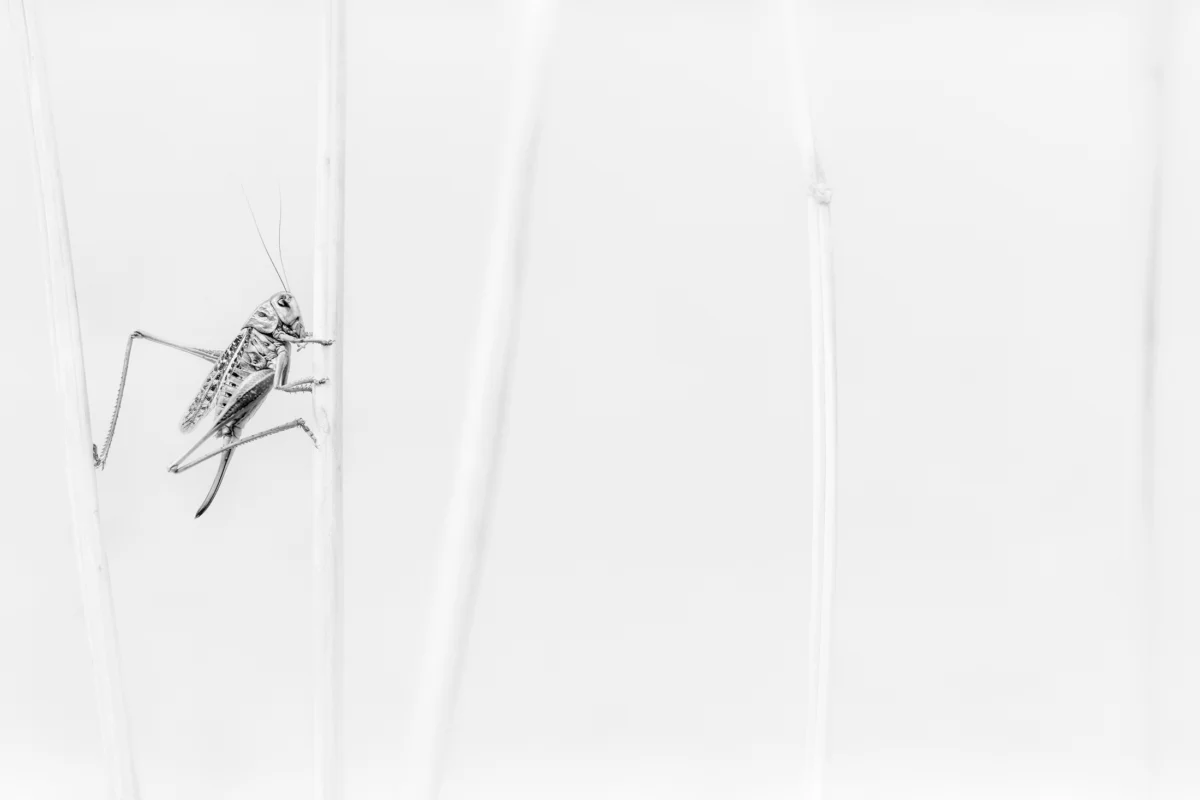
Elisa Confortini, a distinguished nature photographer, has cultivated a profound passion for documenting the natural world through the lens of macro photography, focusing particularly on arthropods. Her unique approach, characterized by meticulous observation and a compelling use of monochrome, invites viewers into an often-overlooked universe, revealing the intricate beauty and complex behaviors of these ubiquitous creatures. Confortini’s work transcends mere documentation, aiming to convey the intrinsic characteristics and habits of her subjects in a manner that deeply captivates and educates.
Confortini’s journey into nature photography was intrinsically linked to the accessibility and endless fascination offered by arthropods. Found readily even in close proximity to human dwellings, these creatures presented themselves as ideal subjects for macro exploration. The act of observing them up close, she notes, is consistently both fascinating and instructive. Each year, her photographic expeditions involve seeking out cherished species or discovering new ones, a testament to the boundless diversity within the arthropod kingdom. This commitment to long-term observation is crucial, allowing her to capture nuanced behaviors that often elude casual human perception, thereby enriching the narrative presented in her images.

The Ubiquitous and Enigmatic World of Arthropods
Arthropods, a phylum encompassing insects, arachnids, crustaceans, and myriapods, represent the largest phylum in the animal kingdom, accounting for over 80% of all known animal species. Their staggering diversity, ranging from the colossal Goliath beetle to the microscopic dust mite, plays indispensable roles in ecosystems worldwide, acting as pollinators, decomposers, pest controllers, and food sources. Despite their critical ecological significance, human interactions with insects and their kin have historically been complex, marked by a spectrum of emotions from admiration and veneration to fear and revulsion. This intricate relationship of love, hate, and awe has permeated human culture, inspiring artists, writers, and thinkers across civilizations.
Throughout history, the intricate forms and often otherworldly appearances of arthropods have served as an inexhaustible source of inspiration for artists globally. From ancient Egyptian scarabs symbolizing rebirth to intricate Japanese insect art and modern scientific illustrations, their representation reflects humanity’s evolving relationship with the natural world. Confortini’s work continues this tradition, but with a distinctive contemporary twist: leveraging the timeless power of black and white photography to highlight the structural and behavioral intricacies that define these creatures.

The Enduring Appeal of Black and White Photography
In an era saturated with vibrant digital imagery, where technological advancements enable effortless color manipulation, black and white photography might seem an anachronism. Yet, it remains a profoundly powerful and timeless medium that continues to flourish. Far from being a relic of the past, working in monochrome today is a deliberate aesthetic and stylistic choice, a conscious decision to express and evoke emotion with unparalleled intensity. It forces both the photographer and the viewer to engage with an image on a deeper, more analytical level, moving beyond superficial chromatic appeal to appreciate form, texture, and light.
The deliberate choice of monochrome is rooted in several compelling advantages:

- Undivided Focus: Color, while beautiful, can often act as a distraction, drawing the eye away from the primary subject. By stripping away color, black and white photography ensures that the viewer’s attention remains fixed on the arthropod, its details, and its story. This is particularly effective in macro photography, where intricate patterns and minute structures are paramount.
- Emphasis on Form and Texture: The absence of color inherently magnifies textures, contrasts, and shapes. This allows the subtle ridges on an insect’s exoskeleton, the delicate veins of a dragonfly’s wing, or the intricate hairs on a spider’s leg to emerge with striking clarity, conveying a tactile quality that might be diminished in a color image.
- Evoking Emotion and Atmosphere: The nuanced tonal scale of black and white, from deep shadows to brilliant highlights, possesses a unique ability to evoke feelings of drama, mystery, and contemplation. These emotional registers can often be overlooked or overshadowed by the literal interpretation of a scene in color.
- Cultivating Compositional Acuity: Monochrome photography demands a heightened focus on fundamental compositional elements: light, shadow, lines, patterns, and contrast. Without the crutch of color, photographers are compelled to develop a keener eye for these structural components, ultimately leading to stronger, more impactful images.
- Revealing True Essence: By forcing both the creator and the audience to look beyond the immediate visual information of color, black and white photography encourages a deeper discovery of the image’s true essence, its underlying narrative, and its emotional core.
- Enhanced Post-Processing Control: In the digital darkroom, converting an image to black and white offers significantly greater control over tonal nuances, highlights, shadows, and contrast. This flexibility allows for artistic interpretations that would be either impossible or less effective with color adjustments, empowering the photographer to sculpt the light and mood of the scene precisely.
Approaches to Monochrome Macro Photography
Photographers typically adopt one of two main approaches to black and white imaging. The first involves photographing subjects as usual, but with a heightened awareness of scenes that inherently possess strong monochrome potential. This requires developing an instinct for how light, shadow, and form translate into a grayscale palette. The second, more immersive approach, involves committing to working exclusively in black and white. Setting the camera to monochrome mode can be an invaluable training tool, conditioning the eye and mind to perceive the world in terms of tones and contrasts rather than colors. This method, while challenging, fosters a profound visual sensitivity essential for crafting impactful monochrome images.
For a nature photographer accustomed to the vibrant hues of the natural world – the iridescent wings of a butterfly, the emerald green of foliage, the rich reds of a beetle – seeing the world solely in shades of gray is a significant mental shift. It requires learning how specific colors translate into particular gray tones. Experimenting with brightly colored subjects in monochrome helps demystify this transformation, revealing how their character changes when stripped of their chromatic identity.

Confortini personally favors converting images to black and white during post-processing. This method provides maximum control over tonal nuances and intricate details, allowing for precise adjustments that might be difficult to achieve in-camera. Crucially, as monochrome is not her sole mode of expression, this flexibility enables her to make a calm, considered decision for each image: whether it benefits most from its original color palette or if its impact is significantly enhanced by the evocative power of black and white. While some images immediately present themselves as ideal monochrome candidates, others require careful conversion and extensive post-processing work before their true effectiveness in grayscale becomes apparent.
Revisiting the Archive: New Perspectives on Old Work
An often-underestimated aspect of monochrome photography is the practice of revisiting existing image archives. Converting older color photographs to black and white can be a revelation, offering fresh perspectives on familiar subjects and unveiling new emotions or narratives previously obscured by color. This retrospective process can be a fertile ground for generating new ideas and inspiring future photographic endeavors. However, a critical eye is paramount, as not every image lends itself effectively to monochrome conversion. Confortini emphasizes that if color is integral to the narrative or emotional content of an image, she will never convert it to black and white. Conversely, when atmosphere, graphic qualities, or the interplay of light and shadow are the dominant elements, monochrome can elevate the final result significantly.

Strategic Monochrome: When to Embrace the Grayscale
Confortini identifies several specific situations where monochrome photography proves particularly advantageous in her macro work:
- Subject Isolation in Cluttered Environments: The natural habitats of arthropods are frequently chaotic, filled with competing visual elements. Monochrome acts as a powerful tool to reduce visual clutter and chromatic noise, allowing the intricate form of the arthropod to stand out distinctly against its background. By chromatically isolating the subject, its essence is profoundly emphasized.
- Harnessing Harsh Light and Shadow: Challenging lighting conditions, such as strong, direct sunlight creating deep contrasts, can often be difficult to manage in color photography. In monochrome, however, these harsh lights and shadows become valuable compositional elements, accentuating forms and allowing for more effective use of negative space to create dramatic and impactful images.
- Transforming Noise into Atmosphere: High-ISO images, often necessary in low-light macro situations, can suffer from significant chromatic noise. Rather than being a flaw, in black and white, this noise can be transformed into a textural element, adding a film-like grain that contributes to the image’s atmosphere and mood, particularly when environment and mood take precedence over clinical detail.
- Correcting Unwanted Color Casts: There are instances where environmental color casts, such as the unnatural tint of water in certain ponds or polluted light, cannot be corrected satisfactorily in color. Monochrome provides an elegant solution, eliminating these distracting hues and allowing the underlying forms and compositions to shine through.
- Enhancing Experimental Techniques: When employing techniques like double exposures or intentional camera movement, where color might appear unnatural or disorienting, monochrome can unify the image. By removing the distraction of potentially discordant colors, it allows the abstract qualities and compositional flow of these experimental images to be fully appreciated.
It might superficially appear that monochrome serves as a means to "rescue" technically imperfect images. However, Confortini’s experience refutes this notion. She judiciously converts only a select few images – those that already possess inherent strength, graphic clarity, or a potent expressive potential that transcends their original color. Monochrome, in her practice, is not a fix but an enhancement, unlocking deeper layers of artistic meaning.

Minimalism and Abstraction in the Macro Lens
In macro photography, monochrome is an exceptional tool for exploring minimalism. By deliberately reducing clutter, complexity, and distraction, it focuses the viewer’s attention on simplified compositions. The enhancement of an arthropod’s silhouette against a tonal background is perhaps the most intuitive application of black and white in this realm, yet countless other creative possibilities exist.
The exploration of shapes, both geometric and irregular, becomes paramount in monochrome. Geometric forms introduce a sense of order and structure, while irregular shapes can convey movement, energy, and unpredictability. Without the interference of color, the subtle differences in light and shadow become more pronounced, allowing contrast to emerge as a powerful compositional force.

Composition, even within the tight confines of macro photography, remains the cornerstone of creativity. Confortini highlights that the subject does not always need to fill the frame; abstraction can become a potent narrative device in close-up work. Limited depth of field, another creative tool, allows a single, sharply focused element to stand out, while everything else dissolves into an elegant blur. This technique guides the viewer’s eye and offers unexpected, often dreamlike, perspectives.
Furthermore, grain, whether naturally occurring or intentionally added, can evoke strong emotional responses. In black and white macro photography, a carefully applied grain can significantly enhance atmosphere, particularly when the overall mood and environment are prioritized over minute detail. While grain can result from underexposure or high ISO settings, Confortini prefers to maintain clean images initially and then experiment with adding grain during editing, carefully calibrating its intensity to achieve the desired effect.
Beyond the Beginner’s Tool: A Mature Creative Choice

While black and white photography is often recommended as a learning tool for beginners to grasp fundamentals of composition and light, Confortini posits that in macro photography, this choice often emerges later in a photographer’s journey. It represents a more mature decision, typically adopted once a personal visual language has already been established and refined. For her, it became a profound path worthy of deeper exploration. In certain artistic contexts, the presence of color can paradoxically limit creative interpretation, distracting from the subtle atmosphere, raw emotion, and profound sensations experienced during the act of photographing.
The ability to create vibrant, hyper-detailed color close-ups of insects is undoubtedly valuable. However, Confortini’s work demonstrates that there is equal, if not greater, power in choosing to express their beauty by evoking their environment, behavior, or character through a more interpretive, monochrome lens.
Ultimately, this stylistic decision is a deeply personal creative choice. It is a choice that reveals a small yet immense universe—a world that is rich, often unfamiliar, endlessly fascinating, and at times unsettling—but always seen from an entirely different, uniquely compelling perspective. By stripping away the literal colors, Confortini’s black and white macro photography forces us to truly see the complex, often hidden, lives of arthropods, fostering a renewed appreciation for these vital, miniature inhabitants of our planet. This artistic endeavor serves not only as a testament to photographic skill but also as an important contribution to raising awareness and fostering empathy for the intricate biodiversity that surrounds us.
