
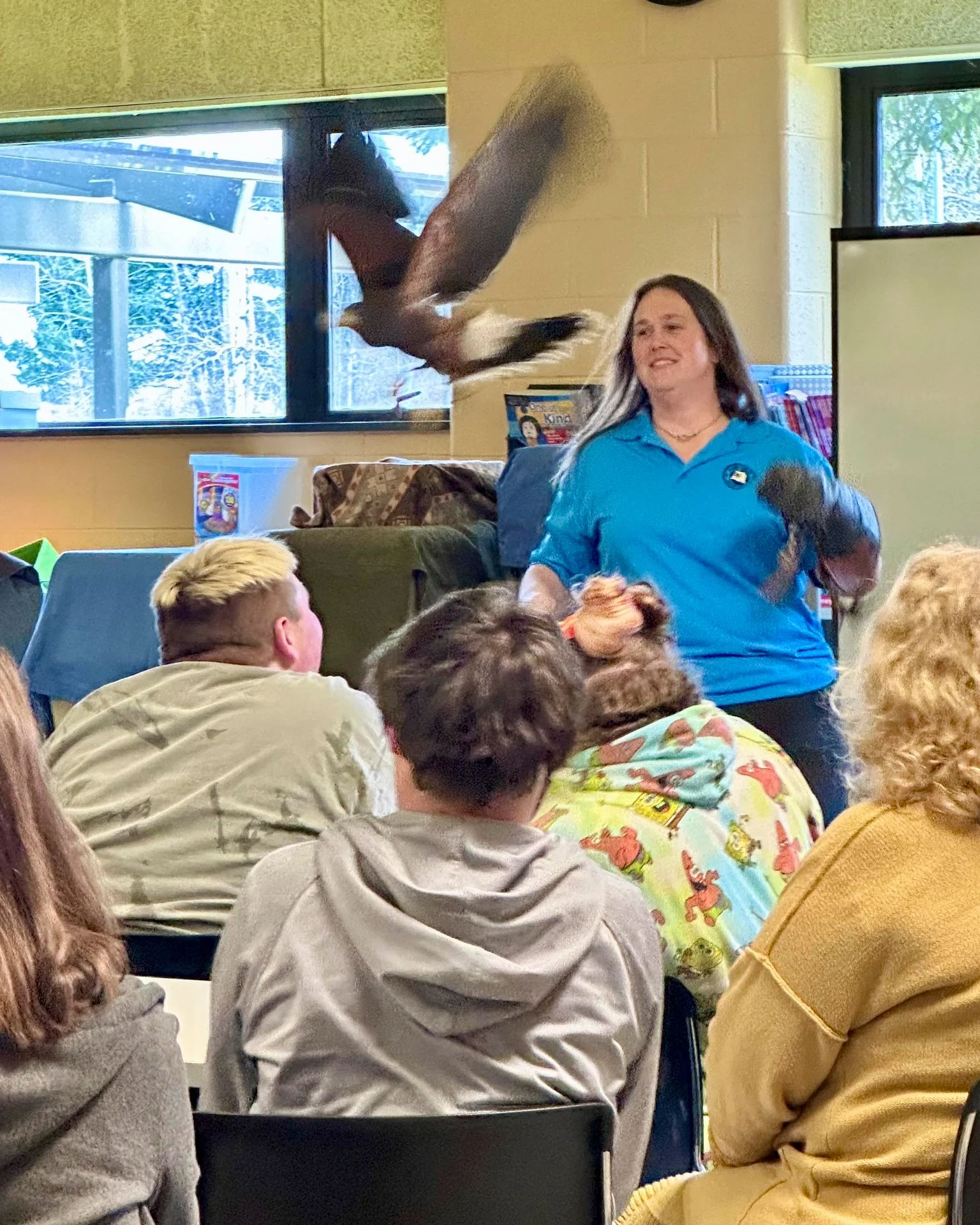
Students at the Hewes Educational Center recently experienced an extraordinary educational opportunity as they were visited by the esteemed Hawk Creek Wildlife Center. This engaging program, designed to bring the natural world to life for young learners, provided an up-close and personal encounter with a diverse array of wildlife, fostering a deeper understanding and appreciation for native species and their habitats.
A Day of Discovery and Wonder
The educational initiative, a cornerstone of Hawk Creek Wildlife Center’s outreach efforts, aims to bridge the gap between classroom learning and the tangible realities of the natural world. By bringing a carefully curated selection of animals directly to educational institutions, the center empowers students to observe, interact with, and learn about wildlife in a safe and controlled environment. This hands-on approach, as witnessed at the Hewes Educational Center, cultivates a sense of wonder and curiosity that can ignite a lifelong passion for conservation and environmental stewardship.
During the visit, two experienced wildlife naturalists from Hawk Creek led the students through an educational journey, introducing them to a fascinating lineup of animals. The presentation encompassed a spectrum of the animal kingdom, featuring majestic raptors, intriguing mammals, and captivating snakes. Each animal was presented not merely as an exhibit, but as a vital component of a larger ecosystem, with naturalists detailing their specific roles, natural habitats, and unique behaviors. This comprehensive approach ensured that the students gained a nuanced understanding of the interconnectedness of life within various environments.
One of the most memorable and exhilarating moments of the day, as reported, was when a raptor, likely a magnificent bird of prey such as a hawk or owl, soared directly over the students’ heads. Such an event is not only a thrilling spectacle but also a powerful demonstration of the grace, power, and natural flight capabilities of these apex predators. For many of the students, this direct aerial display would undoubtedly have been a profound and lasting impression, transforming abstract concepts about flight and adaptation into a vivid, unforgettable experience. These direct encounters are crucial for building empathy and respect for wildlife, moving beyond theoretical knowledge to emotional connection.

The Mission and Impact of Hawk Creek Wildlife Center
Hawk Creek Wildlife Center, based in Jamestown, New York, has been dedicated to its mission of "Fostering Compassion, Saving Species, Restoring Balance" for many years. Founded with a vision to educate the public about wildlife conservation and to provide rehabilitation services for injured and orphaned animals, the center has become a respected institution in the region. Their educational programs are a vital part of this mission, reaching thousands of students annually. These programs are meticulously crafted to align with educational standards, providing valuable learning experiences that complement classroom curricula.
The center’s work extends beyond educational outreach. They are actively involved in the rescue, rehabilitation, and release of native wildlife, a critical service that helps to maintain healthy wildlife populations. By caring for animals that have been injured due to human activities, natural disasters, or other causes, Hawk Creek provides a second chance at life for countless creatures. This dual focus on education and direct care underscores their holistic approach to wildlife conservation.
Supporting Data and Educational Philosophy
The effectiveness of wildlife education programs like those offered by Hawk Creek is well-documented. Studies have consistently shown that direct interaction with animals, even in a controlled educational setting, leads to increased knowledge retention, improved attitudes towards conservation, and a greater likelihood of engaging in pro-environmental behaviors later in life. For instance, research published in journals such as the Journal of Environmental Education indicates that experiential learning, which these programs exemplify, significantly boosts students’ understanding of ecological concepts and fosters a stronger sense of personal responsibility towards the environment.
The animals featured in these presentations are often those that cannot be released back into the wild due to permanent injuries or other issues. By serving as educational ambassadors, these animals play a crucial role in teaching the public about the challenges wildlife face and the importance of conservation efforts. This approach not only educates but also humanely utilizes animals that would otherwise be unable to live independently.

Broader Implications and Community Engagement
The visit to the Hewes Educational Center is indicative of a growing trend in educational institutions to incorporate hands-on, experiential learning into their programming. In an era where children often have limited direct contact with nature, such initiatives are invaluable in cultivating a connection to the natural world. The partnership between schools and organizations like Hawk Creek Wildlife Center highlights the importance of community collaboration in addressing educational and environmental goals.
The "Share This Story" prompt within the original content suggests a desire for broader dissemination of the positive impact of such events. This encourages schools, parents, and community members to recognize the value of these programs and to advocate for their continued support and expansion. By sharing these experiences, the message of wildlife conservation and the importance of environmental education can reach a wider audience, potentially inspiring more schools to host similar events and more individuals to support conservation efforts.
The presence of an "About the Author" section, crediting Amanda, suggests that the original article was part of a larger communication strategy by Hawk Creek Wildlife Center, likely aimed at engaging their community and showcasing their outreach activities. This format is common for organizational blogs and newsletters, where content is often generated by staff members to highlight ongoing projects and successes.
Future Outlook and Conclusion
Programs like the one at Hewes Educational Center are vital for building a future generation of environmentally conscious citizens. By providing engaging, informative, and memorable experiences, Hawk Creek Wildlife Center is not just educating students about animals; they are fostering a deep-seated respect for the natural world and inspiring action for its protection. The success of such initiatives is a testament to the power of hands-on learning and the enduring importance of connecting with nature. As these programs continue to reach more students, the ripple effect of their impact on conservation awareness and environmental stewardship is poised to grow, contributing significantly to the long-term health of our planet’s ecosystems and the species that inhabit them. The commitment of organizations like Hawk Creek Wildlife Center to both education and direct wildlife care serves as a crucial model for addressing the complex environmental challenges of our time, reminding us all of the interconnectedness of life and the shared responsibility we have in preserving it.
