
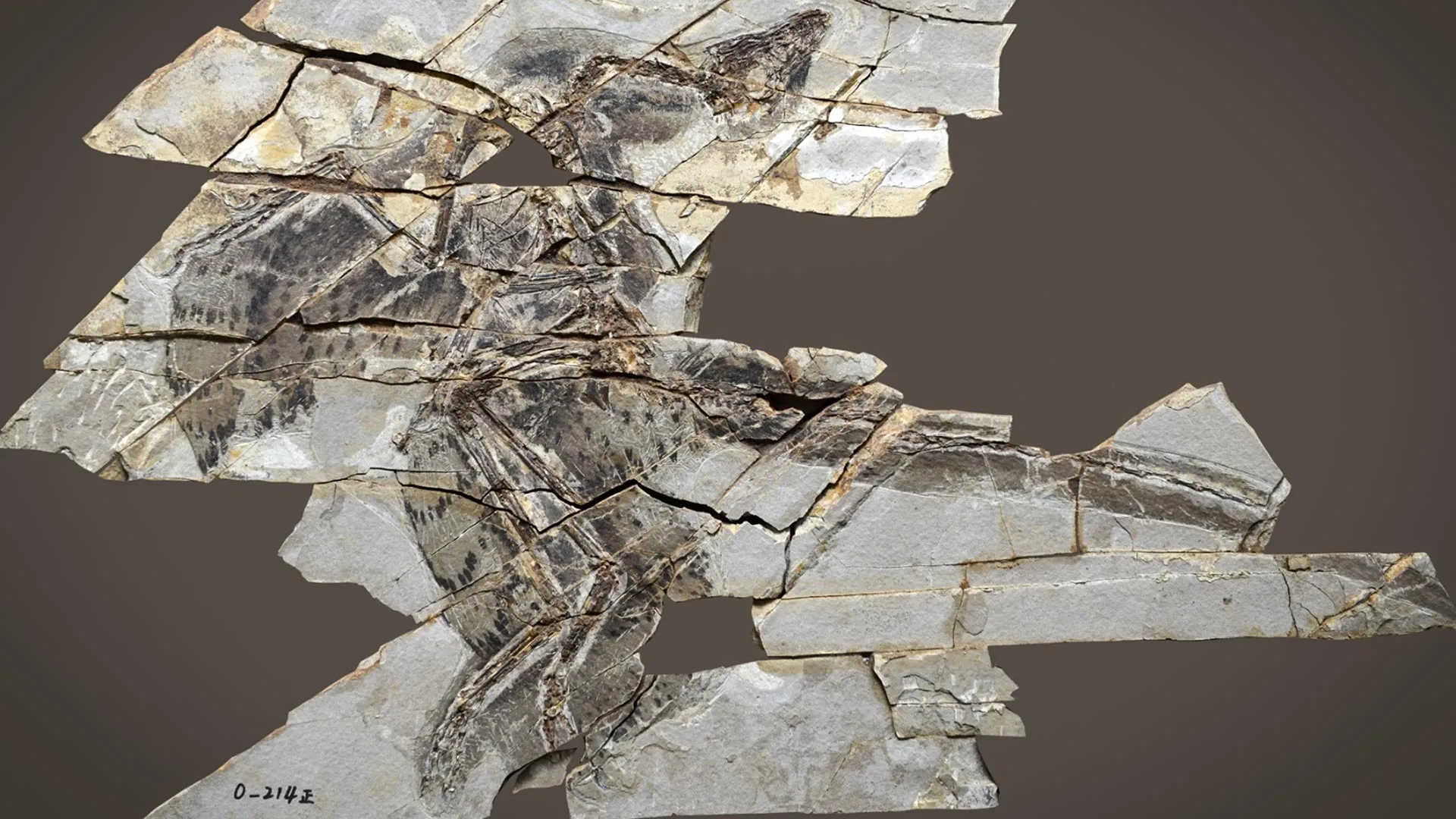
A groundbreaking study led by researchers from Tel Aviv University has unveiled compelling evidence suggesting that some feathered dinosaurs, once thought to be on the direct path to avian flight, had already relinquished their capacity for aerial locomotion. This unexpected finding, derived from the meticulous analysis of exceptionally preserved dinosaur fossils from eastern China, redefines our understanding of flight’s intricate and often non-linear evolutionary journey. The research team emphasizes the profound implications of this discovery, stating, "Feather molting seems like a small technical detail – but when examined in fossils, it can change everything we thought about the origins of flight, highlighting how complex and diverse wing evolution truly was." This revelation not only offers an unprecedented glimpse into the lives of animals inhabiting Earth approximately 160 million years ago but also significantly reshapes the narrative of how flight emerged and developed across various dinosaur lineages and eventually in modern birds.
The study, spearheaded by Dr. Yosef Kiat from the School of Zoology and the Steinhardt Museum of Natural History at Tel Aviv University, in collaboration with esteemed colleagues from China and the United States, provides a rare window into the sophisticated biological mechanisms of prehistoric life. Their findings, published in the prestigious journal Communications Biology by Nature Portfolio, underscore the dynamic and often circuitous nature of evolutionary adaptation. The researchers collectively note, "This finding has broad significance, as it suggests that the development of flight throughout the evolution of dinosaurs and birds was far more complex than previously believed. In fact, certain species may have developed basic flight abilities – and then lost them later in their evolution." This concept of "secondary flightlessness" is well-documented in modern avian species, such as ostriches and penguins, but its identification in such an early feathered dinosaur fundamentally alters the established timeline and evolutionary pathways for avian flight.
Unraveling the Mysteries of Anchiornis
The primary focus of this pivotal research centered on nine remarkable fossils belonging to Anchiornis, a genus of feathered paravian dinosaur that roamed the Late Jurassic period, roughly 160 million years ago. Anchiornis huxleyi, the type species, holds a crucial position in paleontological studies, often considered one of the earliest known feathered dinosaurs with clear avian-like characteristics. Discovered in the Tiaojishan Formation of Liaoning, China, these small, crow-sized dinosaurs, typically weighing around 110 grams and measuring approximately 34 centimeters in length, possessed long limbs and extensive feathering on all four limbs, forming distinct "wings" on both forelimbs and hindlimbs. Their arboreal lifestyle and potential for gliding or even flapping flight have been subjects of intense scientific debate since their initial description in 2008.
What makes the Anchiornis fossils analyzed in this study exceptionally rare and valuable is not merely the preservation of their feathers but also the retention of their original coloration and intricate structural details. This extraordinary level of preservation is attributed to the unique geological conditions of the region, part of the famed Jehol Biota, where volcanic ash quickly buried organisms, creating an anaerobic environment conducive to soft tissue preservation. Each of the nine specimens examined exhibited wing feathers that were predominantly white, strikingly punctuated by a distinct black spot at the tip. This preserved pigmentation, detectable through the presence of melanosomes (pigment-containing organelles) within the fossilized feathers, allowed the research team to delve into the microscopic architecture and growth patterns of the feathers in ways previously unimaginable for such ancient remains.
The Evolutionary Tapestry of Dinosaurs and Feathers
To fully appreciate the significance of this discovery, it is essential to contextualize the broader evolutionary narrative of dinosaurs and the emergence of feathers. Dr. Kiat, an ornithologist with a deep specialization in feather biology, elaborates on this timeline. Dinosaurs, a diverse group of reptiles, first appeared approximately 240 million years ago during the Triassic period, diverging from other reptilian lineages. Relatively soon thereafter, on an evolutionary timescale spanning millions of years, a significant number of these species began to develop feathers. These lightweight, protein-based integumentary structures initially served a multitude of functions beyond flight, including thermoregulation, display, and camouflage.
Around 175 million years ago, during the Middle Jurassic, a critical evolutionary divergence occurred with the appearance of the Pennaraptora. This clade, encompassing oviraptorosaurs, scansoriopterygids, dromaeosaurids (like Velociraptor), troodontids, and Avialae (the group including Archaeopteryx and modern birds), is characterized by the presence of vaned feathers—feathers with a central shaft and interlocking barbs that form a continuous surface. These animals are widely considered the distant ancestors of modern birds and represent the only dinosaur lineage that managed to survive the catastrophic mass extinction event at the end of the Mesozoic era, approximately 66 million years ago, which wiped out all non-avian dinosaurs.
For decades, the prevailing scientific consensus has been that Pennaraptora evolved these sophisticated vaned feathers primarily for the purpose of flight or at least some form of aerial locomotion. However, the new findings on Anchiornis introduce a crucial nuance to this perspective. While early forms of flight or gliding might have been an initial driver for feather evolution in some species, environmental shifts, changes in predatory pressures, or ecological opportunities may have subsequently led certain lineages to abandon flight, much like the secondary flightlessness observed in contemporary birds such as ostriches, emus, cassowaries, rheas, kiwis, and penguins. These modern examples highlight that the development of flight is not necessarily an irreversible evolutionary trajectory but rather a flexible adaptation that can be gained, refined, and even lost depending on selective pressures.
Molting Patterns: A Window into Ancient Flight Capabilities
The linchpin of Dr. Kiat’s research lies in the meticulous analysis of feather molting patterns. Molting is a fundamental biological process in birds, where old, worn feathers are shed and replaced by new ones. As Dr. Kiat explains, feathers grow over a period of two to three weeks, during which they are nourished by a robust blood supply. Once they reach their full size, they detach from these blood vessels, becoming nonliving, keratinous structures. Over time, these feathers naturally wear out due to environmental exposure, physical stress, and daily activities, necessitating their replacement.
The critical insight derived from molting patterns pertains directly to an animal’s ability to fly. "Feathers grow for two to three weeks. Reaching their final size, they detach from the blood vessels that fed them during growth and become dead material. Worn over time, they are shed and replaced by new feathers – in a process called molting, which tells an important story: birds that depend on flight, and thus on the feathers enabling them to fly, molt in an orderly, gradual process that maintains symmetry between the wings and allows them to keep flying during molting. In birds without flight ability, on the other hand, molting is more random and irregular. Consequently, the molting pattern tells us whether a certain winged creature was capable of flight."
For modern flying birds, maintaining aerodynamic integrity is paramount for survival. Thus, they exhibit highly regulated and symmetrical molting sequences, often shedding feathers gradually from both wings simultaneously to preserve balance and lift. This ensures that they can continue to fly effectively even while new feathers are growing. For instance, many songbirds undergo a complete molt after breeding, replacing all feathers over several weeks, while larger birds of prey might spread their molt over several years. Waterfowl often undergo a simultaneous molt of their flight feathers, rendering them temporarily flightless but occurring in a predictable, synchronized manner.
Conversely, birds that have lost the ability to fly do not face the same aerodynamic constraints. Their molting patterns tend to be far less structured, more sporadic, and irregular. The timing and sequence of feather replacement are not dictated by the need to maintain flight symmetry, leading to a more haphazard distribution of growing and shedding feathers across their wings. This distinction provides a powerful diagnostic tool for inferring flight capability, even from fossilized remains.
By meticulously examining the fossilized feathers of Anchiornis, the research team identified a continuous line of black spots along the wing edges of several specimens. Crucially, they also observed developing feathers whose black spots were distinctly out of alignment with the mature feathers, clearly indicating active growth. A detailed analysis of these patterns across the nine specimens revealed a molting sequence that was strikingly irregular and asymmetrical, rather than the orderly, symmetrical pattern characteristic of flying birds.
The Verdict: Anchiornis Was Flightless
Based on this compelling evidence, Dr. Kiat unequivocally concluded, "Based on my familiarity with modern birds, I identified a molting pattern indicating that these dinosaurs were probably flightless. This is a rare and especially exciting finding: the preserved coloration of the feathers gave us a unique opportunity to identify a functional trait of these ancient creatures – not only the body structure preserved in fossils of skeletons and bones." This represents a significant leap in paleo-biological interpretation, moving beyond skeletal morphology to infer complex behavioral and physiological traits from soft tissue remnants.
The implications of this finding are profound. Dr. Kiat further elaborates, "Feather molting seems like a small technical detail – but when examined in fossils, it can change everything we thought about the origins of flight. Anchiornis now joins the list of dinosaurs that were covered in feathers but not capable of flight, highlighting how complex and diverse wing evolution truly was." This places Anchiornis alongside other feathered dinosaurs, such as Caudipteryx and Gigantoraptor, which possessed extensive feathering but were clearly terrestrial, demonstrating that feathers evolved for a variety of purposes long before or even independently of powered flight. The idea that feathers might have initially evolved for insulation, display, or even aiding in swift ground maneuvers (e.g., ‘wing-assisted incline running’) is gaining increasing traction.
The Jehol Biota: A Paleontological Treasure Trove
The extraordinary preservation of the Anchiornis fossils is intrinsically linked to the Jehol Biota, a fossil assemblage spanning the Late Jurassic to Early Cretaceous periods (approximately 160 to 120 million years ago) in northeastern China. This region, particularly the Liaoning Province, is globally renowned for its Lagerstätten—sites of exceptional fossil preservation where not only bones but also soft tissues, feathers, fur, and even internal organs are preserved in astonishing detail. The Jehol Biota has yielded a wealth of feathered dinosaurs, early birds, mammals, reptiles, amphibians, and plants, providing an unparalleled window into an ancient ecosystem.
The unique conditions, primarily the rapid burial by volcanic ash and fine sediments in lacustrine (lake) environments, created anaerobic conditions that prevented decomposition, allowing for the mineralization of delicate structures. This geological serendipity has been instrumental in overturning the long-held perception of dinosaurs as scaly, reptilian beasts, firmly establishing the feathered dinosaur paradigm. Discoveries from Jehol, such as Sinosauropteryx, the first non-avian dinosaur confirmed to have feathers, and Microraptor, a four-winged gliding dinosaur, have been pivotal in shaping our understanding of dinosaur-bird evolution. The Anchiornis fossils, with their preserved melanosomes, further exemplify the incredible detail that these sites can offer, pushing the boundaries of what paleontologists can deduce about ancient life.
Broader Implications for Avian Evolution
This study significantly contributes to the ongoing scientific discourse regarding the origins of avian flight, often framed by the "ground-up" (cursorial) versus "trees-down" (arboreal) hypotheses. While Anchiornis‘s arboreal adaptations and four wings previously suggested a potential gliding or primitive flying capability, its inferred flightlessness based on molting patterns complicates this picture. It indicates that the presence of wing-like structures and feathers does not automatically equate to flight. Instead, the evolution of flight was likely a mosaic process, involving multiple experiments in different lineages, with some progressing towards sustained flight while others diverged or even reverted to terrestrial lifestyles.
The concept of exaptation, where a trait evolved for one purpose is co-opted for another, is particularly relevant here. Feathers, initially developed for insulation or display, could have been exapted for aerodynamic purposes in some lineages, leading to gliding and eventually powered flight. However, as Anchiornis demonstrates, this transition was not universal or unidirectional. This challenges the notion of a simple, linear progression from feathered dinosaur to flying bird, instead advocating for a more complex, bush-like evolutionary tree with many branches exploring different adaptations.
Moreover, the research highlights the incredible diversity of evolutionary strategies within the Pennaraptora. While some lineages were clearly honing their aerial skills, others, like Anchiornis, might have found greater ecological success by remaining terrestrial or arboreal gliders without fully committing to powered flight. This underscores the power of natural selection in shaping adaptations based on specific environmental niches and competitive landscapes.
Future Research and Unanswered Questions
The findings open several avenues for future research. Paleontologists will undoubtedly seek more exceptionally preserved fossils that can reveal similar functional traits through detailed analyses of feather structure, growth, and molting. The application of advanced imaging techniques and comparative studies with a wider range of modern birds will further refine our ability to infer behavior and physiology from fossil evidence.
Questions remain about the precise ecological pressures that might have led Anchiornis to lose flight if it ever possessed it. Was it due to a lack of aerial predators, an abundance of food on the ground or in trees, or perhaps a trade-off where the energy expenditure of flight was redirected to other beneficial traits? Understanding the full context of the Anchiornis ecosystem, including its predators, prey, and habitat, will be crucial in piecing together this evolutionary puzzle.
In conclusion, the study of Anchiornis‘s molting patterns represents a significant paradigm shift in our understanding of flight evolution. It serves as a powerful reminder that evolution is not a straightforward march towards increasing complexity but a convoluted dance of adaptation, innovation, and sometimes, even reversion. The "small technical detail" of feather molting has indeed changed everything, reinforcing the idea that the path to the skies for dinosaurs and birds was far more intricate, diverse, and fascinating than previously imagined.
