
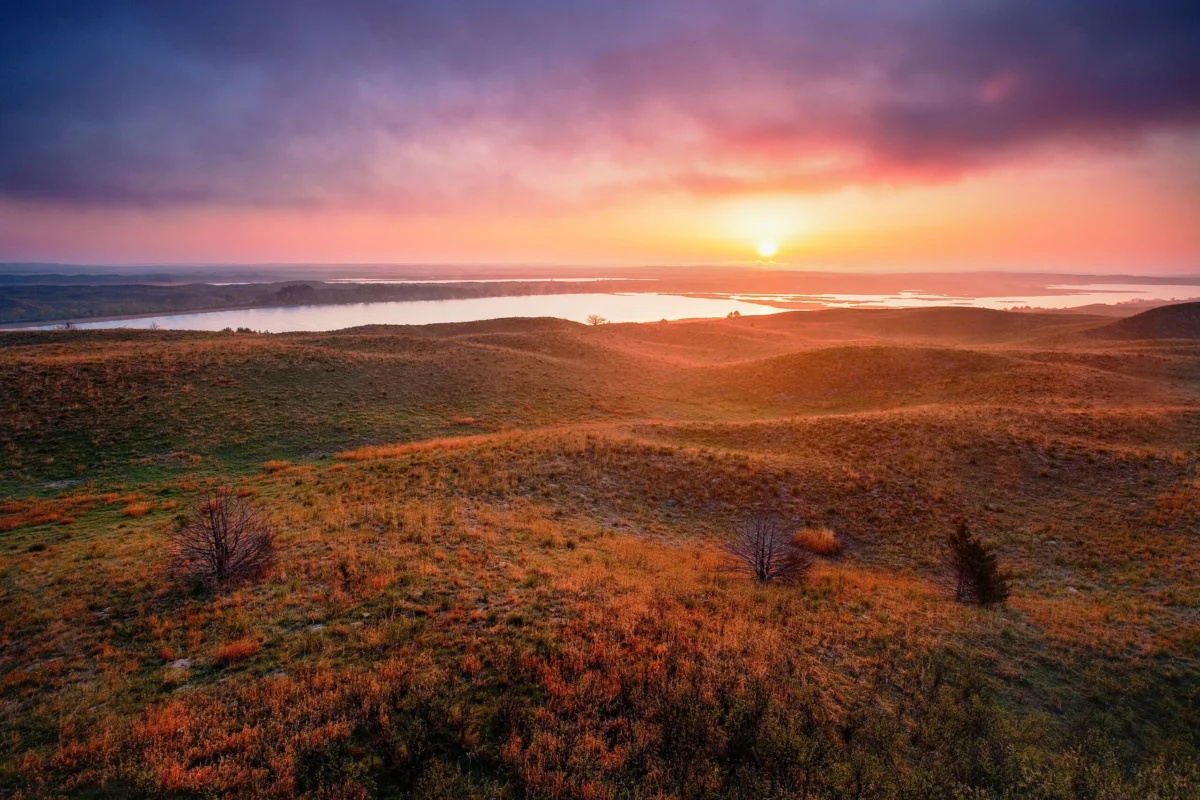
North America’s vast grasslands, once an unbroken expanse stretching across the continent, represent a critically endangered yet ecologically indispensable ecosystem that underpins unique communities of flora, fauna, and human societies. Often dismissively labeled as "flyover country," these prairies, from the Great Plains to the Chihuahuan Desert, are intricate tapestries of grasses, wildflowers, and sedges that provide literal groundwork for immense biodiversity. However, this majestic biome is in profound peril. Since European colonization, more than 300 million acres of prairie on the plains have been destroyed, primarily due to agricultural conversion and development. Today, native grasslands cover less than 40 percent of their historic span, a devastating habitat loss that has triggered a catastrophic decline in grassland bird populations, which have plummeted by an alarming 43 percent since 1970—the most significant decrease among any avian group in North America. Despite this grim reality, extraordinary, horizon-spanning prairies persist, testament to the tireless efforts of preservationists, restoration ecologists, and the sheer immensity of some remaining tracts. These vital oases offer a glimpse into the plains of yesteryear and a hopeful vision for a grassland-friendly future.
The Ecological Heartbeat of North America
Before widespread agricultural conversion, North America boasted one of the largest grassland biomes on Earth, covering roughly one-third of the continent, from the Canadian Prairies to the Gulf Coast. These prairies were not merely flat, monotonous landscapes but dynamic ecosystems characterized by deep, fertile soils, a high diversity of plant species, and an intricate web of life. The deep root systems of prairie grasses, some extending 10 to 15 feet into the earth, are crucial for soil stabilization, water infiltration, and carbon sequestration. These roots create a sponge-like effect, allowing rainwater to penetrate the ground, replenishing aquifers, and preventing runoff and erosion. This natural infrastructure is invaluable, especially in an era of increasing climate variability, offering resilience against both droughts and floods.
Furthermore, grasslands are biodiversity hotspots, supporting a unique array of species adapted to open, treeless environments. Beyond the iconic bison and prairie dogs, these habitats are home to myriad insects, reptiles, amphibians, and mammals like pronghorn, elk, and various rodent species. The interdependence of these species is profound; for instance, prairie dog colonies create microhabitats that benefit numerous other species, including burrowing owls and black-footed ferrets, one of North America’s most endangered mammals. The diversity of wildflowers, blooming in succession from spring to autumn, provides essential nectar and pollen for pollinators, including native bees and migrating butterflies like monarchs. As Alison Holloran, former executive director of Audubon Rockies, rightly asserts, "But if you step out and step into it, it is such an ecologically diverse and rich place."
A History of Decline: From Vastness to Fragmentation
The story of North American grasslands is largely one of dramatic transformation and loss. For millennia, indigenous peoples lived in harmony with the prairies, utilizing their resources sustainably and often employing controlled burns to maintain ecosystem health and enhance hunting grounds. With European settlement and westward expansion in the 19th century, this delicate balance was shattered. The invention of the steel plow, capable of breaking through the dense sod of the tallgrass prairie, opened the floodgates for agricultural conversion. Homestead acts, such as the Homestead Act of 1862, incentivized settlement and farming, leading to the rapid conversion of millions of acres into croplands. By 1900, much of the tallgrass prairie had already been converted, and the shortgrass and mixed-grass prairies followed suit as dryland farming techniques advanced.
By the early 20th century, vast stretches of prairie had been plowed under, creating the "breadbasket" of America but simultaneously setting the stage for ecological disaster. The Dust Bowl of the 1930s, a harrowing period of severe dust storms and widespread agricultural failure across the southern plains, served as a stark reminder of the consequences of unsustainable land use and the loss of natural prairie cover. While it spurred some early soil conservation efforts, such as the establishment of the Soil Conservation Service, the fundamental pressure to convert grasslands to agriculture continued, exacerbated by post-World War II agricultural intensification and technological advancements. Today, less than 40% of historic native grasslands remain, and what is left is often fragmented, isolated, and degraded. Tallgrass prairie, in particular, has suffered catastrophic losses, with over 96 percent of its original extent destroyed, making it one of the most endangered ecosystems globally.
The Crisis for Grassland Birds and Beyond
The ecological ramifications of prairie destruction are far-reaching. The 43 percent decline in grassland bird populations since 1970 is a critical indicator of ecosystem health. Species like the Grasshopper Sparrow, Western Meadowlark, Upland Sandpiper, and Sprague’s Pipit, once common, are now facing steep declines due to habitat loss and fragmentation. These birds rely on specific grassland structures for nesting, foraging, and breeding, and their disappearance signals a broader unraveling of the prairie food web. The decline is particularly acute in the central United States, where agricultural conversion has been most extensive.
Beyond birds, insect populations, the base of many food webs, are also in crisis. The extensive use of pesticides and herbicides in agricultural areas bordering or replacing prairies has contributed to widespread insect declines, impacting everything from pollinators to decomposers. This, in turn, affects the birds and mammals that rely on insects for food. The loss of prairie also diminishes the natural resilience of landscapes to climate change. Intact grasslands sequester significant amounts of carbon in their deep soils, acting as vital carbon sinks. A study published in Nature Communications in 2018 highlighted that grasslands can store more carbon below ground than forests do above ground. Their destruction releases this stored carbon, contributing to atmospheric greenhouse gas concentrations. Furthermore, healthy prairies are more resistant to drought and can better absorb heavy rainfall, mitigating the impacts of extreme weather events that are becoming more frequent. The economic value of ecosystem services provided by healthy prairies, including water purification, soil fertility, and pollination, is estimated to be in the billions of dollars annually.
Modern Conservation: A Collaborative Effort
In response to these profound threats, a diverse coalition of conservation organizations, government agencies, private landowners, and scientific researchers has redoubled efforts to protect and restore North America’s remaining grasslands. These initiatives range from large-scale land acquisitions and rewilding projects to community-based restoration and educational programs. The focus is not only on preserving pristine remnants but also on actively restoring degraded lands, reintroducing keystone species like bison, and promoting sustainable land management practices.
Organizations like the National Audubon Society, The Nature Conservancy, and American Prairie are at the forefront, leveraging scientific research, policy advocacy, and community engagement. Their work often involves complex partnerships, balancing ecological goals with economic realities, such as working with ranchers to implement bird-friendly grazing practices. Federal agencies like the U.S. Fish and Wildlife Service, National Park Service, and Bureau of Land Management manage millions of acres of grassland, implementing conservation strategies and providing public access. The success of these efforts is crucial not just for wildlife, but for the ecological services prairies provide to human communities, including clean water, healthy soils, and climate resilience.
Oases of Hope: North America’s Resilient Prairies
Despite the historical losses, several extraordinary prairie landscapes persist, offering critical refugia for wildlife and inspiring examples of successful conservation. These sites provide a sense of the vastness that once defined the continent and a tangible vision for a grassland-friendly future.
Valentine National Wildlife Refuge, Nebraska
Location: Nebraska | Size: 71,500 acres | Standout species: Yellow-headed Blackbird
The Valentine National Wildlife Refuge serves as a crucial entry point into the sprawling Nebraska Sandhills, a truly unique geological and ecological marvel covering some 12 million acres. This region, described by writer Jim Harrison as "without a doubt the most mysterious landscape in the United States," is the world’s most intact temperate grassland. It encompasses North America’s largest field of sand dunes, stabilized by deep-rooted grasses, interspersed with hundreds of shallow lakes and over a million acres of wetlands. This unique hydrology, supported by the underlying Ogallala Aquifer, creates awe-inspiring views of endless rolling prairie and provides ideal breeding habitat for a multitude of waterfowl and grassland birds, including the striking Yellow-headed Blackbird. Conservation strategies here focus on sustainable grazing, prescribed burning, and water level management to maintain diverse habitats. Visitors can explore via two short walking trails or a nine-mile gravel drive for wildlife viewing. Reserved blinds offer opportunities to witness the dazzling mating displays of Sharp-tailed Grouse and Greater Prairie-Chickens, highlighting the refuge’s commitment to protecting these iconic species.
Nachusa Grasslands, Illinois
Location: Illinois | Size: 4,100 acres | Standout species: Henslow’s Sparrow
Illinois, once known as the "Prairie State," lost over 96 percent of its tallgrass prairie. However, at Nachusa Grasslands, a beacon of restoration managed by The Nature Conservancy, dense fields of native grasses wave anew. Located just two hours from Chicago, this meticulously restored grassland is nearly indistinguishable from the prairies of old, boasting over 700 species of native plants and a thriving herd of bison, reintroduced in 2014 as a keystone species to aid in ecological management through their grazing patterns. The reintroduction of bison has been instrumental in creating a more natural and diverse habitat structure, controlling woody vegetation, and promoting plant diversity. Paved roads provide easy access to Nachusa’s five trails, with the Clear Creek Trail offering a particularly immersive experience. While wildflowers and grassland breeders like the elusive Henslow’s Sparrow peak from spring through midsummer, an autumn visit reveals a subtle, breathtaking rainbow of grasses as they mature.
Carrizo Plain National Monument, California
Location: California | Size: 250,000 acres | Standout species: Prairie Falcon
While California is often recognized for its redwood forests and deserts, grasslands constitute one of the state’s largest ecosystems. Carrizo Plain, a roughly 50-mile-long strip of prairie running down the San Andreas Fault east of San Luis Obispo, exemplifies this. This arid grassland transforms dramatically after springtime rains, when wildflowers explode into a "superbloom," painting the prairie in resplendent purples, yellows, and oranges, making mid-March to mid-April the ideal time for a visit. Hikers should be prepared for potentially muddy roads and bring ample water, as none can be purchased within the monument. The monument also protects rare vernal pools, ephemeral wetlands that host unique aquatic life. Later in the season, the grassland is naturally "mown" short by giant kangaroo rats, an endangered species endemic to California, whose burrows provide habitat for other rare species like the San Joaquin kit fox and the blunt-nosed leopard lizard. For a cultural interlude, visitors can reserve a trip to Painted Rock, a cave within the monument containing ancient Native American rock art.
American Prairie Reserve, Montana
Location: Montana | Size: 605,700 acres | Standout species: Chestnut-collared Longspur
In Montana, American Prairie shines as brightly as Glacier National Park for grassland enthusiasts. Founded in 2001, this ambitious project aims to create the largest wildlife reserve in the contiguous United States, a "Yellowstone of the prairies," eventually projected to span over 3 million acres. It comprises a growing array of public and private lands protecting an enormous expanse of pristine shortgrass prairie, the durable ecosystem that dominates the rain shadow of the Rocky Mountains. This vast habitat supports iconic species like pronghorn and prairie dogs, and is a critical area for bison reintroduction, with herds growing steadily across the landscape. The remote location of American Prairie demands careful planning; visitors must ensure they have sufficient food, water, and gasoline for a full day, and be aware of unpredictable weather, even during peak summer. Several breathtaking locations, such as Sun Prairie and the PN property, require all-wheel-drive vehicles. A stop at the National Discovery Center in Lewistown is recommended to plan routes and understand access requirements for this monumental conservation endeavor.
Attwater Prairie Chicken National Wildlife Refuge, Texas
Location: Texas | Size: 10,500 acres | Standout species: Greater Prairie-Chicken (Attwater’s subspecies)
The critically endangered Attwater’s Greater Prairie-Chicken is the primary avian draw for this Texas refuge. These chickens depend entirely on the coastal prairie, a rare ecosystem found only along the western Gulf Coast, characterized by relatively heavy rainfall and wet clay soil. With fewer than 100 individuals remaining in the wild, the refuge is a key player in the species’ recovery, managing habitat through prescribed burns and grazing, and participating in intensive captive breeding programs. The annual Boomin’ and Bloomin’ Festival, typically held in early April, is an excellent opportunity to witness the males’ elaborate courtship displays, known as "booming." Throughout the year, visitors can take a four-mile auto tour loop or hike the property’s two trails for panoramic views of the lush grasses. Conveniently located just an hour’s drive from Houston, the refuge offers an accessible window into this unique and fragile prairie type.
Badlands National Park, South Dakota
Location: South Dakota | Size: 242,700 acres | Standout species: Upland Sandpiper
While renowned for its otherworldly geological formations, Badlands National Park also harbors one of the country’s largest remaining mixed-grass prairies. This unique landscape showcases the interplay between dramatic eroded buttes and expansive grasslands, providing critical habitat for bison, bighorn sheep, and prairie dogs, as well as numerous grassland birds like the Upland Sandpiper and Ferruginous Hawk. Most visitors arrive in July and August; to avoid crowds, consider visiting in early June when the grassland is lush and verdant, or in drier September for cooler temperatures. The park charges a $30 entry fee per private vehicle, valid for seven days. Scenic drives like the Sage Creek Rim Road and Badlands Loop Road offer extensive prairie views, interspersed with glimpses of the iconic badlands formations. While in the Rapid City area, nearby Wind Cave National Park also features an impressive prairie ecosystem alongside its famous
