
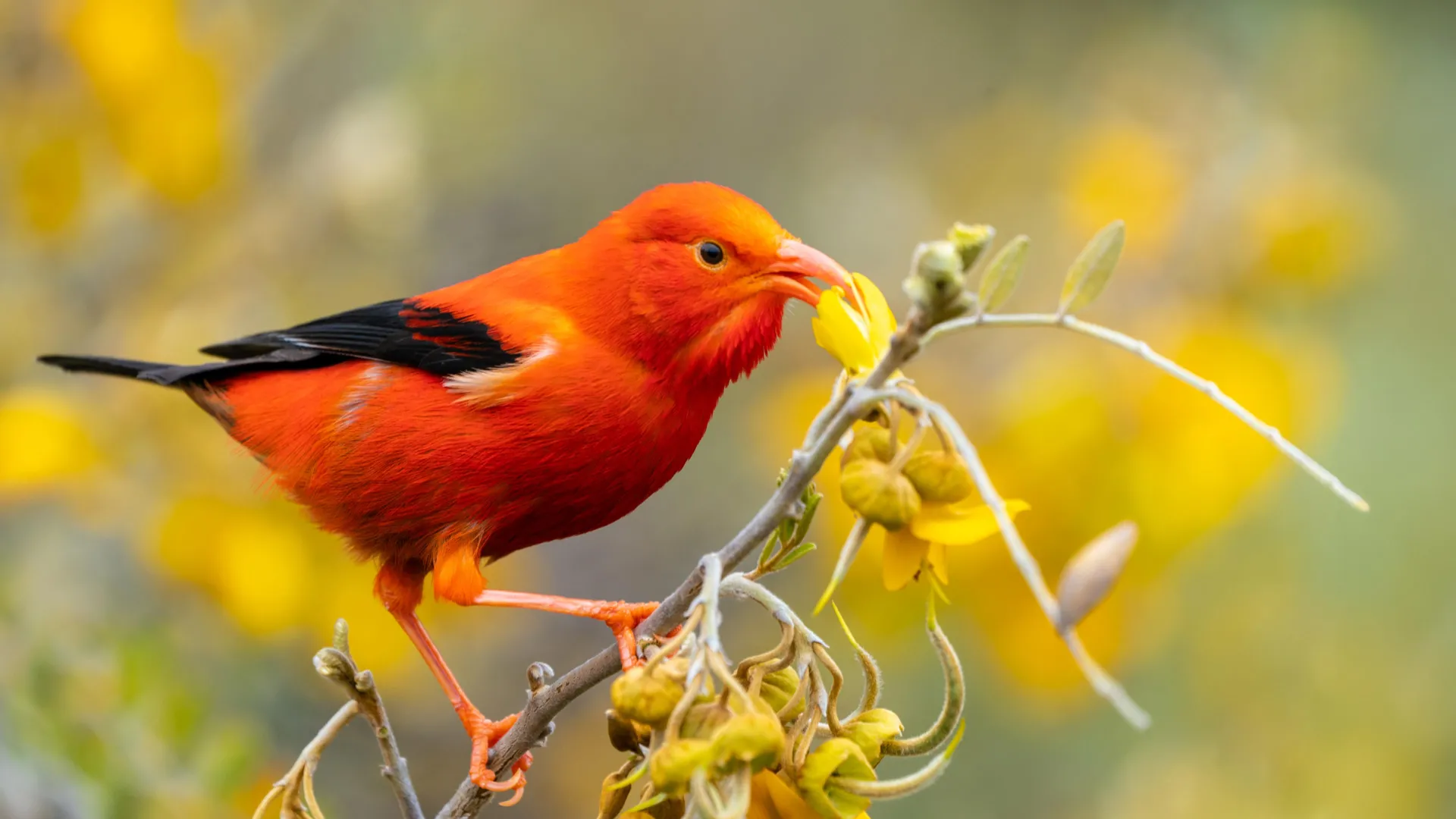
A sweeping new study led by a researcher at the University of Hawaiʻi at Mānoa, in collaboration with the University of California, Santa Cruz, has delivered a sobering revelation for conservation efforts in the archipelago: almost every forest bird species in Hawaiʻi possesses the ability to transmit avian malaria. This pervasive capacity for infection dissemination provides a critical, albeit grim, explanation for the disease’s ubiquitous presence across nearly all mosquito-inhabited regions of the islands, profoundly escalating the urgency for advanced vector control measures to protect the state’s imperiled native avifauna.
The Silent Spreaders: Unpacking the Study’s Revelations
The groundbreaking findings, meticulously detailed and published on February 10 in the esteemed scientific journal Nature Communications, are the culmination of extensive fieldwork and laboratory analysis. The research team detected avian malaria at an alarming 63 of the 64 locations sampled statewide, encompassing a diverse array of forest ecosystems with vastly different compositions of bird species. This near-universal prevalence underscores the insidious nature of the illness, which is caused by the generalist parasite Plasmodium relictum. For generations, this parasite has played a central and devastating role in the steep declines and, tragically, the extinctions of many of Hawaiʻi’s iconic native honeycreepers, a family of birds renowned for their extraordinary evolutionary adaptations and vibrant plumage.
Christa M. Seidl, the mosquito research and control coordinator for the Maui Forest Bird Recovery Project, spearheaded this critical research as part of her doctoral studies at the University of California, Santa Cruz. Her insights highlight the profound challenge now facing conservationists. "Avian malaria has taken a devastating toll on Hawaiʻi’s native forest birds, and this study shows why the disease has been so difficult to contain," Seidl stated. "When so many bird species can quietly sustain transmission, it narrows the options for protecting native birds and makes mosquito control not just helpful, but absolutely essential to preventing further extinctions." This statement marks a significant shift in understanding, moving beyond the previous focus on a few key "reservoir hosts" to acknowledging a much broader and more complex transmission network.
A History of Vulnerability: Avian Malaria’s Hawaiian Journey
The current crisis facing Hawaiian forest birds is deeply rooted in a confluence of historical events, beginning with the unintentional introduction of non-native species. The primary vector for avian malaria in Hawaiʻi, the southern house mosquito (Culex quinquefasciatus), made its fateful arrival in 1826. This species, likely transported on whaling ships, found an ideal breeding ground in the islands’ warm, humid climate and burgeoning human settlements. For decades, the mosquitoes proliferated, establishing themselves across the lower and mid-elevations.
However, the true biological weapon arrived later. The Plasmodium relictum parasite itself is believed to have been introduced to Hawaiʻi in the early 20th century, hitchhiking with non-native bird species brought to the islands, either as ornamental birds or for pest control. Unlike the native Hawaiian avifauna, these introduced birds often carried a degree of immunity to avian malaria, having co-evolved with the parasite in their ancestral homelands.
The native Hawaiian birds, by contrast, had evolved in splendid isolation for millions of years, devoid of exposure to avian malaria. This lack of evolutionary defense left them exquisitely vulnerable to the introduced pathogen. Their immune systems were utterly unprepared to combat Plasmodium relictum, leading to catastrophic mortality rates. The unique evolutionary radiation of the Hawaiian honeycreepers, which diversified into over 50 species from a single ancestral finch, became a tragic testament to their ecological fragility in the face of novel disease. These birds, ranging from nectar-feeders with curved bills to seed-eaters with stout beaks, once filled every ecological niche in the Hawaiian forests. Today, many are gone, and others cling to existence by a thread.
The consequences of this vulnerability are stark. Avian malaria attacks red blood cells, leading to severe anemia, organ failure, significantly lower survival rates, and often, rapid death in susceptible species. For the ʻIʻiwi (Drepanis coccinea), also known as the scarlet honeycreeper, studies have revealed a staggering mortality rate of approximately 90 percent if infected. The ʻAkikiki (Oreomystis bairdi), a honeycreeper endemic to Kauaʻi, has recently been declared extinct in the wild, a tragic milestone attributed largely to the relentless pressure of avian malaria compounded by other threats. These are but two examples among many species that have faced similar fates or are on the precipice.
The Mechanics of a Menace: How Transmission Works
The study’s methodology was robust, combining extensive field surveillance with controlled laboratory experiments to dissect the intricate dynamics of avian malaria transmission. Researchers meticulously examined blood samples from over 4,000 birds captured across Hawaiʻi’s four main islands: Kauaʻi, Oʻahu, Maui, and Hawaiʻi Island. These field data, which provided a snapshot of infection prevalence, were then complemented by laboratory experiments designed to quantify how readily mosquitoes became infected after feeding on birds carrying the parasite. This dual approach allowed the team to move beyond simply identifying infected birds to understanding their actual capacity to transmit the disease to the mosquito vector.
The results painted a troubling picture, challenging previous assumptions about avian malaria ecology in Hawaiʻi. While many infectious diseases rely on a limited number of "super-spreader" species to maintain their spread, this research demonstrates that avian malaria operates under a different, more widespread paradigm in the Hawaiian context. The study found that most forest birds, irrespective of whether they were native or introduced species, possessed at least a moderate capability of infecting the southern house mosquito. Critically, even birds carrying very small, almost undetectable, amounts of the parasite were still able to infect mosquitoes. This revelation signifies that a vast array of bird communities, even those with seemingly low infection rates, can effectively maintain ongoing transmission of Plasmodium relictum.
"We often understandably think first of the birds when we think of avian malaria, but the parasite needs mosquitoes to reproduce and our work highlights just how good it has gotten at infecting them through many different birds," Seidl explained, emphasizing the critical role of the mosquito vector in the disease cycle. The parasite’s success in Hawaiʻi, therefore, is not just about its virulence in birds, but its remarkable adaptability in exploiting a wide range of avian hosts to complete its life cycle through the mosquito.
A particularly significant finding of the study was the prevalence of chronic infections. Researchers discovered that birds can carry the Plasmodium relictum parasite for extended periods—months, or even years—without necessarily displaying severe symptoms. During this protracted, low-level infectious stage, when birds may appear only mildly affected, they remain fully capable of passing the parasite to feeding mosquitoes. The researchers estimate that this long-lasting, low to moderate infectious stage accounts for the majority of avian malaria transmission across the statewide landscape. This mechanism ensures a continuous reservoir of the parasite, making eradication or even significant reduction of the disease exceedingly difficult without direct intervention on the vector itself.
Shrinking Sanctuaries: Climate Change as an Accelerant
The parasite’s newfound confirmed ability to infect a broad spectrum of bird species provides a stark explanation for why avian malaria is so widespread across the Hawaiian Islands. The study’s findings suggest that very few mosquito-infested habitats now remain truly free of transmission risk. This broad transmission capacity is being critically exacerbated by another existential threat: climate change.
Historically, higher elevation forests on Hawaiʻi’s mountains have served as crucial refugia for native birds. These areas were typically too cool for the southern house mosquito to thrive, creating natural sanctuaries where susceptible native species could live and breed without the constant threat of malaria. However, as global temperatures rise, these critical havens are rapidly shrinking. Warming temperatures are allowing mosquitoes and, consequently, avian malaria to expand their range into progressively higher elevation areas. This upward migration of the disease vector is systematically dismantling the last remaining strongholds of vulnerable native bird populations, pushing them further towards extinction. The ʻAlalā, or Hawaiian crow, for example, which was once widespread, is now critically endangered, with efforts to reintroduce it into the wild facing immense challenges from malaria at lower elevations. The ʻAkepa and Maui Parrotbill, two other highly endangered honeycreepers, also rely on these shrinking high-elevation forests.
The encroachment of mosquitoes and malaria into these previously safe zones creates an ecological squeeze, trapping native birds between the expanding disease front and existing threats like habitat loss and invasive predators at lower elevations. This dynamic underscores the urgent and multifaceted nature of the conservation crisis in Hawaiʻi.
A Unified Front: Conservation Efforts and Reactions
The implications of this comprehensive study resonate deeply within the scientific and conservation communities dedicated to preserving Hawaiʻi’s unique biodiversity. Christa Seidl’s research provides an undeniable scientific foundation for the initiatives already underway. Her work, conducted as part of her PhD, is directly informing the strategies of the Maui Forest Bird Recovery Project, a critical organization working on the front lines of avian conservation. The project operates under the auspices of the Pacific Cooperative Studies Unit in the College of Natural Sciences, ensuring rigorous scientific oversight and collaboration. All birds involved in the study were captured and handled by highly trained ornithologists operating under strict state and federal permits, upholding ethical research standards.
This study’s findings are particularly pertinent to the "Birds, Not Mosquitoes" collaboration, a diverse partnership encompassing academic institutions, state and federal agencies, non-profit organizations, and industry partners. This coalition was formed with the explicit mission to advance innovative mosquito control strategies in support of Hawaiian bird conservation. The new data unequivocally reinforces their long-held conviction that direct, landscape-scale mosquito control is not merely an option, but an absolute imperative.
Leaders within the "Birds, Not Mosquitoes" coalition, while not explicitly quoted in the original article, would undoubtedly view this study as a pivotal moment, validating their urgent calls for action. They are actively exploring and developing advanced mosquito control techniques, most notably the Incompatible Insect Technique (IIT) using the naturally occurring Wolbachia bacterium. This technique involves releasing male mosquitoes carrying a specific strain of Wolbachia that, when they mate with wild females, results in non-viable eggs. This method offers a species-specific, environmentally sound approach to suppress mosquito populations without pesticides, and the new study significantly bolsters the scientific rationale for its rapid deployment.
Statements from key stakeholders, such as the Hawaiʻi Department of Land and Natural Resources (DLNR) and the U.S. Fish and Wildlife Service (USFWS), though inferred, would likely echo a heightened sense of urgency. These agencies, responsible for the management and protection of Hawaiʻi’s natural resources and endangered species, would emphasize the need for accelerated implementation of mosquito control measures, given the pervasive threat confirmed by the study. The research provides undeniable evidence that the window of opportunity to save several species of honeycreepers is rapidly closing, making immediate and decisive action paramount.
Beyond the Data: Broader Ecological and Cultural Implications
The loss of native Hawaiian birds transcends mere biodiversity statistics; it represents an irreplaceable diminishment of the state’s natural heritage, with profound ecological and cultural consequences. These birds are not just beautiful creatures; they are integral components of Hawaiʻi’s unique ecosystems, playing roles in pollination, seed dispersal, and insect control. Their decline destabilizes forest health and ecosystem resilience.
Culturally, native birds hold immense significance for Native Hawaiians, featuring prominently in legends, chants, and traditional practices. The vibrant feathers of honeycreepers were historically used to craft exquisite cloaks and helmets for aliʻi (chiefs), symbolizing status and spiritual connection to the land. The silence of forests once filled with their songs is a poignant loss, severing a tangible link to ancestral traditions and the spiritual fabric of the islands.
The findings of Seidl’s study present a formidable challenge, underscoring the complexity and scale of the avian malaria problem. It reveals that the fight to save Hawaiʻi’s forest birds is not against a localized threat but a systemic, island-wide contagion, perpetuated by nearly every feathered resident. However, the clarity of this understanding also provides a focused path forward. The imperative is clear: comprehensive, innovative, and aggressive mosquito control is no longer an optional conservation tool, but the singular, essential strategy to prevent further extinctions and ensure that the unique songs of Hawaiʻi’s native forest birds do not fade into history. The fate of these irreplaceable species now hinges on the swift and concerted efforts of scientists, conservationists, government agencies, and the community to deploy effective solutions before it is too late.
