
For decades, the prevailing scientific consensus held that dinosaur fossils were little more than mineralized rock, with any original biological material, particularly complex organic molecules like proteins, having long since been destroyed by the relentless march of geological time. This fundamental assumption, deeply ingrained in paleontological thought, dictated how researchers approached the study of ancient life. However, an extraordinary new study, meticulously centered on a remarkably preserved Edmontosaurus fossil, is now powerfully challenging this long-held belief, offering compelling evidence that traces of original organic molecules, including collagen, can indeed persist within dinosaur bones dating back approximately 66 million years. This groundbreaking discovery adds robust new support to a controversial idea that has sharply divided paleontologists for more than three decades, promising to reshape our understanding of fossilization and the potential for molecular insights into extinct animals.
The Edmontosaurus at the Heart of the Discovery
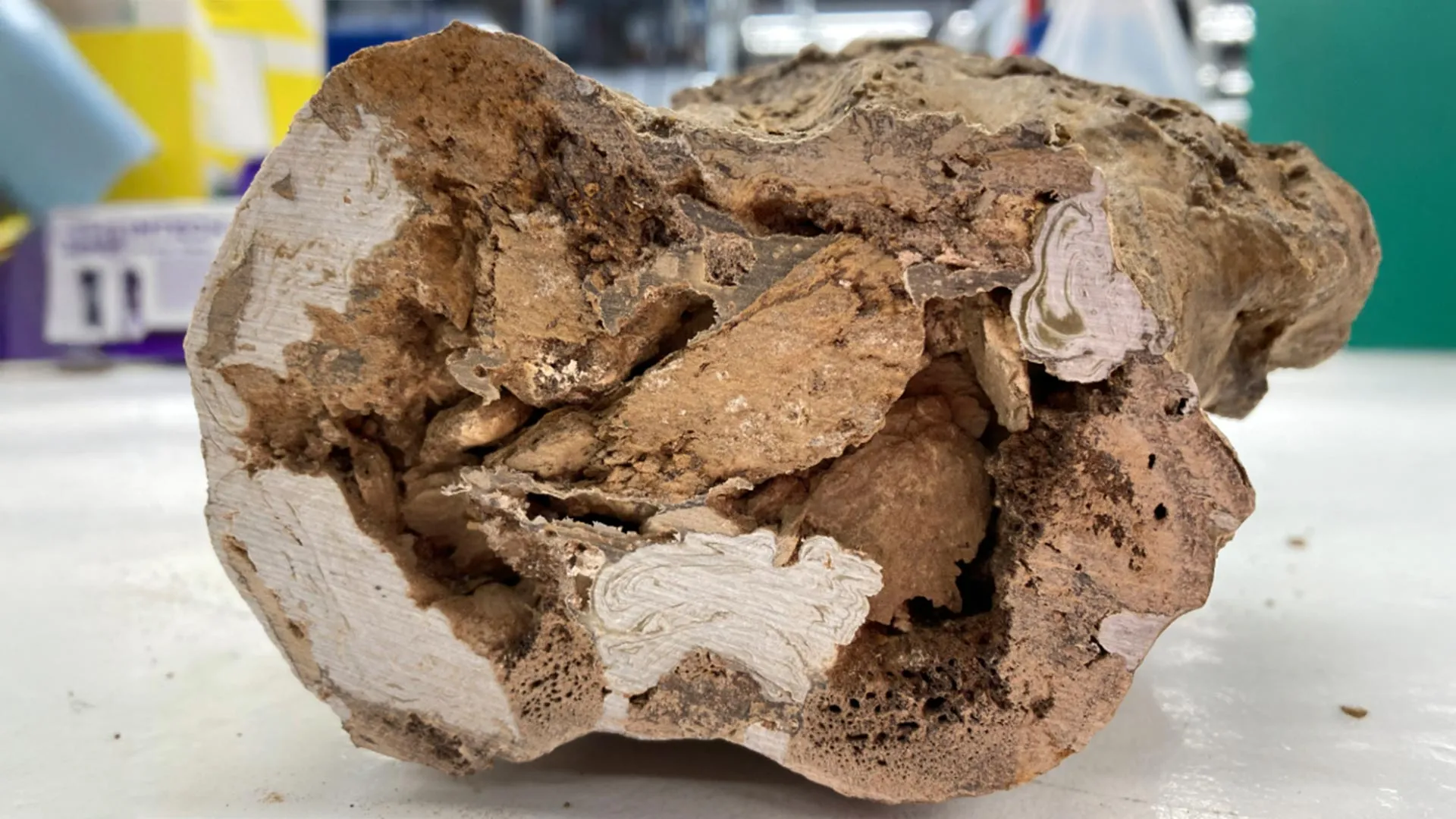
The fossil specimen at the core of this pivotal research is a 22-kilogram sacrum, a part of the dinosaur’s hip region, belonging to an Edmontosaurus. This particular fossil was recovered from the world-renowned Hell Creek Formation in South Dakota, a geological treasure trove famous for its exceptionally well-preserved late Cretaceous period fossils, including those of Tyrannosaurus rex. Edmontosaurus, a large, duck-billed plant-eater, was a ubiquitous herbivore that roamed the landscapes of North America during the very end of the Cretaceous Period, coexisting with formidable predators like T. rex just before the catastrophic asteroid impact that ended the age of dinosaurs. The preservation quality of this specific Edmontosaurus sacrum was critical to the study’s success, highlighting the importance of rare taphonomic conditions that allow for such delicate molecular remnants to endure. The Hell Creek Formation is particularly known for specimens that exhibit extraordinary preservation, sometimes even including detailed skin impressions, earning them the moniker "dinosaur mummies," a phenomenon that further underscores the unique conditions at play in this region.
Unveiling Ancient Proteins: The Methodological Rigor
Researchers, primarily led by the University of Liverpool and involving contributions from UCLA, employed a sophisticated arsenal of advanced laboratory methods to scrutinize the fossilized bone. This multi-pronged approach was crucial for ensuring the integrity and authenticity of their findings, directly addressing the skepticism that has historically plagued claims of ancient biomolecule preservation. Key techniques included protein sequencing, which allows scientists to determine the amino acid sequence of a protein, and several forms of mass spectrometry, such as Matrix-Assisted Laser Desorption/Ionization Time-of-Flight (MALDI-TOF) and Liquid Chromatography-Mass Spectrometry/Mass Spectrometry (LC-MS/MS). These highly sensitive analytical tools enabled the scientists to detect and characterize minute remnants of collagen embedded within the fossilized bone matrix.
Collagen, the most abundant protein in mammals, is the primary structural protein found in bone tissue, cartilage, tendons, and skin. Its complex triple-helix structure provides strength and flexibility to these tissues. Crucially, collagen is one of the hardest biomolecules to explain away as modern contamination when identified in a fossilized context due to its distinct molecular signature and its integral role within bone structure. The detection of collagen, therefore, offers a compelling argument against the presence of merely environmental contaminants or microbial biofilms. Adding another layer of verification, researchers from UCLA independently identified hydroxyproline, a unique amino acid that is strongly associated with collagen, particularly in bone tissue. This specific identification served as an important biochemical confirmation, significantly strengthening the case that the degraded collagen fragments detected were genuinely present inside the 66-million-year-old fossil and not the result of external contamination.
Professor Steve Taylor, chair of the Mass Spectrometry Research Group at the University of Liverpool’s Department of Electrical Engineering & Electronics, emphasized the robustness of their findings: "This research shows beyond doubt that organic biomolecules, such as proteins like collagen, appear to be present in some fossils." He further elaborated on the profound implications, stating, "Our results have far-reaching implications. Firstly, it refutes the hypothesis that any organics found in fossils must result from contamination." This statement directly confronts the primary argument of skeptics in the long-running debate over dinosaur soft tissues.
A Scientific Paradigm Shift: Challenging Decades of Dogma
Claims of preserved soft tissues and proteins in dinosaur fossils have ignited fierce debate within the paleontological community since the early 2000s. For decades prior, the prevailing wisdom, rooted in the understanding of molecular degradation rates, dictated that complex organic molecules simply could not survive for tens of millions of years. Fossils were understood as mineral replacements, faithful copies in stone, but devoid of original biological chemistry.
This paradigm was first dramatically challenged in 2005 when paleontologist Mary Schweitzer and her colleagues at North Carolina State University reported the astounding discovery of what appeared to be flexible soft tissue structures, including possible blood vessels and cells, inside the femur of a Tyrannosaurus rex fossil recovered from the Hell Creek Formation. This finding sent shockwaves through the scientific community. While some hailed it as a monumental breakthrough, many others expressed deep skepticism, arguing that the reported materials were either modern contamination, bacterial biofilms, or artifacts of the fossilization process rather than authentic dinosaur molecules. The debate intensified with subsequent studies that identified possible collagen and blood vessel-like structures in additional dinosaur specimens, including hadrosaurs related to Edmontosaurus.
The new Edmontosaurus analysis stands out precisely because of the unprecedented rigor of its methodology. The research team meticulously used multiple independent testing methods—combining high-resolution microscopy to visualize structures, sophisticated chemical analysis to identify molecular components, and protein sequencing to confirm their identity—all applied to the same fossil specimen. This comprehensive, multi-faceted approach was specifically designed to rule out contamination and bolster the case that the identified molecules were truly original to the dinosaur itself. The peer-reviewed findings were published in the prestigious journal Analytical Chemistry in 2025 under the title "Evidence for Endogenous Collagen in Edmontosaurus Fossil Bone," a testament to the scientific community’s recognition of the study’s methodological soundness and significant contribution.
The Unfolding Timeline of Discovery
The journey to this groundbreaking Edmontosaurus discovery is built upon a progressive timeline of scientific inquiry and increasing methodological sophistication:
- Early 2000s: Initial, often anecdotal, observations of unusual preservation in certain fossils begin to pique interest, though largely dismissed by the broader scientific community.
- 2005: Mary Schweitzer and her team publish their seminal paper in Science, reporting seemingly preserved soft tissues and potential blood vessels in a T. rex femur. This ignites widespread scientific debate and skepticism.
- Late 2000s – Early 2010s: Subsequent studies by Schweitzer and others report similar findings in additional dinosaur specimens, including hadrosaurs, leading to further analyses and attempts to replicate the results, often with mixed or inconclusive outcomes, fueling the controversy. Arguments for contamination or bacterial origins remain strong.
- Mid-2010s: Advancements in analytical chemistry, particularly in mass spectrometry and protein sequencing, begin to offer more precise tools for molecular identification at extremely low concentrations, pushing the boundaries of what is detectable in ancient samples.
- Late 2010s – Early 2020s: Research groups, including those from the University of Liverpool and UCLA, embark on studies leveraging these advanced techniques, focusing on exceptionally preserved fossils and employing stringent contamination controls.
- 2025: The publication in Analytical Chemistry of the Edmontosaurus collagen discovery, utilizing multiple independent methods, marks a significant milestone in validating the presence of endogenous proteins in dinosaur fossils, substantially shifting the weight of evidence in the long-running debate.
This chronology illustrates a gradual, yet persistent, chipping away at long-held assumptions, driven by technological innovation and rigorous scientific methodology.
The Enduring Mystery: How Molecules Survive Millions of Years
The discovery of protein remnants in 66-million-year-old bone naturally prompts a fascinating and complex scientific question: how did these delicate molecules survive for such an unimaginable span of time? Proteins are inherently unstable; they normally break down relatively quickly through hydrolysis and enzymatic degradation, especially across geological timescales. Yet, certain fossils appear capable of preserving microscopic biological structures and even molecular fragments under specific, highly unusual conditions.
Scientists are increasingly investigating the intricate processes of taphonomy – the study of how organisms decay and become fossilized – to unravel this mystery. One leading hypothesis explores whether specific mineral interactions inside bone may play a crucial role in shielding fragments of collagen from complete decay. For instance, iron, released from hemoglobin during the breakdown of blood, has been proposed to act as a potent preservative, forming cross-links between proteins and preventing microbial degradation, essentially "embalming" the tissues. Other theories suggest that the dense mineral matrix of bone (calcium phosphate) might physically encapsulate and protect collagen fibers, creating a microenvironment where degradation is dramatically slowed. Certain burial environments, such as rapid burial in anoxic (oxygen-depleted) sediments, can also significantly inhibit microbial activity and chemical breakdown, further contributing to exceptional preservation.
It is no coincidence that this groundbreaking discovery involves an Edmontosaurus fossil. Edmontosaurus specimens are already famous within paleontology for their exceptional preservation. Over the last century, numerous discoveries of Edmontosaurus fossils have included remarkably detailed skin impressions, and in some rare cases, even other soft tissue features, leading to their famous designation as "dinosaur mummies." More recent paleontology research has continued to uncover surprisingly detailed soft tissue preservation in Edmontosaurus specimens, including evidence of fleshy structures and preserved skin anatomy, indicating that the conditions conducive to molecular survival might have been particularly prevalent for this genus in certain regions. These unique taphonomic pathways, coupled with the inherent protective qualities of bone, likely contributed to the extraordinary survival of collagen in this particular Edmontosaurus sacrum.
Profound Implications for Paleontology and Beyond
The implications of definitively establishing the presence of endogenous proteins in dinosaur fossils are profound and far-reaching, promising to revolutionize several fields of scientific inquiry.
Firstly, if proteins can indeed survive in fossils for tens of millions of years, scientists may gain an entirely new and unprecedented way to study extinct animals. The molecular data encapsulated within these ancient biomolecules could provide an unparalleled window into the biology of dinosaurs that skeletal remains alone cannot offer. Tiny molecular traces could potentially reveal evolutionary relationships between dinosaur species with a level of precision previously thought impossible, allowing for the construction of molecular phylogenies for creatures long extinct. This could resolve long-standing debates about the evolutionary tree of dinosaurs and their relationship to modern birds.
Furthermore, molecular analysis could unlock secrets about dinosaur growth, aging processes, metabolism, physiology, and even ancient diseases. Proteins carry a wealth of information about an organism’s internal workings, including diet, environment, and stress. Understanding the molecular composition of dinosaur tissues could provide insights into their warm-bloodedness (or lack thereof), their reproductive strategies, or their immune systems. For instance, the discovery of specific proteins associated with disease markers could reveal prevalent pathologies in ancient populations.
Professor Taylor also noted that this discovery necessitates a re-evaluation of fossil samples collected over the past century. He suggested that cross-polarized light microscopy images, taken decades ago and now residing in museum archives, could contain overlooked evidence of preserved collagen in ancient bones. "These images may reveal intact patches of bone collagen, potentially offering a ready-made trove of fossil candidates for further protein analysis," Taylor explained. "This could unlock new insights into dinosaurs, for example revealing connections between dinosaur species that remain unknown." This call to revisit existing collections underscores the transformative potential of the new understanding, turning old data into new frontiers of research.
Beyond paleontology, the study’s findings have broader implications for biogeochemistry, astrobiology, and the understanding of molecular stability in extreme environments. If complex organic molecules can persist for geological timescales under specific conditions on Earth, it expands our conceptual framework for the potential discovery of ancient biomolecules on other planetary bodies, or even the survival of biosignatures in very old terrestrial rocks, further informing the search for extraterrestrial life and the origins of life on Earth.
Together, these groundbreaking discoveries are fundamentally reshaping how scientists conceptualize fossils. Instead of viewing them solely as stone replicas or mineralized casts of ancient bones, researchers are increasingly beginning to see some fossils as potential molecular time capsules. These remarkable specimens may still preserve faint, yet invaluable, traces of prehistoric biology, offering a direct chemical link to life that thrived millions of years ago and opening up entirely new avenues for understanding Earth’s deep past.
