
Fifty years ago, Donald Griffin’s groundbreaking 1976 book, The Question of Animal Awareness, shattered prevailing scientific dogma by proposing that nonhuman animals possessed consciousness and even discernible levels of self-awareness comparable to humans. At the time, the scientific community largely adhered to the view that animals were primarily instinct-driven beings, their actions merely learned responses to stimuli based on reward and punishment. This perspective, as reviewed by Pepperberg (1999), was deeply entrenched. Today, the question of nonhuman consciousness, particularly its extent and how to reliably assess it in non-primate species like birds, remains a vibrant and complex area of scientific inquiry. This ongoing debate has recently gained renewed momentum with the signing of a declaration by hundreds of scientists (Andrews et al., 2024), asserting that "strong scientific support" exists for the consciousness of mammals, birds, and potentially all other vertebrates. However, the challenge of providing definitive proof of consciousness, for both humans and nonhumans, persists.
The Evolving Landscape of Consciousness Research
The scientific pursuit of understanding animal consciousness has traversed a complex path since Griffin’s initial proposition. Early research often focused on observable behaviors, struggling to bridge the gap between external actions and internal subjective experience. The prevailing paradigm viewed animals as sophisticated automatons, driven by biological imperatives and conditioned responses, a perspective that left little room for concepts like subjective feelings or self-awareness.
Griffin’s work marked a significant departure, urging scientists to consider the possibility of inner lives in animals. This shift in perspective, however, was not immediately embraced. It took decades for the scientific community to begin seriously grappling with the implications of his research. The subsequent decades saw a gradual accumulation of evidence from various fields, including ethology, comparative psychology, and neuroscience, all contributing to a more nuanced understanding of animal cognition and behavior.
Sentience as a Proxy for Consciousness
A common approach in contemporary research is to examine sentience – the capacity to experience emotions and sensations – as a potential indicator of consciousness. This metric, however, introduces its own set of profound questions. How can we reliably assess emotions and sensations in nonhuman beings? Given the inherent difficulties humans face in articulating and even understanding their own emotional states, as noted by Plutchik (2001), extrapolating these experiences to other species presents a formidable challenge.
While focusing on a single sensation, such as sensitivity to pain, might offer a more manageable starting point, it is widely acknowledged that this would represent a fundamentally basic level of inquiry. Pain sensitivity, while crucial for welfare considerations, is unlikely to be a sufficient criterion for arguing the presence of human-like consciousness. The quest for a comprehensive understanding continues, pushing the boundaries of scientific methodology.
The Complexity of Measuring Cognitive Abilities
Researchers like Birch et al. (2020) and Bayne et al. (2024) have developed sophisticated metrics for evaluating consciousness. While these frameworks are intellectually stimulating, they often carry a discernible bias towards human cognitive capacities, potentially overlooking unique forms of consciousness that might manifest differently in other species.
Several decades ago, a significant contribution to this field emerged from the collaboration between Irene Pepperberg and S.K. Lynn (2000). They proposed the existence of distinct levels of consciousness, positing a correlation between these levels and quantifiable cognitive abilities within a species. Their hypothesis suggested that these cognitive processing levels were likely shaped by evolutionary factors, including homologous or convergent brain evolution, the development of specific perceptual structures, and the evolution of learning mechanisms. This perspective opened new avenues for research, prompting investigations into whether parallels existed between human and nonhuman cognitive processes, and whether a “neural correlate of consciousness” (NCC) could be identified across species. The ongoing struggle to pinpoint an NCC even in humans (Cognitive Consortium, 2025) underscores the immense complexity of this endeavor when applied to nonhuman animals.
The AI Conundrum and the Return to Sentience
The rapid advancements in Artificial Intelligence (AI) have added another layer of complexity to the consciousness debate. If pure processing power were the sole determinant of consciousness, then sophisticated AI systems might be considered candidates. However, current AI, despite its impressive capabilities, demonstrably lacks self-awareness, leading some researchers to re-evaluate the primacy of higher-order cognitive processing over sentience (Block, 2025). This divergence prompts a critical question: should the focus shift back to examining sentience as a more fundamental aspect of consciousness, or is there a more integrated approach required?
The Scientific Debate Around Animal Consciousness
The scientific community is actively engaged in a multifaceted debate surrounding animal consciousness. The declaration by Andrews et al. (2024) represents a significant milestone, signaling a growing consensus among researchers regarding the evidence for nonhuman consciousness. This declaration was preceded by extensive discussions and research, aiming to synthesize existing knowledge and provide a unified stance. The impetus behind such declarations often stems from a desire to influence policy and ethical considerations, particularly in areas related to animal welfare and conservation.
The core challenge lies in defining and measuring consciousness. While sentience is a key component, many researchers argue that full consciousness entails more than just the capacity to feel. It includes the monitoring of sensory inputs and mental states, the executive control of decision-making and voluntary actions, and crucially, an awareness of one’s own thoughts – the metacognitive ability of "being aware that one is aware." This self-awareness is particularly elusive in nonhuman animals, especially those lacking the symbolic language to explicitly report on their subjective experiences.
Behavioral Indicators of Self-Awareness: The Case of Delayed Gratification
Faced with these challenges, researchers are exploring alternative avenues to infer consciousness and self-awareness. One promising approach involves examining behavioral patterns and task completion in nonhumans that, when observed in humans, are considered indicative of self-awareness. As outlined by Pepperberg (2026), these tasks require subjects to exhibit abilities that necessitate a degree of self-awareness to succeed.
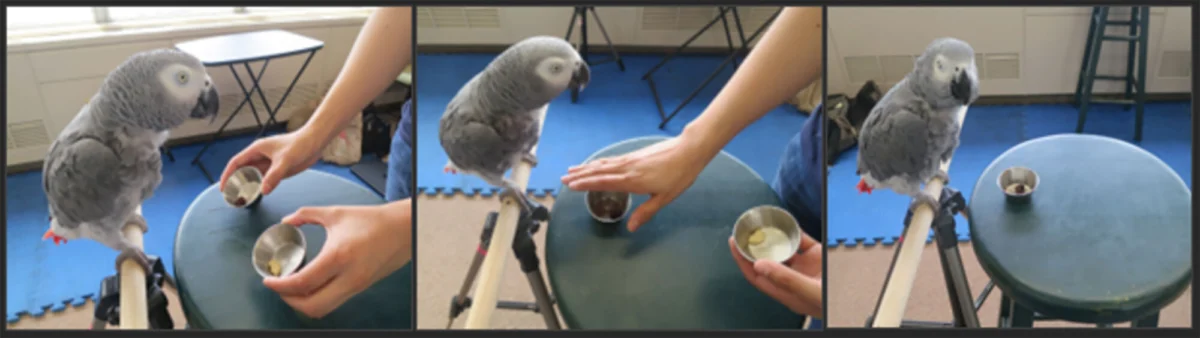
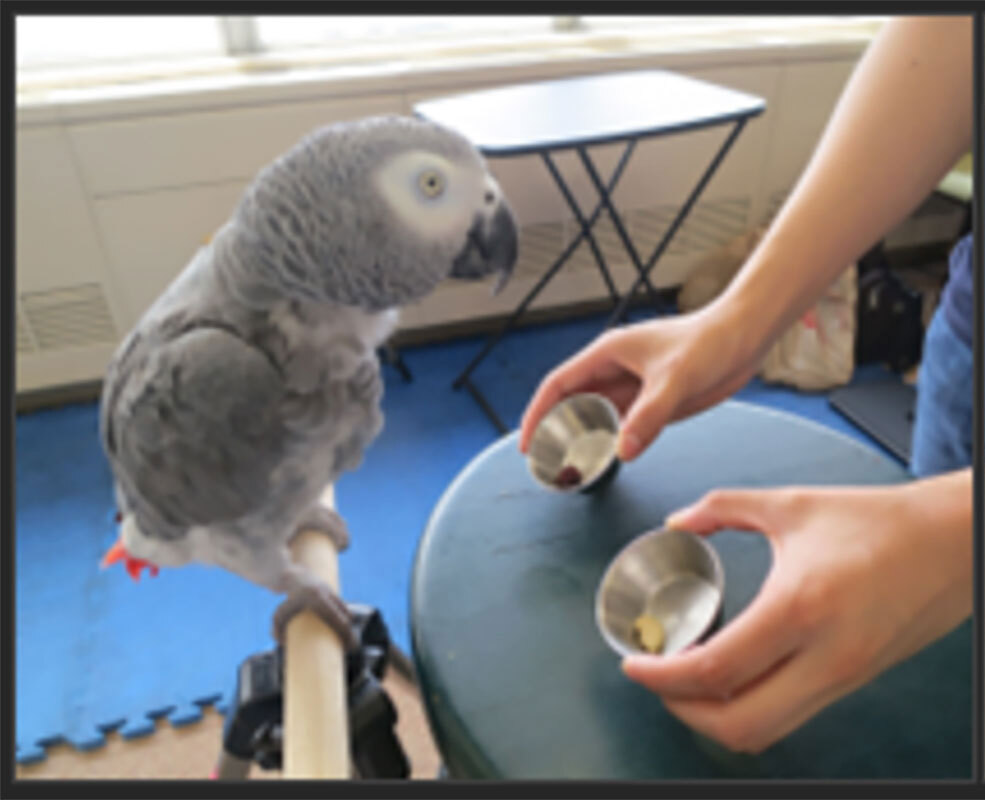
A compelling example is the task of delayed gratification. This involves a subject forgoing an immediate reward in favor of a larger or better reward that will be available after a waiting period. To successfully navigate such a task, an individual must:
- Recognize, understand, and suppress immediate impulses, needs, and desires.
- Comprehend the potential conflict between immediate satisfaction and long-term benefits.
- Maintain the long-term goal actively in memory.
- Devise and implement a strategy that involves sustained cognitive effort to achieve the ultimate reward.
Grey parrots, renowned for their remarkable cognitive abilities, have demonstrated a notable aptitude for succeeding in delayed gratification tasks (Koepke et al., 2015; Pepperberg & Hartsfield, 2023; Pepperberg & Rosenberger, 2022). Studies involving parrots like Griffin have illustrated this phenomenon, where the birds are presented with different reward options and are instructed to wait for a superior outcome. The ability of these birds to resist the allure of an immediate, albeit less desirable, treat in anticipation of a better one provides compelling behavioral evidence for complex cognitive processes, including impulse control and future planning, which are often associated with self-awareness.
While these behavioral observations, such as Griffin’s participation in delayed gratification experiments, do not constitute definitive proof of avian consciousness, they offer significant insights. These findings must be considered alongside other forms of evidence, such as those derived from established consciousness tests, to build a comprehensive picture of avian cognitive capabilities and conscious experience.
Implications for Animal Welfare and Conservation
The scientific exploration of nonhuman consciousness carries profound implications for how we interact with and treat other species. The difficulties in definitively proving consciousness do not diminish the ethical imperative to act with caution and compassion. In the spirit of the principle "Do no harm" (Andrews et al., 2024), even evidence that is merely indicative of consciousness should be integrated into the design of protocols for animal welfare, humane treatment, and conservation efforts.
The New York Declaration on Animal Consciousness, a significant development in this field, emphasizes the need for a more nuanced understanding of animal subjective experiences. This declaration, supported by a broad spectrum of scientific experts, calls for a re-evaluation of existing ethical frameworks and legal protections for animals, acknowledging their potential for rich inner lives.
Looking Ahead: A Prudent Approach to Coexistence
While the scientific quest for definitive proof of consciousness continues, a pragmatic approach is necessary for practical applications. When considering how best to coexist with nonhuman animals, a degree of prudence may necessitate a lowering of the stringent certainty levels typically required for scientific proof. This does not imply abandoning rigorous scientific inquiry, but rather acknowledging that in situations involving potential harm or well-being, a precautionary principle should guide our actions.
The ongoing research into grey parrot consciousness, exemplified by studies on delayed gratification, represents a vital step in this ongoing scientific journey. It underscores the importance of interdisciplinary collaboration, innovative research methodologies, and a willingness to challenge long-held assumptions about the nature of mind and awareness across the animal kingdom. The fifty-year journey since Griffin’s seminal work has transformed the conversation, moving from outright skepticism to a widespread acknowledgment of the complexity and potential depth of nonhuman subjective experience. The future of this field promises further revelations, demanding a continued commitment to empirical investigation and ethical reflection.
References
Andrews, K., Birch, J., Sebo, J., & Sims, T. (2024, April 19). Background to the New York Declaration on Animal Consciousness. nydeclaration.com
Bayne, T., Seth, A. K., Massimini, M., Shepherd, J., et al. (2024). Tests for consciousness in humans and beyond. Trends in Cognitive Science, 28(5), 454–466.
Birch, J., Schnell, A. K., & Clayton, N. S. (2020). Dimensions of animal consciousness. Trends in Cognitive Science, 24(10), 789–801.
Block, N. (2025). Can only meat machines be conscious?. Trends in Cognitive Sciences, 30(4), 298–308.
Cogitate Consortium. (2025). Adversarial testing of global neuronal workspace and integrated information theories of consciousness. Nature, 6422(8066), 133–142.
Griffin, D.R. (1976). The question of animal awareness. Rockefeller University Press.
Koepke, A. E., Gray, S. L., & Pepperberg, I. M. (2015). Delayed gratification: A Grey parrot ( Psittacus erithacus) will wait for a better reward. Journal of Comparative Psychology, 129(4), 339–346.
Pepperberg, I.M. (1999) The Alex studies. Harvard University Press.
Pepperberg, I.M. (2026). Comments on consciousness in Grey parrots. Comparative Cognition and Behavior Reviews. DOI:10.3819/CCBR.2026.210011
Pepperberg, I. M., & Hartsfield, L-A. (2023). A study of executive function in Grey parrots: Experience can affect delay of gratification. Journal of Comparative Psychology, 138(1), 8–19.
Pepperberg, I. M., & Lynn, S. K. (2000). Possible levels of animal consciousness with reference to Grey parrots (Psittacus erithacus). American Zoologist, 40(6), 893–901.
Pepperberg, I. M., & Rosenberger, V. A. (2022) Delayed gratification: A Grey parrot (Psittacus erithacus) will wait for more tokens. Journal of Comparative Psychology, 136(1), 79–89.
Plutchik, R. (2001). The nature of emotions: Human emotions have deep evolutionary roots, a fact that may explain their complexity and provide tools for clinical practice. American Scientist, 89(4), 344–350.
