
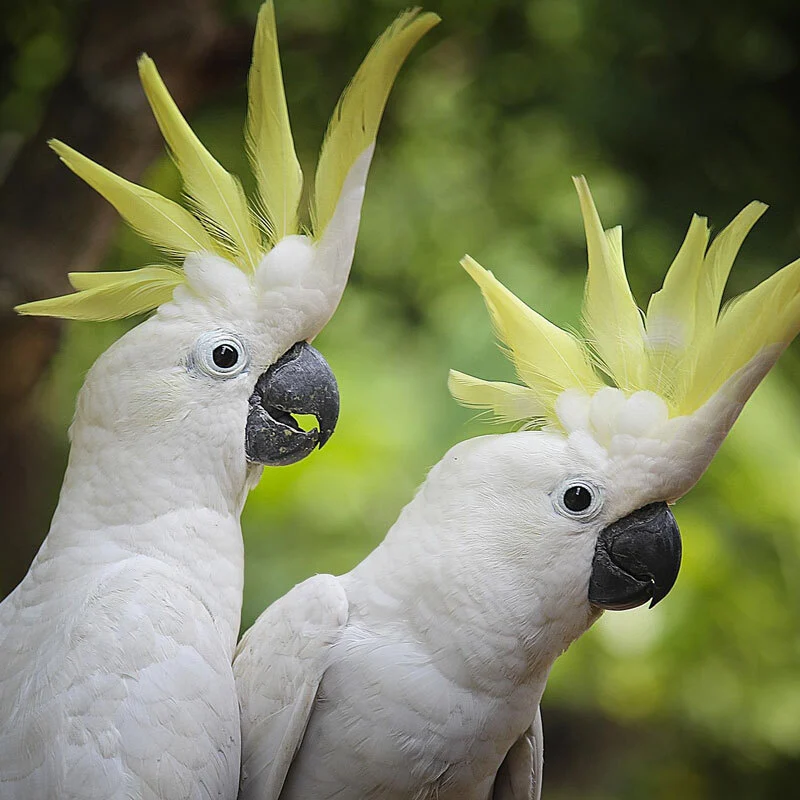
Researchers are increasingly delving into the complex cognitive abilities of birds, uncovering a sophisticated level of intelligence that often manifests in their social behaviors. A recent groundbreaking study published in PLOS Biology reveals that wild cockatoos, much like humans, engage in observational learning and adopt new behaviors based on the actions of their peers, particularly concerning novel food sources. This research sheds light on the intricate mechanisms of information transfer and behavioral adoption within avian communities, highlighting a striking parallel between human societal trends and the evolutionary adaptations of birds.
The study, a collaborative effort involving five researchers from prestigious institutions including the University of Konstanz in Germany, The Australian National University, the University of California Davis, and The University of Sydney in Australia, aimed to dissect the nuances of social learning in wild parrot populations. The primary focus was to understand how these intelligent birds develop an interest in trying unfamiliar foods, a critical aspect of survival and adaptation in diverse environments. The findings suggest that visual observation and the perceived actions of flock members play a pivotal role in overcoming neophobia, the fear of new things, especially when it comes to dietary choices.
The Genesis of a Study: Unraveling Avian Social Dynamics
The impetus for this research stemmed from a growing body of evidence indicating that birds are not merely instinct-driven creatures but possess remarkable cognitive capacities. Scientists have long observed complex social structures and problem-solving skills in various avian species, but the precise mechanisms of how new behaviors, particularly those related to resource acquisition, spread through a population remained a key area of inquiry. The researchers hypothesized that social learning, a process where individuals learn by observing and imitating others, would be a significant factor in the adoption of novel food items.
The study commenced with the identification of suitable study sites and the selection of a specific parrot species known for its social nature and adaptability: the Sulphur-crested Cockatoo (Cacatua galerita). These large, intelligent birds are common in urban and semi-urban environments across eastern Australia, making them ideal subjects for observing natural behaviors influenced by human presence and changing landscapes. The researchers meticulously selected five distinct roosting sites to ensure a representative sample of the population and to track the dissemination of learned behaviors across different social groups.
The Experiment: Colored Almonds as a Catalyst for Learning
The core of the experimental design involved introducing a novel food item – almonds in their shells – to the cockatoos in a way that encouraged social observation. To differentiate and potentially influence the birds’ choices, the almonds were colored. Specifically, two distinct colors, blue and red, were applied to the shells of the almonds. This coloration served as a visual cue, allowing researchers to easily identify which almonds were being consumed and by which individuals or groups.
The experimental protocol involved training a small group of four "demonstrator" cockatoos at each of the five roosts. These demonstrator birds were habituated to consume the colored almonds. The researchers then observed the behavior of the non-demonstrator birds within these roosts. The hypothesis was that the surrounding flock members would observe the demonstrator birds eating the colored almonds and, through social learning, eventually adopt this new food source themselves.
Observational Learning in Action: The Power of Witnessing
The results were compelling and provided strong evidence for the significance of social learning. In the initial stages, the majority of the cockatoos did not readily consume the colored almonds. This initial hesitation aligns with the concept of neophobia, a common trait in many animals, including birds, when encountering unfamiliar food. However, the behavior of the trained demonstrator birds proved to be a powerful catalyst.
Within a relatively short period, the cockatoos that were not initially trained began to show interest in the colored almonds, but only after observing the demonstrator birds actively eating them. This observation phase was crucial. The non-demonstrator birds would watch their flock mates, seemingly evaluating the safety and palatability of the new food. Once they witnessed others successfully consuming the colored almonds, their own willingness to try them increased significantly.
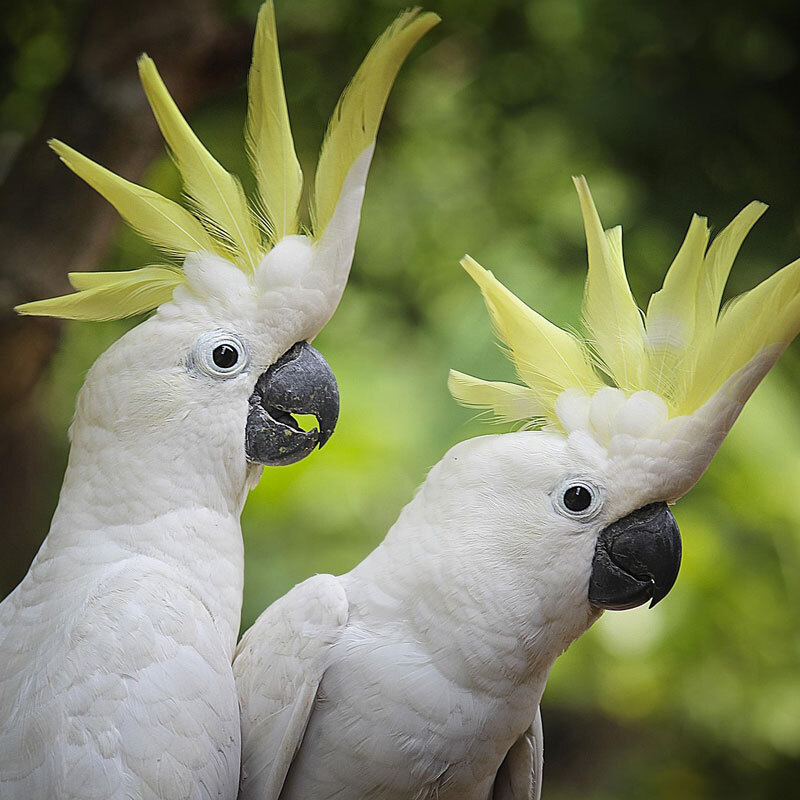
A particularly insightful observation occurred in one of the roosts. Birds in this location were slower to adopt the new food. However, the dynamic shifted dramatically when a cockatoo from a different, previously established roost – one where the colored almonds had already been accepted – arrived. This newcomer immediately began consuming the colored almonds, and within minutes, the other birds in that roost followed suit. This instance underscores the role of conspecifics (individuals of the same species) as reliable sources of information, especially in novel situations. The presence of a bird already familiar with and accepting of the new food acted as a strong social cue, overcoming the initial hesitation of the local population.
The Ripple Effect: Broader Adoption and Age-Related Differences
Over the course of the 20-day experiment, the impact of social learning became widespread. The study meticulously tracked the consumption of colored almonds across all five marked roosts, involving a total of 349 Sulphur-crested Cockatoos. By the end of the experimental period, a significant proportion of these birds were actively consuming and apparently enjoying the colored almonds. This widespread adoption was a direct consequence of observing and learning from their flock members.
An intriguing aspect of the findings mirrored human societal trends: the younger birds were generally quicker to adapt to the new behavior. This suggests that younger individuals may be more receptive to novel experiences and less entrenched in established routines. Their willingness to experiment and adopt new behaviors set a precedent for the older members of the flock. While older birds might have initially exhibited more caution, they eventually engaged in the behavior after observing their younger companions, demonstrating an indirect influence of the younger generation on the older one. This dynamic highlights a nuanced social hierarchy where information and behavioral norms can flow in multiple directions, not just from older to younger individuals.
Societal Dynamics and Information Dissemination
The study’s conclusions strongly suggest that ongoing societal behavioral changes within a group can lead to a wider acceptance of similar behaviors by others. The proximity of roosting communities played a significant role in the speed of adaptation. Communities that were closer to each other and likely had more social interaction among their members adopted the new behavior more rapidly. This implies that the density and nature of social connections within a bird population directly influence the efficiency of information transfer and behavioral diffusion.
This phenomenon is remarkably analogous to how trends spread through human societies. Whether it’s fashion, technology, or social customs, individuals often observe the adoption of these trends by their peers before fully embracing them. The initial adoption by early adopters, often younger or more open-minded individuals, influences the broader population. The speed at which a trend catches on is also influenced by the interconnectedness of social networks.
Broader Implications: Beyond Food Preferences
The implications of this research extend far beyond simple dietary preferences. This study provides robust evidence for the sophisticated cognitive abilities of birds and their capacity for complex social learning. It suggests that many behaviors observed in wild bird populations, from foraging strategies to migration patterns and even responses to environmental changes, may be significantly influenced by social learning.
- Conservation Efforts: Understanding how birds learn and adapt is crucial for effective conservation strategies. If new food sources or habitat changes are introduced, knowing that social learning plays a role can inform how best to encourage adoption and minimize stress on populations. For instance, introducing a new, beneficial food source might be more successful if strategically placed where influential individuals are likely to discover and consume it first.
- Urban Adaptation: As birds increasingly inhabit urban environments, their ability to adapt to novel resources and challenges is paramount. This study demonstrates that urban birds are adept at learning from each other, which can be a key factor in their success in human-dominated landscapes. Their capacity to observe and imitate can help them identify new food sources, avoid human-related hazards, and navigate complex urban ecosystems.
- Cognitive Evolution: The parallels drawn between cockatoo behavior and human trend adoption raise fascinating questions about the convergent evolution of intelligence and social learning mechanisms across different species. It suggests that the underlying cognitive processes that facilitate learning from others may be fundamental to the development of complex societies, regardless of species.
- Animal Welfare: For pet birds, understanding their innate capacity for social learning can inform enrichment strategies. Providing opportunities for observation and interaction with other birds or even humans can enhance their cognitive well-being and facilitate learning of desirable behaviors, such as cage training or the acceptance of new foods.
Further Research and Future Directions
While this study provides significant insights, it also opens avenues for future research. Researchers might explore:
- The role of specific social cues: Beyond mere observation, what specific visual, auditory, or even olfactory cues do birds use to assess the safety and desirability of a new food source?
- The influence of individual differences: Are some individuals inherently better "teachers" or "learners" within a flock? How do factors like age, social status, and past experiences influence learning capacity?
- The impact of different types of novel stimuli: Does social learning apply equally to the adoption of new foraging techniques, alarm calls, or even social interactions?
- The long-term implications of learned behaviors: How do these learned behaviors persist and evolve within a population over generations?
In conclusion, the study on Sulphur-crested Cockatoos offers a compelling glimpse into the sophisticated social intelligence of birds. By demonstrating that these intelligent creatures learn and adopt new behaviors, much like humans, by watching and following others, the research significantly advances our understanding of avian cognition and the complex dynamics of social learning in the natural world. The findings serve as a potent reminder that the minds of our feathered companions are far more intricate and human-like than often presumed.
