
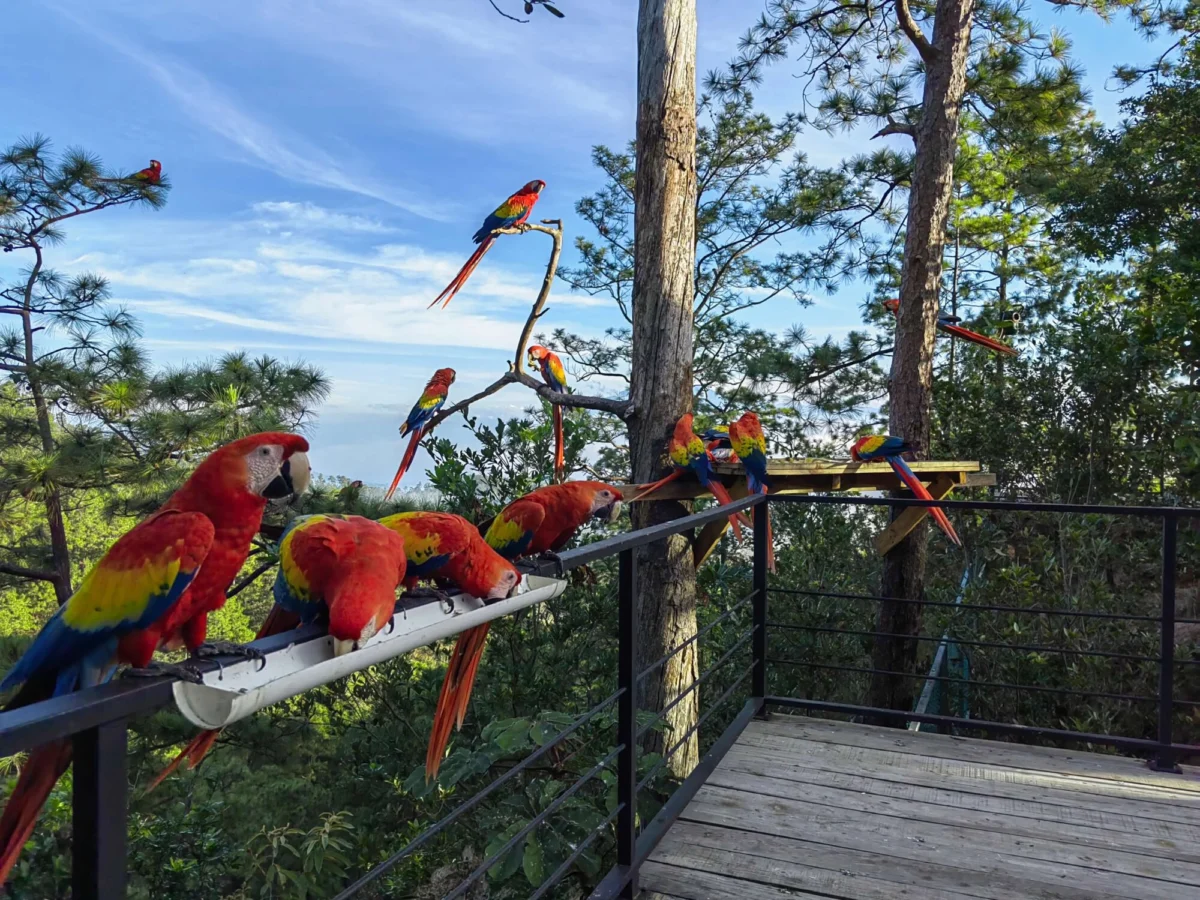
A vibrant flash of scarlet, yellow, and blue once soared over Esquipulas, Guatemala, a poignant reminder of the delicate interconnectedness of wildlife and human communities. This single sighting, in 2018, of a scarlet macaw (Ara macao) likely venturing from the acclaimed reintroduction programs in Copán Ruinas, Honduras, ignited more than just awe for the family who witnessed it. For the local villagers, the majestic bird was perceived as a potential pet, leading to an unfortunate attempt at capture. Fortunately, the macaw evaded its pursuers and never returned, but the incident underscored a critical conservation challenge: the arbitrary nature of human borders versus the unwavering drive for survival in the natural world. Today, a dedicated, volunteer-led initiative in Guatemala is striving to transform border regions into havens of protection, ensuring that these magnificent birds are met with understanding and conservation, rather than capture.
The Copán Success Story: A Beacon of Hope Across the Border
The success of scarlet macaw conservation in the region is largely attributed to the groundbreaking work undertaken in Copán Ruinas, Honduras. Just a short distance from the Guatemalan border, Macaw Mountain, in partnership with the NGO PRO ALAS (an organization dedicated to bird protection), has orchestrated a remarkable reproduction, rehabilitation, and release program. Since its inception, this initiative has successfully reintroduced over 150 wild scarlet macaws into their natural habitat, re-establishing a presence that had dwindled significantly due to habitat loss and illegal pet trade. This program, operating for over a decade, has become a model for avian conservation, demonstrating that dedicated efforts can bring iconic species back from the brink.
The reintroduction program’s tangible results are evident in the increasing numbers of macaws observed in the skies around Copán. However, this burgeoning population presents a new set of challenges. As the macaws, driven by their natural foraging behaviors and territorial instincts, expand their range, they are increasingly crossing into neighboring Guatemala. This migration, while a testament to the success of the Honduran efforts, places these birds in immediate peril within Guatemalan border communities. Anecdotal evidence and reports from local conservationists paint a grim picture: young macaws are often subjected to harassment, with children throwing stones, and adults attempting to capture them for the lucrative illegal pet trade. This stark contrast highlights the urgent need to extend the principles of conservation education and community engagement beyond the Honduran border.
A Grassroots Awakening: From Curiosity to Guardianship
The incident in Esquipulas served as a catalyst for Christian Chinchilla, a young Guatemalan biologist with a deep commitment to avian conservation. Recognizing the critical gap in protective measures on the Guatemalan side of the border, Chinchilla partnered with the Parrot Conservation Corps of One Earth Conservation (OEC). Armed with specialized training acquired through OEC’s comprehensive courses and a modest initial grant, Chinchilla, along with his girlfriend, launched a grassroots initiative aimed at shifting local attitudes towards scarlet macaws in the border village of Caparjá.
The initial phase of their project was characterized by a strategic emphasis on building trust and fostering respect within the community. Understanding that effective conservation requires local buy-in, Chinchilla and his team collaborated with Plan Trifinio, a trilateral governmental development agency, and the Municipality of Camotán. This collaboration facilitated a pivotal field trip, bringing local village leaders and primary school teachers to Macaw Mountain. This immersive experience allowed them to witness firsthand the breathtaking beauty of the scarlet macaws and grasp their profound ecological significance, transforming abstract conservation concepts into tangible realities.
With the endorsement of community leaders, the project moved into the classrooms. The educational strategy was designed to be engaging and relatable, moving beyond dry scientific facts. Simple yet impactful materials were developed, including coloring books featuring the vibrant plumage of the macaws, and interactive presentations that highlighted the birds’ natural behaviors and their importance to the local ecosystem. Discussions also centered on the macaws’ traditional significance, weaving in elements of local folklore and history. The response from the children was overwhelmingly positive. They were captivated by the images of the very birds they had observed flying overhead, igniting a sense of personal connection and responsibility. The project successfully transitioned these young observers from potential threats to enthusiastic advocates, fostering a new generation of guardians for the scarlet macaw.
Reclaiming a Rich Heritage: Macaws and Mayan Legacy
The conservation efforts in the border region are intrinsically linked to the rich cultural heritage of the indigenous Chorti Maya population. This ancestral group has inhabited the lands on both sides of the Guatemala-Honduras border for centuries, their traditions and identity deeply intertwined with the natural world. The Copán Ruins archaeological site, a testament to the sophisticated civilization of the ancient Maya, is adorned with intricate stone carvings, glyphs, and sculptures that prominently feature macaws. These magnificent birds were not merely decorative elements; they were revered symbols representing the sun, the sky, and the spirit, holding profound spiritual and cultural significance in Mayan cosmology.
By engaging Chorti children in Guatemala with the story of the scarlet macaw, the project endeavors to do more than just impart scientific knowledge. It aims to facilitate a reconnection with a living, breathing element of their ancestral legacy. This educational initiative seeks to revive a sense of pride and ownership over these magnificent creatures, reinforcing their cultural importance and fostering a deeper commitment to their protection. The visual evidence from the archaeological sites serves as a powerful reminder of the historical reverence for macaws, providing a compelling narrative that resonates with the community’s cultural identity. This revitalization of cultural connection is a potent force in driving long-term conservation success.
Navigating Challenges, Embracing Hope: The Path Forward
Despite the promising initial results and the enthusiastic reception from the children, the project encountered a familiar hurdle: the depletion of its initial funding. The specialized training and initial resources provided by OEC, while crucial for launching the initiative, were a finite source. Currently, the entire operation relies on the unwavering dedication and personal sacrifice of Christian Chinchilla and his girlfriend, who are volunteering their time and energy to maintain the momentum within the community. Their commitment, however, has not gone unnoticed.
The project’s dedication and its innovative, border-bridging approach have attracted the attention of high-ranking government officials. Through the persistent advocacy of Plan Trifinio, the Vice President of Guatemala, Dr. Karin Herrera, personally visited Macaw Mountain. Impressed by the initiative’s vision of fostering cross-border conservation and its positive impact on local communities, she pledged government support for the project. While the specifics of this support are still being finalized, the promise of official backing offers a beacon of hope for the sustainability of the program. This governmental recognition signifies a crucial step towards institutionalizing conservation efforts in the region.
Building a Sanctuary: How You Can Contribute to a Brighter Future
While the prospect of long-term government aid is encouraging, the scarlet macaws continue to traverse the border daily, facing ongoing threats. Immediate, short-term funding is critically needed to sustain the educational outreach program. This bridge funding will enable the continuation of school visits and the expansion of the primary education campaign to encompass all the border villages. The goal is to ensure that no child in these communities is left unaware of the importance of protecting these magnificent birds.
Once the promised government funding materializes, the project plans to strategically deploy these larger institutional resources towards critical long-term conservation goals. These include enhancing habitat protection measures, establishing robust nesting monitoring systems, and spearheading community-led reforestation efforts in collaboration with the villagers. These initiatives will aim to create a more sustainable and resilient ecosystem for the macaws and other wildlife in the region.
The current efforts are a testament to the power of grassroots action and community engagement in the face of significant conservation challenges. By supporting these initiatives, individuals can play a direct role in creating a safe haven for scarlet macaws as they journey between Honduras and Guatemala. The ultimate aim is to cultivate a generation of informed and passionate protectors, ensuring that the vibrant flight of these iconic birds continues to grace the skies for generations to come, a symbol of successful cross-border cooperation and a revitalized cultural heritage. The current month’s donation from Lafeber is directed towards bolstering these crucial educational programs in Guatemala, supporting the ambitious goal of replicating the conservation triumphs achieved by the scarlet macaw project just across the border in Honduras, with continued gratitude to One Earth Conservation for their foundational support and ongoing commitment.
