
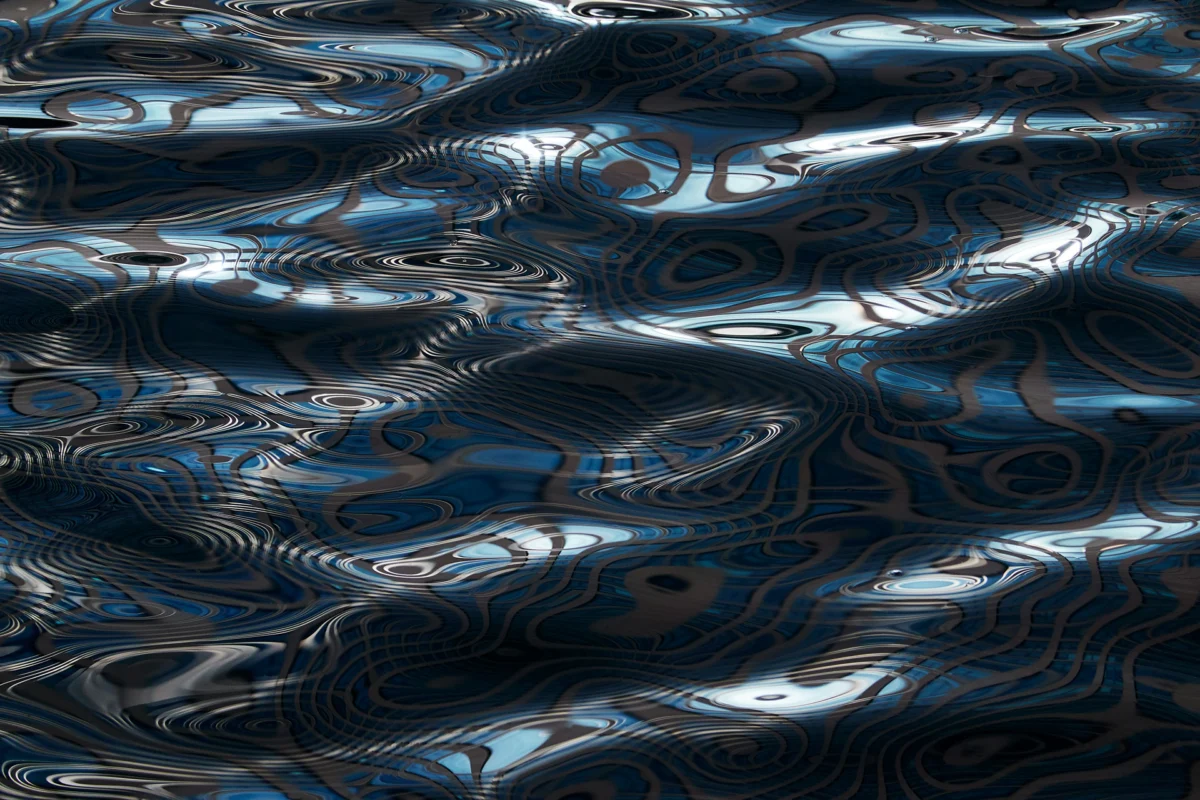
The captivating photographic series, Fleeting Reflections, challenges conventional notions of fine art and nature photography, demonstrating that profound artistic expression can emerge from the most unexpected and accessible environments. For over a decade, the creator of this acclaimed body of work has meticulously documented the ephemeral interplay of light, water, glass, and steel within the bustling financial district of Canary Wharf in London. These images, often mistaken for digital manipulations, are in fact pure in-camera creations – a testament to rigorous observation, technical mastery, and an unwavering commitment to a singular vision. The series, which has culminated in two published books and multiple exhibitions, underscores a powerful philosophy centered on the pillars of accessibility, repeatability, and patience.
The genesis of Fleeting Reflections traces back over ten years, when the photographer embarked on a journey to explore the visual potential of their immediate surroundings. While many photographers are drawn to dramatic, remote landscapes or exotic locales, the artist found an infinitely rich canvas in the seemingly mundane environment of London’s Canary Wharf docks. This urban setting, renowned globally as a hub of commerce and towering skyscrapers, was transformed through the artist’s lens into a dynamic crucible of light and form. The initial spark of curiosity evolved into a sustained, almost obsessive, engagement with the location, leading to a deep understanding of its ever-changing character. This long-term commitment allowed for the development of a coherent and distinctive body of work that reveals the hidden beauty within an industrial landscape.
Beyond the Lens: The Three Pillars of a Masterpiece

The artistic methodology underpinning Fleeting Reflections is distilled into three fundamental principles: accessibility, repeatability, and patience. These are not merely practical considerations but form the philosophical bedrock of the entire project, proving that the most sophisticated art often springs from the simplest, yet most dedicated, approaches.
Accessibility: The Power of Proximity
A pervasive myth in contemporary nature photography dictates that one must venture to distant, untouched wildernesses to capture truly compelling images. The Fleeting Reflections series stands as a powerful refutation of this idea. The entirety of the project has unfolded within approximately one square mile of water, nestled amidst the towering office blocks of Canary Wharf. This deliberate choice of an accessible location is, according to the artist, absolutely fundamental to the work’s depth.
Canary Wharf, with its iconic glass and steel architecture, is typically perceived as a symbol of corporate might. However, the photographer views these structures not as static buildings but as dynamic "light sources." These towers cast an intricate dance of color, line, and shadow onto the water’s surface, which then becomes a fluid canvas. Wind sculpts these reflected images into a myriad of shapes – waves, shimmering ribbons, sharp fractures – creating an endless array of abstract compositions. The ability to "listen" to this visual symphony is predicated entirely on the location’s accessibility.

The practical advantages are significant. The artist can reach the docks with ease, often within a short commute, eliminating the need for extensive travel, costly permits, or dedicated weeks off work. This flexibility allows for visits lasting as little as 40 minutes, or extended sessions when conditions are particularly inspiring. Crucially, it enables the photographer to engage with the subject in all its moods, regardless of conventional photographic wisdom. Whether the light is deemed "bad" by traditional standards, or if it’s raining and the water’s surface transforms into a hammered metal texture, every condition offers new opportunities for observation and capture. This constant, unhindered access fosters a level of familiarity that allows the artist to move beyond superficial observations, delving into the nuanced character of the place and revealing its deeper, less obvious truths. The implication for aspiring photographers is clear: profound work can often be found in one’s own backyard, if one only commits to truly seeing it.
Repeatability: The Ever-Evolving Canvas
The second pillar, repeatability, refers to the deliberate choice of a subject that consistently offers new permutations, surprises, and creative possibilities with each encounter. The docks of Canary Wharf exemplify this principle in abundance. The artist notes that "nothing there is ever truly the same twice." This inherent dynamism ensures that repeated visits never become monotonous but rather unlock deeper layers of understanding and visual discovery.
The variations are manifold and endlessly fascinating. A serene morning might present long, glassy pulls of color, reflecting the urban skyline with elegant precision. A gusty afternoon, however, can shatter those same building reflections into jagged, serrated lines, evoking the iconic waveform from Joy Division’s Unknown Pleasures. The passage of a boat can smear and distort the reflections into something resembling a hand-drawn sketch, while diesel slicks on the water’s surface create fleeting iridescent interference patterns that might last mere minutes and never reappear in the same form.

Because the environment is so inherently repeatable and mutable, the photographer can genuinely revisit the "same" scene hundreds or even thousands of times, yet continuously produce what feels like new work. The process often involves staying in a single spot for hours, observing a specific patch of water as it cycles through a spectrum of visual personalities. At these moments, the focus shifts from photographing static architecture to capturing the fluid "behaviour" of light and water.
This is where specific in-camera techniques become indispensable tools rather than mere "tricks." Fast burst rates are employed to freeze micro-moments of intense visual interest on the water’s surface before they dissipate. Multiple exposure modes are utilized to layer gestures and extend the inherent abstraction already present in the reflections. However, these techniques are only effective because the subject itself continually offers an inexhaustible supply of raw material. The visual palette shifts with the weather, the geometric forms bend with the wind, and the overall mood changes with the tide. This profound interaction between a repeatable subject and dedicated observation is what elevates the work from mere documentation to a compelling body of art. As the artist succinctly puts it, "Without repeatability you get postcards. With repeatability you get a body of work."
Patience: The Unseen Foundation of Mastery
The final and arguably most underestimated pillar of the Fleeting Reflections project is patience. This essential quality permeates every stage of the artistic process, from the initial decision to press the shutter to the long-term maturation of the entire series.

Patience begins long before a single photograph is taken. It involves waiting for the precise alignment of favorable weather conditions with the artist’s availability. Bright, hard sun on still water produces vastly different visual effects compared to flat light under a drizzle, and not every combination yields useful results. It is not uncommon for the artist to walk for miles around the docks, carefully checking various angles and light conditions, only to find nothing that aligns with the day’s specific photographic intent.
Even when conditions appear promising, patience transforms into a physical and mental exercise during the shooting phase. The photographer might remain at a single location for up to four hours, capturing as many as 3,000 frames of what a casual passerby might perceive as "the same scene." This intense, focused dedication is aimed at isolating that singular, elusive instant where color, rhythm, structure, and tension coalesce into a perfect harmony. This process cannot be rushed; it demands a sustained presence and acute awareness to recognize when that moment arrives.
The commitment to patience extends into the post-capture workflow. Upon returning home, thousands of nearly identical-looking images are downloaded, initiating a slow, deliberate sifting process on the iMac. This is where rigorous discipline comes into play. The artist meticulously reviews each frame, searching for the exact alignment of elements that defines a successful image, with the vast majority being rejected. The "keep rate" is, by their own admission, "brutally low," emphasizing the uncompromising standard applied to the work.
Furthermore, the processing itself is characterized by restraint. Working primarily in Capture One, the artist employs only global adjustments such as levels, clarity, sharpness, and contrast. There is a strict adherence to not manipulating shapes in Photoshop. This choice is as much philosophical as it is aesthetic: the goal is not to "create" forms but to "reveal what was already there in the water." This dedication to the honesty and integrity of the image is paramount, allowing the artist to declare, "hand on heart, ‘this happened.’"

Finally, there is the longest form of patience: allowing the work itself to mature over time. The Fleeting Reflections project was not shown publicly in any significant way for several years. The artist continuously returned to the docks, shooting, refining, and learning to distinguish essential visual elements from mere noise. It took approximately seven years before the body of work felt coherent and substantial enough to present to a publisher. This sustained, private dedication ultimately led to the publication of the first book, Fleeting Reflections, in 2017 by Triplekite. This was followed by exhibitions at the Greenwich Gallery in 2017 and the Anise Gallery in London in 2019, culminating in the release of a second volume, Fleeting Reflections II, in 2023. These milestones, while appearing as markers of success, represent only the visible tip of an immense iceberg, concealing thousands of hours spent walking, watching, waiting, shooting, editing, rejecting, and returning. The journey was slow, deliberate, and undeniably obsessive.
Broader Implications for the Photographic Community
The enduring legacy and profound insights derived from the Fleeting Reflections series offer invaluable lessons for photographers across all genres. The primary takeaway is a liberating one: truly personal and distinctive work does not necessitate dramatic landscapes or exotic locales. What is truly essential are the often-overlooked qualities of accessibility, repeatability, and patience.
The artist encourages fellow photographers to re-evaluate their immediate surroundings. Whether it’s a local canal, a harbor wall, a marshland on the outskirts of town, or even rainwater pooling in a car park, accessible subjects abound. The key is to commit to returning to these places in all seasons, all moods, and all weather conditions. This sustained engagement allows one to anticipate how the environment will respond to changing light and atmospheric conditions, fostering a deep, intuitive understanding.

Beyond finding the subject, the real work lies in the commitment to a slow, deliberate process: extensive walking, patient waiting, continuous refinement of vision, and unflinching honesty in the editing phase. Patience, in this context, is not a passive waiting game but a highly active and intentional decision. It signifies a profound investment of oneself in a chosen subject for as long as it takes to truly comprehend and interpret it. Over time, this deep-seated patience becomes visibly embedded within the photographs themselves. While viewers may initially be drawn to the compelling colors, shapes, and abstract forms, what they are ultimately experiencing is the palpable manifestation of the artist’s unwavering attention and dedication. The Fleeting Reflections series thus stands as a powerful testament to the idea that extraordinary beauty and artistic depth can be found anywhere, provided one brings an extraordinary level of commitment to seeing it.
