
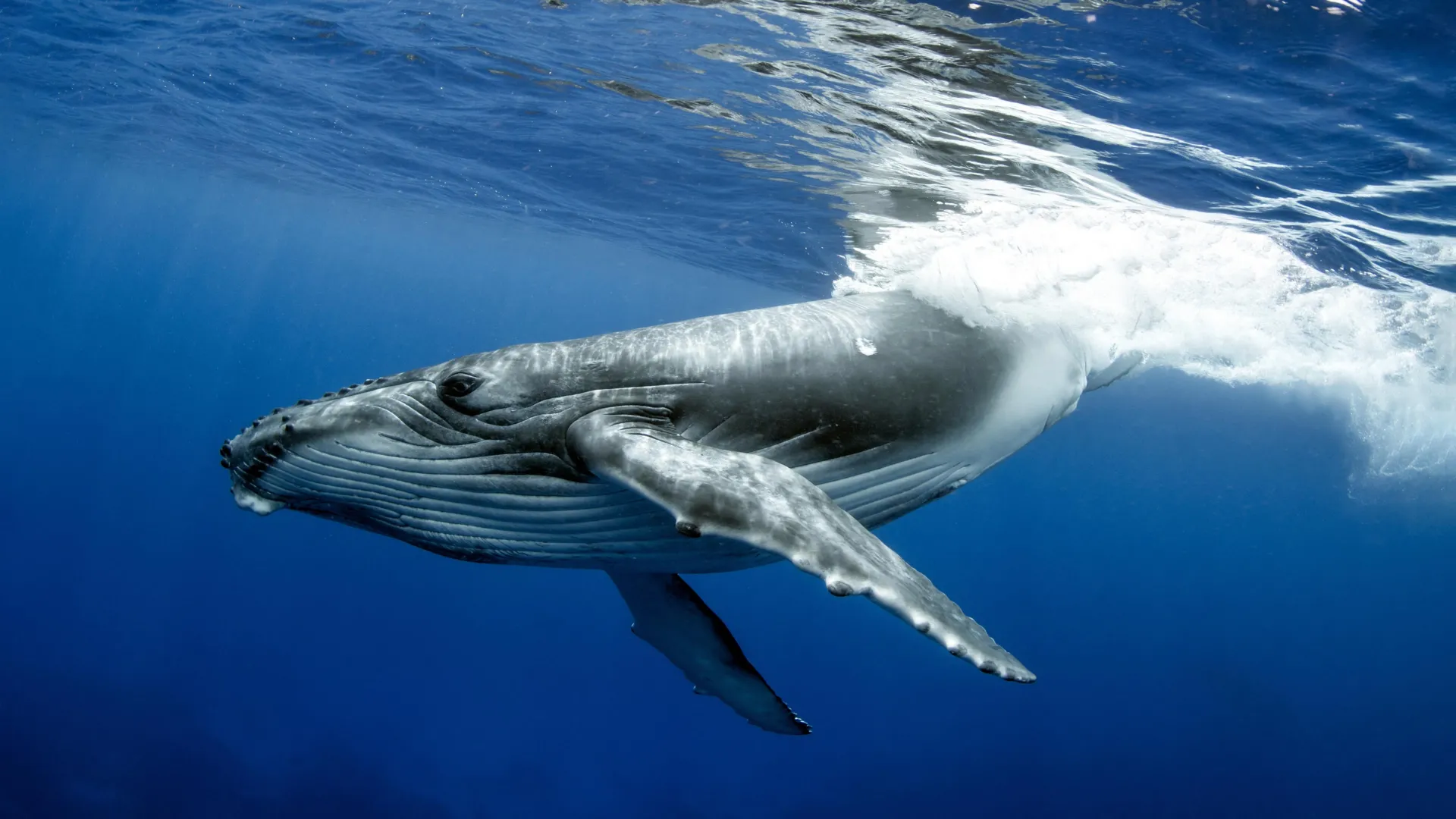
A monumental discovery in marine biology has unveiled an extraordinary feat of endurance and navigation: humpback whales (Megaptera novaeangliae) have been confirmed to travel between distant breeding grounds in eastern Australia and Brazil, traversing more than 14,000 kilometers of open ocean. This remarkable inter-oceanic journey represents the greatest confirmed distance ever recorded between sightings of individual humpback whales anywhere in the world, challenging long-held assumptions about population isolation and migratory fidelity. Published in the prestigious journal Royal Society Open Science, the study provides compelling evidence of a rare but significant exchange between two previously considered distinct populations, highlighting the intricate and far-reaching connectivity of global marine ecosystems.
The revelation is the culmination of multi-decadal research efforts and unprecedented international collaboration, demonstrating the power of persistent scientific inquiry paired with advanced technological tools. As Stephanie Stack, a PhD Candidate at Griffith University and co-author of the study, eloquently stated, "Discoveries like this are only possible because of investment into long-term multi-decadal research programs and international collaboration. These whales were photographed decades apart, by different people, in opposite parts of the world, separated by two different oceans, and yet we can connect their journey." This profound statement underscores the immense logistical and analytical challenges overcome by the research team to piece together these astonishing narratives.
The Unveiling of an Epic Journey: First Confirmed Trans-Oceanic Traveler
The initial evidence of this incredible trans-oceanic migration emerged from the meticulous comparison of photographic data, a technique known as photo-identification. Researchers identified the whales by analyzing tens of thousands of images of humpback whale tails, or flukes, each bearing unique markings akin to human fingerprints. These natural patterns, including pigmentation, scarring, and serrations along the trailing edge, allow scientists to reliably identify individual whales across vast distances and extended periods.
The first whale to reveal this extraordinary migratory pattern was initially photographed in Hervey Bay, Queensland, a renowned humpback whale sanctuary on Australia’s eastern coast, in 2007. This individual was observed again in the same protected waters six years later, in 2013, reinforcing its connection to the Australian breeding grounds. The astounding surprise came in 2019 when the very same whale was photographed near São Paulo, Brazil, thousands of kilometers across the Atlantic Ocean. This incredible journey, spanning 12 years between the initial Australian sighting and the Brazilian reappearance, established a minimum straight-line distance of approximately 14,200 kilometers. To put this into perspective, this distance is roughly equivalent to a direct flight from Sydney to London, a staggering testament to the whale’s migratory capabilities. Researchers emphasized that this figure represents only the straight-line distance between the documented points; the whale’s actual travel path, likely curvilinear and influenced by ocean currents and foraging opportunities, would undoubtedly have been even greater, its exact route remaining an enigma of the deep.
A New Global Record Set: The 15,100-Kilometer Marathoner
While the first whale’s journey was groundbreaking, a second individual subsequently shattered this newly established record, setting a new benchmark for the longest known movement of an individual humpback whale. This remarkable whale was first documented in 2003 at Brazil’s Abrolhos Bank, off the coast of Bahia. The Abrolhos Bank is a critical nursery and breeding ground for humpback whales in the South Atlantic, characterized by its vibrant coral reefs and rich marine biodiversity. At the time of its initial sighting, the whale was observed actively swimming within a lively group of nine adult whales, a common social behavior in breeding areas.
An astonishing twenty-two years later, in September 2025 (a date falling within the study’s comprehensive data collection period from 1984 to 2025), the same whale was spotted again – this time alone in the distant waters of Hervey Bay, Australia. This second documented journey, occurring over a span of more than two decades, covered an astonishing minimum straight-line distance of 15,100 kilometers. This incredible trajectory not only surpassed the previous record but also provided definitive proof of bidirectional exchange between these two geographically disparate breeding populations. The sheer duration between sightings, coupled with the immense distance, underscores the long-term commitment required for such profound scientific discoveries and the remarkable longevity of these marine giants.
Decades of Dedication: The Science Behind the Discovery
The success of this study hinges on the robustness of the photo-identification technique and the vast scale of the data collected. Humpback whale flukes are highly individualistic, displaying unique patterns of pigmentation (white and black markings), distinctive serrations along the trailing edge, and accumulated scars from encounters with predators, boats, or other whales. These "natural tags" allow scientists to track individuals over their long lifespans, which can exceed 50 years.
The study relied on an immense dataset comprising 19,283 high-quality fluke photographs. These images were painstakingly collected between 1984 and 2025, spanning four decades of dedicated fieldwork in both eastern Australia and Latin America. Such a vast temporal and spatial dataset is rare in marine mammal research and represents an invaluable resource for understanding whale population dynamics. The logistical challenge of comparing tens of thousands of photographs manually would have been insurmountable. To address this, scientists employed advanced automated image recognition software, a critical technological advancement that can rapidly sift through vast databases to identify potential matches. Following this initial automated screening, every possible match was then meticulously checked and confirmed manually by experienced researchers, ensuring the integrity and accuracy of the findings. This hybrid approach, combining computational efficiency with human expertise, was essential for the reliability of the study.
The Power of Collaboration and Citizen Science
Beyond the technological and methodological rigor, the study also stands as a powerful testament to the impact of international collaboration and the burgeoning field of citizen science. The comprehensive photographic database was not solely compiled by professional researchers; a significant portion of the images came from dedicated citizen scientists. These passionate individuals, often whale watchers or marine enthusiasts, contributed their high-quality photographs through global whale tracking platforms like Happywhale.
Dr. Cristina Castro, the lead researcher from Pacific Whale Foundation, highlighted the invaluable contribution of this collaborative model: "This kind of research highlights the value of citizen science. Every photo contributes to our understanding of whale biology and, in this case, helped uncover one of the most extreme movements ever recorded." Citizen science initiatives like Happywhale democratize data collection, expanding the geographical and temporal reach of research far beyond what professional teams alone could achieve. By engaging the public, these platforms not only gather crucial scientific data but also foster greater awareness and appreciation for marine conservation. The long-term nature of the data collection, spanning several decades, further underscores the commitment of both professional and amateur researchers to unraveling the mysteries of these magnificent creatures.
Rarity and Resilience: Why These Crossings Matter
Despite the stunning distances involved, the researchers were keen to emphasize the extreme rarity of these trans-oceanic migrations. Across more than four decades of data, covering nearly 20,000 individually identified humpback whales, only two whales were found to have traveled between the eastern Australian and Brazilian breeding regions. This represents an infinitesimally small proportion – a mere 0.01 percent of the whales included in the records. Such a low frequency underscores the exceptional nature of these journeys, suggesting they are not a regular component of the species’ migratory cycle but rather an extraordinary occurrence.
However, the scientific community maintains that even these rare movements hold profound significance for the long-term health and resilience of whale populations. Ms. Stack elaborated on this crucial point: "Despite their rarity, these exchanges matter for the long-term health of whale populations. Occasional individuals moving between distant breeding grounds can help maintain genetic diversity across populations and may even carry new song styles from one region to another."
The Symphony of the Seas: Whale Songs and Cultural Exchange
The concept of "cultural exchange" among whales, particularly through their complex songs, adds another fascinating dimension to this discovery. Humpback whales are renowned for their elaborate and evolving vocalizations, which are primarily sung by males during the breeding season. These songs are highly structured, featuring themes, phrases, and sequences that can last for many minutes and be repeated for hours. Critically, these songs are not genetically encoded but are learned and transmitted culturally within and across populations. A specific song style can spread rapidly across an entire ocean basin, much like popular music trends in human societies.
The movement of even a single whale from one breeding ground to another, thousands of kilometers away, presents a potential mechanism for the introduction of new song styles. Should an individual familiar with Brazilian songs arrive in Australian waters, or vice-versa, it could potentially introduce novel vocalizations to the resident population. This phenomenon highlights the dynamic and fluid nature of whale culture, where rare migratory events can act as conduits for the spread of information and behavioral traits, enriching the cultural landscape of entire ocean basins. This cultural exchange is not merely anecdotal; it offers insights into the cognitive complexity of whales and the subtle ways in which distant populations remain connected.
Unraveling the ‘Southern Ocean Exchange’ Hypothesis
The findings of this study provide critical support for what researchers term the "Southern Ocean Exchange" hypothesis. This compelling idea posits that humpback whales from different breeding populations, which typically return to their specific regional breeding grounds year after year, may occasionally meet in shared Antarctic feeding areas during the austral summer. The Southern Ocean is a critical foraging ground, rich in krill, the primary food source for humpbacks.
The hypothesis suggests that after a period of intense feeding in the Antarctic, some whales, instead of returning to their original breeding grounds, might inadvertently follow a different migration route. This could lead them to a completely new breeding region, effectively "exchanging" populations. The confirmed bidirectional travel between Australia and Brazil perfectly aligns with this theoretical framework. It suggests a mechanism where individuals might cross the formidable barrier of the Southern Ocean, moving from the Indian/Pacific Ocean sectors to the Atlantic sector, or vice versa, before heading north to breed. This exchange underscores the interconnectedness of whale populations at a global scale, where even seemingly isolated groups are part of a larger, dynamic meta-population linked by the Antarctic feeding grounds.
A Changing Climate, Shifting Migrations?
Looking forward, researchers believe that climate change could play a significant role in making these rare trans-oceanic crossings more common in the future. The Antarctic region, a critical habitat for humpback whales, is undergoing rapid environmental shifts. Changes in Antarctic sea ice dynamics, including its extent and seasonal melt patterns, directly impact the distribution and abundance of Antarctic krill. As krill populations shift in response to warming waters and altered ice regimes, whales may be compelled to adjust their foraging strategies and, consequently, their migration patterns.
Such environmental pressures could potentially lead more individuals to explore new feeding grounds or to deviate from traditional migratory routes, increasing the likelihood of encountering and potentially settling in different breeding areas. This prospective link between climate change and altered migration patterns adds a critical conservation dimension to the discovery. Understanding how climate-induced changes might influence these exchanges is vital for predicting future population dynamics and for implementing effective, adaptive conservation strategies for a species that, despite its remarkable recovery in many regions, still faces threats from entanglement, ship strikes, and ocean noise pollution.
Broader Conservation Implications
The documentation of these unprecedented journeys carries significant implications for the global conservation of humpback whales. Historically, whale populations have often been managed as discrete units, based on their fidelity to specific breeding grounds. However, evidence of even rare inter-oceanic exchange necessitates a more holistic, globally integrated approach to conservation. It highlights that the health and genetic viability of one population can be subtly influenced by distant populations, underscoring the need for international cooperation in marine protection.
Understanding the potential for genetic exchange helps conservationists assess population resilience and genetic diversity. Furthermore, if climate change indeed leads to more frequent cross-ocean migrations, it will become even more crucial to monitor these movements to inform decisions regarding marine protected areas, shipping lane adjustments, and other management interventions. The study serves as a powerful reminder of the vast unknowns that still exist within our oceans and the continuous need for long-term, collaborative research to unravel the complexities of marine life. This groundbreaking discovery not only expands our understanding of humpback whale biology but also reinforces the profound interconnectedness of our planet’s marine ecosystems and the imperative for global stewardship.
