
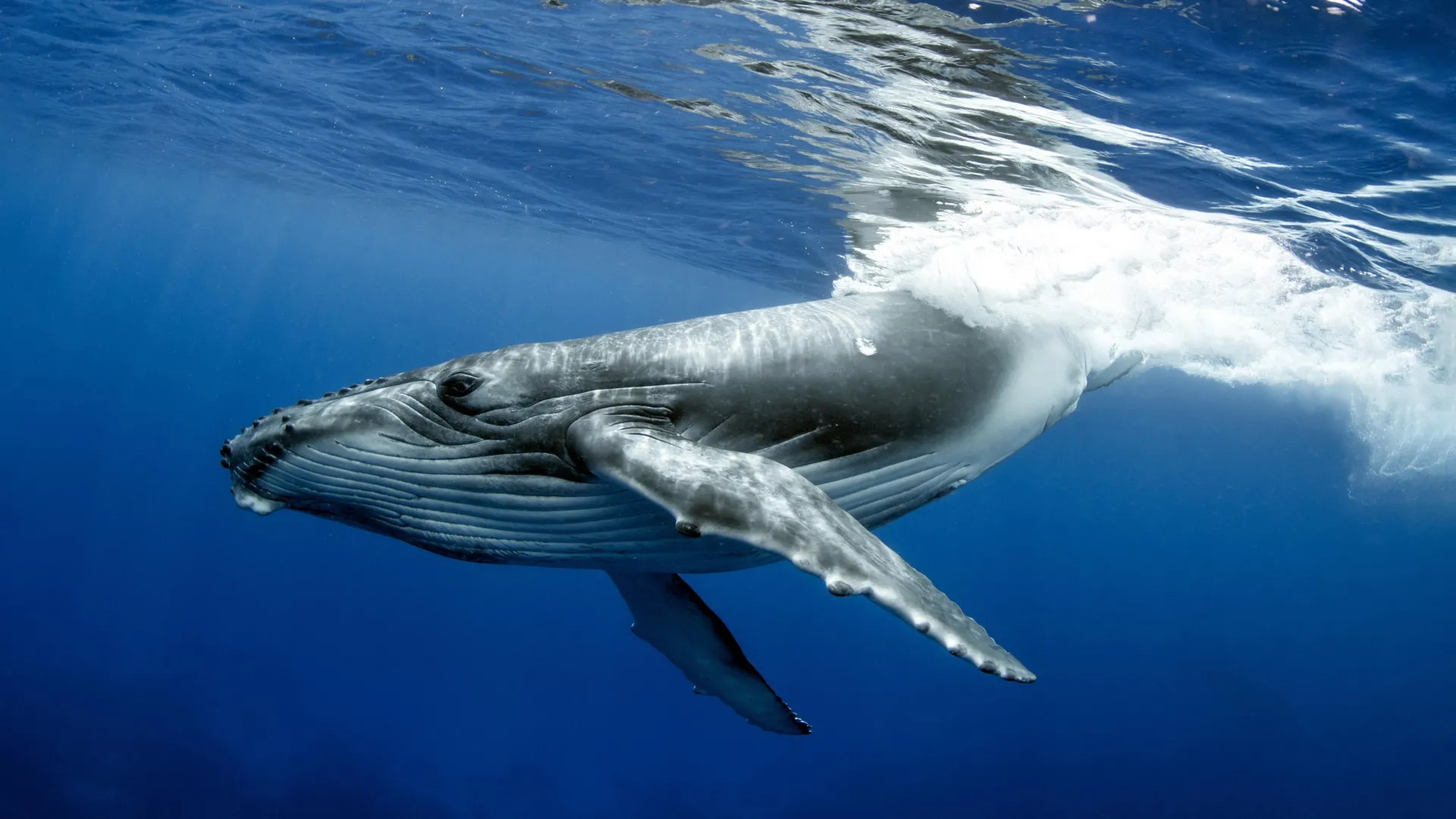
Scientists have officially documented an extraordinary and unprecedented feat of whale migration, confirming for the first time that individual humpback whales have journeyed between breeding grounds in eastern Australia and Brazil, traversing more than 14,000 kilometers of open ocean. This monumental discovery not only establishes the greatest confirmed distance ever recorded between sightings of individual humpback whales anywhere in the world but also offers profound insights into the species’ adaptability, genetic connectivity, and potential responses to environmental shifts.
The groundbreaking findings, published in Royal Society Open Science, underscore the immense value of long-term research initiatives and international scientific collaboration. As Stephanie Stack, a PhD Candidate at Griffith University and co-author of the study, remarked, "Discoveries like this are only possible because of investment into long-term multi-decadal research programs and international collaboration. These whales were photographed decades apart, by different people, in opposite parts of the world, separated by two different oceans, and yet we can connect their journey."
Unveiling Record-Breaking Journeys Through Photo Identification
The ability to track individual whales across such vast distances hinges on a sophisticated and well-established scientific technique: photo identification of humpback whale flukes. Each humpback whale possesses a unique pattern of markings, scars, and pigmentation on the underside of its tail fluke, akin to a human fingerprint. These distinct patterns allow researchers to reliably identify and re-identify individual whales over time and space, providing invaluable data on migration routes, population dynamics, and life histories. The study meticulously compared tens of thousands of such photographs, an arduous task significantly aided by modern technology and global partnerships.
The first compelling case involved a humpback whale initially photographed in Hervey Bay, Queensland, a renowned whale-watching destination and critical breeding ground on Australia’s eastern coast, in 2007. This same whale was resighted in the same Australian waters in 2013, confirming its fidelity to that breeding area. Remarkably, in 2019, the identical whale was photographed near São Paulo, Brazil, thousands of kilometers across the Atlantic and Southern Oceans. The minimum straight-line distance between these two distant breeding grounds is approximately 14,200 kilometers, a staggering distance roughly equivalent to traveling from Sydney to London. Researchers emphasize that the actual travel distance for this whale was undoubtedly greater, as only the start and end points of its journey were documented, with the precise migratory route remaining speculative.
However, an even more astonishing result emerged from the data concerning a second whale. This individual was first identified in 2003 at Brazil’s Abrolhos Bank, off the coast of Bahia. Abrolhos Bank is recognized as Brazil’s primary humpback whale nursery, a vibrant hub of reproductive activity. At the time of its initial sighting, the whale was observed within a dynamic group of nine adult whales, indicative of breeding ground social dynamics. An incredible twenty-two years later, in September 2025, the very same whale was spotted, alone, in Hervey Bay, Australia. This documented transit established a new, undisputed record for the longest known movement of an individual humpback whale, spanning an astounding 15,100 kilometers. The longevity of the tracking period for this second whale — over two decades — further highlights the power of sustained, long-term observational research.
A Symphony of Data: Decades of Research and Citizen Science
The success of this unprecedented study is a testament to the collaborative spirit of modern marine science, integrating professional research with the invaluable contributions of citizen scientists. The dataset underpinning these discoveries comprised an impressive 19,283 high-quality fluke photographs collected over an extensive period, from 1984 to 2025. These images originated from both dedicated professional researchers affiliated with various institutions and passionate citizen scientists, who contributed their photographic observations through global whale tracking platforms like Happywhale.
Happywhale, an online platform, leverages advanced automated image recognition software to compare whale fluke photographs submitted by individuals worldwide. Once the software identifies potential matches, a critical manual verification process by experienced researchers ensures the accuracy and reliability of the findings. This hybrid approach significantly accelerates the data processing and expands the geographical and temporal scope of whale monitoring efforts.
Dr. Cristina Castro, lead researcher from the Pacific Whale Foundation, underscored the pivotal role of community involvement: "This kind of research highlights the value of citizen science. Every photo contributes to our understanding of whale biology and, in this case, helped uncover one of the most extreme movements ever recorded." The ability of a casual observer’s photograph to contribute to a world-record scientific discovery powerfully illustrates the democratization of scientific data collection.
The Rarity of Trans-Oceanic Crossings: A Glimpse into Connectivity
Despite the breathtaking distances covered by these two individual whales, researchers emphasized the extreme rarity of such trans-oceanic migrations. The comprehensive dataset, spanning over four decades and encompassing nearly 20,000 identified humpback whales, revealed only these two instances of individuals traversing between the Eastern Australia and Brazilian breeding regions. This represents a mere 0.01 percent of the total whales included in the records, firmly establishing these events as exceptional rather than commonplace.
Humpback whales (Megaptera novaeangliae) are renowned for their epic annual migrations, typically traveling thousands of kilometers between productive high-latitude feeding grounds in polar waters and warmer, low-latitude breeding grounds in tropical or subtropical regions. While extensive migrations within ocean basins are well-documented – for instance, between Antarctica and various points along the eastern or western coasts of continents – direct, purposeful crossings between distinct ocean basins have historically been considered rare or non-existent for breeding populations. This study challenges the perception of completely isolated breeding populations, suggesting a subtle, yet significant, degree of inter-basin exchange.
Why Rare Crossings Matter: Genetic Diversity and Cultural Exchange
Even with their observed rarity, scientists posit that these infrequent movements hold substantial importance for the long-term health and resilience of global humpback whale populations. Ms. Stack explained, "Despite their rarity, these exchanges matter for the long-term health of whale populations. Occasional individuals moving between distant breeding grounds can help maintain genetic diversity across populations and may even carry new song styles from one region to another — humpback whale songs are known to spread culturally across ocean basins, much like music trends in human populations."
The concept of genetic diversity is fundamental to species survival. A diverse gene pool enhances a population’s ability to adapt to environmental changes, disease, and other stressors. Should a population become too isolated and genetically homogenous, it becomes more vulnerable. The introduction of even a few individuals from a distant population, carrying different genetic material, can help refresh and strengthen the genetic makeup of the recipient population. This phenomenon, known as gene flow, is a crucial evolutionary process.
Beyond genetics, humpback whales are celebrated for their complex and evolving vocalizations, particularly their "songs" performed primarily by males in breeding grounds. These songs are culturally transmitted, meaning they are learned and shared among individuals, often changing and spreading across vast geographical areas over time. The migration of an individual whale carrying a new song style from one breeding ground to another could initiate the cultural diffusion of that song across an entire ocean basin, illustrating a fascinating parallel to human cultural trends. This cultural exchange further emphasizes the interconnectedness of seemingly disparate whale populations.
The Southern Ocean Exchange Hypothesis: A Unified Antarctic Connection
The findings of this study lend significant credence to what researchers term the "Southern Ocean Exchange" hypothesis. This hypothesis proposes that humpback whales from different breeding populations, such as those off eastern Australia and Brazil, may occasionally converge and interact in shared Antarctic feeding areas during the austral summer. The rich krill-laden waters of the Southern Ocean provide a common pantry for whales originating from various Southern Hemisphere breeding grounds.
The theory suggests that after a season of intensive feeding, some whales might not return along their original migratory path to their natal breeding grounds. Instead, they might follow a different migratory corridor, eventually settling in a completely new breeding region. This "misnavigation" or adaptive route-switching could explain the rare trans-oceanic movements observed. The Southern Ocean, therefore, acts not merely as a feeding ground but potentially as a dynamic melting pot where different populations intermingle before dispersing.
Climate Change: A Catalyst for Shifting Migrations?
Looking to the future, researchers believe that the frequency of these rare trans-oceanic crossings could potentially increase due to the pervasive influence of climate change. The Antarctic environment, critical for humpback whale feeding, is undergoing significant transformations. Shifts in Antarctic sea ice distribution and profound changes in the availability and distribution of Antarctic krill – the whales’ primary food source – are already being observed.
As climate change alters oceanographic conditions, prey availability, and habitat suitability, whales may be compelled to adjust their migratory patterns and foraging strategies. These environmental pressures could lead to more frequent instances of individuals straying from traditional routes or seeking out new feeding and breeding grounds, thereby potentially increasing the likelihood of inter-basin movements. Monitoring these trends will be crucial for understanding the long-term ecological impacts of a warming planet on marine megafauna.
Broader Implications for Conservation and Management
The discovery of these trans-oceanic migrations carries significant implications for the conservation and management of humpback whale populations worldwide. Historically, humpback whale populations have often been managed as distinct, geographically isolated units, based on their fidelity to specific breeding grounds. However, evidence of inter-basin exchange, even if rare, suggests a greater degree of connectivity than previously assumed.
This interconnectedness means that conservation efforts in one region might inadvertently impact populations in distant regions. It emphasizes the need for an even more globally coordinated approach to whale conservation, transcending national and regional boundaries. Understanding the extent of genetic flow and cultural exchange is vital for assessing population health, genetic resilience, and the potential spread of diseases.
Furthermore, the study highlights the remarkable recovery of humpback whale populations since the cessation of commercial whaling. Decimated by industrial whaling in the 20th century, many populations are now rebounding, a testament to international conservation efforts. As populations grow, competitive pressures for resources or space might also contribute to individuals exploring new territories, potentially fueling further exploratory migrations.
This monumental scientific achievement, combining decades of dedicated research, cutting-edge technology, and the enthusiastic participation of citizen scientists, paints a more complex and interconnected picture of humpback whale ecology. It reminds us that even in an era of advanced understanding, the ocean’s depths still hold profound secrets, and its magnificent inhabitants continue to surprise and inspire us with their extraordinary capabilities. The journey of these two whales across continents serves as a powerful symbol of nature’s enduring mysteries and the boundless possibilities of scientific discovery.
